


Why Choose Shuttering Magnets for Precast Concrete?

Precast concrete production depends on repeatable setups, clean mould edges, and secure formwork. A Shuttering Magnet helps hold side forms in position on a steel casting bed without drilling or welding. Its magnetic force supports fast placement, while the switch or release mechanism allows crews to reposition it between pours. Small details matter: a magnet that sits flat on a clean bed can reduce movement when concrete is placed and vibrated.

A practical principle for this guide is: “Choose the magnet for the formwork load and casting conditions, not by holding force alone.” This is an editorially composed expert takeaway, not a verified quotation from a named specialist. Real operating conditions vary. Form height, vibration, bed condition, and magnet spacing all affect performance. A setup that works for a short wall panel may not suit a taller, heavier form.

This article examines why precast teams choose Shuttering Magnet systems, how they support flexible mould layouts, and what to check before selection. It also considers limitations. Magnets need suitable steel contact, regular cleaning, and careful handling. They are useful tools, not substitutes for sound formwork design or production checks. The goal is straightforward: understand where they save setup time, and where a closer review is needed.
Why Choose Shuttering Magnets for Precast Concrete?

What Shuttering Magnets Are and How They Work

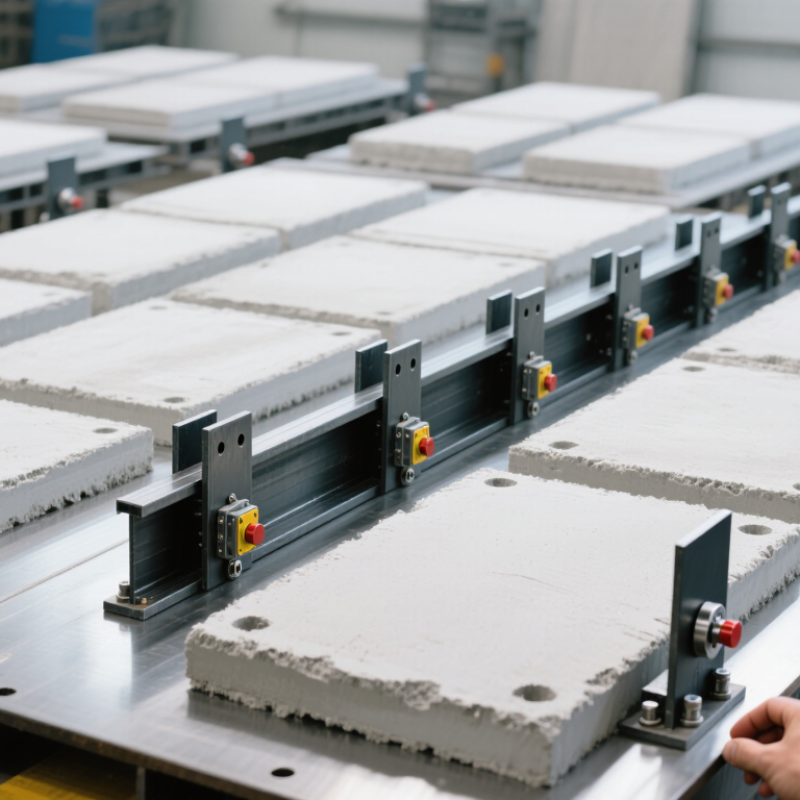
Shuttering magnets are compact assemblies that secure formwork to a steel casting bed during precast concrete production. A typical unit contains permanent magnets inside a steel housing, with a switch or lever to activate and release the magnetic hold. The housing often attaches to a formwork profile, keeping the mould in position without drilling into the bed.

When activated, the magnets direct their force through the housing and into the steel surface beneath them. That contact helps resist movement as concrete is placed and vibrated.

No drilling required.

Operators position the form, engage the magnets, then check alignment and end joints before pouring. A clean, flat bed matters: rust flakes, concrete residue, or a small gap can reduce effective holding force.

In practice, a quick visual check is easy to skip, especially during a busy production run. It is still worth doing.

Magnet capacity must suit the formwork design and expected loads; the magnets alone do not guarantee a leak-free mould or correct alignment.

After curing, operators release the units and inspect them for wear or trapped debris.

How Magnets Secure Formwork on Precast Beds

Shuttering magnets secure formwork by pressing steel side rails firmly against a precast bed. Their magnetic force holds the rails in position without drilling or welding. This helps keep the casting area clear and makes form adjustments easier between pours. Small details matter.

Before placement, crews should remove loose concrete, dust, and oil from the bed’s contact surface. A thin layer of debris can reduce contact and allow a rail to shift. Set each magnet at the spacing required by the formwork design, then engage its locking mechanism. Check the rail’s line and height with a straightedge or measuring tool. Do not assume it is aligned just because the magnet feels tight.

During pouring, concrete pressure and vibration can test the setup. Use magnets rated for the application, and follow the system’s load guidance rather than relying on appearance. Watch for movement as concrete is placed, especially near corners and joints. Even careful crews can miss a small gap. That is worth reflecting on: magnets hold the form, but they cannot correct a warped rail or an uneven bed. After curing, release them with the intended tool, not by striking the formwork.

Why Choose Shuttering Magnets for Precast Concrete?

How magnets secure formwork on precast beds

Shuttering magnets attach formwork to a compatible steel casting bed, helping hold panels in position without drilling or welding. The bars show example nominal holding-force classes, not test results or a universal product range. Actual force depends on the magnet design, steel contact, surface condition, and loading direction; check the rated specification for the application.

Key Benefits for Precast Concrete Production

Why Choose Shuttering Magnets for Precast Concrete?
Key Benefits for Precast Concrete Production

Shuttering magnets hold steel formwork in position on a casting bed without drilling or welding. Operators can place a unit, engage its switch, and check the panel line before pouring. This setup can reduce layout time, especially when a production run uses several panel sizes. Fewer drilled holes also mean less patching and fewer points where slurry can leak. On a busy floor, small gains matter. Less rework.

Their clamping force helps resist movement from concrete pressure and vibration, supporting straighter edges and more consistent dimensions. Magnets can be repositioned between pours, allowing crews to adjust a bed without rebuilding its framework. This is useful for custom openings, door recesses, and changing panel widths. Still, performance depends on clean contact surfaces, correct placement, and suitable formwork. Paste or rust beneath a magnet can weaken its hold; this detail is easy to overlook. A practical routine includes wiping the bed, checking release mechanisms, and confirming alignment before each pour. Magnets do not replace sound engineering or inspection, but they can make repeatable setup easier. Some crews may find handling them awkward at first. A short trial can help refine spacing and lifting habits.

Factors to Consider When Selecting Shuttering Magnets

Why Choose Shuttering Magnets for Precast Concrete?

Factors to Consider When Selecting Shuttering Magnets

Selecting shuttering magnets starts with the loads they must resist, not the largest force printed on a data sheet. ACI 347R-14, Guide to Formwork for Concrete, identifies placement rate, concrete temperature, and mixture properties as factors affecting fresh-concrete pressure. For a practical reference, concrete at 2,400 kg/m³ creates about 23.5 kPa of hydrostatic pressure per metre of depth. This is an estimate, not a complete formwork design. Small details matter. Vibration and fast placement can increase demands, while gaps or uneven steel surfaces can reduce a magnet’s effective grip.

Check the panel’s steel thickness, flatness, and cleanliness against the magnet’s tested conditions. Then consider sliding, overturning, and handling forces, not only direct pull-off force. Leave a safety margin and confirm the layout with a load calculation or a controlled trial on the actual form. Temperature and repeated use matter too; concrete residue can prevent full contact. A magnet that performs well on a clean test plate may behave differently on a worn panel. That is easy to overlook. Compare test data, release mechanism, and access for safe removal. When placement conditions are uncertain, ask the formwork engineer to review the assumptions before production.

Common Applications Across Precast Concrete Projects

Across precast projects, shuttering magnets secure side forms to steel casting beds without drilling or welding. They are used for wall panels, floor slabs, beams, columns, stair units, and balcony elements. On a wall-panel line, crews can position a side rail, check dimensions, then lock it down with a magnet. Small adjustments matter. A few millimeters can affect panel edges and later assembly. Magnets also help with repeat production, where the same form layout returns each shift. For openings, recesses, and narrow edge forms, compact units can keep the setup tidy, though unusual shapes may still need brackets or extra support.

Sandwich panels often use magnets to hold perimeter rails and internal block-outs during casting. They can also support adjustable forms for varied panel widths. The right choice depends on form weight, concrete pressure, bed condition, and vibration. Clean contact surfaces are essential; dried paste or grit can reduce holding performance. Test the arrangement before pouring, and follow the manufacturer’s load guidance. Not every setup is ideal. Magnets can speed changes, but they do not replace sound formwork design or careful inspection. Crews may need a trial run to find spacing that stays secure without slowing release. That extra check can feel fussy. It is often cheaper than correcting a chipped edge or misaligned insert.

Powder Coat Booths

For those larger-sized parts, or smaller quantity runs, we have 2 independent powder coat booths and ovens. The quality, durability and affordability of today’s powder coating finishes make this the process of choice for world-class companies.

Powder coating advantages over other forms of coating are many. Materials used in the Powder coating process can be metals and non-metals that come in a multitude of thicknesses, textures, colors, etc. Another of Powder coating’s biggest advantages over conventional coatings is its ability to create finishes in many different textures. Powder Coating Booths allow us the ability to apply these advantages to large products.

Wet Paint Line

Tri-State Fabricators runs a full-service conveyor line for painting. Wet painting can provide protection or decoration to many different part styles. From start to finish, every project is easier to undergo random and point-based inspection by our skilled painting team.

Advantages to our Wet Paint Line are these lines start with product prep and ends with a thorough inspection of a high quality finished product. Our ability to complete large and small projects with a superior finish and doing so in a timely and economical fashion. This passes along the savings in production to our customers. When powder coating ins not an option, our Wet Paint Line gets the job done right the first time.

Wet Paint Booths

When the parts get big and heavy we roll-out our custom paint racks and oversize booth. By utilizing our partnerships with all the major paint brands, we can match virtually any color with wet paint.

The advantages of having access to a Wet Paint Booth are many. Large projects of many different shapes can be loaded into the booth. The Wet Paint Booth offers an environment that is much more controlled than a typical parts painting operation.

Not only are they used because of their controlled environment, but they’re are also advantageous when it comes to applying paint to parts that are needed in industries that require specialty coatings such as medical, aerospace, etc.

Military CARC

Our military forces have some very high standards when it comes to the finish of their vehicles and equipment. From the first pre-treatment step to final coat, it takes a great deal of knowledge and experience to protect the men and women of our armed forces. They deserve only the best, and Tri-State Fabricators provides it.

All of our processes are closely monitored by our staff and management teams. Both of which are highly trained in the processes of metal fabrication and finishing. Tri-State Fabricators’ goal is to always fully satisfy each and every customer, including the military. We will always put a 110% into what we do.

Glass-Bead Blasting

Abrasive media blasting is an excellent way to remove old paint, rust, and increase the paint/powder adhesion. Glass beads produce a much smoother and brighter finish than angular abrasives; leaving the part clean yet without any dimensional change. Chemically inert and environmentally friendly, we can recycle our beads approximately 30 times; making them a more preferred method of metal cleaning or surface finishing.

Advantages to Glass Bead Blasting are many. Glass bead blast media is used when a project is needing rough surfaces need to become smooth for applications of coatings such as paint. It is typically used to clean paint and rust from a product surface without deforming the surface it is being used on. Overall, compared to many other blasting media, Glass Bead Blasting is a very economical choice and those savings are always passed on to our customers.

Part Washing

Tri-State Fabricators utilize a zinc phosphate wash to clean and etch the material to ensure the best paint adhesion possible. The unique design of our 3-stage wash system does the work like a 5-stage. From Cleaning and rinsing to conversion coating and post-treatment, Our Part Washing process is a complete service and works throughout the fabrication service and the finishing service.

Along with the previously mentioned benefits, Curing is a vital chemical reaction that leaves the product finish hard and relatively safe from mild abrasion and aggressive corrosion. This process can be done in more than one way; ambient air-dry or in curing ovens at temps that exceed 240°.

Burn-Off Oven

From fixing paint mistakes (someone else’s of course) to simply cleaning our paint line hooks, our burn-off oven is put to good use. After a quick burn-off, a little clean up, and a fresh coat of paint, your parts will look better than new.

Why does our Burn-Off Oven work so well? Because super heating the air around parts turns the materials into ashes. From paint and powder coatings to rubber and machining oils, high temps do the job without degrading the integrity of the part.

Masking

Masking is a vital part of producing high quality products. We have die-cut masking patterns to protect machined surfaces as well as a wide range of plugs and caps to protect threaded holes and bolts. We provide permanent and temporary masking.

Masking allows the selected sections of a product to be protected from a fabrication or finishing service. This can be with both chemicals when etching and tapes, paints when only finishing just a section of the product. Masking is great in aiding the customization process of a project.

Screen Printing

Screen printing is a photographic process that transfers artwork onto a porous nylon screen which allows colored ink to flow through the screen and be deposited on an aluminum or plastic component. We can generally have just about any design created onto a screen for your parts.

Some of the advantages of Screen Printing are, brand recognition for your business displaying on your products, assembly instructions, product warnings/hazards, etc. Tri-State Fabricators produces Screen Printing of the highest quality so you know it’s durable.

Metal Finishing

Metal Finishing is the art of treating the exterior portion of product, often metal but can also be made of other materials, so that the surface is clean and free of any debris. Then the process of applying coats or either paint of powder coat takes place. This coating process improves the quality of the product in both appearance and resistance to wear and corrosion.

Tri-State Fabricators, Inc., understands that a project typically isn’t complete until a high-quality finish has been added to your product. This is why our painting and powder coating teams continuously inspect the products throughout the Metal Finishing process.

