How to Choose the Right Aerial Platform Rotary Actuator?
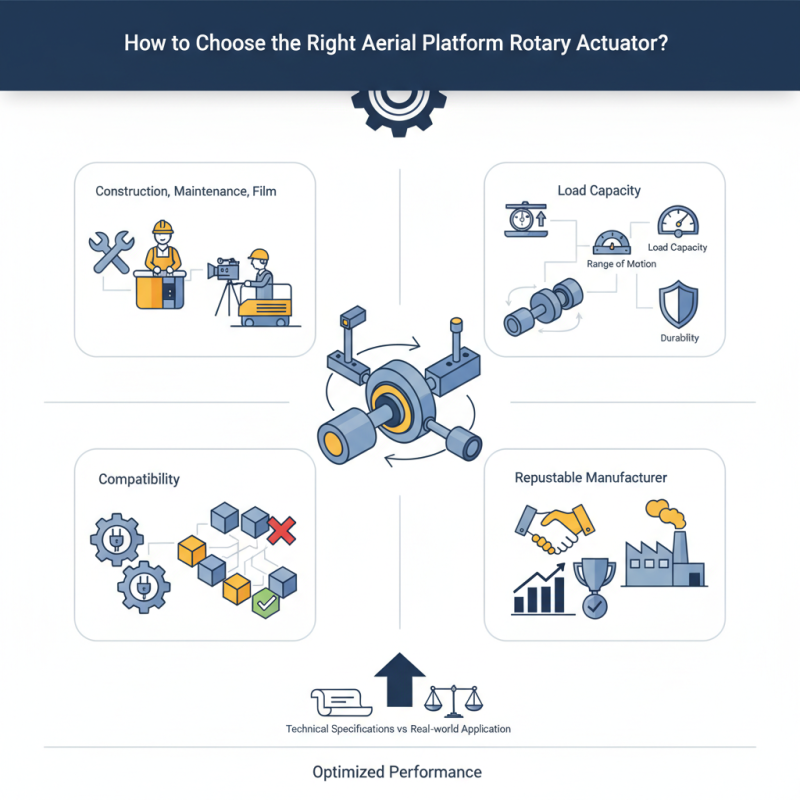
Choosing the right Aerial Platform Rotary Actuator is crucial for optimizing performance. Whether you're in construction, maintenance, or film production, the decisions you make impact safety and efficiency. These actuators provide essential motion control, enabling smooth aerial maneuvers.
Understanding various actuator types is vital. Each has strengths and weaknesses. Factors like load capacity, range of motion, and durability should guide your choice. Yet, many overlook the importance of compatibility with existing systems. This can lead to operational challenges and increased costs.
Additionally, selecting a reputable manufacturer adds credibility. Look for those with proven expertise and positive reviews. Remember, an informed choice ultimately enhances your project outcomes. However, without sufficient research, you might make a misstep. Balancing technical specifications with real-world application is key.
Understanding the Basics of Aerial Platform Rotary Actuators
Aerial platform rotary actuators are crucial in various applications. They control movement in equipment like lifts and drones. Understanding their function helps you make informed decisions. Each actuator type has unique benefits and limitations. Knowledge of these can prevent costly mistakes.
These actuators typically consist of a motor and gearing system. They convert electrical energy into rotational motion. This motion is essential for precise positioning. Consider factors like torque, speed, and duty cycle when selecting. Each use case demands specific capabilities. Overlooking these details might lead to inefficiencies.
Choosing the right actuator is not just about specs. It’s also about real-world performance. Users may find that stated specifications don’t always match performance. Testing in your specific environment is vital. A mismatch could result in operational challenges. Being aware of these issues can guide better choices.
Key Parameters for Selecting Aerial Platform Rotary Actuators
When selecting aerial platform rotary actuators, various key parameters should be considered. The torque capacity is crucial. According to industry reports, the torque requirement often ranges from 5 to 300 Nm depending on the application. Insufficient torque can limit performance, making this parameter critical for efficient operations.
Speed is another significant factor. Many applications require rotation speeds from 0.1 to 10 RPM. Knowing the speed requirements helps in selecting the right actuator. Payload capacity should also be assessed. Some actuators can handle loads up to 500 kg, while others may manage less. The ability to support a specific weight safely is pivotal to operational safety.
Additionally, environmental factors come into play. Some actuators can operate in extreme temperatures, while others are limited to standard conditions. Understanding the working environment can prevent actuator failure. Many designs now incorporate weather-proof materials for outdoor applications. However, materials may degrade over time, indicating the need for regular maintenance and evaluation.
Evaluating Load Capacity and Torque Specifications in Actuators
When selecting an aerial platform rotary actuator, understanding load capacity and torque specifications is crucial. Load capacity refers to the maximum weight the actuator can handle without failing. It's important to overestimate the weight slightly to account for unexpected stress. For instance, if your platform will hold 200 kg, choose an actuator rated for at least 250 kg. This safety margin is essential to ensure reliable performance.
Torque specifications determine how efficiently an actuator can rotate the platform. Torque is the rotational force, and it must match your operational needs. Evaluate the required torque by considering the platform size and the weight distribution on it. Calculating the right torque isn’t straightforward. It often requires real-world testing and adjustments. Pay attention to the actuator’s response speed too. A faster response may be necessary for specific applications, but it can come at the cost of stability.
It's also important to review installation details and environmental factors. Sometimes, actuators may need modifications to fit various platforms or conditions. Remember, a mismatch in specifications can lead to performance issues. Take the time to perform thorough calculations and consult with experts if needed. This diligence can make a significant difference in achieving optimal performance.
Assessing Environmental Conditions and Actuator Durability
When selecting an aerial platform rotary actuator, environmental conditions play a pivotal role. Harsh environments can significantly impact actuator performance and longevity. According to a report by the International Society of Automation, exposure to extreme temperatures can reduce an actuator's lifespan by up to 30%. Understanding the operational context—be it high humidity, extreme heat, or salt-laden air—is essential for ensuring durability.
Evaluating material selection is another crucial aspect. Corrosion-resistant materials are vital in outdoor settings. A study from the Society of Manufacturing Engineers highlighted that actuators made from stainless steel or specialized polymers exhibit better resistance to environmental wear. Choosing the right seals and coatings also enhances durability in varying conditions. However, not all materials guarantee protection. Some forgo durability for weight, leading to early failures under demanding circumstances.
Testing protocols are often overlooked. Rigorous testing in real-world conditions can highlight material weaknesses. A recent industry survey found that only 40% of manufacturers conduct thorough environmental testing. Without such assessments, companies risk selecting actuators that fail when facing unforeseen conditions. A careful evaluation of all these factors can lead to a more reliable and efficient actuator choice.
Comparing Actuator Control Mechanisms and Their Applications
When selecting an aerial platform rotary actuator, understanding control mechanisms is crucial. There are primarily three types: electric, hydraulic, and pneumatic. Each offers distinct advantages and limitations based on application needs. Electric actuators, known for precision, are ideal for settings requiring exact torque control. Reports show that electric actuators have a 30% lower energy consumption compared to hydraulics. However, they may face challenges in high-load situations.
Hydraulic actuators, frequently used in heavy machinery, deliver powerful performance. They are the go-to for applications demanding high force. Nonetheless, they can incur higher maintenance costs and may leak hydraulic fluid, presenting reliability concerns. In contrast, pneumatic actuators excel in rapid motions. Their lightweight design allows quick movements, but they often lack the precision found in electric systems.
Selecting the right actuator requires careful consideration. Factors such as operational environment, load requirements, and speed need weighing. Industries are evolving; preferences shift toward more sustainable options. A growing report indicates that around 40% of companies now prioritize energy efficiency in actuator selection. As technology advances, the importance of aligning actuator choice with specific application conditions becomes more apparent, ensuring optimal performance and longevity.