How to Choose Prefab Steel Buildings for Global Projects?
Choosing Prefab Steel Buildings for global projects requires more than comparing prices and floor areas. Climate, transport, local standards, construction skills, and long-term maintenance can change the right decision. A warehouse near Singapore may need strong corrosion protection and ventilation. A facility in northern Canada may require deeper insulation, snow-load design, and reliable heating space. Coastal wind, seismic activity, drainage, and soil conditions also deserve early attention.
A dependable evaluation begins with verified engineering documents, material certificates, connection details, and clear responsibility between suppliers and local professionals. Ask whether the supplier has completed similar projects in comparable climates. Review steel grades, coating systems, fire protection, roof drainage, and replacement access. Confirm that foundations match the site survey, not merely a standard drawing. Delivery plans should include packaging, port handling, customs documentation, and possible delays. Local engineers should check structural assumptions before fabrication begins. This step can prevent expensive changes after shipment.
No checklist is perfect. Site reality often disagrees with early estimates. A low purchase price may hide higher assembly, insulation, or maintenance costs. A visually impressive building may still perform poorly in humid conditions. The most reliable choice balances engineering evidence, supplier experience, installation capacity, lifecycle value, and project risk. Careful questions matter. So does honest uncertainty. This guide explains how to compare Prefab Steel Buildings for global projects while recognizing practical limits, regional differences, and decisions that may need revision as better site information becomes available.
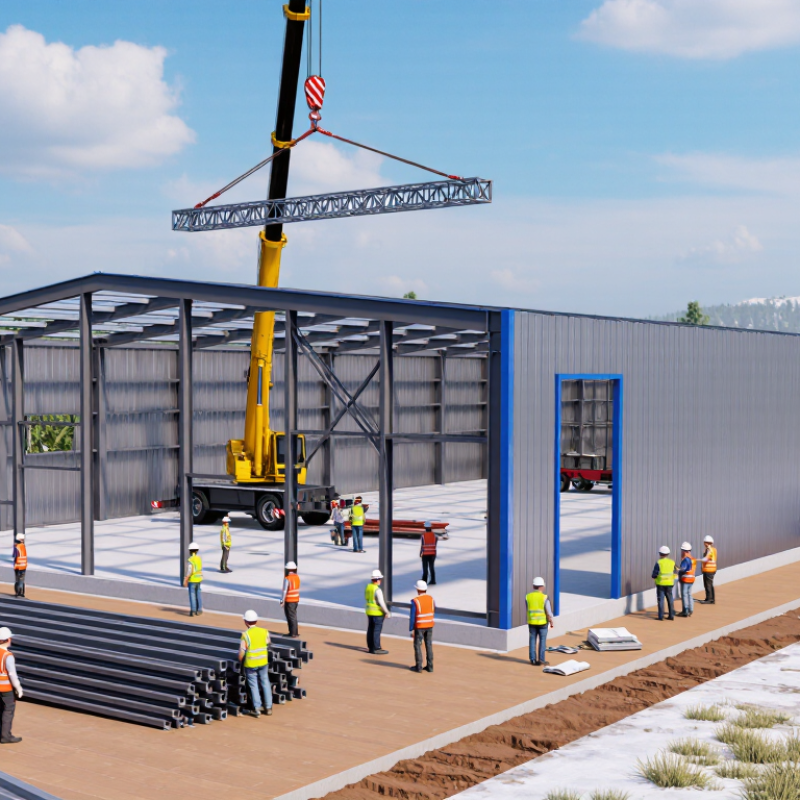
Define Site Loads with ASCE 7 Wind Speeds and Eurocode Seismic Classes
Prefab steel buildings become reliable global assets only after local site loads are defined. ASCE/SEI 7-22 wind maps generally show ultimate speeds from 90 to 200 mph across the contiguous United States. A 150 mph wind is not a minor upgrade from 120 mph. Pressure rises with the square of velocity, creating about 56% greater wind pressure. That difference affects columns, roof purlins, doors, cladding, and anchor bolts.
Eurocode 8 requires a different reading. It uses ground types A through E, importance classes I through IV, and national seismic parameters. Do not label a site simply “high seismic.” Record the reference peak ground acceleration, soil profile, building importance, and behavior factor. The European Commission’s Joint Research Centre guidance shows how these inputs shape the design spectrum. The 2023 USGS National Seismic Hazard Model also identifies stronger shaking potential in several U.S. regions, including parts of the central and eastern states. The map is not the design.
For a prefabricated frame, engineers should freeze the load basis before fabrication. A coastal site may need stronger diaphragm connections and corrosion-resistant details. A soft-soil site may need longer anchors and stricter drift control. Small errors compound. I have seen projects compare wind speeds without checking exposure categories, topography, or internal pressure. That shortcut feels efficient, but it can produce an under-designed envelope. Verify each value with a licensed local engineer and the governing national annex. Structural assumptions should travel with the building. Seismic labels alone cannot.
How to Choose Prefab Steel Buildings for Global Projects?
Define Site Loads with ASCE 7 Wind Speeds and Eurocode Seismic Classes
ASCE 7 Wind Reference
The chart shows representative ASCE 7 ultimate design wind speeds for Risk Category II buildings, expressed as 3-second gust speeds. Final values must be confirmed from the applicable ASCE 7 edition, risk category, exposure, topography, and exact project location.
Eurocode 8 Soil Classes
Eurocode 8 classifies ground conditions using average shear-wave velocity: A above 800 m/s, B from 360–800 m/s, C from 180–360 m/s, and D below 180 m/s. Class E represents a soft surface layer over stiffer ground and requires site-specific assessment.
Use these values for early-stage comparison only. Structural design should use the governing national standard, local hazard maps, geotechnical data, and a qualified engineer’s site-specific calculations.
Select Steel Grades by Strength: S355 Offers a 355 MPa Yield Point
When selecting prefab steel buildings for global projects, S355 is a practical starting point. Under EN 10025-2, S355 provides a minimum 355 MPa yield strength for sections up to 16 mm thick. The value decreases as thickness increases. For example, plates between 40 and 63 mm may provide 335 MPa. Check the mill certificate, not only the grade label.
On site, I have seen a small thickness change alter connection details and lifting behavior. A 12 mm column plate and a 40 mm base plate cannot be treated identically. Engineers should verify buckling, weldability, impact toughness, and local design codes before approving fabrication drawings. S355JR, S355J0, and S355J2 also differ in impact-testing requirements. That distinction matters in cold regions. Very much.
The World Steel Association reported approximately 1.89 billion tonnes of crude steel production in 2023, showing the scale of global supply. Yet availability does not guarantee identical quality between mills. Request traceable certificates, chemical composition, tensile results, and third-party inspection where project risk is high. Corrosion protection also needs local judgment. Coastal humidity, freeze-thaw cycles, and transport damage can reduce real service life. Strength alone is not enough. A neat specification may still fail when designers ignore plate thickness, fabrication tolerances, or regional wind loads.
How to Choose Prefab Steel Buildings for Global Projects? – Select Steel Grades by Strength: S355 Offers a 355 MPa Yield Point
| Steel Grade | Common Standard | Minimum Yield Strength* | Typical Tensile Strength | Typical Prefab Building Applications | Selection Considerations |
| S235JR | EN 10025-2 | 235 MPa | 360–510 MPa | Light-duty frames, purlins, bracing, platforms and secondary members | Economical and generally easy to fabricate; suitable when design loads and member sizes permit. |
| S275JR | EN 10025-2 | 275 MPa | 410–560 MPa | Standard portal frames, columns, beams and connection plates | A balanced option for moderate loading, availability and fabrication requirements. |
| S355JR | EN 10025-2 | 355 MPa | 470–630 MPa | Main frames, heavily loaded columns, crane-supporting structures and long-span members | A common high-strength choice for global projects; confirm impact toughness, thickness reduction and welding requirements. |
| S460ML | EN 10025-4 | 460 MPa | 540–720 MPa | Long-span frames, high-load transfer members and weight-sensitive structures | Can reduce steel weight, but requires stricter design checks, qualified welding procedures and reliable supply. |
| A36 | ASTM A36/A36M | 250 MPa minimum | 400–550 MPa | General structural framing, base plates, brackets and miscellaneous steelwork | Widely recognized in North American specifications; verify availability and design-code compatibility. |
| A572 Grade 50 | ASTM A572/A572M | 345 MPa minimum | 450 MPa minimum | Primary frames, columns, beams and structures requiring higher strength than A36 | Strength is close to S355, but the grades are not automatically interchangeable; check the governing code and certification. |
| A992 | ASTM A992/A992M | 345 MPa minimum | 450–550 MPa | Wide-flange beams and columns in building frames | Designed for structural shapes; verify section availability, connection design and local requirements. |
| SM490A | JIS G 3106 | 325 MPa minimum for thickness ≤16 mm | 490–610 MPa | Structural frames, industrial buildings, bridges and welded members | Strength varies with thickness; confirm the exact product certificate and applicable Japanese or project standard. |
Global project selection notes: - Yield-strength values are minimum specified values and may decrease as product thickness increases. Always check the grade, product form and thickness range in the governing standard.
- S355 provides a nominal 355 MPa minimum yield strength for products up to 16 mm thickness under the relevant EN 10025-2 requirements; thicker products may have lower specified minimum values.
- Do not treat grades from different standards as automatic equivalents. Confirm chemical composition, impact toughness, weldability, dimensional tolerances, mill certificates and local design-code acceptance.
- For cold regions, specify the required impact-toughness class, such as JR, J0 or J2, according to the project minimum design temperature.
- Higher strength can reduce member weight, but connection capacity, buckling resistance, fire performance, fatigue, corrosion protection and fabrication costs must also be checked.
*Yield-strength and tensile-strength figures are representative minimum or specified ranges from the listed standards. Final procurement should be based on the current edition of the applicable standard and certified material test reports.
Verify Factory Quality Under ISO 9001 and EN 1090 Execution Classes
For global projects, prefab steel building quality begins long before panels reach the site. A factory should provide a current ISO 9001 certificate, but this alone does not prove structural performance. ISO 9001 confirms a controlled quality management system. It does not replace engineering checks, welding controls, or product compliance.
Ask how the factory applies EN 1090 Execution Classes. EXC1 suits simple, low-risk components, while EXC2 is common for ordinary building frames. EXC3 and EXC4 demand stricter control for higher-risk or fatigue-sensitive structures. The selected class should match the design engineer’s risk assessment.
Request the Factory Production Control certificate, approved welding procedures, welder qualifications, and material certificates. Heat numbers should follow steel from delivery to fabrication.
Inspect the details. Look for calibrated welding machines, marked steel plates, controlled bolt storage, and documented dimensional checks. Ask for coating thickness records and non-destructive testing reports. A reliable factory can explain who inspected each weld and when. It should also show how nonconforming parts are isolated and corrected.
Do not rely on a polished certificate folder. During one review, missing traceability records revealed a weak handover process, although the welds looked acceptable. That mistake changed our inspection plan. Independent audits, sample production checks, and video evidence can expose gaps before shipment.
Factory capability is never just paperwork. It is repeatable behavior on the workshop floor.
Plan Global Shipping Around 20- and 40-Foot Container Limits
How to Choose Prefab Steel Buildings for Global Projects?
Choosing prefab steel buildings for global projects begins with the shipping plan, not the floor plan. A standard 20-foot container usually provides about 5.9 meters of internal length. A 40-foot container offers roughly 12 meters. Usable width and height can vary by container type. Payload limits also depend on the carrier, route, and local handling equipment. Confirm these figures before engineering begins.
A practical packing schedule should list every column, beam, panel, bolt box, and tool. Keep heavy steel low and centered. Protect finished surfaces with separators and moisture barriers. Divide oversized frames into bolted sections whenever possible. Each bundle needs clear labels, weight data, and a matching installation drawing. One missing connector can delay a crew for several days.
Do not assume a 40-foot container is always the better choice. Port restrictions, inland bridges, and crane capacity may favor several 20-foot loads. Long components can also increase handling risks. A small trial packing exercise often reveals wasted space or unsafe weight distribution. It may feel inefficient. It prevents expensive surprises later. My planning preference is to review container drawings with the fabricator, freight forwarder, and site installer together. Their feedback can expose design choices that look efficient on paper but fail during unloading.
Compare Corrosion Protection Using ISO 12944 and 90% Steel Recyclability
Choosing prefab steel buildings for global projects requires more than comparing price and erection speed. In coastal, humid, or industrial regions, corrosion protection should follow ISO 12944. The standard helps classify atmospheric exposure, from moderate C3 conditions to severe C5 environments. Project teams should verify the site category before selecting primers, intermediate coats, and finishes. Surface preparation matters just as much. Dust, salt deposits, and poor edge treatment can shorten coating life. During site inspections, I would check dry-film thickness, repaired scratches, drainage points, and concealed connections. Details matter. These areas are easy to overlook, yet they often determine maintenance costs.
Steel also supports circular construction. A well-designed building can achieve about 90% steel recyclability, but this figure is not automatic. It depends on clean material separation, accessible connections, and effective local recycling systems. Bolted joints may simplify future dismantling, while mixed composites can complicate recovery. Designers should record steel grades and connection details for future users. That creates useful project evidence. The 90% claim still needs verification. Recycling does not erase manufacturing or transport impacts. Similarly, ISO 12944 cannot guarantee a fixed service life. Weather, workmanship, inspection frequency, and accidental damage remain important. A small coating defect can spread beneath an apparently sound surface. Global specifications should allow local climate data, qualified inspection, and realistic maintenance access. Some assumptions will need revision.





