


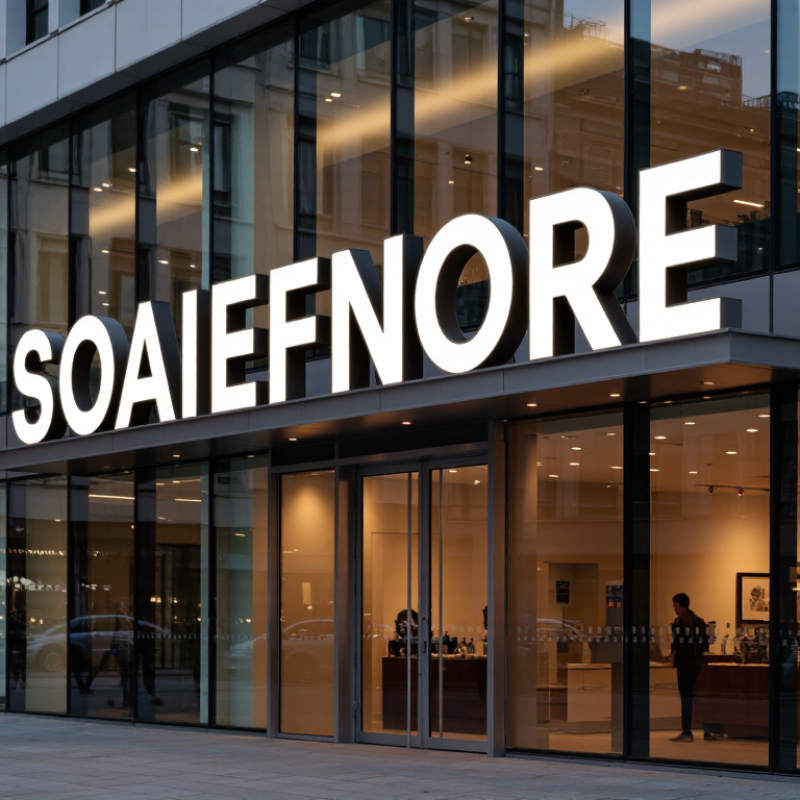
How to Choose Luminous Giant Letters for Your Business

Choosing Luminous giant letters is not only a branding decision. It is a practical investment in visibility, recognition, and customer confidence. The 2012 FedEx Office Signs of the Times survey reported that 68% of consumers believe a business’s signage reflects the quality of its products or services. It also found that 76% had entered a store because of its sign. These figures make the storefront difficult to ignore.

Yet brightness alone does not create effective signage. Size, viewing distance, letter spacing, contrast, illumination color, and installation height must work together. The Sign Research Foundation has repeatedly highlighted on-premise signs as valuable tools for attracting attention and supporting business performance. A glowing letter that looks impressive in a showroom may appear weak beside traffic, glass reflections, or strong street lighting. That is where real site experience matters.

Wayfinding expert Per Mollerup often stresses that signs should be clear, consistent, and conspicuous. This principle applies directly to Luminous giant letters. They should communicate the brand within seconds, even during rain or evening traffic. Warm white may suggest hospitality, while crisp white can support a modern retail identity. Still, preferences vary. There is no universal “best” color.

Measure the wall first. Study the street second. Then question the design again. Oversized letters can dominate a narrow façade, while small letters disappear above passing vehicles. The most reliable choice balances engineering, readability, energy use, maintenance access, and brand character. A beautiful sign that cannot be repaired easily is not a complete solution.

How to Choose Luminous Giant Letters for Your Business

Define Your Business Goals and Display Requirements

Before choosing luminous giant letters, define what your business needs the display to achieve. Is the goal stronger street visibility, clearer wayfinding, or a memorable photo point? A restaurant may need warm lettering above its entrance, while a showroom may require crisp illumination across a wide facade. Write down the viewing distance, operating hours, and preferred visual mood. These details prevent attractive but unsuitable choices.

Measure the installation area carefully. Record the wall width, ceiling height, pedestrian flow, and nearby lighting. Letter height should match the viewing distance, not only the available space. Consider daytime contrast as well as nighttime brightness. A sign that looks impressive indoors may disappear beside strong exterior lighting. In my installation experience, owners often focus on letter size first. That can be a costly mistake. Electrical access, weather exposure, mounting weight, and maintenance space also affect the final result. Check local electrical and building requirements before ordering.

Tips: Photograph the location at noon and after sunset. Mark the proposed letter width with removable tape. Ask several people to read the message from different distances. Choose steady, even illumination over excessive brightness. Confirm the power load with a qualified professional. Keep cleaning access practical. A dusty letter loses impact quickly. I once underestimated reflected glare from a glass facade, and the display became harder to read. That mistake reminded me to test materials and brightness on site, not only on a digital drawing. Expect to revise the plan. Good signage usually improves through careful observation.

Choose the Right Size, Font, Color, and Lighting Style

How to Choose Luminous Giant Letters for Your Business

Size, font, color, and lighting style should work as one visual system.

A 2012 national survey of 1,000 U.S. consumers found that 76% had entered a store because of its sign. It also reported that 68% viewed sign quality as an indicator of business quality. These figures show why scale matters. Measure the farthest viewing point, then test the letters outdoors. Six-inch letters may suit a lobby, but they can disappear across a busy street. Consider nearby trees, parked vehicles, and nighttime glare.

Choose a simple font with open counters and clear spacing. Narrow scripts often lose detail when illuminated. High-contrast colors improve recognition, but excessive contrast can feel harsh. Warm white lighting creates a welcoming appearance. Cool white can look cleaner and more technical. Halo lighting adds depth to brick or concrete walls, while face-lit letters deliver stronger direct visibility. My practical experience suggests testing both styles after sunset. Indoor samples can mislead you.

Tips: Photograph the sign from the customer’s approach. Check readability at 50, 100, and 150 feet. Keep the message short. Ask someone unfamiliar with the design to read it quickly. If they hesitate, the font or spacing needs revision. Lighting power also deserves restraint; brighter is not always clearer, especially near reflective glass. Data supports visibility, but local conditions still matter.


Compare Materials, Construction Quality, and Weather Resistance

How to Choose Luminous Giant Letters for Your Business

Choosing luminous giant letters starts with the material, not the brightness. Aluminum is lightweight, corrosion-resistant, and practical for most outdoor signs. Stainless steel offers a stronger, more polished appearance, but it usually costs more. Acrylic faces can create clean, even illumination, although they may crack under severe impact or rapid temperature changes.

Construction quality deserves close inspection.

Check whether the letter seams are welded, sealed, or simply joined with adhesive. Examine the rear access panels, cable openings, and mounting points. Water often enters through small gaps. Reliable letters should use protected wiring, secure fasteners, and evenly spaced internal LEDs. Ask for lighting tests before installation. Dark spots are easy to miss in a showroom.

Weather resistance depends on the entire structure.

A durable finish should resist ultraviolet exposure, rain, dust, and repeated freezing or heating. Outdoor electrical components need suitable ingress protection ratings, verified by documentation rather than sales language. In coastal areas, salt air can damage ordinary metal surprisingly fast. Powder coating helps, but it is not magic. I have seen attractive signs develop rust around poorly sealed screws. Maintenance access also matters, because even good LEDs eventually need replacement. Review the installation site, local climate, and drainage conditions with a qualified fabricator before approving the final design. Something can look impressive on opening day and still be a poor long-term choice.

Check Installation Options, Safety Standards, and Maintenance Needs

How to Choose Luminous Giant Letters for Your Business

Installation decisions should match the site, not just the sign’s appearance. Freestanding letters need a stable base, hidden cable routes, and protection from wind. Wall-mounted letters require a verified fixing surface and accurate load calculations. For outdoor displays, ask about weather resistance, drainage, and suitable ingress protection ratings. A licensed electrician should connect the system and check power isolation. Request drawings, fixing details, and written installation instructions before work begins.

Tips: Photograph the site before installation. Mark pedestrian paths, doors, sprinklers, and emergency access points. Ask the installer to explain how each letter will be lifted and secured. A small test installation can reveal glare, shadows, or uneven spacing. I once saw a display look balanced in a workshop but crowded against the actual storefront. Site testing matters.

Safety checks should include insulated wiring, protected connections, secure anchors, and accessible switches. Verify that the design follows applicable electrical, building, and workplace safety requirements. Do not rely on a supplier’s general statement alone. Request inspection records and confirm who is responsible for future repairs. Maintenance is easier when panels, drivers, and connectors remain reachable. Clean surfaces with mild soap and a soft cloth. Avoid abrasive tools. Inspect seals, cables, fasteners, and brightness every few months, especially after storms. Some maintenance plans seem excessive at first. Neglect can become expensive quickly.

How to Choose Luminous Giant Letters for Your Business

Compare common enclosure protection ratings before selecting an installation method, power system, and maintenance plan.

Installation options
Direct wall mounting offers a clean appearance, while raceway or stand-off mounting can simplify cable routing and future access.
Safety standards
IP ratings are defined by IEC 60529. The first digit indicates protection against solid particles, and the second indicates protection against water.
Maintenance needs
Inspect fasteners, wiring, seals, illumination, and drainage according to the manufacturer’s instructions and applicable local electrical requirements.

Reference: IEC 60529 ingress protection code. The appropriate rating depends on the sign’s location, exposure, mounting method, and local regulations.

Set a Budget and Select a Reliable Signage Provider

Set a budget before choosing luminous giant letters. Include design, fabrication, wiring, installation, access equipment, permits, maintenance, and a 10–15% contingency. The Sign Research Foundation and the University of Cincinnati reported that 60% of surveyed businesses gained sales after improving on-premise signage. That potential matters, but it does not justify uncontrolled spending. Size, viewing distance, mounting height, and letter depth can change the quote quickly. A practical mistake is budgeting only for the letters. Electrical work can surprise you.

Ask each signage provider for an itemized proposal and a site survey. Check structural drawings, electrical qualifications, insurance, warranty terms, and service response times. Request recent project references with similar letter sizes. The U.S. Department of Energy states that LED lighting uses at least 75% less energy and lasts up to 25 times longer than incandescent lighting. Confirm the provider uses suitable LED modules, weather-resistant materials, safe cable routing, and accessible power supplies. Brightness should support readability, not create glare. This detail is often overlooked.

Tips: Compare at least three written quotes. Ask what the warranty excludes. Confirm who handles maintenance. Review nighttime photos, not only daytime images. Check local sign requirements before fabrication. A low price may look attractive, but weak installation can damage the whole investment. I would leave room for one redesign; the first concept is not always the best one.

How to Choose Luminous Giant Letters for Your Business - Set a Budget and Select a Reliable Signage Provider
Project Budget Level Typical Letter Height Recommended Construction Estimated Sign Cost Estimated Installation Cost Expected Power Use Typical Lead Time Best Suited For Provider Requirements
Entry Level 300–600 mm
(12–24 in)
Powder-coated aluminum sides with acrylic faces and standard LED modules $1,200–$3,500 $500–$1,500 Approximately 15–35 W per letter 3–5 weeks Small storefronts, reception areas, cafés, and interior feature walls Written quotation, electrical safety documentation, installation method statement, and at least 2 years of sign warranty
Standard Commercial 600–1,000 mm
(24–39 in)
Aluminum returns, translucent acrylic faces, sealed LED modules, and concealed mounting frame $3,500–$8,500 $1,000–$3,000 Approximately 30–70 W per letter 4–7 weeks Retail stores, restaurants, offices, hotels, and shopping-center façades Site survey, structural fixing details, documented material specifications, installation insurance, and maintenance support
Premium Architectural 1,000–1,500 mm
(39–59 in)
Fabricated aluminum or stainless-steel letters with high-output LEDs and custom illumination control $8,500–$18,000 $2,500–$7,000 Approximately 60–130 W per letter 6–10 weeks Corporate headquarters, large retail façades, hotels, entertainment venues, and landmark buildings Engineering review, wind-load assessment where required, certified installers, sample approval, and a detailed service-level agreement
Large-Scale Exterior 1,500–2,500 mm
(59–98 in)
Reinforced metal construction, weather-resistant finishes, high-efficiency LEDs, and engineered support structure $18,000–$45,000+ $6,000–$20,000+ Approximately 120–300 W per letter 8–16 weeks Shopping complexes, stadiums, convention centers, industrial facilities, and roadside developments Stamped structural calculations where applicable, lifting plan, permits support, certified electrical work, extended warranty, and scheduled inspections
Planning figures are typical U.S. market ranges for custom illuminated dimensional letters and may vary with letter count, site access, local labor rates, permits, mounting height, electrical conditions, shipping, and lighting-control requirements. Request an itemized quotation that separates fabrication, delivery, installation, electrical work, permits, and ongoing maintenance.

Powder Coat Booths

For those larger-sized parts, or smaller quantity runs, we have 2 independent powder coat booths and ovens. The quality, durability and affordability of today’s powder coating finishes make this the process of choice for world-class companies.

Powder coating advantages over other forms of coating are many. Materials used in the Powder coating process can be metals and non-metals that come in a multitude of thicknesses, textures, colors, etc. Another of Powder coating’s biggest advantages over conventional coatings is its ability to create finishes in many different textures. Powder Coating Booths allow us the ability to apply these advantages to large products.

Wet Paint Line

Tri-State Fabricators runs a full-service conveyor line for painting. Wet painting can provide protection or decoration to many different part styles. From start to finish, every project is easier to undergo random and point-based inspection by our skilled painting team.

Advantages to our Wet Paint Line are these lines start with product prep and ends with a thorough inspection of a high quality finished product. Our ability to complete large and small projects with a superior finish and doing so in a timely and economical fashion. This passes along the savings in production to our customers. When powder coating ins not an option, our Wet Paint Line gets the job done right the first time.

Wet Paint Booths

When the parts get big and heavy we roll-out our custom paint racks and oversize booth. By utilizing our partnerships with all the major paint brands, we can match virtually any color with wet paint.

The advantages of having access to a Wet Paint Booth are many. Large projects of many different shapes can be loaded into the booth. The Wet Paint Booth offers an environment that is much more controlled than a typical parts painting operation.

Not only are they used because of their controlled environment, but they’re are also advantageous when it comes to applying paint to parts that are needed in industries that require specialty coatings such as medical, aerospace, etc.

Military CARC

Our military forces have some very high standards when it comes to the finish of their vehicles and equipment. From the first pre-treatment step to final coat, it takes a great deal of knowledge and experience to protect the men and women of our armed forces. They deserve only the best, and Tri-State Fabricators provides it.

All of our processes are closely monitored by our staff and management teams. Both of which are highly trained in the processes of metal fabrication and finishing. Tri-State Fabricators’ goal is to always fully satisfy each and every customer, including the military. We will always put a 110% into what we do.

Glass-Bead Blasting

Abrasive media blasting is an excellent way to remove old paint, rust, and increase the paint/powder adhesion. Glass beads produce a much smoother and brighter finish than angular abrasives; leaving the part clean yet without any dimensional change. Chemically inert and environmentally friendly, we can recycle our beads approximately 30 times; making them a more preferred method of metal cleaning or surface finishing.

Advantages to Glass Bead Blasting are many. Glass bead blast media is used when a project is needing rough surfaces need to become smooth for applications of coatings such as paint. It is typically used to clean paint and rust from a product surface without deforming the surface it is being used on. Overall, compared to many other blasting media, Glass Bead Blasting is a very economical choice and those savings are always passed on to our customers.

Part Washing

Tri-State Fabricators utilize a zinc phosphate wash to clean and etch the material to ensure the best paint adhesion possible. The unique design of our 3-stage wash system does the work like a 5-stage. From Cleaning and rinsing to conversion coating and post-treatment, Our Part Washing process is a complete service and works throughout the fabrication service and the finishing service.

Along with the previously mentioned benefits, Curing is a vital chemical reaction that leaves the product finish hard and relatively safe from mild abrasion and aggressive corrosion. This process can be done in more than one way; ambient air-dry or in curing ovens at temps that exceed 240°.

Burn-Off Oven

From fixing paint mistakes (someone else’s of course) to simply cleaning our paint line hooks, our burn-off oven is put to good use. After a quick burn-off, a little clean up, and a fresh coat of paint, your parts will look better than new.

Why does our Burn-Off Oven work so well? Because super heating the air around parts turns the materials into ashes. From paint and powder coatings to rubber and machining oils, high temps do the job without degrading the integrity of the part.

Masking

Masking is a vital part of producing high quality products. We have die-cut masking patterns to protect machined surfaces as well as a wide range of plugs and caps to protect threaded holes and bolts. We provide permanent and temporary masking.

Masking allows the selected sections of a product to be protected from a fabrication or finishing service. This can be with both chemicals when etching and tapes, paints when only finishing just a section of the product. Masking is great in aiding the customization process of a project.

Screen Printing

Screen printing is a photographic process that transfers artwork onto a porous nylon screen which allows colored ink to flow through the screen and be deposited on an aluminum or plastic component. We can generally have just about any design created onto a screen for your parts.

Some of the advantages of Screen Printing are, brand recognition for your business displaying on your products, assembly instructions, product warnings/hazards, etc. Tri-State Fabricators produces Screen Printing of the highest quality so you know it’s durable.

Metal Finishing

Metal Finishing is the art of treating the exterior portion of product, often metal but can also be made of other materials, so that the surface is clean and free of any debris. Then the process of applying coats or either paint of powder coat takes place. This coating process improves the quality of the product in both appearance and resistance to wear and corrosion.

Tri-State Fabricators, Inc., understands that a project typically isn’t complete until a high-quality finish has been added to your product. This is why our painting and powder coating teams continuously inspect the products throughout the Metal Finishing process.
