How to Choose Low Melt Polyester Staple Fiber?
Choosing Low Melt Polyester Staple Fiber is not simply a matter of selecting the lowest softening temperature. The right fiber must match the product, equipment, and bonding process. Dr. Behnam Pourdeyhimi, a respected nonwovens researcher, offers a useful principle: “Performance begins with the right fiber choice.” This idea fits low-melt fiber selection closely.
A practical evaluation starts with the fiber structure. Is it a bicomponent sheath-core fiber or a single polymer fiber? Sheath-core designs often provide controlled bonding while preserving the polyester core’s strength. Check the melting point, softening range, denier, cut length, crimp, and moisture content. These details affect carding, web formation, bonding uniformity, and finished softness. A fiber may look suitable on paper. It can still behave poorly on the production line.
Imagine a thermal-bonding test at 130°C. The web should bond firmly without becoming glossy, brittle, or excessively compressed. Confirm the supplier’s technical data with small batch trials. Compare tensile strength, shrinkage, thickness recovery, and odor after heating. Ask for traceability and consistent batch performance. Reliable suppliers should explain test methods, not only provide attractive numbers.
There is no universal best grade. That is easy to overlook. A fiber designed for automotive insulation may not suit hygiene materials or mattress padding. Your process speed, oven profile, and blending ratio also matter. Sometimes, the “recommended” fiber still needs adjustment. That is where careful testing, honest records, and expert review become essential.
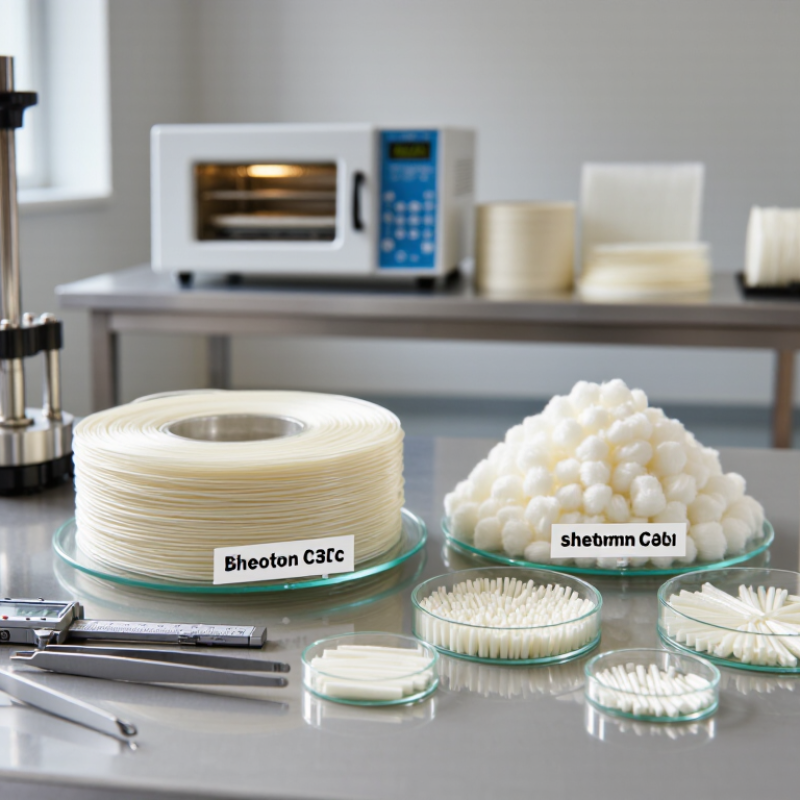
Understanding Low Melt Polyester Staple Fiber and Its Uses
How to Choose Low Melt Polyester Staple Fiber?
Low melt polyester staple fiber is a thermal bonding material, not simply a softer polyester. Its sheath or modified polymer softens below conventional polyester temperatures. Many grades activate between 110°C and 180°C, depending on formulation and test method. This range needs verification.
Textile Exchange’s Materials Market Report 2024 states that polyester represented about 57% of global fiber production in 2023. That equals roughly 70.8 million tonnes, showing the importance of consistent fiber selection.
Choose the fiber by activation temperature first. Compare oven temperature, dwell time, pressure, and the companion fiber’s shrinkage. A 130°C cycle may protect foam, wool, or delicate nonwovens better than a 170°C cycle. Then check denier, cut length, crimp, tensile strength, and finish content.
Needle-punched felt often uses 3–6 denier fibers for balanced cohesion and softness. Automotive pads, insulation, and filtration media require DSC curves, thermal shrinkage, and bonding-strength data. Do not select by melting point alone.
In production trials, blend ratios often need adjustment after carding. A fiber that bonds well in the laboratory may form hard spots on a fast line. That is an easy mistake. Textile Exchange reported that recycled polyester represented about 14% of polyester production in 2023. Recycled content can affect color, strength, and thermal response.
Ask for batch data, not only a specification sheet. Run a pilot using the actual oven and web structure. The best grade bonds evenly without demanding excessive heat.
Identifying the Required Melting Point and Fiber Specifications
How to Choose Low Melt Polyester Staple Fiber?
Identifying the required melting point starts with the bonding process, not the fiber label. Low melt polyester usually softens between 110°C and 180°C, depending on its polymer design. A sheath-core fiber may bond at a lower temperature while keeping a stronger polyester core. Select a melting point at least 10–20°C below the substrate’s heat limit. This reduces shrinkage, yellowing, and surface distortion during processing. According to Textile Exchange’s Materials Market Report 2024, polyester represented about 57% of global fiber production in 2023. That scale supports broad technical data, but specifications still vary by supplier and application.
Check the actual melting behavior with differential scanning calorimetry under ISO 11357. Do not rely only on a catalog value. A fiber listed at 130°C may need a higher oven setting because heat transfer, web thickness, and production speed change the result. Review denier, cut length, crimp, thermal shrinkage, tensile strength, and finish compatibility. For insulation, a 6–12 mm cut length may improve blending, while nonwoven bonding may require tighter length control. The first specification is rarely perfect. A small pilot trial can expose unexpected curling, poor opening, or weak bonding. I would record bonding temperature, dwell time, pressure, and peel strength before approving bulk production. ASTM textile testing guidance also supports measuring fiber dimensions and performance under controlled conditions, rather than judging softness by hand alone.
Matching Fiber Properties to the Target Application
How to Choose Low Melt Polyester Staple Fiber?
Matching fiber properties to the target application starts with the bonding process. Textile Exchange’s 2024 Materials Market Report reports that polyester represented about 57% of global fiber production in 2023. This scale increases demand for efficient bonding fibers in nonwovens, insulation, automotive interiors, and bedding. However, a low melt point alone does not guarantee performance. Check the softening range, melting profile, fiber fineness, cut length, crimp, and thermal shrinkage. Common low melt polyester grades soften around 110–180°C, but actual values vary with copolymer design.
For mattress padding, a fine denier can improve softness and surface uniformity. Automotive panels usually need stronger bonding, controlled shrinkage, and stable thickness after heating. Filtration media may require clean processing and minimal fiber migration. I have seen trials fail because engineers selected the lowest melting grade without checking the host fiber. That choice can create weak bonding or surface distortion. Test the blend with differential scanning calorimetry, tensile testing, and repeated heat exposure. Measure bonding strength after cooling, not only during production. It is an easy detail to miss.
Production data should also guide selection. A 2024 market analysis by Grand View Research identifies nonwoven materials as a major polyester application area, reflecting continued demand for lightweight engineered structures. Still, laboratory results can mislead. Different ovens, airflow rates, and web densities change bonding behavior. Run pilot trials using the actual line settings, then compare recovery, odor, color change, and dimensional stability before approval.
Evaluating Quality, Compatibility, and Processing Performance
Choosing low melt polyester staple fiber requires more than comparing melting points. Quality begins with consistent fineness, cut length, crimp, moisture, and color. Check the certificate of analysis, but verify it with incoming inspection. A clean break matters. Loose fibers, oily surfaces, or uneven lengths can disturb carding and web formation.
Compatibility depends on the base fiber and the final product. The low melt component should bond without damaging stronger fibers. Review melting range, shrinkage, denier, and recommended blending ratio together. A fiber may perform well in one nonwoven structure but fail in another. Run a small blend trial before approving a full shipment. I have seen minor moisture differences change web uniformity more than expected.
Processing performance should be measured on the actual production line. Record opening behavior, static, fiber loss, oven temperature, residence time, and fabric strength. Bonding must be sufficient, not excessive. Overheating can create hard spots, odor, or unwanted shrinkage. Use laboratory thermal analysis when results appear inconsistent. Then repeat the trial with another lot. One test is not enough. Retain samples and compare them after storage. My own evaluations sometimes rely too heavily on initial appearance, which is a mistake. Stable results matter more than a perfect first impression.
How to Choose Low Melt Polyester Staple Fiber?
Evaluating quality, compatibility, and processing performance through representative thermal requirements.
Typical low-melt polyester staple fibers soften and bond within approximately 120–160°C, while the polyester core generally remains stable until temperatures above 240°C. Select the activation range according to the compatible matrix, web structure, bonding equipment, and required dimensional stability. Actual values vary by fiber construction and test method.
Comparing Suppliers and Selecting the Best Fiber Option
How to Choose Low Melt Polyester Staple Fiber?
Comparing Suppliers and Selecting the Best Fiber Option
Choosing low melt polyester staple fiber starts with the application, not the lowest quotation. Compare melting range, fiber length, denier, crimp, color, and moisture content. A fiber that melts too early may shrink during carding or storage. One that melts too late can leave weak bonding points. Define the bonding temperature window before contacting suppliers. Keep it practical.
Ask each supplier for a current technical data sheet and batch-specific certificate of analysis. Check melting point, tensile strength, oil content, moisture, and fineness against your process limits. Request samples from at least two production lots. Small samples can hide variation. During trials, record oven temperature, line speed, web weight, and bonding time. Inspect peel strength, surface appearance, odor, and dimensional stability after cooling. A reliable supplier explains deviations instead of changing test conditions. That response matters.
Supplier evaluation should include traceability, lead time, packaging, and technical support. Ask how complaints are investigated and how retained samples are stored. Consistent documentation often predicts consistent material. Price still matters, but unstable fiber can increase waste and downtime. The best option is the one matching your equipment and quality target. Not always the cheapest. Engineers should also challenge their own trial design. One successful run proves little. Repeat tests under normal humidity and production pressure before approving regular orders.





