


Choosing reliable Js Concrete Mixer Manufacturers in 2026 requires more than comparing prices and product photographs. A mixer may look powerful on a website, yet struggle with sticky concrete, uneven aggregates, or continuous site production. Buyers should examine measurable details, including mixing capacity, discharge time, motor protection, liner thickness, and spare-parts availability. Factory experience also matters. A manufacturer that can show operating machines, inspection records, and customer references deserves closer attention.
Michael Turner, an independent concrete equipment consultant with more than 20 years of plant experience, explains, “A mixer earns trust through consistent batches, not impressive specifications.” That principle is practical. Ask to see a real mixing test. Check whether the blades produce a uniform blend after each cycle. Listen for abnormal gearbox noise. Inspect welds around the frame and observe the discharge gate under load. Small details often reveal production discipline.
Reliable Js Concrete Mixer Manufacturers should also provide clear technical documents, installation guidance, operator training, and responsive after-sales support. Confirm the warranty terms in writing. Check delivery schedules carefully. Local service can prevent long stoppages when a seal or bearing fails. Cost still matters, but the cheapest quotation may hide thinner steel, limited support, or expensive replacement parts. I have seen buyers focus too heavily on initial price. That decision can become costly.
The right choice depends on your materials, climate, workload, and maintenance team. Compare evidence, not promises. A careful evaluation may take longer, but it reduces uncertainty before the mixer reaches your project.
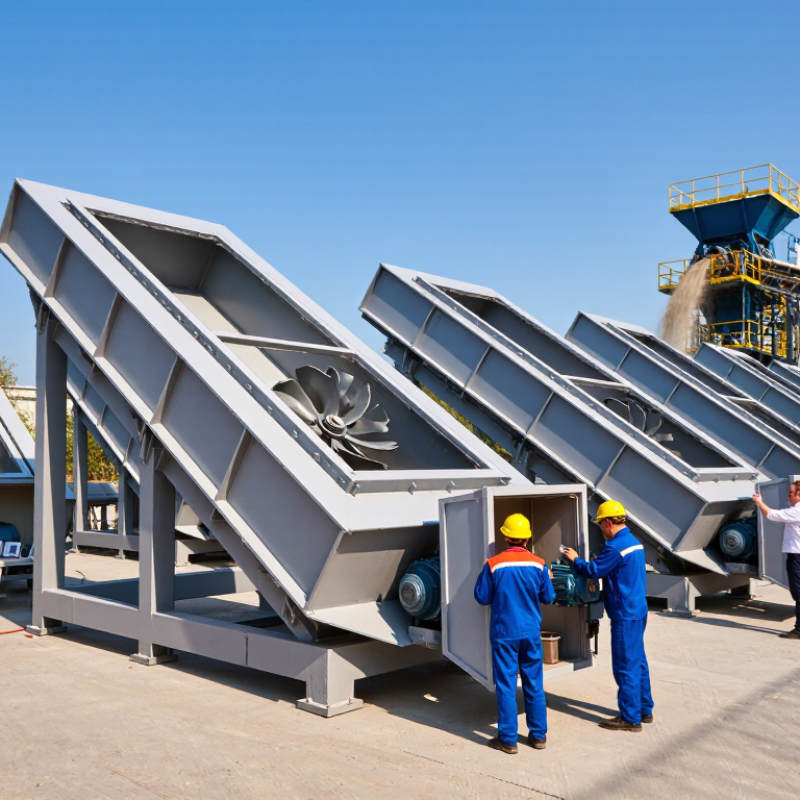
How to Choose JS Concrete Mixer Manufacturers in 2026?
Choosing a JS concrete mixer manufacturer starts with capacity, not advertising claims. Models commonly range from 0.5 to 6 m³ per batch, with rated outputs of 20–240 m³/h. A 2 m³ mixer producing 30 batches hourly may theoretically reach 60 m³/h. Real output is usually lower. Loading time, discharge speed, material moisture, and cleaning delays all matter. Experienced suppliers should explain these limits clearly and provide test data.
Match the mixer to your actual worksite. A small 0.5 m³ unit may suit repair projects, while a 4–6 m³ model fits large batching plants. Check the mixing cycle, motor power, shaft design, liner material, and spare-part availability. Ask for drawings, installation guidance, warranty terms, and service response times. Reliable manufacturers should also show comparable operating cases, not only polished factory photos. This is where many buyers become too optimistic.
Tips: Calculate hourly demand from your truck schedule. Keep a 10–20% capacity margin. Confirm whether quoted output includes loading and discharge time. Inspect welds, access doors, safety guards, and emergency stops. Request a performance test using your aggregate size and mix recipe. A spreadsheet can look precise. Concrete is less cooperative. Weather and operator habits may still change the result.

This chart maps JS concrete mixer batch capacity from 0.5 to 6 m³ against a representative output range of 20 to 240 m³/h. The values reflect the stated capacity and output limits; actual production depends on loading, mixing, discharge, material type, and cycle time.
A serious factory audit starts with ISO 9001, not a framed certificate. ISO’s 2022 Survey recorded over 1.2 million ISO 9001 certificates worldwide, yet certification alone cannot prove mixer durability. Ask for the current certificate, scope, audit body, and production-site address. Then compare them with welding procedures, shaft alignment records, gearbox inspection sheets, and calibration dates. A clean workshop matters. So does the evidence.
CE files require closer checking. CE marking is a manufacturer’s declaration of conformity, not a universal quality award. Request the EU Declaration of Conformity, risk assessment, technical construction file, safety test reports, and user instructions. The European Commission’s Blue Guide 2022 explains that technical documentation must support conformity throughout the product life. Check whether the documents describe the supplied JS mixer, not an older model. Serial numbers should match. Missing pages are a warning.
EN 206 traceability connects mixer performance with concrete quality. Request batch records for steel, liners, bearings, and electrical components. For each mixer, the factory should retain material certificates, welding records, inspection results, and final load tests. EN 206:2013+A2:2021 emphasizes production control and consistent concrete properties, although it does not certify a mixer itself. A practical audit should follow one serial number from raw steel to dispatch. I have seen impressive files fail this simple test. Paperwork can look complete while calibration expires quietly. Ask for recent records, not perfect samples.
A JS twin-shaft mixer should deliver a repeatable 30–60 second mixing cycle. Treat this as a test target, not a marketing promise. ASTM C94/C94M-24 specifies controlled mixing and discharge procedures, but it does not mandate one universal cycle for every mixer. Ask manufacturers for batch records using your actual cement, aggregate sizes, moisture, and admixture dosage. A dry trial can hide weak mixing performance.
Shaft speed matters more than a large motor nameplate. Many industrial twin-shaft mixers operate near 20–35 rpm, depending on diameter and material resistance. Higher speed may shorten dispersion time, but it can increase power demand and liner abrasion. Check torque readings during a full batch. Watch the current curve. It should not rise sharply when coarse aggregate enters.
Wear liners deserve equal attention. The Concrete Plant Manufacturers Bureau’s Plant Standards emphasize maintainability, access, and replaceable wear components. Request liner thickness, material hardness, bolt layout, and expected service hours under abrasive aggregate. A common reference range is 400–600 Brinell hardness, but hardness alone is not enough. Fit, impact loading, and moisture change results. The World Steel Association’s 2024 data shows global crude steel production exceeded 1.8 billion tonnes, reminding buyers that wear-resistant steel supply is broad, but quality still varies. I would require a documented wear test. Claims without batch evidence remain uncertain.
A low purchase price can hide expensive operating problems. During site evaluations, I compare mixer energy use under realistic batch loads, not empty running. Ask for motor efficiency data, mixing capacity, cycle time, and hourly power consumption. A fifteen-minute cycle may look acceptable, but daily delays quickly increase labor costs. Small differences matter.
Request a five-year lifecycle cost estimate from each manufacturer. Include electricity, wear parts, maintenance labor, shipping, and downtime. Check the price and expected life of blades, liners, seals, bearings, and hydraulic components. A supplier offering common parts may reduce inventory pressure. Confirm stock locations and typical delivery times. One week without a critical seal can stop an entire project.
Warranty language needs careful reading. Does coverage include labor, transport, and electronic controls? Are parts covered for twelve months, or only manufacturing defects? Ask for service records from comparable installations and speak with actual operators. Their comments often reveal noise, cleaning difficulty, and recurring leaks. I once trusted a detailed brochure too quickly. The machine performed well, but replacement parts arrived slowly. That mistake changed my buying checklist.
Compare total cost of ownership, not just the invoice. Use documented test results and written commitments. A clear answer is valuable. An unclear answer deserves further questions.
A reliable manufacturer should prove performance before signing a large order. Request test batches using your actual aggregate, moisture level, and cement ratio. Measure mixing time, discharge residue, batch consistency, and motor temperature. A smooth 60-second cycle means little if the final slump varies. Ask for signed test records, calibration details, and photos from the trial. ISO 9001 certification supports process control, but it does not replace plant-level testing.
Lead time needs evidence, not optimistic promises. Request a production schedule, inspection date, shipping plan, and spare-parts list. Confirm who handles commissioning and emergency support. The IEA’s 2023 Cement report estimates cement production creates about 8% of global CO2 emissions. Energy efficiency therefore matters in the buying decision. Compare motor efficiency, gearbox losses, maintenance hours, replacement parts, and expected service life. A cheaper mixer may cost more through downtime. This is where many evaluations become too simple.


For those larger-sized parts, or smaller quantity runs, we have 2 independent powder coat booths and ovens. The quality, durability and affordability of today’s powder coating finishes make this the process of choice for world-class companies.
Powder coating advantages over other forms of coating are many. Materials used in the Powder coating process can be metals and non-metals that come in a multitude of thicknesses, textures, colors, etc. Another of Powder coating’s biggest advantages over conventional coatings is its ability to create finishes in many different textures. Powder Coating Booths allow us the ability to apply these advantages to large products.
Tri-State Fabricators runs a full-service conveyor line for painting. Wet painting can provide protection or decoration to many different part styles. From start to finish, every project is easier to undergo random and point-based inspection by our skilled painting team.
Advantages to our Wet Paint Line are these lines start with product prep and ends with a thorough inspection of a high quality finished product. Our ability to complete large and small projects with a superior finish and doing so in a timely and economical fashion. This passes along the savings in production to our customers. When powder coating ins not an option, our Wet Paint Line gets the job done right the first time.
When the parts get big and heavy we roll-out our custom paint racks and oversize booth. By utilizing our partnerships with all the major paint brands, we can match virtually any color with wet paint.
The advantages of having access to a Wet Paint Booth are many. Large projects of many different shapes can be loaded into the booth. The Wet Paint Booth offers an environment that is much more controlled than a typical parts painting operation.
Not only are they used because of their controlled environment, but they’re are also advantageous when it comes to applying paint to parts that are needed in industries that require specialty coatings such as medical, aerospace, etc.
Our military forces have some very high standards when it comes to the finish of their vehicles and equipment. From the first pre-treatment step to final coat, it takes a great deal of knowledge and experience to protect the men and women of our armed forces. They deserve only the best, and Tri-State Fabricators provides it.
All of our processes are closely monitored by our staff and management teams. Both of which are highly trained in the processes of metal fabrication and finishing. Tri-State Fabricators’ goal is to always fully satisfy each and every customer, including the military. We will always put a 110% into what we do.
Abrasive media blasting is an excellent way to remove old paint, rust, and increase the paint/powder adhesion. Glass beads produce a much smoother and brighter finish than angular abrasives; leaving the part clean yet without any dimensional change. Chemically inert and environmentally friendly, we can recycle our beads approximately 30 times; making them a more preferred method of metal cleaning or surface finishing.
Advantages to Glass Bead Blasting are many. Glass bead blast media is used when a project is needing rough surfaces need to become smooth for applications of coatings such as paint. It is typically used to clean paint and rust from a product surface without deforming the surface it is being used on. Overall, compared to many other blasting media, Glass Bead Blasting is a very economical choice and those savings are always passed on to our customers.
Tri-State Fabricators utilize a zinc phosphate wash to clean and etch the material to ensure the best paint adhesion possible. The unique design of our 3-stage wash system does the work like a 5-stage. From Cleaning and rinsing to conversion coating and post-treatment, Our Part Washing process is a complete service and works throughout the fabrication service and the finishing service.
Along with the previously mentioned benefits, Curing is a vital chemical reaction that leaves the product finish hard and relatively safe from mild abrasion and aggressive corrosion. This process can be done in more than one way; ambient air-dry or in curing ovens at temps that exceed 240°.
From fixing paint mistakes (someone else’s of course) to simply cleaning our paint line hooks, our burn-off oven is put to good use. After a quick burn-off, a little clean up, and a fresh coat of paint, your parts will look better than new.
Why does our Burn-Off Oven work so well? Because super heating the air around parts turns the materials into ashes. From paint and powder coatings to rubber and machining oils, high temps do the job without degrading the integrity of the part.
Masking is a vital part of producing high quality products. We have die-cut masking patterns to protect machined surfaces as well as a wide range of plugs and caps to protect threaded holes and bolts. We provide permanent and temporary masking.
Masking allows the selected sections of a product to be protected from a fabrication or finishing service. This can be with both chemicals when etching and tapes, paints when only finishing just a section of the product. Masking is great in aiding the customization process of a project.
Screen printing is a photographic process that transfers artwork onto a porous nylon screen which allows colored ink to flow through the screen and be deposited on an aluminum or plastic component. We can generally have just about any design created onto a screen for your parts.
Some of the advantages of Screen Printing are, brand recognition for your business displaying on your products, assembly instructions, product warnings/hazards, etc. Tri-State Fabricators produces Screen Printing of the highest quality so you know it’s durable.
Metal Finishing is the art of treating the exterior portion of product, often metal but can also be made of other materials, so that the surface is clean and free of any debris. Then the process of applying coats or either paint of powder coat takes place. This coating process improves the quality of the product in both appearance and resistance to wear and corrosion.
Tri-State Fabricators, Inc., understands that a project typically isn’t complete until a high-quality finish has been added to your product. This is why our painting and powder coating teams continuously inspect the products throughout the Metal Finishing process.

