


How to Choose Insulated Floor Tile Panels in 2026?

Choosing Insulated Floor Tile Panels in 2026 requires more than comparing prices and decorative finishes. These panels must manage heat loss, moisture, load, and daily wear beneath your feet. A warm-looking surface can still perform poorly if its insulation layer is thin or its joints admit damp air.

Building-science expert Joseph Lstiburek often states, “The building enclosure is a system.” That principle matters here. Insulated Floor Tile Panels should work with the subfloor, vapor-control layer, underfloor heating, adhesives, and room ventilation. Check the panel’s thermal resistance, compressive strength, moisture behavior, fire rating, and declared test standards. Do not rely on attractive product photographs.

Feel the difference.

In a cold room, a well-selected panel can reduce the chill rising from a concrete slab. In a busy hallway, it must resist concentrated loads from furniture legs and repeated foot traffic. Measure the substrate flatness before ordering. A panel may be excellent, yet fail over an uneven base. Installation quality still matters.

Experience also exposes uncertainty. Manufacturer data can differ between laboratory testing and occupied homes. Long-term moisture performance may deserve more attention than a slightly higher insulation value. I might favor thicker panels too quickly, while a thinner, stronger system could suit a low-clearance renovation better. This guide examines those trade-offs, helping readers choose Insulated Floor Tile Panels with practical evidence, technical judgment, and realistic expectations for 2026.
How to Choose Insulated Floor Tile Panels in 2026?

Understanding Insulated Floor Tile Panels and Their Core Functions

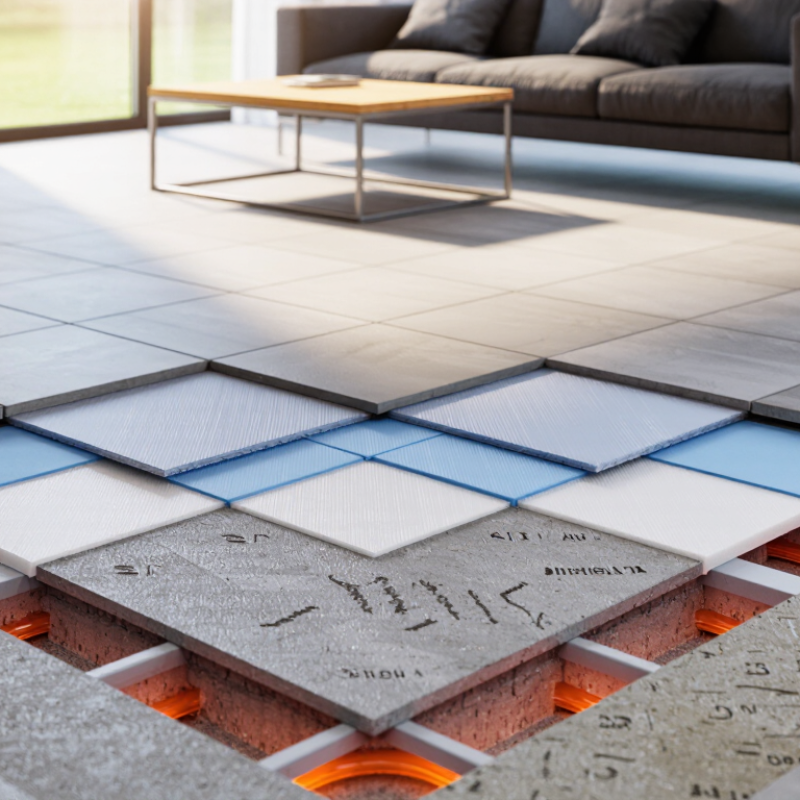
Insulated floor tile panels combine a tiled surface, a rigid insulation core, and a supporting layer. They limit heat transfer through floors and help rooms retain warmth. That matters in bathrooms, kitchens, and rooms above unheated spaces. Some panels also reduce minor surface temperature changes, making tiled floors feel less harsh underfoot.

Their core functions extend beyond thermal insulation. A reliable panel should resist compression, tolerate expected moisture, and support the tile without excessive movement. Check the declared thermal conductivity, thickness, load rating, and water-resistance data. Installation also matters. Uneven subfloors can create weak points, while poorly sealed joints may allow moisture into the panel system. In wet areas, compatible membranes and carefully treated edges are essential. Small gaps can become expensive problems.

During evaluation, compare the panel with the actual floor structure, not only its advertised insulation value. A thin panel may suit a renovation, but it may provide limited thermal improvement. A thicker system can perform better, yet it may affect doors, steps, and drainage levels. I would also inspect test reports, installation guidance, and temperature limits before choosing. I have seen specifications look convincing while the site conditions told a different story. No panel solves every issue. Thermal bridges, poor adhesive coverage, and careless cutting can still reduce performance. A practical choice balances warmth, strength, moisture control, and installation tolerance.


How to Choose Insulated Floor Tile Panels in 2026?

Typical Thermal Resistance of 50 mm Insulation Cores

Thermal resistance indicates how effectively an insulated floor tile panel slows heat transfer. The values shown are calculated from typical insulation thermal-conductivity ranges using R = thickness ÷ thermal conductivity. Higher R-values generally provide better insulation, but final panel selection should also consider compressive strength, moisture resistance, fire performance, tile compatibility, and installation conditions.

Identifying Thermal, Structural, Moisture, and Fire-Resistance Requirements

How to Choose Insulated Floor Tile Panels in 2026?

Choosing an insulated floor tile panel begins with the building’s thermal demands. Measure indoor temperatures, subfloor conditions, and expected foot traffic before comparing products. A panel with a low thermal conductivity value can reduce heat loss through cold floors. However, performance depends on installation quality, joints, and edge sealing. Small gaps can create uncomfortable cold strips beside walls.

Structural capacity deserves equal attention. Check compressive strength, point-load resistance, and long-term creep under furniture or equipment. A residential bedroom needs different support than a workshop or commercial corridor. During site inspections, I look for uneven subfloors, weak transitions, and concentrated loads near doorways. Ratings can look impressive on paper. Poor preparation still causes movement and cracked tiles.

Moisture and fire resistance require practical judgment. In bathrooms, basements, and ground-level rooms, examine water absorption, vapor behavior, and drainage details. A moisture-resistant surface may still fail when water reaches unsealed joints. Fire performance should be verified through current test reports and local building requirements, not marketing language. Ask whether the full assembly was tested, including adhesive, insulation, tile, and backing. I once underestimated moisture near a threshold, and the repair was more disruptive than expected. That mistake changed my inspection checklist. Consult a qualified building professional when conditions are unusual or loads are difficult to calculate.

Comparing Panel Materials, Thicknesses, Sizes, and Installation Systems

How to Choose Insulated Floor Tile Panels in 2026?

Choosing insulated floor tile panels starts with the material beneath the tile. Cement-faced panels resist moisture and provide a firm surface. Foam-core panels are lighter and usually offer better thermal insulation. Some composite panels combine both benefits, but their edge strength varies. Check technical data, fire performance, moisture resistance, and compressive strength before buying. A low price can hide weak joints or poor dimensional stability.

Thickness should match the room, floor height, and expected loads. A thin panel may suit a bathroom renovation with limited clearance. Thicker panels can improve insulation, but they may interfere with doors and thresholds. Panel size also affects installation speed. Large sheets create fewer joints, while smaller panels fit around drains and awkward corners. Measure the floor twice. Small errors become expensive near walls.

Installation systems deserve equal attention. Tongue-and-groove edges can reduce movement between panels. Mechanical fasteners, compatible adhesive, or both may be required by the installation guide. Keep joints staggered, seal wet-area penetrations, and leave expansion space where specified. On one renovation, I underestimated a floor drain’s slope and needed to adjust several panels. That mistake was avoidable. Follow current building requirements, use verified test reports, and ask a qualified installer to inspect the substrate before tiling.

Checking Energy Performance, Compatibility, Durability, and Safety Standards

How to Choose Insulated Floor Tile Panels in 2026?

Checking Energy Performance, Compatibility, Durability, and Safety Standards

When I assess insulated floor tile panels, I begin with measured thermal resistance, not marketing language. Check the declared R-value or U-value, test method, thickness, and temperature range. A cold garage conversion may need different performance from a heated bathroom. Small gaps matter. Ask for independent test reports and current technical sheets. Values can change after moisture exposure, so dry-lab figures deserve caution.

Compatibility is practical. Confirm panel dimensions, compression strength, adhesive requirements, and underfloor-heating limits. Place a straightedge across the subfloor; uneven spots can create hollow tiles and cracked grout. Check moisture readings before installation. Some panels tolerate damp conditions, but none should hide a leaking slab. That mistake is expensive. Leave movement joints where the floor design requires them, especially beside sunlit glazing and heated zones.

Durability means more than a strong first impression. Review impact, abrasion, water absorption, dimensional stability, and expected traffic. For kitchens or entrances, choose a surface with suitable slip resistance under wet conditions. Safety documents should identify fire performance, emissions, and installation limits. Compare these claims with applicable local standards and request traceable laboratory evidence. I also inspect cut edges and transitions, because failures often begin there. My own checklist is not perfect; site conditions can defeat a good specification. Rechecking after installation is worthwhile.

Selecting the Best Insulated Floor Tile Panels for Your Project and Budget

Selecting insulated floor tile panels starts with the room, not the brochure. Measure finished-floor height, substrate flatness, moisture exposure, and expected point loads. UNEP and GlobalABC’s 2024 Global Status Report states that buildings used 32% of global energy in 2023. Small thermal losses still deserve attention. For living areas, prioritize stable compression, low water absorption, and reliable tile adhesion. Bathrooms need more than a high R-value. Specify sealed joints, compatible cementitious layers, and a tested wet-area assembly.

Ask for thermal testing under ASTM C518 and compressive data under ASTM C165. Use the declared design value, not a flattering laboratory headline. U.S. Department of Energy guidance supports insulating floors above unconditioned spaces, while local codes determine required performance. A higher R-value may improve comfort, but extra thickness can create door-clearance and transition problems. Measure twice.

Budget comparisons should include panels, adhesive, leveling materials, edge insulation, fasteners, labor, and possible demolition. Then compare cost per square metre against delivered R-value and compressive capacity. The cheapest panel can become expensive after cracked grout or remedial work. Conversely, the thickest option may waste money in a mild climate. The cost worksheet is rarely final; local labor can overturn a neat calculation. A practical site lesson is simple: inspect the subfloor before ordering. Dampness, unevenness, and poor perimeter detailing can defeat excellent insulation. Choose the assembly you can install correctly, not merely the specification that looks strongest.

Powder Coat Booths

For those larger-sized parts, or smaller quantity runs, we have 2 independent powder coat booths and ovens. The quality, durability and affordability of today’s powder coating finishes make this the process of choice for world-class companies.

Powder coating advantages over other forms of coating are many. Materials used in the Powder coating process can be metals and non-metals that come in a multitude of thicknesses, textures, colors, etc. Another of Powder coating’s biggest advantages over conventional coatings is its ability to create finishes in many different textures. Powder Coating Booths allow us the ability to apply these advantages to large products.

Wet Paint Line

Tri-State Fabricators runs a full-service conveyor line for painting. Wet painting can provide protection or decoration to many different part styles. From start to finish, every project is easier to undergo random and point-based inspection by our skilled painting team.

Advantages to our Wet Paint Line are these lines start with product prep and ends with a thorough inspection of a high quality finished product. Our ability to complete large and small projects with a superior finish and doing so in a timely and economical fashion. This passes along the savings in production to our customers. When powder coating ins not an option, our Wet Paint Line gets the job done right the first time.

Wet Paint Booths

When the parts get big and heavy we roll-out our custom paint racks and oversize booth. By utilizing our partnerships with all the major paint brands, we can match virtually any color with wet paint.

The advantages of having access to a Wet Paint Booth are many. Large projects of many different shapes can be loaded into the booth. The Wet Paint Booth offers an environment that is much more controlled than a typical parts painting operation.

Not only are they used because of their controlled environment, but they’re are also advantageous when it comes to applying paint to parts that are needed in industries that require specialty coatings such as medical, aerospace, etc.

Military CARC

Our military forces have some very high standards when it comes to the finish of their vehicles and equipment. From the first pre-treatment step to final coat, it takes a great deal of knowledge and experience to protect the men and women of our armed forces. They deserve only the best, and Tri-State Fabricators provides it.

All of our processes are closely monitored by our staff and management teams. Both of which are highly trained in the processes of metal fabrication and finishing. Tri-State Fabricators’ goal is to always fully satisfy each and every customer, including the military. We will always put a 110% into what we do.

Glass-Bead Blasting

Abrasive media blasting is an excellent way to remove old paint, rust, and increase the paint/powder adhesion. Glass beads produce a much smoother and brighter finish than angular abrasives; leaving the part clean yet without any dimensional change. Chemically inert and environmentally friendly, we can recycle our beads approximately 30 times; making them a more preferred method of metal cleaning or surface finishing.

Advantages to Glass Bead Blasting are many. Glass bead blast media is used when a project is needing rough surfaces need to become smooth for applications of coatings such as paint. It is typically used to clean paint and rust from a product surface without deforming the surface it is being used on. Overall, compared to many other blasting media, Glass Bead Blasting is a very economical choice and those savings are always passed on to our customers.

Part Washing

Tri-State Fabricators utilize a zinc phosphate wash to clean and etch the material to ensure the best paint adhesion possible. The unique design of our 3-stage wash system does the work like a 5-stage. From Cleaning and rinsing to conversion coating and post-treatment, Our Part Washing process is a complete service and works throughout the fabrication service and the finishing service.

Along with the previously mentioned benefits, Curing is a vital chemical reaction that leaves the product finish hard and relatively safe from mild abrasion and aggressive corrosion. This process can be done in more than one way; ambient air-dry or in curing ovens at temps that exceed 240°.

Burn-Off Oven

From fixing paint mistakes (someone else’s of course) to simply cleaning our paint line hooks, our burn-off oven is put to good use. After a quick burn-off, a little clean up, and a fresh coat of paint, your parts will look better than new.

Why does our Burn-Off Oven work so well? Because super heating the air around parts turns the materials into ashes. From paint and powder coatings to rubber and machining oils, high temps do the job without degrading the integrity of the part.

Masking

Masking is a vital part of producing high quality products. We have die-cut masking patterns to protect machined surfaces as well as a wide range of plugs and caps to protect threaded holes and bolts. We provide permanent and temporary masking.

Masking allows the selected sections of a product to be protected from a fabrication or finishing service. This can be with both chemicals when etching and tapes, paints when only finishing just a section of the product. Masking is great in aiding the customization process of a project.

Screen Printing

Screen printing is a photographic process that transfers artwork onto a porous nylon screen which allows colored ink to flow through the screen and be deposited on an aluminum or plastic component. We can generally have just about any design created onto a screen for your parts.

Some of the advantages of Screen Printing are, brand recognition for your business displaying on your products, assembly instructions, product warnings/hazards, etc. Tri-State Fabricators produces Screen Printing of the highest quality so you know it’s durable.

Metal Finishing

Metal Finishing is the art of treating the exterior portion of product, often metal but can also be made of other materials, so that the surface is clean and free of any debris. Then the process of applying coats or either paint of powder coat takes place. This coating process improves the quality of the product in both appearance and resistance to wear and corrosion.

Tri-State Fabricators, Inc., understands that a project typically isn’t complete until a high-quality finish has been added to your product. This is why our painting and powder coating teams continuously inspect the products throughout the Metal Finishing process.
