How to Choose Folding Glass Doors for Your Project?
Choosing Folding Glass Doors is not simply a matter of selecting the largest glass panels. The right system must suit your building, climate, daily use, and available space. A showroom sample may look impressive, yet perform poorly when exposed to strong wind, driving rain, or constant traffic. Good decisions begin with accurate measurements and honest project priorities.
Consider the opening width, floor level, ceiling height, and direction of panel movement. A six-panel system needs more than attractive glass; it needs a stable track, dependable rollers, and carefully aligned hardware. Low-E glass can improve comfort near sunny façades. Laminated or tempered glass may provide added protection, depending on local requirements. Ask for documented performance data, warranty terms, and installation details. Vague promises are not enough.
Think about real moments. Will children push the panels? Will guests carry food through the opening? Could leaves collect inside the lower track? These details often matter more than brochure photographs. An experienced installer should check drainage, structural support, weather sealing, and the finished floor before ordering. Small errors become expensive later.
There is no perfect door system. A wider opening may bring more daylight, but it can also increase cost, maintenance, and thermal demands. I have seen attractive designs disappoint when cleaning access was ignored. That mistake is easy to make. Review samples in natural light, test the hardware by hand, and compare options from established manufacturers. A thoughtful choice balances appearance, performance, budget, and long-term reliability.
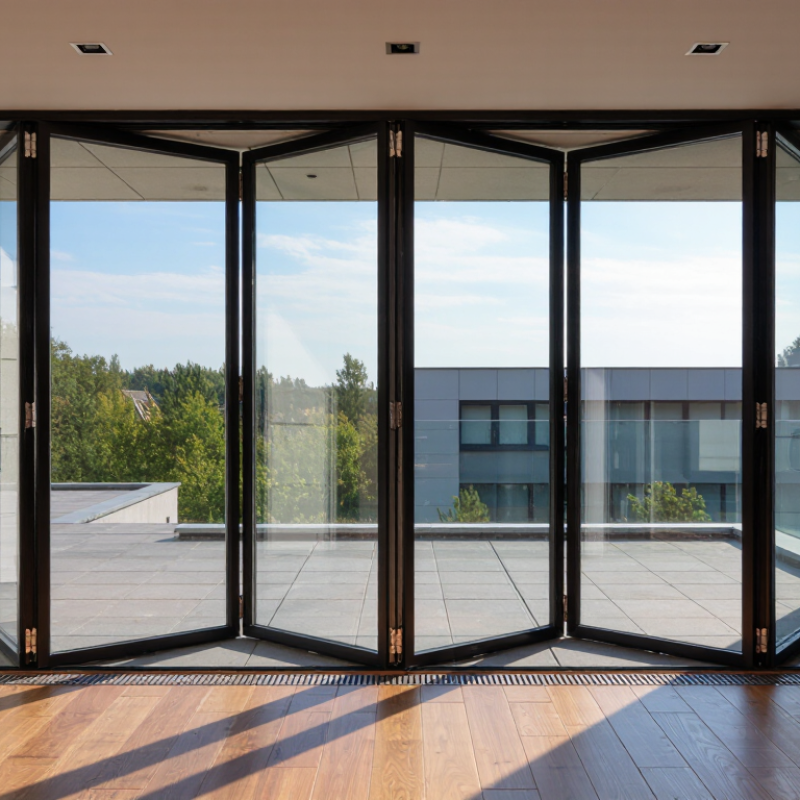
Define Project Requirements and Door Performance Goals
Choosing folding glass doors should begin with the building’s actual demands, not appearance alone. Measure the opening, floor level, ceiling height, and available stacking space. Record the room’s exposure to wind, rain, sunlight, and temperature changes. A coastal project may need stronger corrosion resistance and tighter weather seals. An interior dining area may value smooth operation and sound control instead.
Define clear performance goals before comparing door systems. Decide how much daylight, ventilation, privacy, and thermal insulation the space requires. Check the expected traffic level, including children, visitors, or delivery carts. Ask whether the threshold must support accessibility or wheelchair movement. Safety glazing, controlled closing, and secure locking also deserve early attention. Confirm local construction requirements with a qualified professional, especially for large openings and emergency access.
Be specific.
In practice, small errors can create expensive problems. A few millimeters of floor variation may affect panel alignment and drainage. I have seen attractive layouts become frustrating when the stacked panels block lighting controls or furniture paths. Request technical drawings, tested performance data, and installation tolerances. Review air leakage, water resistance, wind-load ratings, acoustic values, and thermal performance together. One goal may weaken another; larger glass areas can increase heat gain and cleaning demands. A first specification is rarely perfect. Recheck it after reviewing the daily movement through the room.
Compare Folding Glass Door Configurations and Opening Styles
Choosing folding glass doors starts with comparing configurations, not just panel counts. In real projects, bi-fold systems suit compact openings because panels stack neatly to one side. Center-opening systems divide movement between both sides and can feel more balanced in large rooms. Corner configurations remove two walls visually, but they demand accurate structural coordination. Pocket-style folding doors disappear into wall cavities, although they require more planning for drainage, insulation, and service access.
Opening style affects daily comfort. A left- or right-stacking layout works well when furniture limits one side. A center-opening layout creates a clear entrance for busy patios or reception areas. Some systems include a traffic door within the folding set, allowing quick passage without moving every panel. Check the sill height carefully. A low threshold feels accessible, but it may require better water management. In exposed locations, wind pressure, glass weight, and panel width should be verified by a qualified professional. Bigger is not always better.
Tips: Mark the intended opening on the floor before ordering. Walk through it with furniture nearby. Check where panels will stack, where handles will sit, and whether sunlight creates glare. Ask for tested performance data, including air leakage, water resistance, thermal values, and safety glazing. I have seen attractive layouts fail because the stack blocked a light switch. Recheck the plan from inside and outside. Practical details often change the best configuration.
Evaluate Glass Types, Frames, Hardware, and Safety Features
Choosing folding glass doors starts with the opening, not the catalog. Measure width, height, floor level, and prevailing wind direction. For sunny rooms, low-emissivity insulated glass can reduce heat gain. Laminated glass adds useful protection because its layers stay together after breakage. Tempered glass is stronger than ordinary glass, but its edges still need careful protection. I once underestimated afternoon glare. The room looked bright, yet occupants avoided the seating area. That mistake changed how I assess daylight.
Frames must suit the building’s movement and climate. Thermally broken aluminum frames suit many exposed openings, while timber frames offer warmth but need regular finishing. Check drainage paths, sill height, and tested air and water ratings. Hardware should feel controlled, not merely heavy. Look for adjustable rollers, corrosion-resistant hinges, secure multipoint locks, and handles reachable from inside. Ask how many operating panels the opening truly needs. More panels can mean narrower leaves and additional hardware. I sometimes prefer fewer panels, although that choice can reduce the clear opening.
Safety details deserve physical review. Confirm finger-safe gaps, smooth running forces, visible glass markings, and restrictors where children may be present. Choose a threshold that balances weather resistance with wheelchair access. Fire separation, escape routes, and local building requirements may change the specification. Have the installer verify structural support before ordering. A beautiful door can still perform poorly if the wall or floor is not ready.
Check Installation Conditions, Building Codes, and Maintenance Needs
Choosing folding glass doors starts with the opening, not the frame color. Measure the width, height, and finished floor level carefully. Check whether the wall can carry the door’s weight. Large panels need solid structural support above the opening. Uneven floors can prevent smooth movement and cause premature hardware wear. I have seen small level errors create noticeable gaps between panels. That mistake is expensive to correct later. Leave enough space for drainage, sealants, and adjustment.
Building codes also influence glass selection, panel size, safety markings, and emergency access. Requirements vary by location and building type. Confirm local rules with a qualified contractor or building official before ordering. Tempered or laminated safety glass may be required in doors and nearby hazardous areas. Energy codes can also affect glazing performance, especially in heated or cooled rooms. Do not rely only on a supplier’s general specification. The project’s climate, exposure, and occupancy matter.
Maintenance needs deserve equal attention. Choose tracks that remain accessible for cleaning and inspection. Keep debris away from rollers and drainage channels. Check seals after heavy rain, strong wind, or seasonal movement. Hardware may need adjustment over time. That is normal. However, sticking panels, cracked glass, or loose handles require prompt professional inspection. I once underestimated cleaning access on a narrow balcony project. The doors worked well, but maintenance became awkward. A better design would have allowed safer access from the interior.





