


How to Choose Fluorinated Rubber in 2026?

Choosing Fluorinated Rubber in 2026 requires more than comparing temperature ratings or chemical-resistance charts. FKM, FVMQ, and FFKM compounds can look similar on paper, yet behave differently in seals, hoses, pumps, and fuel systems. The correct choice depends on the complete operating environment.

Dr. Mike Sepe, a respected polymer materials consultant, has stated, “Material selection is a systems decision, not a resin decision.” This principle remains highly practical for Fluorinated Rubber buyers. Consider temperature peaks, pressure cycles, media exposure, compression set, shaft movement, and installation conditions. A seal facing hot oil may still fail when exposed to steam, rapid decompression, or repeated cold starts.

Look beyond the datasheet.

In real applications, a rubber compound can soften, swell, crack, or lose elasticity after only a few weeks. Laboratory testing helps, but it cannot reproduce every field condition. That limitation deserves honest attention. Ask suppliers for compound-specific test results, not only generic FKM claims. Review hardness, tensile strength, elongation, compression-set data, and volume change after chemical exposure.

The 2026 selection process should also examine traceability, manufacturing consistency, sustainability documentation, and supply stability. Lower cost may become expensive after premature leakage or maintenance downtime. However, the most expensive grade is not automatically the safest answer.

Start with the operating profile. Then match the compound. Validate it under realistic conditions. Reconsider the decision when the evidence feels incomplete. Fluorinated Rubber selection is technical, practical, and sometimes imperfect. Reliable performance comes from disciplined comparison, clear supplier communication, and testing that reflects the actual application.
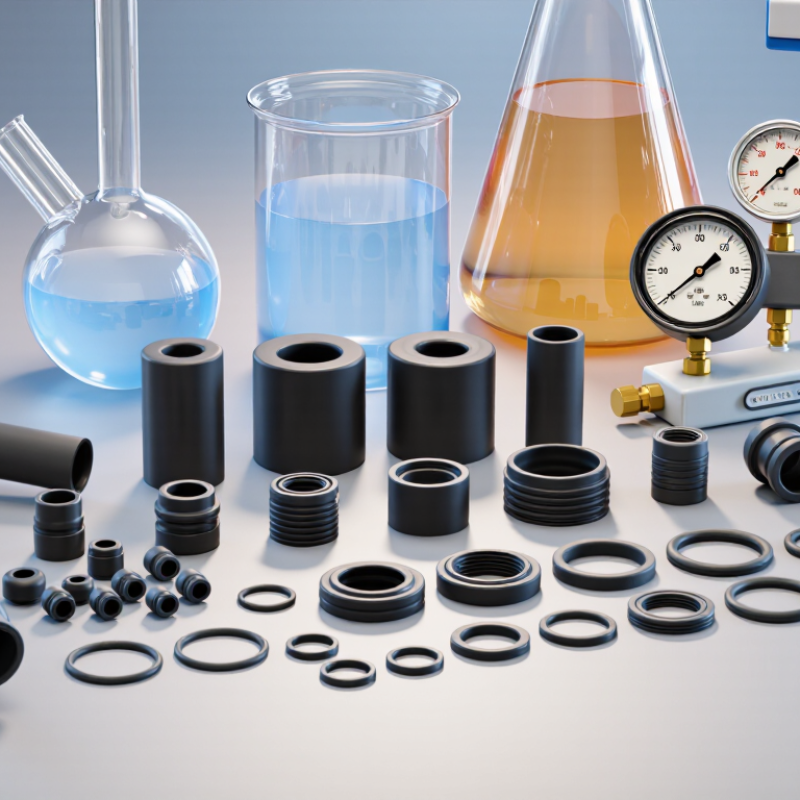
How to Choose Fluorinated Rubber in 2026?

What Fluorinated Rubber Is and How It Performs

How to Choose Fluorinated Rubber in 2026?

What Fluorinated Rubber Is and How It Performs

Fluorinated rubber is a high-performance elastomer containing fluorine in its polymer structure. It is commonly selected for seals, gaskets, hoses, and molded parts. The fluorine content improves resistance to oils, fuels, solvents, and many aggressive chemicals. It also supports reliable performance at elevated temperatures, often around 200°C, depending on the compound and design.

However, no fluorinated rubber grade performs equally everywhere. Some compounds resist aromatic fuels well but struggle with hot water, steam, or certain polar chemicals. Low temperatures can also reduce flexibility. In field inspections, seal failure often comes from choosing by temperature alone. Pressure, movement, surface finish, compression, and exposure time matter too. Laboratory data helps, but real service conditions may be less predictable. That is worth questioning.

Tips: Define the exact fluid, temperature range, pressure, and motion before selecting a compound. Request compatibility data for the complete formulation, not only the base polymer. Test a sample under cycling conditions when failure would be costly. Check compression set after aging. Small details matter. A harder seal is not automatically better. For demanding equipment, consult an experienced materials engineer and document every test result.


Which Fluorinated Rubber Types Suit Different Applications

How to Choose Fluorinated Rubber in 2026?

Which Fluorinated Rubber Types Suit Different Applications

Choosing fluorinated rubber starts with the fluid, temperature, and movement involved. Standard FKM suits seals exposed to mineral oils, fuels, and many hydraulic fluids. It commonly handles continuous temperatures near 200°C, depending on the compound. For aggressive chemicals or repeated thermal cycling, FFKM offers wider resistance, but its cost is substantially higher. Fluorosilicone rubber remains useful where fuel resistance meets low-temperature flexibility, especially in aerospace and sensor applications.

According to Grand View Research’s 2024 fluoroelastomers market analysis, demand is growing with chemical processing, automotive, and semiconductor equipment. The report identifies high-temperature sealing as a major growth driver. However, market growth does not guarantee the correct grade. Ethylene-based FEPM can perform well against amines, steam, and hot water, while some FKM grades may swell or lose strength. ISO 1629 and ASTM D1418 help classify rubber families, but compound testing remains essential.

Tips: Request immersion data at your actual temperature and exposure time. Check compression set after aging, not only the supplier’s headline temperature. A small mistake matters. We once underestimated rapid pressure changes; the seal looked chemically stable but failed mechanically. Consider hardness, pressure cycling, surface finish, and installation damage together. The “best” fluorinated rubber is sometimes the wrong choice when low-temperature recovery or dynamic wear dominates. Validation should include real fluid samples, because laboratory substitutes can hide unpleasant surprises.

How to Choose Fluorinated Rubber in 2026?

Which fluorinated rubber types suit different applications?

The chart shows typical continuous service-temperature ranges for major fluorinated rubber families. FKM is a balanced choice for automotive, oil, fuel and general chemical sealing; FFKM is preferred for extremely aggressive chemicals and high-temperature processes; FEPM is suited to hot steam, amines and strong bases; and fluorosilicone is selected when low-temperature flexibility and fuel resistance are both required. Actual performance depends on compound formulation, pressure, media concentration and exposure time.

How to Match Fluorinated Rubber With Chemical and Thermal Conditions

How to Choose Fluorinated Rubber in 2026?

Fluorinated rubber selection starts with the actual chemical, not the catalog name. Standard FKM usually handles oils, fuels, and many mineral acids. It can struggle with hot water, steam, ketones, amines, and some concentrated acids. The O-Ring Handbook ORD 5700 commonly places standard FKM service near -20°C to 205°C. Special compounds may reach about 230°C, but only under controlled conditions.

Chemical exposure also needs time-based testing. ASTM D471 uses a 70-hour immersion period to measure volume, mass, tensile strength, and elongation changes. A seal that looks stable after one hour may swell after several days. ISO 23936-2 adds qualification guidance for elastomers used in oil and gas environments. Pressure cycling and explosive decompression can reveal failures that simple temperature charts miss. A neat chart is not enough.

Tips: List the chemical concentration, pressure, temperature, exposure time, and movement type. Request immersion results at the real operating temperature. Check hardness change and volume change, not resistance labels alone. For steam or hot-water service, question standard FKM early. Consider a specialized grade only after testing. I have seen selection errors begin with one missing detail: the cleaning cycle.

How to Evaluate Fluorinated Rubber Quality, Cost, and Compliance

How to Choose Fluorinated Rubber in 2026?

How to Evaluate Fluorinated Rubber Quality, Cost, and Compliance

A practical evaluation begins with the actual service conditions, not a catalog description. Record temperature peaks, chemical exposure, pressure, movement, and sealing time. Then compare hardness, tensile strength, elongation, compression set, and volume swell. A reliable supplier should provide batch test reports, traceability, storage guidance, and clear processing limits. Small details matter. Ask for samples from different production batches.

Cost needs a wider lens. Compare material price, molding temperature, tooling wear, scrap rates, delivery time, and expected replacement intervals. A cheaper compound may absorb chemicals faster, causing leaks and unplanned maintenance. Calculate cost per operating month instead of cost per kilogram. Trial production can reveal defects that laboratory data misses. I would not trust one test result alone.

Compliance also requires evidence. Check the safety data sheet, restricted-substance declarations, and applicable regional requirements for the finished seal or component. Confirm whether pigments, processing aids, or adhesives create additional obligations. Keep supplier certificates linked to batch numbers and purchase records. Requirements can change. A compliance review should be repeated when the formulation, site, or application changes. My checklist is useful, but not perfect; field results may expose assumptions that looked reasonable during selection.

How to Select and Validate the Best Fluorinated Rubber in 2026

How to Select and Validate the Best Fluorinated Rubber in 2026

Selecting fluorinated rubber in 2026 starts with the sealing environment, not the material catalog. Define temperature peaks, pressure cycles, fuel or chemical exposure, and expected service time. A seal near an engine may face 200°C, vibration, and sudden cooling. Static contact and dynamic movement require different compound behavior. Do not choose only by fluorine content. Polymer structure, cure system, hardness, and filler selection can change performance significantly.

In practical validation work, I compare compression set, tensile strength, elongation, volume change, and leakage after aging. Test samples should match the final seal geometry when possible. Small laboratory buttons can mislead. Use the real fluid, realistic pressure, and repeated thermal cycles. ASTM or ISO methods improve consistency, but internal acceptance limits still need engineering judgment. Check supplier certificates, batch traceability, and independent laboratory results. Keep retained samples for later comparison.

My first test plan was too neat. It ignored installation damage and surface finish. That was a useful mistake. Inspect seal edges under magnification, then test installation with actual tools and lubrication. Record every failure, including minor swelling or permanent flattening. A compound that passes one fluid test may fail after mixed exposure. Recheck results across several production lots. Avoid the cheapest option when replacement requires shutdowns, yet do not over-specify without evidence. Some decisions remain uncertain. Document that uncertainty clearly.

How to Choose Fluorinated Rubber in 2026? - How to Select and Validate the Best Fluorinated Rubber in 2026

Selection Dimension Typical Requirement or Data Range Suitable Fluorinated Rubber Direction Validation Method Important Limitation
Operating temperature Continuous service commonly ranges from approximately −20°C to +200°C, depending on formulation. Some specialized grades extend toward +230°C. Standard FKM for general high-temperature sealing; specialized high-temperature formulations for prolonged exposure above +200°C. Expose finished parts at the maximum continuous temperature and measure hardness, tensile strength, elongation, mass, and compression set. Maximum temperature is compound- and exposure-time-dependent; short-term peak temperature should not be treated as continuous service temperature.
Low-temperature flexibility Required flexibility may be below −20°C, especially in outdoor, aerospace, mobile, and cold-start applications. Low-Temperature FKM formulations or modified fluorinated elastomers; consider an alternative elastomer if deep-flexibility is the primary requirement. Use ASTM D1329/TR test methods, brittleness testing where relevant, and dynamic sealing tests at the minimum operating temperature. Higher fluorine content generally improves fluid resistance but can reduce low-temperature flexibility.
Fuel and hydrocarbon resistance Resistance to gasoline, diesel, lubricants, hydraulic fluids, and many mineral-oil-based media is commonly required. General-purpose FKM is often suitable; select a fuel-optimized formulation for aggressive fuel blends or long-term immersion. Immersion testing using the actual fluid or the applicable reference fluid; record volume change, hardness change, tensile retention, and visual damage. Compatibility can change with fuel oxygenates, additives, temperature, pressure, and exposure duration.
Chemical compatibility Resistance may be needed against acids, solvents, aromatic compounds, cleaning agents, or process chemicals. Choose the formulation according to the exact chemical, concentration, temperature, and exposure mode rather than fluorine content alone. Perform ASTM D471 immersion testing or an equivalent procedure with the production compound and actual chemical mixture. FKM is not universally resistant to strong bases, hot steam, hot water, amines, and certain polar solvents.
Compression set Low permanent deformation is important for static seals, especially at elevated temperature. Target values must be defined for the application and test condition. Use a properly post-cured FKM compound with a cure system selected for the temperature and sealing geometry. Measure according to ASTM D395, Method B, at the specified temperature and duration; test production-size parts when possible. Compression-set results from different temperatures, durations, and specimen geometries are not directly interchangeable.
Gas and vapor permeation Low permeation may be required for fuel vapor, refrigerant, vacuum, or emissions-control applications. Higher-fluorine or low-permeation formulations may reduce transport through the seal; geometry and surface finish remain critical. Use application-specific permeation testing, helium leak testing, or the relevant regulatory test protocol. Permeation depends on pressure differential, temperature, seal thickness, compound, and time; hardness alone is not a reliable predictor.
Dynamic sealing and friction Reciprocating or rotary seals require controlled friction, wear resistance, extrusion resistance, and adequate lubrication. Select a dynamic-sealing formulation and optimize hardness, surface finish, lubrication, and gland design together. Run representative pressure-speed-temperature endurance tests and inspect wear, leakage, friction, and surface damage. Static material-screening data cannot reliably predict dynamic seal life.
Hardness and extrusion control Common seal hardness selections are often within approximately 70–90 Shore A, subject to pressure, gap, and installation requirements. Use softer compounds for conformity and lower installation force; use harder compounds or anti-extrusion measures for higher pressure and clearance gaps. Measure hardness under ASTM D2240 and conduct pressure-cycle tests using the actual gland dimensions. Hardness is not a substitute for correct gland design, tolerances, backup rings, and surface finish.
Electrical and plasma environment Applications may require controlled outgassing, low particle generation, or resistance to plasma and cleaning cycles. Use a formulation qualified for the specific vacuum, plasma, cleaning chemistry, and contamination limits. Conduct outgassing, particle, weight-loss, dimensional, and repeated cleaning-cycle tests in the application environment. Conventional industrial FKM should not be assumed suitable for high-purity or plasma processes without qualification.
Regulatory and material compliance Requirements may include restricted-substance control, food-contact suitability, potable-water contact, automotive specifications, or aerospace qualification. Select a compound with documented compliance for the exact market, application, and processing condition. Review the current declaration, formulation restrictions, lot traceability, and independent laboratory reports where required. Compliance is compound-specific and may vary by color, cure system, production site, and product thickness.
Manufacturing and quality consistency Stable hardness, dimensions, cure state, surface condition, and batch-to-batch performance are essential for reliable sealing. Choose a compound supported by a controlled specification, defined cure conditions, and repeatable production capability. Audit incoming material controls, first-article inspection, capability data, dimensional inspection, and lot-level test records. A laboratory sample that passes testing may still fail if processing, storage, or dimensional controls are inadequate.

Data shown are typical engineering guidance ranges and selection considerations for fluorinated rubber, commonly referred to as FKM. Final material selection should be validated using the actual compound, seal geometry, fluid, pressure, temperature, and service duration.

Powder Coat Booths

For those larger-sized parts, or smaller quantity runs, we have 2 independent powder coat booths and ovens. The quality, durability and affordability of today’s powder coating finishes make this the process of choice for world-class companies.

Powder coating advantages over other forms of coating are many. Materials used in the Powder coating process can be metals and non-metals that come in a multitude of thicknesses, textures, colors, etc. Another of Powder coating’s biggest advantages over conventional coatings is its ability to create finishes in many different textures. Powder Coating Booths allow us the ability to apply these advantages to large products.

Wet Paint Line

Tri-State Fabricators runs a full-service conveyor line for painting. Wet painting can provide protection or decoration to many different part styles. From start to finish, every project is easier to undergo random and point-based inspection by our skilled painting team.

Advantages to our Wet Paint Line are these lines start with product prep and ends with a thorough inspection of a high quality finished product. Our ability to complete large and small projects with a superior finish and doing so in a timely and economical fashion. This passes along the savings in production to our customers. When powder coating ins not an option, our Wet Paint Line gets the job done right the first time.

Wet Paint Booths

When the parts get big and heavy we roll-out our custom paint racks and oversize booth. By utilizing our partnerships with all the major paint brands, we can match virtually any color with wet paint.

The advantages of having access to a Wet Paint Booth are many. Large projects of many different shapes can be loaded into the booth. The Wet Paint Booth offers an environment that is much more controlled than a typical parts painting operation.

Not only are they used because of their controlled environment, but they’re are also advantageous when it comes to applying paint to parts that are needed in industries that require specialty coatings such as medical, aerospace, etc.

Military CARC

Our military forces have some very high standards when it comes to the finish of their vehicles and equipment. From the first pre-treatment step to final coat, it takes a great deal of knowledge and experience to protect the men and women of our armed forces. They deserve only the best, and Tri-State Fabricators provides it.

All of our processes are closely monitored by our staff and management teams. Both of which are highly trained in the processes of metal fabrication and finishing. Tri-State Fabricators’ goal is to always fully satisfy each and every customer, including the military. We will always put a 110% into what we do.

Glass-Bead Blasting

Abrasive media blasting is an excellent way to remove old paint, rust, and increase the paint/powder adhesion. Glass beads produce a much smoother and brighter finish than angular abrasives; leaving the part clean yet without any dimensional change. Chemically inert and environmentally friendly, we can recycle our beads approximately 30 times; making them a more preferred method of metal cleaning or surface finishing.

Advantages to Glass Bead Blasting are many. Glass bead blast media is used when a project is needing rough surfaces need to become smooth for applications of coatings such as paint. It is typically used to clean paint and rust from a product surface without deforming the surface it is being used on. Overall, compared to many other blasting media, Glass Bead Blasting is a very economical choice and those savings are always passed on to our customers.

Part Washing

Tri-State Fabricators utilize a zinc phosphate wash to clean and etch the material to ensure the best paint adhesion possible. The unique design of our 3-stage wash system does the work like a 5-stage. From Cleaning and rinsing to conversion coating and post-treatment, Our Part Washing process is a complete service and works throughout the fabrication service and the finishing service.

Along with the previously mentioned benefits, Curing is a vital chemical reaction that leaves the product finish hard and relatively safe from mild abrasion and aggressive corrosion. This process can be done in more than one way; ambient air-dry or in curing ovens at temps that exceed 240°.

Burn-Off Oven

From fixing paint mistakes (someone else’s of course) to simply cleaning our paint line hooks, our burn-off oven is put to good use. After a quick burn-off, a little clean up, and a fresh coat of paint, your parts will look better than new.

Why does our Burn-Off Oven work so well? Because super heating the air around parts turns the materials into ashes. From paint and powder coatings to rubber and machining oils, high temps do the job without degrading the integrity of the part.

Masking

Masking is a vital part of producing high quality products. We have die-cut masking patterns to protect machined surfaces as well as a wide range of plugs and caps to protect threaded holes and bolts. We provide permanent and temporary masking.

Masking allows the selected sections of a product to be protected from a fabrication or finishing service. This can be with both chemicals when etching and tapes, paints when only finishing just a section of the product. Masking is great in aiding the customization process of a project.

Screen Printing

Screen printing is a photographic process that transfers artwork onto a porous nylon screen which allows colored ink to flow through the screen and be deposited on an aluminum or plastic component. We can generally have just about any design created onto a screen for your parts.

Some of the advantages of Screen Printing are, brand recognition for your business displaying on your products, assembly instructions, product warnings/hazards, etc. Tri-State Fabricators produces Screen Printing of the highest quality so you know it’s durable.

Metal Finishing

Metal Finishing is the art of treating the exterior portion of product, often metal but can also be made of other materials, so that the surface is clean and free of any debris. Then the process of applying coats or either paint of powder coat takes place. This coating process improves the quality of the product in both appearance and resistance to wear and corrosion.

Tri-State Fabricators, Inc., understands that a project typically isn’t complete until a high-quality finish has been added to your product. This is why our painting and powder coating teams continuously inspect the products throughout the Metal Finishing process.
