


Choosing Filter Media For Silicon Industry applications in 2026 requires more than selecting the smallest pore size. Silicon manufacturing exposes filters to aggressive chemicals, abrasive particles, high-purity water, and demanding thermal conditions. A media choice that looks efficient on paper may create excessive pressure loss, shorten service life, or introduce unwanted extractables.
Filtration specialist Dr. Robert W. Purchas offered a practical principle: “The best filter is not necessarily the finest filter, but the one that meets the process requirement reliably.” That principle remains valuable across wafer cleaning, polysilicon production, slurry filtration, and ultrapure water systems. PTFE may suit chemically aggressive fluids. Polypropylene can provide economical depth filtration. PES often supports high-flow liquid filtration where low extractables matter. Stainless steel may be preferred for durability and repeated cleaning.
The decision should begin with the contaminant, fluid chemistry, temperature, flow rate, and required cleanliness level. Operators should also examine particle loading, differential pressure, sterilization needs, and compatibility with existing housings. Small details matter. A filter exposed to hot alkaline cleaning fluid behaves differently from one handling cool rinse water.
There is no universal winner. That is easy to forget. Some specifications remain incomplete, especially when suppliers report retention performance under different test conditions. Pilot trials, extractables testing, and real production data can reveal weaknesses before they reach valuable wafers. This guide explains how to compare media performance, verify supplier claims, and build a more dependable filtration strategy for silicon manufacturing in 2026.
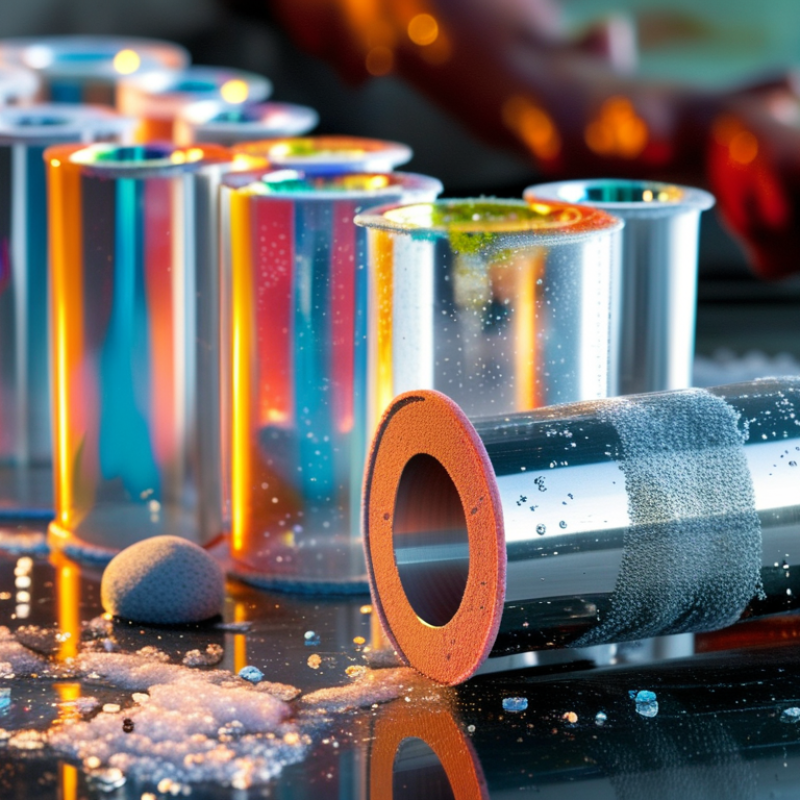
Silicon processing demands filtration that controls more than visible particles. Liquid streams may contain silica fines, metallic ions, organic residues, and fragments from pumps or piping. Gas lines face moisture, oil vapor, corrosive traces, and submicron particles. Small contamination matters.
Filter media must match the fluid, temperature, pressure, and required purity. Polymeric membranes can support fine particle removal in compatible liquids. Depth media may handle higher solids loading, but can release extractables if poorly selected. For corrosive chemicals, material compatibility requires documented testing, not assumptions. In high-purity gas systems, low-shedding media and stable seals are essential. Field experience shows that differential pressure trends often reveal problems before product testing does. Yet one reading is not enough.
Tips: Build a contaminant profile for each process stream. Record particle size, concentration, temperature, and chemical exposure. Compare clean pressure drop with loaded pressure drop. Check extractables, burst strength, and replacement intervals. Test the media with real process fluid when possible. A laboratory result may not predict production behavior. I have seen teams choose the finest rating available, then discover reduced flow and unstable pressure. Finer is not always better. Review sampling methods, too; poor sampling can make reliable media look unreliable.

How to Choose Filter Media for Silicon Industry in 2026?
Filter media selection begins with the contaminant, process fluid, and required cleanliness level. In semiconductor production, every pore size matters. Membrane media, often made from fluoropolymer materials, remove particles mainly by surface filtration. Their defined pores provide sharp retention for ultrapure chemicals and process water. They also support integrity testing before use.
Depth media use a thick, porous structure to trap particles through interception, adsorption, and tortuous flow paths. They are useful for higher dirt loads, but their retention can be less precise. Sintered metal media capture particles across a rigid porous body and tolerate heat, pressure, and repeated cleaning. They suit gas lines and demanding process conditions. However, they may introduce unwanted metal ions if compatibility is overlooked.
Carbon-based media work through adsorption. They can reduce organic impurities, but they require careful capacity checks and replacement planning. A smaller pore is not always better. Excessive pressure loss can disturb flow and shorten service life. I have seen specifications focus on particle size while ignoring extractables, chemical swelling, or startup flushing. That is a weak selection method. Review temperature, pressure, flow rate, chemical compatibility, cleanability, and validation data together. The final choice should reflect actual operating conditions, not only a laboratory result.
Typical nominal particle ratings of common filter media used in semiconductor chemical, ultrapure water, and process-gas filtration. Smaller ratings indicate finer particle capture. Actual performance depends on chemistry, pressure, temperature, compatibility, and validation testing.
Operating principles: membrane media provide surface capture through defined pores; depth media retain particles within a porous matrix; sintered metal relies on tortuous-path interception and can support high-temperature or high-pressure service.
How to Choose Filter Media for Silicon Industry in 2026?
Filter media must match each silicon processing stage, not just the target particle size. In chemical delivery, confirm compatibility with acids, bases, solvents, and oxidizers. PTFE often suits aggressive chemicals, while polypropylene can support less demanding liquid streams. Always review temperature, pressure, and extractables. A chemically stable membrane can still fail if its housing or seal degrades.
During wafer cleaning and rinsing, low-particle, low-extractable media are essential. Polyethersulfone or nylon may fit selected aqueous applications, but the process chemistry decides the final choice. Ultrapure water systems need careful control of fiber shedding and microbial risk. In slurry filtration for polishing, the media must control oversized particles without removing useful abrasives. This balance is difficult. A smaller pore rating is not automatically better. It may increase pressure loss and shorten service life.
Tips: Test a small filter sample with the actual process fluid. Record flow rate, pressure change, temperature, and particle counts. Inspect the filter after use. Unexpected discoloration or brittleness deserves investigation. Engineers sometimes select media from a specification sheet alone, and that is a weak habit. Real process data should guide validation, especially when chemistry, cleaning cycles, or production volume changes. Keep records for each stage, because a filter that performs well in chemical transfer may be unsuitable near the final wafer rinse.
How to Choose Filter Media for Silicon Industry in 2026?
Filter media selection in silicon production begins with the process, not the catalog. Map particle size, temperature, pressure, chemical exposure, and cleaning cycles. A membrane may capture fine solids efficiently, yet fail after repeated thermal shocks. Depth media can hold more contaminant, but may release fibers or create greater pressure loss. Measure real process conditions, including short contamination spikes.
Compatibility requires more than checking a chemical resistance chart. Review the medium, support layers, seals, adhesives, and housing materials together. Test samples with actual process fluids whenever possible. Watch for swelling, brittleness, extractables, and changes in pore structure. Small failures matter. A filter that passes laboratory testing may behave differently after weeks of vibration and backwashing.
Regulatory evidence should be traceable and current in every target market. Request material declarations, batch records, migration data, and documented quality controls. Check applicable requirements for worker safety, environmental substances, waste handling, and product-contact applications. ISO-based quality systems can support reliability, but certification alone does not prove process suitability. Keep change-notification terms in the purchasing agreement. This point is often overlooked. Revalidate after media, binder, or manufacturing-site changes. A practical selection file should record test methods, acceptance limits, installation details, and replacement intervals. Some assumptions will remain uncertain, so document them and review field data regularly.
How to Choose Filter Media for Silicon Industry in 2026?
Filter media selection in silicon manufacturing should begin with process evidence, not catalog price. Experienced engineers compare particle loading, chemical exposure, temperature, and required cleanliness. A media sample may look suitable, yet release trace metals after repeated cleaning. That risk can damage yield and create expensive investigation work.
Total cost includes replacement labor, disposal, energy, and pressure-drop losses. A filter with a longer service life may consume less electricity because it maintains stable airflow. Sustainability also depends on cleaning frequency and material recovery. For example, teams can record pressure changes weekly and replace media only when performance reaches a defined limit. Simple records help prevent premature disposal.
Reliability needs testing.
Long-term trials should measure retention efficiency, flow stability, extractables, and mechanical strength across several operating cycles. In practice, results can differ from laboratory predictions. My own first-pass comparisons have sometimes focused too heavily on purchase cost and overlooked installation downtime. That mistake is easy to repeat. A better review uses site data, supplier test methods, and independent verification where contamination control is critical. Engineers should also document uncertainty, because no filter performs perfectly under every silicon process condition.
Comparative screening table for particle, slurry, process-water, and wastewater filtration
| Filter Media | Typical Silicon-Industry Use | Typical Particle or Pore Range | Typical Operating Temperature | Indicative Cost Index | Waste and Sustainability Profile | Long-Term Reliability | Main Selection Risk |
|---|---|---|---|---|---|---|---|
| Polypropylene Depth Media | Pre-filtration, process water, chemical solutions, and bulk slurry protection | Approximately 0.5–100 μm nominal, depending on construction | Usually up to approximately 80°C; confirm housing and chemical limits | 1 / 5 Lowest | Low unit cost, but generally disposable; generates polymer cartridge waste | Good for low-to-medium solids loading; service life depends strongly on dirt-holding capacity | Fiber release, premature blinding, or insufficient particle retention when used as final filtration |
| Polyethersulfone Membrane | Fine filtration of ultrapure water, process chemicals, and aqueous cleaning streams | Approximately 0.03–0.45 μm, depending on membrane grade | Commonly up to approximately 80°C for many aqueous applications | 3 / 5 Medium | Single-use formats create polymer waste; longer service is possible with validated cleaning | High and consistent particle retention when pressure, cleaning, and compatibility are controlled | Fouling, oxidation, unsuitable solvents, or excessive differential pressure |
| Polytetrafluoroethylene Membrane | Aggressive chemical filtration, solvent-compatible gas or liquid service, and vent filtration | Approximately 0.05–1.0 μm, depending on membrane construction | Often approximately 100–150°C; actual limit depends on support and seals | 4 / 5 High | Excellent chemical durability can extend service life, but disposal of fluoropolymer media is difficult | Very high chemical resistance; reliability decreases if wetting, pressure, or seal design is unsuitable | Poor wetting in aqueous service, membrane damage, or incompatibility with high-temperature hardware |
| Ceramic Membrane | High-solids slurry separation, silicon-processing wastewater, and applications requiring repeated cleaning | Approximately 0.01–1.4 μm for common microfiltration and ultrafiltration grades | Often capable of approximately 150–250°C, subject to module design | 5 / 5 Highest initial cost | Long service potential and repeated chemical cleaning reduce replacement waste; higher energy demand may result from cross-flow operation | Very high mechanical and thermal durability; suitable for regeneration when cleaning is validated | High capital cost, fragile module handling, and energy consumption from recirculation |
| Sintered Metal Media | High-temperature gas or liquid filtration, catalyst protection, and reusable process filtration | Approximately 0.5–100 μm, depending on metal powder and pore structure | Approximately 300–600°C for selected metal grades and designs | 4 / 5 High | Reusable through backwashing or other cleaning methods; metal recycling is generally more feasible than polymer recycling | Excellent mechanical strength and long life when corrosion and fatigue are controlled | Corrosion, pore blockage, thermal cycling, or inadequate cleaning access |
| Activated Carbon Media | Removal of selected organic contaminants, residual chlorine, and odor-forming compounds from water streams | Adsorptive media; particle filtration is not its primary function | Typically below approximately 60°C in water treatment; verify adsorption and safety limits | 2 / 5 Low to medium | Spent media requires controlled replacement or reactivation; performance is capacity-limited | Reliable for targeted adsorption when breakthrough is monitored; not a substitute for fine particle filtration | Breakthrough, microbial growth, pressure drop, or incorrect contaminant targeting |
Evaluation notes: The cost index is a relative screening scale from 1 to 5, where 1 represents the lowest typical initial media cost and 5 represents the highest. Actual total cost of ownership should include replacement frequency, cleaning chemicals, energy, labor, downtime, disposal, and product-loss risk.
Temperature, pore size, service life, chemical compatibility, and pressure-drop limits are indicative engineering ranges rather than universal specifications. Final selection should be confirmed through application-specific compatibility testing, particle-retention testing, and differential-pressure validation.


For those larger-sized parts, or smaller quantity runs, we have 2 independent powder coat booths and ovens. The quality, durability and affordability of today’s powder coating finishes make this the process of choice for world-class companies.
Powder coating advantages over other forms of coating are many. Materials used in the Powder coating process can be metals and non-metals that come in a multitude of thicknesses, textures, colors, etc. Another of Powder coating’s biggest advantages over conventional coatings is its ability to create finishes in many different textures. Powder Coating Booths allow us the ability to apply these advantages to large products.
Tri-State Fabricators runs a full-service conveyor line for painting. Wet painting can provide protection or decoration to many different part styles. From start to finish, every project is easier to undergo random and point-based inspection by our skilled painting team.
Advantages to our Wet Paint Line are these lines start with product prep and ends with a thorough inspection of a high quality finished product. Our ability to complete large and small projects with a superior finish and doing so in a timely and economical fashion. This passes along the savings in production to our customers. When powder coating ins not an option, our Wet Paint Line gets the job done right the first time.
When the parts get big and heavy we roll-out our custom paint racks and oversize booth. By utilizing our partnerships with all the major paint brands, we can match virtually any color with wet paint.
The advantages of having access to a Wet Paint Booth are many. Large projects of many different shapes can be loaded into the booth. The Wet Paint Booth offers an environment that is much more controlled than a typical parts painting operation.
Not only are they used because of their controlled environment, but they’re are also advantageous when it comes to applying paint to parts that are needed in industries that require specialty coatings such as medical, aerospace, etc.
Our military forces have some very high standards when it comes to the finish of their vehicles and equipment. From the first pre-treatment step to final coat, it takes a great deal of knowledge and experience to protect the men and women of our armed forces. They deserve only the best, and Tri-State Fabricators provides it.
All of our processes are closely monitored by our staff and management teams. Both of which are highly trained in the processes of metal fabrication and finishing. Tri-State Fabricators’ goal is to always fully satisfy each and every customer, including the military. We will always put a 110% into what we do.
Abrasive media blasting is an excellent way to remove old paint, rust, and increase the paint/powder adhesion. Glass beads produce a much smoother and brighter finish than angular abrasives; leaving the part clean yet without any dimensional change. Chemically inert and environmentally friendly, we can recycle our beads approximately 30 times; making them a more preferred method of metal cleaning or surface finishing.
Advantages to Glass Bead Blasting are many. Glass bead blast media is used when a project is needing rough surfaces need to become smooth for applications of coatings such as paint. It is typically used to clean paint and rust from a product surface without deforming the surface it is being used on. Overall, compared to many other blasting media, Glass Bead Blasting is a very economical choice and those savings are always passed on to our customers.
Tri-State Fabricators utilize a zinc phosphate wash to clean and etch the material to ensure the best paint adhesion possible. The unique design of our 3-stage wash system does the work like a 5-stage. From Cleaning and rinsing to conversion coating and post-treatment, Our Part Washing process is a complete service and works throughout the fabrication service and the finishing service.
Along with the previously mentioned benefits, Curing is a vital chemical reaction that leaves the product finish hard and relatively safe from mild abrasion and aggressive corrosion. This process can be done in more than one way; ambient air-dry or in curing ovens at temps that exceed 240°.
From fixing paint mistakes (someone else’s of course) to simply cleaning our paint line hooks, our burn-off oven is put to good use. After a quick burn-off, a little clean up, and a fresh coat of paint, your parts will look better than new.
Why does our Burn-Off Oven work so well? Because super heating the air around parts turns the materials into ashes. From paint and powder coatings to rubber and machining oils, high temps do the job without degrading the integrity of the part.
Masking is a vital part of producing high quality products. We have die-cut masking patterns to protect machined surfaces as well as a wide range of plugs and caps to protect threaded holes and bolts. We provide permanent and temporary masking.
Masking allows the selected sections of a product to be protected from a fabrication or finishing service. This can be with both chemicals when etching and tapes, paints when only finishing just a section of the product. Masking is great in aiding the customization process of a project.
Screen printing is a photographic process that transfers artwork onto a porous nylon screen which allows colored ink to flow through the screen and be deposited on an aluminum or plastic component. We can generally have just about any design created onto a screen for your parts.
Some of the advantages of Screen Printing are, brand recognition for your business displaying on your products, assembly instructions, product warnings/hazards, etc. Tri-State Fabricators produces Screen Printing of the highest quality so you know it’s durable.
Metal Finishing is the art of treating the exterior portion of product, often metal but can also be made of other materials, so that the surface is clean and free of any debris. Then the process of applying coats or either paint of powder coat takes place. This coating process improves the quality of the product in both appearance and resistance to wear and corrosion.
Tri-State Fabricators, Inc., understands that a project typically isn’t complete until a high-quality finish has been added to your product. This is why our painting and powder coating teams continuously inspect the products throughout the Metal Finishing process.

