


2026 How to Choose Cuplock Scaffolding for Your Project?

Choosing Cuplock Scaffolding is not simply a matter of comparing prices or selecting the tallest frame. The right system must suit the work, the site, and the people using it. A façade repair, a compact interior fit-out, and a heavy-duty industrial job place different demands on a scaffold.

Safety data gives this decision real weight. OSHA scaffold safety materials have cited estimates of 4,500 scaffold-related injuries and 60 deaths annually in the United States. These are historical estimates, not a forecast for 2026. The U.S. Bureau of Labor Statistics’ 2023 Census of Fatal Occupational Injuries offers broader context on construction risks, but it does not measure Cuplock systems alone. Numbers need context.

For a practical selection, assess intended loads, platform height, bay dimensions, ground conditions, access needs, and how workers will erect and inspect the structure. Check that the supplier provides clear component specifications and load information. A qualified professional should verify the design for the planned configuration and local requirements. In the United States, OSHA’s scaffold standard, 29 CFR 1926.451, is one relevant reference; other jurisdictions have their own rules. A familiar connection system can make assembly more straightforward, but it does not remove the need for competent planning. That distinction is easy to overlook. This guide explains how to compare Cuplock Scaffolding options, ask suppliers useful questions, and match a system to your project without treating a catalogue rating as a complete safety plan.
2026 How to Choose Cuplock Scaffolding for Your Project?

Understanding Cuplock Scaffolding and Its Main Components

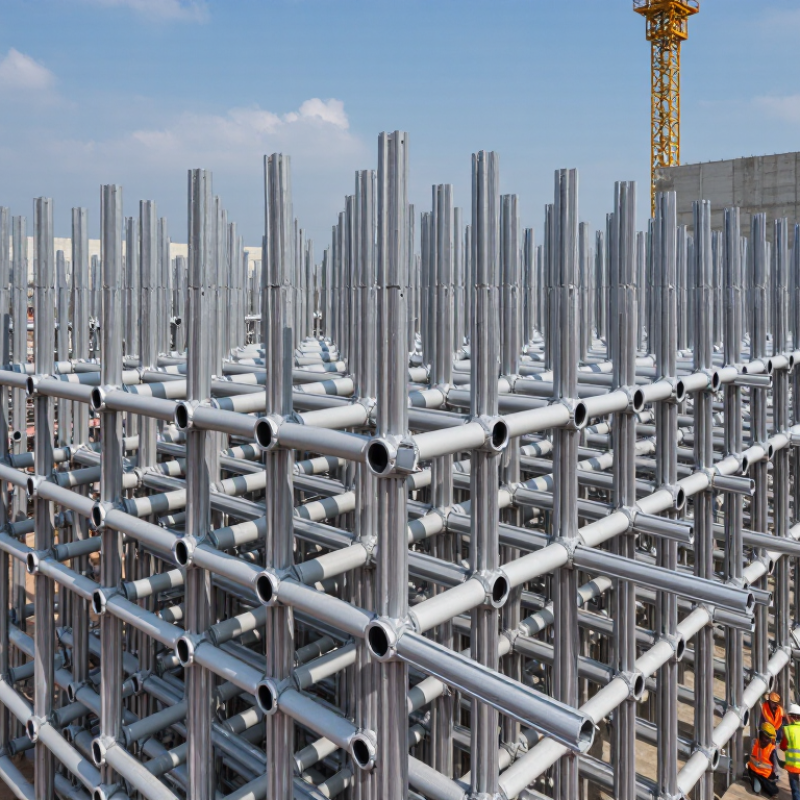
Cuplock scaffolding is a modular support system that connects vertical standards and horizontal ledgers with cup-shaped fittings. Its parts work together to create stable working lifts, but only when they are correctly matched and assembled. A standard is the upright tube, usually fitted with a fixed lower cup and a sliding upper cup. Ledger ends have metal blades that sit in the cups; lowering and turning the upper cup secures several connections at once. Simple, but not automatic.

Other components shape how the scaffold performs. Diagonal braces help resist sideways movement, while base jacks adjust the feet on uneven ground. U-head jacks at the top can support beams or formwork. Scaffold boards or other approved platforms provide the working surface. On site, check that cups move freely, blades are not bent, and tubes show no visible damage. A quick visual check matters.

Project conditions still matter. Ground firmness, lift height, intended loads, and access needs affect the required layout. It is easy to focus on the speed of the connections. That can be a mistake. Confirm component compatibility and follow a competent person’s design and assembly instructions; do not assume that parts from different systems fit safely just because they look similar.


Assessing Project Requirements, Loads, and Site Conditions

Choosing cuplock scaffolding starts with the work, not the frame. Measure platform height, working length, and access points. List the trades, tools, and materials expected on each lift. A bricklayer carrying mortar tubs creates different demands from a painter with a light tool bag. Small details matter.

Estimate the combined weight of workers, equipment, and stored materials on each platform. Include concentrated loads, such as a stack of blocks in one area, rather than assuming weight will spread evenly. Compare these estimates with the scaffold system’s rated capacity and layout guidance. When loads are uncertain, ask a qualified scaffolding professional to check the design. Guessing is not a plan. Also consider how workers will move materials without crowding the platform.

Inspect the site before choosing bay lengths and base arrangements. Soft soil, paving edges, slopes, drains, and nearby excavation can affect support and stability. Check for overhead obstructions, vehicle routes, and space to install safe access. Wind exposure matters on open sites, especially when sheeting or netting is planned. A common planning mistake is treating site conditions as fixed. Rain can soften ground, and deliveries can block an access route. Recheck conditions before erection and whenever the work area changes.

Comparing Materials, Standards, and System Compatibility

2026 How to Choose Cuplock Scaffolding for Your Project?

Comparing Materials, Standards, and System Compatibility

Choosing cuplock scaffolding starts with the worksite, not a catalogue photo. Check the required platform height, bay lengths, expected loads, and ground conditions. Steel components are common, but their grade, wall thickness, weld quality, and corrosion protection matter. A galvanized finish can help resist rust, especially on damp or exposed sites. Ask for material specifications and inspection records, rather than relying on appearance alone. Shiny does not always mean sound.

Standards help you compare systems, but the applicable requirements depend on your location and project. Review current local rules and the supplier’s load tables, test documents, and assembly instructions. Compatibility deserves equal attention. Confirm that standards, ledgers, braces, and locking cups match in dimensions and connection design. Parts that look similar may not seat securely. Mixing systems can make inspection and load assessment harder; I have seen teams overlook this when replacing a single missing ledger.

Tips: Before ordering, lay out one typical bay on paper and check its dimensions against the work area. Ask a qualified scaffolding professional to review unusual loads or layouts. Keep a small list of approved component types on site. It may feel fussy. It can prevent costly guesswork when a part needs replacing.

How to Choose Cuplock Scaffolding: Materials, Standards & Compatibility

Material density (approximate): carbon steel 7,850 kg/m³, aluminum alloy 2,700 kg/m³, and stainless steel 8,000 kg/m³. Lower density can reduce component weight, but density alone does not determine scaffold capacity or suitability. Check the system’s design documentation and applicable requirements, such as EN 12810/12811 or OSHA 29 CFR 1926 Subpart L. Standards compliance does not guarantee that components from different systems are interchangeable; verify cup spacing, ledger-end fit, load class, and compatibility with the supplier.

Choosing the Scaffold Layout, Height, and Access Configuration

A cuplock layout should follow the work, not just the building outline. Mark the façade, corners, loading points, and ground changes before selecting bay lengths. Keep platforms close enough for the task, while leaving room for materials and safe movement. A narrow bay may fit a doorway but obstruct workers carrying tools. Small gaps matter. Check the proposed arrangement against the scaffold’s load capacity and have a competent person review site conditions.

Set the working height from the actual task. Measure from the platform to the work face, then allow room for workers to reach without standing on guardrails or improvised supports. As height increases, plan where the scaffold will be tied and how it will be inspected. OSHA estimates that 2.3 million construction workers regularly use scaffolds; proper protection could prevent about 4,500 injuries and 60 deaths each year (OSHA, “Scaffold Safety”). Those figures make access and stability planning more than paperwork.

Choose access based on how crews and materials will move. A stair tower suits frequent movement between levels; a secured ladder may suit lighter, occasional access when the design permits it. Keep the route clear of braces, stored tubes, and loose fittings. Recheck access after the scaffold changes. A plan can look clean on paper and still fail at a busy corner—so review it on site, not only at the desk.

Checking Supplier Quality, Assembly, and Inspection Requirements

A cuplock system is only as dependable as its components and the crew assembling it. Ask suppliers for material certificates, batch traceability, component dimensions, load tables, and system-specific erection instructions. Check sample standards and ledgers for bent ends, damaged cups, cracked welds, and inconsistent fit. Small defects matter. OSHA’s scaffolding safety material estimates that 2.3 million workers use scaffolds regularly, and that better protection could prevent 4,500 injuries and 50 deaths each year. That estimate is a reminder to assess supplier quality, not just compare unit prices.

Assembly details deserve equal scrutiny. Confirm that the design matches the intended height, bay spacing, platform loads, ties, and ground conditions; cuplock components are not automatically interchangeable across systems. During a sample build, check that cups lock fully, ledgers sit square, and bracing follows the approved instructions. A tidy-looking frame can still be wrong. In the United States, OSHA requires scaffold components to support their own weight and at least four times the maximum intended load. It also requires inspection by a competent person before each work shift and after events that could affect structural integrity. Record defects and repairs, and keep inspection records available on site. I would still question any checklist that records a pass without identifying who inspected the scaffold and when.

Powder Coat Booths

For those larger-sized parts, or smaller quantity runs, we have 2 independent powder coat booths and ovens. The quality, durability and affordability of today’s powder coating finishes make this the process of choice for world-class companies.

Powder coating advantages over other forms of coating are many. Materials used in the Powder coating process can be metals and non-metals that come in a multitude of thicknesses, textures, colors, etc. Another of Powder coating’s biggest advantages over conventional coatings is its ability to create finishes in many different textures. Powder Coating Booths allow us the ability to apply these advantages to large products.

Wet Paint Line

Tri-State Fabricators runs a full-service conveyor line for painting. Wet painting can provide protection or decoration to many different part styles. From start to finish, every project is easier to undergo random and point-based inspection by our skilled painting team.

Advantages to our Wet Paint Line are these lines start with product prep and ends with a thorough inspection of a high quality finished product. Our ability to complete large and small projects with a superior finish and doing so in a timely and economical fashion. This passes along the savings in production to our customers. When powder coating ins not an option, our Wet Paint Line gets the job done right the first time.

Wet Paint Booths

When the parts get big and heavy we roll-out our custom paint racks and oversize booth. By utilizing our partnerships with all the major paint brands, we can match virtually any color with wet paint.

The advantages of having access to a Wet Paint Booth are many. Large projects of many different shapes can be loaded into the booth. The Wet Paint Booth offers an environment that is much more controlled than a typical parts painting operation.

Not only are they used because of their controlled environment, but they’re are also advantageous when it comes to applying paint to parts that are needed in industries that require specialty coatings such as medical, aerospace, etc.

Military CARC

Our military forces have some very high standards when it comes to the finish of their vehicles and equipment. From the first pre-treatment step to final coat, it takes a great deal of knowledge and experience to protect the men and women of our armed forces. They deserve only the best, and Tri-State Fabricators provides it.

All of our processes are closely monitored by our staff and management teams. Both of which are highly trained in the processes of metal fabrication and finishing. Tri-State Fabricators’ goal is to always fully satisfy each and every customer, including the military. We will always put a 110% into what we do.

Glass-Bead Blasting

Abrasive media blasting is an excellent way to remove old paint, rust, and increase the paint/powder adhesion. Glass beads produce a much smoother and brighter finish than angular abrasives; leaving the part clean yet without any dimensional change. Chemically inert and environmentally friendly, we can recycle our beads approximately 30 times; making them a more preferred method of metal cleaning or surface finishing.

Advantages to Glass Bead Blasting are many. Glass bead blast media is used when a project is needing rough surfaces need to become smooth for applications of coatings such as paint. It is typically used to clean paint and rust from a product surface without deforming the surface it is being used on. Overall, compared to many other blasting media, Glass Bead Blasting is a very economical choice and those savings are always passed on to our customers.

Part Washing

Tri-State Fabricators utilize a zinc phosphate wash to clean and etch the material to ensure the best paint adhesion possible. The unique design of our 3-stage wash system does the work like a 5-stage. From Cleaning and rinsing to conversion coating and post-treatment, Our Part Washing process is a complete service and works throughout the fabrication service and the finishing service.

Along with the previously mentioned benefits, Curing is a vital chemical reaction that leaves the product finish hard and relatively safe from mild abrasion and aggressive corrosion. This process can be done in more than one way; ambient air-dry or in curing ovens at temps that exceed 240°.

Burn-Off Oven

From fixing paint mistakes (someone else’s of course) to simply cleaning our paint line hooks, our burn-off oven is put to good use. After a quick burn-off, a little clean up, and a fresh coat of paint, your parts will look better than new.

Why does our Burn-Off Oven work so well? Because super heating the air around parts turns the materials into ashes. From paint and powder coatings to rubber and machining oils, high temps do the job without degrading the integrity of the part.

Masking

Masking is a vital part of producing high quality products. We have die-cut masking patterns to protect machined surfaces as well as a wide range of plugs and caps to protect threaded holes and bolts. We provide permanent and temporary masking.

Masking allows the selected sections of a product to be protected from a fabrication or finishing service. This can be with both chemicals when etching and tapes, paints when only finishing just a section of the product. Masking is great in aiding the customization process of a project.

Screen Printing

Screen printing is a photographic process that transfers artwork onto a porous nylon screen which allows colored ink to flow through the screen and be deposited on an aluminum or plastic component. We can generally have just about any design created onto a screen for your parts.

Some of the advantages of Screen Printing are, brand recognition for your business displaying on your products, assembly instructions, product warnings/hazards, etc. Tri-State Fabricators produces Screen Printing of the highest quality so you know it’s durable.

Metal Finishing

Metal Finishing is the art of treating the exterior portion of product, often metal but can also be made of other materials, so that the surface is clean and free of any debris. Then the process of applying coats or either paint of powder coat takes place. This coating process improves the quality of the product in both appearance and resistance to wear and corrosion.

Tri-State Fabricators, Inc., understands that a project typically isn’t complete until a high-quality finish has been added to your product. This is why our painting and powder coating teams continuously inspect the products throughout the Metal Finishing process.
