


Choosing Color Coated Coil for a global project is not simply a matter of matching a color chart. The correct decision depends on climate, building use, forming requirements, transport conditions, and expected service life. A coastal warehouse in Singapore faces humid salt air. A factory in Dubai faces intense sunlight, heat, and dust. One specification cannot serve every location equally well.
Dr. H. K. D. H. Bhadeshia, a respected steel metallurgy authority, has stated, “Steel selection is a service-life decision, not merely a purchasing decision.” This principle also applies to coated steel. The buyer should examine the substrate grade, zinc or metallic coating mass, paint system, film thickness, gloss retention, and corrosion resistance. PVDF may suit demanding exterior façades, while SMP can provide a practical balance for many industrial buildings. The choice must follow the exposure, not a sales brochure.
Details matter. Check the minimum forming radius before production. Confirm whether the coil will be roll-formed, cut, or bent on site. Review test reports, batch traceability, color tolerance, packaging, and edge protection. A damaged edge can become a small but costly failure point. Salt spray results alone may not predict long-term outdoor performance.
There is no perfect specification. We may still underestimate local weather or installation quality. That is why project teams should compare supplier data with actual site experience. A reliable Color Coated Coil decision connects laboratory evidence, engineering judgment, and honest discussion of uncertainty. That approach reduces repainting, material waste, and unpleasant surprises after installation.
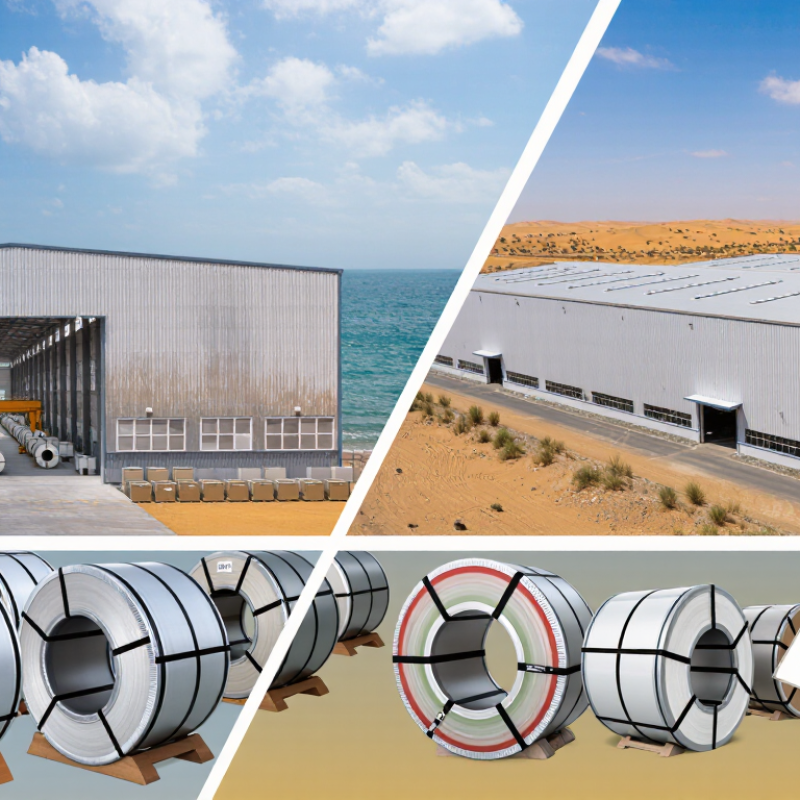
How to Choose Color Coated Coil for Global Projects?
Color coated coil is steel or aluminum coated with a protective layer and colored finish. The process usually includes cleaning, chemical treatment, primer, and topcoat application. This layered structure supports both appearance and corrosion resistance. It also makes the material easier to form into roofing panels, wall cladding, doors, and industrial components.
Its performance depends on more than color. Engineers should check the metal substrate, coating thickness, paint type, gloss level, and forming requirements. A coastal warehouse may need stronger resistance to salt and humidity. A building in a hot region may require a finish that limits solar heat absorption. In cold areas, repeated freezing can expose weak edges and cut surfaces. Small details matter.
Project teams should request technical data, test reports, and samples before ordering large quantities. Visual color can change under different lighting, so a digital image is not enough. Packaging also deserves attention during long-distance transport. Moisture trapped between coils may create staining or early corrosion. That risk is easy to underestimate. No coating suits every climate. Even a carefully selected coil can fail when storage is careless or installation damages the surface. Specifications should be reviewed with local building requirements and real site conditions, not copied from an earlier project.
What Color Coated Coil Is and Why It Matters in Global Projects
| Selection Dimension | Typical Options | Common Technical Range or Requirement | Project Impact | Recommended Use |
|---|---|---|---|---|
| Base Metal | Hot-dip galvanized steel; aluminum-zinc coated steel; zinc-aluminum-magnesium coated steel | Metallic coating mass is commonly specified in g/m² and selected according to corrosion exposure and forming requirements | Determines corrosion resistance, edge protection, forming behavior, and compatibility with local standards | Use galvanized steel for widely standardized construction applications; consider alloy-coated substrates for demanding exposure or improved edge protection |
| Steel Grade and Yield Strength | Forming grade; structural grade; high-strength grade | Typical yield-strength ranges are approximately 140–280 MPa for forming grades and 280–550 MPa for many structural or high-strength grades | Affects load capacity, minimum bend radius, springback, roll-forming settings, and risk of cracking | Select the lowest strength that meets structural calculations when extensive forming is required |
| Steel Thickness | Light-gauge; medium-gauge; heavy-gauge | Common pre-painted coil thicknesses are approximately 0.30–1.20 mm, depending on the application and specification | Controls panel stiffness, span capability, dead load, handling, and material consumption | Verify thickness against structural design, profile geometry, fastener requirements, and local building codes |
| Coil Width | Slit coil; standard-width coil; custom-width coil | Typical construction supply widths range from approximately 600–1,250 mm, while wider or narrower widths may be available for specific lines | Influences yield, slitting waste, roll-forming efficiency, container utilization, and installation layout | Match coil width to the finished profile and allow for side-trim and dimensional tolerances |
| Primer System | Epoxy primer; polyester-compatible primer; corrosion-inhibiting primer | Primer thickness is often specified separately and may commonly be around 5–10 μm, subject to the coating system | Supports adhesion, corrosion protection, forming performance, and compatibility between substrate and topcoat | Choose the primer according to exposure category, forming severity, and the selected topcoat chemistry |
| Topcoat Chemistry | Standard polyester; silicone-modified polyester; polyurethane; polyvinylidene fluoride-based coating | Total organic coating thickness commonly falls within approximately 15–35 μm, depending on the system and service requirement | Affects color retention, chalking resistance, flexibility, scratch resistance, chemical resistance, and expected maintenance interval | Use standard polyester for general building applications; select higher-performance systems for severe ultraviolet, coastal, or chemical exposure |
| Coating Gloss | Low gloss; medium gloss; high gloss; matte finish | Gloss is normally measured at a defined angle, commonly 60°, using a recognized test method | Influences appearance, glare, perceived surface texture, and the visibility of minor surface imperfections | Specify the measurement angle and tolerance instead of relying only on terms such as “shiny” or “matte” |
| Color Control | Standard color reference; project-specific color; multi-coil color matching | Define color using an approved physical sample or an objective color measurement system such as CIELAB with agreed tolerances | Reduces visible variation between production lots, building elevations, replacement panels, and international shipments | Approve a master sample before production and specify inspection conditions, viewing angle, and allowable variation |
| Exposure Environment | Rural; urban; industrial; coastal; high-UV; high-humidity | Classify the environment using a recognized corrosion classification approach, such as ISO 12944, where applicable | Determines the required metallic coating, paint system, edge protection, detailing, and inspection frequency | Use a higher-performance system for salt spray, persistent condensation, industrial pollutants, or strong solar exposure |
| Forming Requirement | Simple bending; roll forming; deep forming; tight-radius forming | Specify minimum internal bend radius relative to sheet thickness; the exact limit depends on grade, coating system, and forming direction | Affects cracking, delamination, exposed metal at bends, dimensional accuracy, and production speed | Request forming test data for tight profiles and confirm whether the visible side must be formed over the inside or outside radius |
| Application | Roofing; wall cladding; sandwich panels; ceiling systems; doors; architectural flashings | Requirements vary for exposed surfaces, concealed surfaces, cut edges, fire performance, acoustic design, and structural loading | Defines the required thickness, strength, coating durability, profile geometry, and installation method | Select the coil only after confirming the complete panel or component design, not from color alone |
| Applicable Standard | ASTM-based; EN-based; ISO-based; regional construction specification | Common references include EN 10169 for continuously organic-coated steel, EN 10346 for continuously hot-dip coated steel, and ASTM A755/A755M for prepainted steel sheet | Ensures that coating mass, mechanical properties, dimensional tolerances, testing, and documentation are comparable across markets | State the governing standard, edition, testing method, and acceptance criteria in the purchase specification |
| Surface Protection During Transport | Removable protective film; moisture-resistant wrapping; edge protection; export packaging | Packaging should prevent water ingress, abrasion, coil movement, and condensation-related storage staining | Reduces transit damage, white rust, surface scratches, and claims caused by long-distance or multimodal shipment | Define packaging, lifting points, storage orientation, maximum storage period, and film-removal requirements |
| Quality Documentation | Mill test certificate; coating test report; dimensional inspection; color and gloss record | Documentation should identify grade, thickness, width, coating mass, paint system, batch or coil number, test results, and applicable standard | Supports customs clearance, traceability, project approval, incoming inspection, and warranty evaluation | Require document review before shipment and retain samples or records for multi-phase global projects |

How to Choose Color Coated Coil for Global Projects?
Project conditions should lead the material decision, not color preference. Start with an exposure map covering humidity, salt, sunlight, temperature, and pollution. Coastal air can accelerate corrosion around cut edges and fasteners. Industrial zones may require stronger corrosion protection and better chemical resistance. Desert projects face intense ultraviolet radiation, dust, and sharp temperature changes. Cold regions need coatings that remain flexible during forming and installation. These details influence the steel substrate, metallic coating, paint system, and film thickness.
Tips: Inspect the full project route. Include storage yards, transport conditions, and installation timing. Request independent test data for corrosion, UV resistance, adhesion, and forming performance. Check both front and reverse coatings. A suitable product can still fail after poor cutting, stacking, or drainage design.
Field experience shows that small assumptions often create expensive repairs. A darker color may absorb more heat and increase panel movement. Thin sections can expose weak edge protection during bending. No coating is perfect. Performance depends on design, handling, and maintenance as well as laboratory results. Use recognized project specifications and compare results from several test methods. It is also wise to review previous projects in similar climates, although local conditions rarely match them exactly. That difference deserves careful attention.
How project conditions determine material and coating requirements
These engineering starting points reflect commonly specified coating levels for color-coated steel. Higher corrosivity, UV exposure, humidity, and salt contamination generally require higher metallic coating mass and thicker, more durable organic coatings. Final requirements should be verified against ISO 12944, EN 10169, local building codes, and the project environment.
Choosing color coated coil requires more than matching a sample card. The substrate sets the project’s durability. Galvanized steel suits many building applications, while aluminum-zinc coated steel often performs better in demanding outdoor conditions. Aluminum reduces weight but may change forming behavior. Check the coating mass, steel grade, tensile strength, and certificate details before ordering.
The paint system must match the exposure. Polyester can suit standard façades, while silicone-modified or fluoropolymer coatings may offer stronger color retention. Coastal air, strong sunlight, humidity, and industrial pollution each create different risks. Color also needs practical judgment. Dark shades absorb more heat, and a small batch variation can become obvious across a long roof. Surface finishes affect appearance and cleaning. Gloss reflects light, matte hides minor marks, and embossed textures can improve visual depth. I once focused too heavily on color and overlooked forming limits. That mistake was expensive.
Tips: Request physical samples, not only digital images. Compare them under daylight and project lighting. Measure coating thickness and gloss with documented methods. Confirm bend performance after painting. Keep one approved reference coil. Surface choices are never perfect; they involve trade-offs between appearance, cost, maintenance, and service life. Even experienced teams should review assumptions before production.
Quality verification begins with the steel substrate, not the painted surface. Request the grade, thickness tolerance, coating mass, paint system, and test results for each production batch. Useful checks include adhesion, bend resistance, impact strength, gloss, color difference, and corrosion performance. A small sample should survive forming without cracking or peeling. It should also match the approved color under controlled lighting. Color can deceive.
Standards must fit the project location and application. Compare requirements with recognized specifications, such as EN 10169 or ASTM A755/A755M. Confirm whether the supplier follows a documented quality system, including ISO 9001 procedures. Ask for mill test certificates, inspection records, and batch traceability. Independent testing can strengthen confidence, especially for large shipments. Certificates alone are not enough; I have seen paperwork look precise while sampling remained weak.
Sustainability needs measurable evidence. Review recycled content, coating chemistry, energy data, waste handling, and environmental product declarations when available. Check whether packaging uses moisture protection without excessive material. Supplier capability also matters. Examine production capacity, slitting accuracy, storage conditions, export packaging, and realistic lead times. Request reference projects with similar thicknesses and coating systems. A factory visit or live video inspection may reveal details that brochures omit. Even a capable supplier can miss a delivery window during peak demand, so define communication, replacement, and claim procedures before placing the order.
How to Choose Color Coated Coil for Global Projects?
Cost planning should begin with the complete project, not the coil price alone. Estimate coating grade, steel thickness, width, packaging, testing, inland transport, and port charges. Import duties may change the final figure. Keep a contingency allowance for currency movement and damaged packages. Many early budgets miss unloading equipment and temporary storage. That mistake is expensive.
Logistics require practical coordination. Confirm the coil’s outside diameter, maximum weight, lifting points, and moisture protection before shipment. Use packaging suitable for sea transit and humid storage conditions. Share loading drawings with the forwarder and installation team. A delivery schedule should include customs clearance, site access, and possible weather delays. Cheap freight can create costly idle labor.
Installation quality affects service life. Store coils on a dry, level surface, away from concrete dust and standing water. Use clean tools, correct slitting settings, and compatible fasteners. Small scratches need immediate repair with an approved touch-up system. Keep batch records, coating specifications, inspection reports, and installation photographs. Maintenance plans should define inspection intervals, cleaning methods, and repair responsibility. In practice, teams sometimes choose a coating for appearance, then discover poor performance near saltwater. Recheck the environment. A stronger finish may cost more initially, but replacement work usually costs more. Some assumptions will be wrong, so review the plan after supplier quotations and site surveys.


For those larger-sized parts, or smaller quantity runs, we have 2 independent powder coat booths and ovens. The quality, durability and affordability of today’s powder coating finishes make this the process of choice for world-class companies.
Powder coating advantages over other forms of coating are many. Materials used in the Powder coating process can be metals and non-metals that come in a multitude of thicknesses, textures, colors, etc. Another of Powder coating’s biggest advantages over conventional coatings is its ability to create finishes in many different textures. Powder Coating Booths allow us the ability to apply these advantages to large products.
Tri-State Fabricators runs a full-service conveyor line for painting. Wet painting can provide protection or decoration to many different part styles. From start to finish, every project is easier to undergo random and point-based inspection by our skilled painting team.
Advantages to our Wet Paint Line are these lines start with product prep and ends with a thorough inspection of a high quality finished product. Our ability to complete large and small projects with a superior finish and doing so in a timely and economical fashion. This passes along the savings in production to our customers. When powder coating ins not an option, our Wet Paint Line gets the job done right the first time.
When the parts get big and heavy we roll-out our custom paint racks and oversize booth. By utilizing our partnerships with all the major paint brands, we can match virtually any color with wet paint.
The advantages of having access to a Wet Paint Booth are many. Large projects of many different shapes can be loaded into the booth. The Wet Paint Booth offers an environment that is much more controlled than a typical parts painting operation.
Not only are they used because of their controlled environment, but they’re are also advantageous when it comes to applying paint to parts that are needed in industries that require specialty coatings such as medical, aerospace, etc.
Our military forces have some very high standards when it comes to the finish of their vehicles and equipment. From the first pre-treatment step to final coat, it takes a great deal of knowledge and experience to protect the men and women of our armed forces. They deserve only the best, and Tri-State Fabricators provides it.
All of our processes are closely monitored by our staff and management teams. Both of which are highly trained in the processes of metal fabrication and finishing. Tri-State Fabricators’ goal is to always fully satisfy each and every customer, including the military. We will always put a 110% into what we do.
Abrasive media blasting is an excellent way to remove old paint, rust, and increase the paint/powder adhesion. Glass beads produce a much smoother and brighter finish than angular abrasives; leaving the part clean yet without any dimensional change. Chemically inert and environmentally friendly, we can recycle our beads approximately 30 times; making them a more preferred method of metal cleaning or surface finishing.
Advantages to Glass Bead Blasting are many. Glass bead blast media is used when a project is needing rough surfaces need to become smooth for applications of coatings such as paint. It is typically used to clean paint and rust from a product surface without deforming the surface it is being used on. Overall, compared to many other blasting media, Glass Bead Blasting is a very economical choice and those savings are always passed on to our customers.
Tri-State Fabricators utilize a zinc phosphate wash to clean and etch the material to ensure the best paint adhesion possible. The unique design of our 3-stage wash system does the work like a 5-stage. From Cleaning and rinsing to conversion coating and post-treatment, Our Part Washing process is a complete service and works throughout the fabrication service and the finishing service.
Along with the previously mentioned benefits, Curing is a vital chemical reaction that leaves the product finish hard and relatively safe from mild abrasion and aggressive corrosion. This process can be done in more than one way; ambient air-dry or in curing ovens at temps that exceed 240°.
From fixing paint mistakes (someone else’s of course) to simply cleaning our paint line hooks, our burn-off oven is put to good use. After a quick burn-off, a little clean up, and a fresh coat of paint, your parts will look better than new.
Why does our Burn-Off Oven work so well? Because super heating the air around parts turns the materials into ashes. From paint and powder coatings to rubber and machining oils, high temps do the job without degrading the integrity of the part.
Masking is a vital part of producing high quality products. We have die-cut masking patterns to protect machined surfaces as well as a wide range of plugs and caps to protect threaded holes and bolts. We provide permanent and temporary masking.
Masking allows the selected sections of a product to be protected from a fabrication or finishing service. This can be with both chemicals when etching and tapes, paints when only finishing just a section of the product. Masking is great in aiding the customization process of a project.
Screen printing is a photographic process that transfers artwork onto a porous nylon screen which allows colored ink to flow through the screen and be deposited on an aluminum or plastic component. We can generally have just about any design created onto a screen for your parts.
Some of the advantages of Screen Printing are, brand recognition for your business displaying on your products, assembly instructions, product warnings/hazards, etc. Tri-State Fabricators produces Screen Printing of the highest quality so you know it’s durable.
Metal Finishing is the art of treating the exterior portion of product, often metal but can also be made of other materials, so that the surface is clean and free of any debris. Then the process of applying coats or either paint of powder coat takes place. This coating process improves the quality of the product in both appearance and resistance to wear and corrosion.
Tri-State Fabricators, Inc., understands that a project typically isn’t complete until a high-quality finish has been added to your product. This is why our painting and powder coating teams continuously inspect the products throughout the Metal Finishing process.

