Why Choose Circular Waveguide for Your Next Project?
In recent years, the demand for innovative communication solutions has risen. Among these solutions, the Circular Waveguide stands out. Dr. Emily Johnson, an expert in waveguide technology, states, "Circular Waveguides offer unmatched efficiency in high-frequency applications." This statement reflects the growing recognition of their benefits.
The Circular Waveguide allows for greater flexibility in design compared to traditional rectangular waveguides. Its unique structure minimizes signal loss and enhances performance. Engineers often turn to these guides for complex projects that require reliable signal transmission. In many cases, the shift to Circular Waveguides proves beneficial, but it’s crucial to evaluate specific project needs.
Yet, these systems are not without challenges. Designing with Circular Waveguides can be intricate, requiring specialized knowledge. Engineers must consider factors like material selection and manufacturing techniques. Despite such complexities, the potential advantages, in terms of efficiency and performance, make Circular Waveguides an attractive choice for forward-thinking projects.
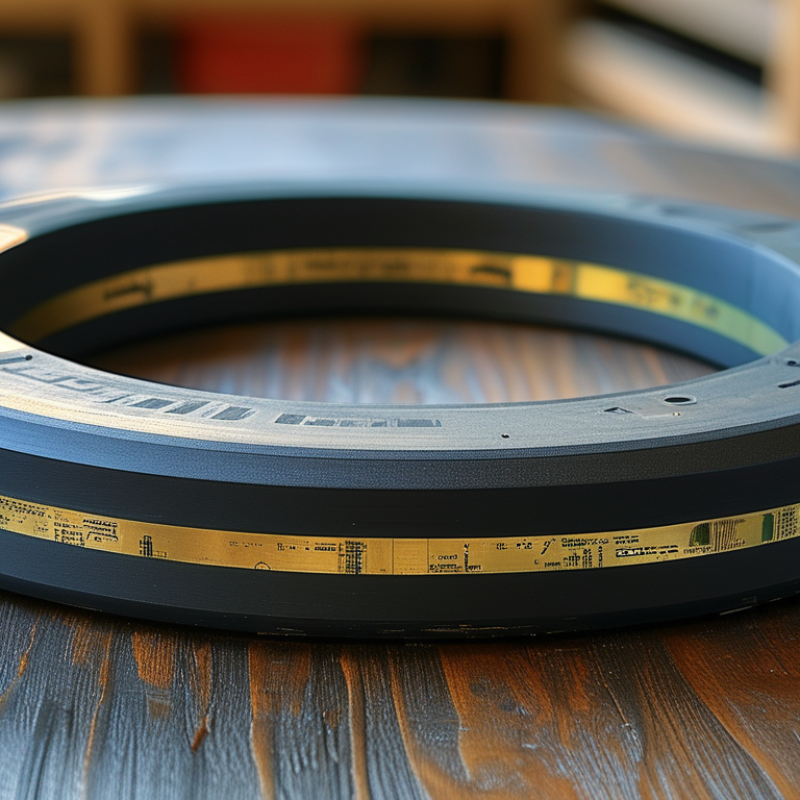
Benefits of Circular Waveguides in High-Frequency Applications
Circular waveguides are gaining popularity in high-frequency applications for several compelling reasons. Their unique structural advantages allow for more efficient transmission of electromagnetic waves. Research by the IEEE indicates that circular waveguides have lower attenuation compared to rectangular counterparts. This efficiency becomes crucial in applications that demand minimal signal loss.
Moreover, circular designs exhibit superior mode control. They can support multiple propagation modes, facilitating flexible system designs. The National Institute of Standards and Technology (NIST) reported that these waveguides can handle higher power levels, making them ideal for industrial and communication sectors. The ability to manage high frequencies with stability can significantly enhance overall system performance.
However, the choice of materials and dimensions is vital. Improper selections can lead to performance issues. Engineers must ensure compatibility with existing systems, which requires detailed analysis and reflection on specific project needs. Developing expertise in waveguide design is essential. While circular waveguides offer distinct advantages, challenges related to installation and integration should not be overlooked.
Comparison of Circular vs. Rectangular Waveguides: Performance Metrics
When considering waveguide design, the choice between circular and rectangular waveguides is crucial. Circular waveguides generally support higher frequencies, which can lead to better performance in many applications. Their cylindrical shape allows for more uniform radiation patterns and reduced polarization losses. In scenarios where space is limited, their compact form can facilitate easier integration.
Rectangular waveguides, on the other hand, offer a straightforward design and ease of fabrication. They excel in certain frequency ranges and provide a wider bandwidth. However, their sharp corners can lead to reflections and mode conversions, which may degrade signal quality. This is an important factor to consider in high-frequency applications where precision is key.
In practice, each waveguide type comes with its own set of challenges. Circular waveguides can be difficult to manufacture with tight tolerances. This can influence overall performance in critical scenarios. Meanwhile, rectangular variants may be less efficient at higher frequencies. Balancing these considerations is essential for optimal performance in your next project.
Performance Metrics of Circular vs. Rectangular Waveguides
Key Industry Applications Utilizing Circular Waveguide Technology
Circular waveguides are increasingly important in various industries. Their unique shapes allow for efficient transmission of signals. This design minimizes loss and interference, making them ideal for high-frequency applications. In aerospace, these waveguides support radar systems. They ensure signals penetrate atmospheric conditions effectively. This capability is crucial for navigation and communication.
Communication systems benefit greatly from circular waveguides. They facilitate secure and reliable signal transmission over long distances. This is particularly true in satellite technology, where maintaining strong connections is vital. Industrial applications, like microwave heating, also utilize this technology. Circular waveguides distribute energy uniformly, enhancing efficiency.
Despite their advantages, there are challenges. Designing and manufacturing circular waveguides can be complex. The materials used must withstand high temperatures and pressures. Engineers need to address these issues carefully. Continuous research and development are essential to improve waveguide performance further.
Cost-Effectiveness and Efficiency of Circular Waveguides in Construction
Circular waveguides offer significant cost-effectiveness and efficiency in construction projects. Their design allows for better energy transmission, minimizing losses compared to traditional rectangular waveguides. According to a recent industry report, using circular waveguides can reduce energy losses by up to 15%. This improvement translates into lower operational costs over time, making them a financially attractive option.
The ability to handle various frequencies with minimal distortion enhances their efficiency. Studies indicate that circular waveguides can support a wide range of applications within the telecommunications sector.
They're particularly noted for their high power handling capabilities, allowing for seamless integration in demanding environments. The design also enables reduced material use, which contributes to a smaller carbon footprint.
While circular waveguides are effective, they may present challenges during installation. The need for precise alignment and specialized fittings can complicate the installation process. Moreover, their initial cost may be higher than alternatives. However, the long-term savings in operational efficiency often justify these early investments. It's important to evaluate both immediate and future financial impacts when considering this technology.
Future Trends in Circular Waveguide Development and Innovation
The development of circular waveguides is increasingly significant in sectors like telecommunications and satellite systems. An industry report by MarketsandMarkets predicts that the waveguide market will reach $2.7 billion by 2026, growing at a CAGR of 8.5%. This growth is driven by advancements in performance and the rising demand for high-frequency applications.
Future trends highlight the integration of new materials, such as ceramics and composites, which enhance durability and performance. These materials can withstand extreme conditions better than traditional metals. Additionally, innovation in fabrication techniques allows for more complex designs, improving efficiency. Emerging technologies in 5G and IoT drive the need for precise and efficient signal transmission. This has led to a closer examination of existing design methods, prompting engineers to rethink conventional techniques.
Despite the advancements, challenges remain. Many designers still face limitations in manufacturing capacity and cost. The learning curve for new technologies can slow adoption. Awareness of these hurdles is essential for informed decision-making in project planning. As the industry evolves, it is crucial to balance innovation with practical application.





