


China has become a major source of mobile robot components, including compact and heavy-duty Agv Chassis platforms. Choosing a manufacturer, however, requires more than comparing online prices. The chassis must match your vehicle’s payload, dimensions, floor conditions, navigation method, and operating schedule. A small mistake can cause repeated wheel slippage, unstable turning, or premature battery drain.
Practical evaluation should begin with technical evidence. Ask for rated payload data, motor specifications, wheel material, suspension details, braking performance, and controller interfaces. Request test reports from realistic conditions, such as polished concrete, narrow aisles, ramps, and uneven joints. A sample chassis can reveal vibration that brochures often hide. Check whether the supplier supports custom mounting holes, battery compartments, emergency stops, and communication protocols. These details affect integration time.
Manufacturer reliability also matters. Review factory capacity, quality-control procedures, spare-parts availability, and response times from previous customers. Certification documents should be current, traceable, and relevant to your target market. Do not accept vague claims without verification. A low quotation may look attractive, but weak after-sales support can become expensive. Very expensive is not automatically better.
Some buyers focus too heavily on maximum load. That is understandable, but incomplete. Real performance depends on speed, center of gravity, duty cycle, and floor friction. A reliable decision combines engineering fit, documented testing, transparent communication, and long-term service. The “best” China Agv Chassis manufacturer may not be the largest one. It may be the supplier that understands your application, admits limitations, and improves the design when field results expose a weakness.
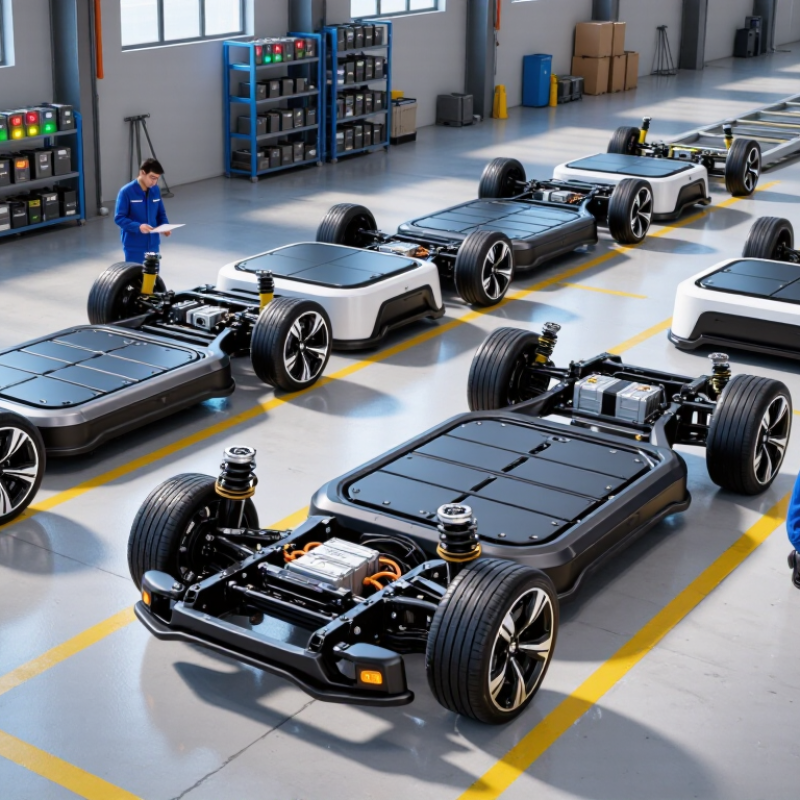
An AGV chassis is the mobile foundation of an automated guided vehicle. It carries the battery, drive system, sensors, controller, and payload. Think of it as the vehicle’s skeleton. Its frame affects stability, turning radius, ground clearance, and service access. A strong chassis must handle repeated starts, stops, uneven floors, and daily warehouse traffic.
Manufacturer selection matters because a chassis is rarely a simple catalogue purchase. The supplier should understand your load distribution, aisle width, floor conditions, and operating hours. Ask for verified load tests, dimensional drawings, wiring details, and maintenance guidance. Check how the drive wheels perform under partial loads. Also review safety integration, spare-part availability, software compatibility, and response times. A low initial price may hide weak documentation or difficult repairs. That mistake can become expensive.
Tips: Request a sample test or factory acceptance test. Place weighted loads on the chassis and observe braking, noise, vibration, and turning accuracy. Discuss future changes, too. No chassis is perfect, and one design may sacrifice speed for stability. I have seen technically attractive solutions fail because technicians could not reach the battery quickly. Manufacturer reliability should include engineering communication, honest limitations, and consistent quality control. Ask difficult questions before signing. Clear answers are valuable evidence.

Choosing among China’s top AGV chassis manufacturers requires more than comparing price and payload. A high-quality chassis starts with a rigid frame, accurate machining, and stable wheel alignment. These details reduce vibration when the vehicle carries heavy goods across uneven factory floors.
Check the drive system carefully. Reliable motors should provide smooth torque at low speed and controlled acceleration. Encoders must support precise positioning, while suspension or adjustable wheels can maintain traction. Battery space, charging access, and heat management also matter during long shifts. Small details become costly problems.
Safety features deserve practical testing. Emergency stopping, obstacle detection, speed limitation, and manual recovery should work under real operating conditions. Ask for load tests, endurance records, dimensional drawings, and inspection data. A manufacturer with engineering experience should explain tolerances, maintenance intervals, and integration limits clearly. Standard compliance is useful, but documents alone cannot prove field reliability.
Do not ignore software compatibility. The chassis should communicate consistently with navigation, control, and warehouse systems. CAN, Ethernet, or other interfaces must be documented and tested. I have found that “universal” designs often need extra adaptation. That is not always a defect, but it should be priced and planned honestly. One overlooked cable route can delay an entire deployment.
Evaluating China’s leading AGV chassis manufacturers requires more than comparing prices and catalog photos. Examine their engineering experience with your actual load, aisle width, floor condition, and operating hours. A capable supplier should provide tested data for payload, turning radius, climbing ability, braking distance, and battery endurance. Ask for drawings and a working sample.
Look closely at the chassis structure. Check weld consistency, wheel alignment, cable protection, and access to service parts. Request records from endurance tests, not only laboratory claims. Review the drive controller, safety interfaces, encoder accuracy, and communication protocols. These details affect positioning stability when the floor contains joints, dust, or slight slopes. Some suppliers customize quickly. That is useful, but rushed customization can hide design weaknesses.
Visit the production site when possible. Observe incoming material inspection, assembly procedures, and final testing. Speak with technical staff, not only sales representatives. Ask how they handle failed components, software changes, spare parts, and remote troubleshooting. Certification can support credibility, but it does not replace field evidence. A polished datasheet may still miss thermal performance during long shifts. That matters.
Compare warranty terms, delivery controls, and documentation quality. Request references from similar applications and verify whether the machines are still operating reliably. Do not judge a manufacturer by one successful demonstration. Repeat the test with your pallet, route, and charging schedule. Even strong suppliers may need improvement in communication or documentation. That weakness should be identified before a purchase order.
China Top AGV Chassis Manufacturers: How to Choose?
Before choosing an AGV chassis supplier, buyers should compare performance against their actual warehouse conditions. Check rated payload, chassis size, turning radius, ground clearance, and climbing ability. A chassis carrying 500 kilograms may perform poorly on uneven floors. Ask for test data under similar loads. Battery type, charging time, operating hours, and replacement cost also deserve attention. These details affect daily productivity more than a low purchase price.
Tips: Request a sample test or video demonstration. Measure stopping distance, noise, vibration, and positioning accuracy. Confirm whether the chassis supports your navigation method, control system, sensors, and software interface. Review drawings carefully. Small mounting errors can delay integration. Supplier experience matters, but documented engineering support matters more. Ask about quality inspections, spare parts, warranty terms, delivery schedules, and remote troubleshooting. A reliable supplier should explain limitations clearly, not promise everything.
Buyers should also compare customization capability and long-term maintenance. Can the supplier adjust wheel layout, battery position, or protective structure? Are replacement parts standardized and available? Total cost includes integration, downtime, training, and future repairs. It is tempting to select the cheapest quotation. That decision can become expensive after installation. Some requirements may remain unclear during the first discussion, so record assumptions in writing. No comparison is perfect. A careful buyer revisits the evaluation after a real-site trial.
| Evaluation Factor | Why It Matters | Recommended Comparison Benchmarks | Documents or Tests Buyers Should Request | Suggested Weight |
|---|---|---|---|---|
| Payload Capacity | The chassis must safely carry the robot body, battery, sensors, controller, and the intended load without excessive frame deflection or loss of traction. | Compare the rated payload with the actual gross weight of the vehicle. Include a safety margin of at least 20% Check whether the rating applies during static operation, driving, turning, or ramp climbing. | Load test report, structural calculation, axle-load data, and a demonstration under the buyer's real load distribution. | 15% |
| Dimensions and Mechanical Compatibility | Incorrect mounting dimensions can create redesign costs, installation delays, and unstable weight distribution. | Compare overall length, width, height, wheelbase, mounting-hole pattern, center of gravity, ground clearance, and turning envelope. Tolerance: verify on approved engineering drawings | 2D drawings, 3D CAD files, mounting interface specifications, and a sample-fit inspection. | 10% |
| Drive and Steering Performance | Motor torque, wheel configuration, and steering architecture determine acceleration, maneuverability, traction, and performance on uneven floors. | Compare rated speed, acceleration, turning radius, maximum grade, wheel material, drive-wheel quantity, and skid-steer or differential-drive behavior. Test with the target payload | Performance curves, grade-climbing test, turning test, floor-condition test, and motor-controller specifications. | 15% |
| Navigation and Control Compatibility | The chassis must communicate reliably with the buyer's navigation system, fleet manager, PLC, sensors, and upper-level software. | Check support for CAN bus, Ethernet, RS-232/RS-485, digital I/O, API or SDK access, encoder feedback, emergency-stop signals, and control-mode options. Require an interface control document | Communication protocol, API documentation, sample code, wiring diagram, integration checklist, and live interoperability test. | 15% |
| Battery System and Operating Time | Battery voltage, capacity, charging method, and thermal protection directly affect operating hours, downtime, and vehicle size. | Compare battery chemistry, nominal voltage, ampere-hour capacity, continuous current, charging time, automatic charging compatibility, battery-swap design, and estimated runtime under actual duty cycles. Runtime should be validated under real payload and floor conditions | Battery datasheet, battery-management-system specifications, runtime test, charger certification, and cycle-life information. | 12% |
| Safety and Protection Functions | Safety functions reduce the risk of collision, uncontrolled movement, electrical hazards, and damage to people or equipment. | Check emergency stop, protective bumpers, obstacle-sensor interfaces, speed reduction zones, audible and visual alarms, braking behavior, overload protection, and restart logic. Assess against the applicable local safety requirements | Risk assessment, safety circuit diagram, stop-distance test, functional-safety documentation, and applicable conformity declarations. | 15% |
| Floor Adaptability and Environmental Rating | AGV chassis performance can change substantially with floor joints, dust, moisture, temperature, slopes, and surface friction. | Compare minimum floor clearance, allowable floor gaps, slope capability, operating temperature, humidity range, wheel-floor friction, and enclosure rating such as IP54 or higher where required. Match the rating to the actual facility | Environmental test results, IP test report when applicable, wheel specification, floor-condition trial, and operating-limit statement. | 8% |
| Manufacturing Quality and Consistency | Stable production processes help ensure that engineering samples, pilot units, and mass-produced chassis have consistent performance. | Compare incoming inspection, assembly traceability, calibration procedures, end-of-line testing, supplier controls, and defect-handling processes. A documented quality system is preferable | Quality manual, inspection plan, sample test records, process-control documents, nonconformance procedure, and factory audit results. | 8% |
| Customization and Engineering Support | AGV projects often require changes to mounting plates, wiring, software interfaces, battery layout, sensors, or load-handling structures. | Evaluate design capability, engineering response time, prototype process, drawing-control procedure, change-management method, and ability to support low-volume customization. Define customization limits before quotation | Engineering team profile, sample drawings, prototype schedule, change-request workflow, and a written scope of supply. | 7% |
| Testing, Reliability, and Serviceability | Reliability and easy maintenance influence total ownership cost and the availability of the AGV fleet. | Compare endurance testing, motor and gearbox access, wheel replacement time, cable protection, spare-parts availability, preventive-maintenance intervals, and mean-time-to-repair targets. Request data based on comparable applications | Endurance-test records, maintenance manual, spare-parts list, warranty terms, service response commitment, and failure-analysis process. | 8% |
| Lead Time, Delivery Terms, and Total Cost | The lowest purchase price may not represent the lowest project cost after integration, tooling, freight, spare parts, training, and downtime are included. | Compare prototype lead time, production lead time, minimum order quantity, tooling charges, packaging, shipping terms, taxes, spare-parts cost, warranty coverage, training, and integration labor. Use a total-cost-of-ownership calculation | Formal quotation, delivery schedule, warranty policy, payment terms, Incoterms, spare-parts price list, and project-cost breakdown. | 7% |
Choosing a China-based AGV chassis manufacturer requires more than checking payload figures. Verify the chassis through test records, not polished brochures. The International Federation of Robotics reported 541,302 industrial robot installations worldwide in 2023. China represented about 51% of that total. This scale increases supplier choice, but it also makes technical screening essential.
Request load testing at the rated payload and 125% of it. Check wheel slip, stopping distance, battery temperature, and vibration on uneven floors. Confirm connector pinouts, CAN communication, mounting dimensions, and software access before purchasing. A chassis may move smoothly during a demonstration, yet fail after months of dust and repeated impacts. Review risk assessments against ISO 3691-4 and functional safety practices under ISO 13849. Ask for traceable serial numbers and inspection records. Missing documents are a warning.
Tips: Run a sample chassis for at least two weeks. Record faults by shift, floor zone, and battery level. Compare actual runtime with the supplier’s stated figure. Invite an independent engineer to witness testing. Also examine after-sales support: spare-part stock, response times, remote diagnostics, repair procedures, and warranty exclusions. The 2024 IFR report shows continuing automation growth, but growth does not guarantee mature service. I have seen projects focus heavily on price and regret weak documentation later. That lesson is uncomfortable. Compatibility should be proven with your controller, navigation system, ramps, and safety scanners, not assumed from a similar model.
Use this weighted scorecard to verify AGV chassis quality, compatibility, and after-sales support before selecting a manufacturer. The percentages represent a practical procurement framework and should be adjusted to the project’s payload, duty cycle, site conditions, and fleet software.


For those larger-sized parts, or smaller quantity runs, we have 2 independent powder coat booths and ovens. The quality, durability and affordability of today’s powder coating finishes make this the process of choice for world-class companies.
Powder coating advantages over other forms of coating are many. Materials used in the Powder coating process can be metals and non-metals that come in a multitude of thicknesses, textures, colors, etc. Another of Powder coating’s biggest advantages over conventional coatings is its ability to create finishes in many different textures. Powder Coating Booths allow us the ability to apply these advantages to large products.
Tri-State Fabricators runs a full-service conveyor line for painting. Wet painting can provide protection or decoration to many different part styles. From start to finish, every project is easier to undergo random and point-based inspection by our skilled painting team.
Advantages to our Wet Paint Line are these lines start with product prep and ends with a thorough inspection of a high quality finished product. Our ability to complete large and small projects with a superior finish and doing so in a timely and economical fashion. This passes along the savings in production to our customers. When powder coating ins not an option, our Wet Paint Line gets the job done right the first time.
When the parts get big and heavy we roll-out our custom paint racks and oversize booth. By utilizing our partnerships with all the major paint brands, we can match virtually any color with wet paint.
The advantages of having access to a Wet Paint Booth are many. Large projects of many different shapes can be loaded into the booth. The Wet Paint Booth offers an environment that is much more controlled than a typical parts painting operation.
Not only are they used because of their controlled environment, but they’re are also advantageous when it comes to applying paint to parts that are needed in industries that require specialty coatings such as medical, aerospace, etc.
Our military forces have some very high standards when it comes to the finish of their vehicles and equipment. From the first pre-treatment step to final coat, it takes a great deal of knowledge and experience to protect the men and women of our armed forces. They deserve only the best, and Tri-State Fabricators provides it.
All of our processes are closely monitored by our staff and management teams. Both of which are highly trained in the processes of metal fabrication and finishing. Tri-State Fabricators’ goal is to always fully satisfy each and every customer, including the military. We will always put a 110% into what we do.
Abrasive media blasting is an excellent way to remove old paint, rust, and increase the paint/powder adhesion. Glass beads produce a much smoother and brighter finish than angular abrasives; leaving the part clean yet without any dimensional change. Chemically inert and environmentally friendly, we can recycle our beads approximately 30 times; making them a more preferred method of metal cleaning or surface finishing.
Advantages to Glass Bead Blasting are many. Glass bead blast media is used when a project is needing rough surfaces need to become smooth for applications of coatings such as paint. It is typically used to clean paint and rust from a product surface without deforming the surface it is being used on. Overall, compared to many other blasting media, Glass Bead Blasting is a very economical choice and those savings are always passed on to our customers.
Tri-State Fabricators utilize a zinc phosphate wash to clean and etch the material to ensure the best paint adhesion possible. The unique design of our 3-stage wash system does the work like a 5-stage. From Cleaning and rinsing to conversion coating and post-treatment, Our Part Washing process is a complete service and works throughout the fabrication service and the finishing service.
Along with the previously mentioned benefits, Curing is a vital chemical reaction that leaves the product finish hard and relatively safe from mild abrasion and aggressive corrosion. This process can be done in more than one way; ambient air-dry or in curing ovens at temps that exceed 240°.
From fixing paint mistakes (someone else’s of course) to simply cleaning our paint line hooks, our burn-off oven is put to good use. After a quick burn-off, a little clean up, and a fresh coat of paint, your parts will look better than new.
Why does our Burn-Off Oven work so well? Because super heating the air around parts turns the materials into ashes. From paint and powder coatings to rubber and machining oils, high temps do the job without degrading the integrity of the part.
Masking is a vital part of producing high quality products. We have die-cut masking patterns to protect machined surfaces as well as a wide range of plugs and caps to protect threaded holes and bolts. We provide permanent and temporary masking.
Masking allows the selected sections of a product to be protected from a fabrication or finishing service. This can be with both chemicals when etching and tapes, paints when only finishing just a section of the product. Masking is great in aiding the customization process of a project.
Screen printing is a photographic process that transfers artwork onto a porous nylon screen which allows colored ink to flow through the screen and be deposited on an aluminum or plastic component. We can generally have just about any design created onto a screen for your parts.
Some of the advantages of Screen Printing are, brand recognition for your business displaying on your products, assembly instructions, product warnings/hazards, etc. Tri-State Fabricators produces Screen Printing of the highest quality so you know it’s durable.
Metal Finishing is the art of treating the exterior portion of product, often metal but can also be made of other materials, so that the surface is clean and free of any debris. Then the process of applying coats or either paint of powder coat takes place. This coating process improves the quality of the product in both appearance and resistance to wear and corrosion.
Tri-State Fabricators, Inc., understands that a project typically isn’t complete until a high-quality finish has been added to your product. This is why our painting and powder coating teams continuously inspect the products throughout the Metal Finishing process.

