


How to Choose Channel Magnets for Global Sourcing?

Choosing Channel Magnets for global sourcing requires more than comparing prices or catalog photographs. These assemblies combine permanent magnets with steel channels, creating focused magnetic force for mounting, holding, signage, doors, fixtures, and industrial equipment. The correct choice depends on pull strength, dimensions, operating temperature, corrosion resistance, coating, and installation conditions.

A reliable sourcing process begins with a clear technical brief. Specify magnet grade, channel material, surface finish, hole pattern, adhesive requirements, and acceptable tolerances. Ask suppliers for measured pull-force data, temperature limits, material certificates, and inspection records. A sample should be tested on the actual steel surface, not only on a supplier’s test plate. Small differences matter. A painted panel may reduce holding force. An air gap can change performance significantly.

Supplier evaluation also deserves careful attention. Review manufacturing experience, quality controls, packaging methods, and export capability. Independent inspection can verify dimensions, coating quality, magnet polarity, and batch consistency before shipment. Confirm labeling and shipping documents with qualified logistics professionals, because international requirements vary by product design and destination. No checklist is perfect. A supplier with attractive pricing may still create delays through weak communication or inconsistent tolerances. Conversely, a higher quoted price may include better testing and safer packaging.

This guide explains how to compare Channel Magnets with practical sourcing evidence. It considers performance, durability, cost, supplier reliability, and long-term use. The best decision is rarely the cheapest one. It is the option that performs predictably after production, transport, installation, and repeated handling. Testing reveals the truth.
How to Choose Channel Magnets for Global Sourcing?

Define Channel Magnets and Their Global Sourcing Applications

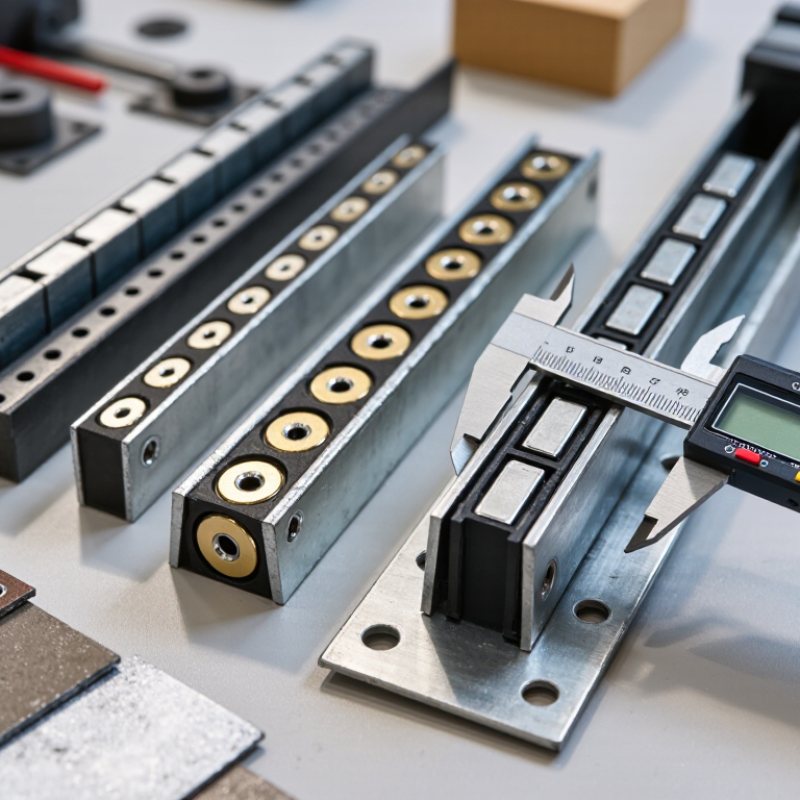
Channel magnets are magnetic holders built into a channel-shaped metal profile. They usually contain one or more permanent magnets inside steel or coated housings. The channel protects the magnet and spreads its holding force across a wider surface. These components can secure signs, labels, light fixtures, tools, and removable panels without drilling holes. Their practical value depends on the load, contact surface, vibration, and installation angle.

Global sourcing requires more than comparing magnet prices. Buyers should define channel length, profile material, magnetic pull, operating temperature, surface treatment, and required tolerances. A magnet that performs well in a clean warehouse may lose effectiveness on painted steel or uneven surfaces. Moisture and salt exposure also influence coating selection. Request samples before placing a large order. Test them under real conditions, not only on a flat laboratory plate. Small details matter.

Tips: Ask suppliers for pull-force test methods and material declarations. Confirm packaging protects channels from impact during international transport. Review production samples against approved drawings. The strongest magnet is not always the best choice; excessive force may slow removal or damage thin panels. Some specifications remain uncertain until field testing. That is a weakness, but it is also useful evidence for improving the next purchase. Keep communication written, measurable, and easy to audit.


How to Choose Channel Magnets for Global Sourcing?

Channel magnets are permanent magnets mounted inside a steel channel to concentrate magnetic flux and provide strong holding force. The chart compares the typical upper range of maximum energy product for common magnet materials used in channel-magnet applications.

Higher MGOe generally supports stronger performance in compact designs. Ferrite is commonly selected for cost-sensitive and high-temperature applications, while neodymium is preferred when high holding force and small size are priorities. Actual pull force depends on magnet dimensions, steel quality, air gap, coating, and operating temperature.

Data basis: typical published maximum-energy-product ranges for standard permanent-magnet materials; values are indicative rather than supplier-specific specifications.

Assess Magnetic Performance, Materials, and Product Specifications

How to Choose Channel Magnets for Global Sourcing?

Channel magnets need more than strong magnetic force. Assess the required holding force at the actual working distance. A magnet rated at the surface may perform differently through paint, glass, or a steel gap. Request measured pull-force data, magnetic field readings, and test conditions from each supplier. Temperature matters too. Heat can reduce performance, especially in enclosed equipment or outdoor fixtures.

Material selection affects durability, cost, and handling. Neodymium magnets provide high strength in compact sizes, while ferrite magnets often suit less demanding applications. Check the steel channel, magnet grade, plating, and operating temperature range. Confirm dimensions, hole positions, adhesive type, and tolerances. I once focused too heavily on pull force and overlooked coating damage during shipment. That mistake changed my inspection checklist.

Tips: Ask for samples from different production batches. Test them with your own steel target, not only a supplier fixture. Record force, dimensions, surface condition, and temperature. Clarify packaging requirements for international transport. Certificates can support trust, but they do not replace practical testing. Small details matter. Suppliers should provide drawings, material declarations, inspection reports, and traceable batch information. If results vary, pause before placing a large order. A cheaper magnet is not useful when its coating fails, its holes shift, or its force drops in real service.

Compare Suppliers, Certifications, Pricing, and Minimum Order Quantities

How to Choose Channel Magnets for Global Sourcing?

Channel magnets vary by grade, coating, holding force, and steel housing. Compare these specifications before comparing prices. A cheaper magnet may use lower-grade material or thinner plating. Ask suppliers for pull-force test conditions, dimensional tolerances, and batch inspection records. The testing surface matters. So does temperature.

Certification evidence should be specific, current, and traceable. ISO 9001 supports process control, but it does not guarantee magnetic performance. Request material declarations for RoHS and REACH compliance. For rare-earth channel magnets, supply risk deserves attention. The International Energy Agency reported that the top three refining countries controlled over 90% of refined rare-earth output in 2023. USGS estimated 2024 global rare-earth mine production at about 390,000 metric tons of rare-earth-oxide equivalent. These figures do not predict every quotation, but they explain sudden cost changes. A spreadsheet can still lie.

Tips: Compare at least three suppliers using the same drawing and test method. Separate tooling charges, packaging, freight, and duties from unit pricing. Record MOQ, lead time, sample fees, and replacement terms. A low MOQ may carry a higher unit cost. A large MOQ may trap cash in slow-moving stock. Ask for a pilot order before committing. This step is sometimes skipped, and that is a mistake worth reconsidering. Use supplier audits where possible, especially for coating quality and final inspection. Cite current certificates, not screenshots. Sources: IEA, Global Critical Minerals Outlook 2024; USGS, Mineral Commodity Summaries 2025.

How to Choose Channel Magnets for Global Sourcing? - Compare Suppliers, Certifications, Pricing, and Minimum Order Quantities

Indicative sourcing comparison for neodymium channel magnets. Prices are typical bulk estimates in USD per piece for standard dimensions and may vary by drawing, coating, tolerances, packaging, freight, and order volume.
Supplier Profile Typical Product Configuration Magnet Grade Size Range Surface Finish Dimensional Tolerance Certifications and Documents Indicative Price at 1,000 pcs Minimum Order Quantity Sample Lead Time Mass-Production Lead Time Typical Trade Terms Best Fit for Buyers
Supplier A
Specialized Magnet Factory
Steel channel with two countersunk holes; bonded neodymium magnets; suitable for fixtures and light-duty mounting N35–N42 20–100 mm length
8–30 mm width
4–10 mm height
Zn plating or black epoxy-coated steel channel ±0.10 mm for machined channel dimensions ISO 9001 RoHS declaration REACH declaration Material report $0.42–$0.78 500 pcs 7–10 working days 20–28 working days EXW or FOB Prototype programs and medium-volume industrial hardware
Supplier B
High-Volume Export Manufacturer
Steel-backed channel magnet with rubberized protective coating; optional threaded stud or mounting hole N35–N48 25–150 mm length
10–35 mm width
5–12 mm height
Nickel-plated channel, rubber cover, or epoxy seal ±0.15 mm standard ISO 9001 RoHS test report REACH statement Packing specification $0.35–$0.68 1,000 pcs 5–8 working days 18–25 working days FOB or CIF Repeat orders where unit cost and production capacity are priorities
Supplier C
Custom Engineering Supplier
Custom channel assembly with locating features, adhesive backing, tapped holes, or non-standard pole orientation N38–N52 Drawing-based; common length range 15–200 mm Nickel, zinc, epoxy, rubber overmold, or customer-specified finish ±0.05 mm on selected machined features ISO 9001 PPAP available RoHS/REACH Material traceability $0.85–$1.90 100 pcs for development
300 pcs for production
10–15 working days 25–35 working days EXW, FOB, or DDP by quotation Automotive, automation, and applications requiring controlled tolerances
Supplier D
Retail-Ready Magnet Converter
Standard channel magnet supplied with protective sleeve, individual labeling, barcode, and retail packaging N35–N42 20–75 mm length
8–25 mm width
4–8 mm height
Nickel-plated steel channel with optional black coating ±0.20 mm standard ISO 9001 RoHS declaration REACH declaration Packaging inspection $0.60–$1.20 300 pcs 8–12 working days 20–30 working days FOB or DDP E-commerce, maintenance kits, and branded packaging programs
Supplier E
Heavy-Duty Magnetic Hardware Supplier
Deep steel channel with multiple magnets, reinforced base, countersunk holes, and high holding-force configuration N42–N52 40–200 mm length
15–50 mm width
8–20 mm height
Black epoxy, zinc plating, or stainless-steel housing ±0.15 mm standard; tighter tolerance by drawing ISO 9001 RoHS/REACH Pull-force test Salt-spray option $1.25–$3.80 200 pcs 12–18 working days 30–40 working days FOB or CIF Industrial tooling, lifting aids, doors, guards, and heavy fixtures
Supplier F
Low-Volume Rapid-Prototyping Supplier
Standard and semi-custom channel magnets manufactured from existing tooling; small-batch sampling supported N35–N45 15–100 mm length
6–30 mm width
3–12 mm height
Nickel-plated channel or black-painted steel ±0.20 mm standard ISO 9001 RoHS statement REACH statement Sample inspection report $0.90–$2.40 50 pcs for samples
100 pcs for small batch
3–7 working days 15–22 working days EXW or express courier Engineering validation, pilot runs, and low-volume replacement parts
Certification documents should be verified for the specific product, factory, production date, and applicable market before purchase. For safety-critical applications, request a documented pull-force test, coating test, dimensional inspection report, and material traceability record.

Verify Quality Through Samples, Testing, and Factory Audits

How to Choose Channel Magnets for Global Sourcing?

A reliable channel magnet starts with evidence, not a polished catalog image. Request production samples from the exact material, coating, and size you plan to order. Check the channel profile with calipers, then inspect edges, plating, and surface consistency under bright light. Small variations matter. A loose fit can reduce installation efficiency.

Test magnetic performance under realistic conditions. Measure pull force with a calibrated gauge, but do not rely on one reading. Repeat tests across several samples and record temperature, contact surface, and measurement direction. Examine corrosion resistance after controlled humidity or salt-spray testing when the application may face moisture. Ask for test methods, equipment details, and dated reports. Documents can be incomplete. That is worth challenging.

A factory audit adds practical confidence. Review incoming-material records, batch identification, process controls, and final inspection procedures. Watch operators handle magnets, because rushed packaging can cause chips or mixed strengths. Confirm that rejected pieces are isolated and traceable. Speak with the quality manager about corrective actions, not only pass rates. In practical sourcing work, open answers often reveal more than perfect paperwork. Still, an audit is only a snapshot. Approve a pre-shipment sample, define acceptance limits in writing, and retain reference pieces for later comparison. Leave room for review.

Plan Shipping, Customs Compliance, and Long-Term Supplier Management

Choosing channel magnets for global sourcing requires more than comparing magnetic strength and unit price. I have seen shipments delayed because the supplier used unsuitable packaging or incomplete product descriptions. Confirm the magnet material, dimensions, coating, pull force, and intended application before ordering samples. Ask for a clear commercial invoice, packing list, specification sheet, and certificate of origin when required. Keep every document consistent with the physical goods.

Tips: Check the correct customs classification with a qualified broker before shipment. Destination rules may differ, especially for magnetized products transported by air. Request packaging that separates magnets, protects coated surfaces, and prevents movement inside cartons. Mark carton quantities clearly. Small errors create large delays.

Long-term supplier management needs measurable controls. Review defect rates, delivery accuracy, packaging quality, and response times each quarter. Keep approved samples and written specifications for comparison. A supplier may perform well during the first order, then change materials quietly. That risk is easy to underestimate. Use pre-shipment inspections for larger purchases and document corrective actions. Maintain a backup supplier, but do not switch without testing magnetic performance and export paperwork. Regular video calls can reveal production changes, storage conditions, and labeling issues earlier than emails. Our process was not perfect; one inspection checklist missed carton damage until arrival. We revised it to include drop-test photos and pallet measurements. That small lesson improved future decisions.

Powder Coat Booths

For those larger-sized parts, or smaller quantity runs, we have 2 independent powder coat booths and ovens. The quality, durability and affordability of today’s powder coating finishes make this the process of choice for world-class companies.

Powder coating advantages over other forms of coating are many. Materials used in the Powder coating process can be metals and non-metals that come in a multitude of thicknesses, textures, colors, etc. Another of Powder coating’s biggest advantages over conventional coatings is its ability to create finishes in many different textures. Powder Coating Booths allow us the ability to apply these advantages to large products.

Wet Paint Line

Tri-State Fabricators runs a full-service conveyor line for painting. Wet painting can provide protection or decoration to many different part styles. From start to finish, every project is easier to undergo random and point-based inspection by our skilled painting team.

Advantages to our Wet Paint Line are these lines start with product prep and ends with a thorough inspection of a high quality finished product. Our ability to complete large and small projects with a superior finish and doing so in a timely and economical fashion. This passes along the savings in production to our customers. When powder coating ins not an option, our Wet Paint Line gets the job done right the first time.

Wet Paint Booths

When the parts get big and heavy we roll-out our custom paint racks and oversize booth. By utilizing our partnerships with all the major paint brands, we can match virtually any color with wet paint.

The advantages of having access to a Wet Paint Booth are many. Large projects of many different shapes can be loaded into the booth. The Wet Paint Booth offers an environment that is much more controlled than a typical parts painting operation.

Not only are they used because of their controlled environment, but they’re are also advantageous when it comes to applying paint to parts that are needed in industries that require specialty coatings such as medical, aerospace, etc.

Military CARC

Our military forces have some very high standards when it comes to the finish of their vehicles and equipment. From the first pre-treatment step to final coat, it takes a great deal of knowledge and experience to protect the men and women of our armed forces. They deserve only the best, and Tri-State Fabricators provides it.

All of our processes are closely monitored by our staff and management teams. Both of which are highly trained in the processes of metal fabrication and finishing. Tri-State Fabricators’ goal is to always fully satisfy each and every customer, including the military. We will always put a 110% into what we do.

Glass-Bead Blasting

Abrasive media blasting is an excellent way to remove old paint, rust, and increase the paint/powder adhesion. Glass beads produce a much smoother and brighter finish than angular abrasives; leaving the part clean yet without any dimensional change. Chemically inert and environmentally friendly, we can recycle our beads approximately 30 times; making them a more preferred method of metal cleaning or surface finishing.

Advantages to Glass Bead Blasting are many. Glass bead blast media is used when a project is needing rough surfaces need to become smooth for applications of coatings such as paint. It is typically used to clean paint and rust from a product surface without deforming the surface it is being used on. Overall, compared to many other blasting media, Glass Bead Blasting is a very economical choice and those savings are always passed on to our customers.

Part Washing

Tri-State Fabricators utilize a zinc phosphate wash to clean and etch the material to ensure the best paint adhesion possible. The unique design of our 3-stage wash system does the work like a 5-stage. From Cleaning and rinsing to conversion coating and post-treatment, Our Part Washing process is a complete service and works throughout the fabrication service and the finishing service.

Along with the previously mentioned benefits, Curing is a vital chemical reaction that leaves the product finish hard and relatively safe from mild abrasion and aggressive corrosion. This process can be done in more than one way; ambient air-dry or in curing ovens at temps that exceed 240°.

Burn-Off Oven

From fixing paint mistakes (someone else’s of course) to simply cleaning our paint line hooks, our burn-off oven is put to good use. After a quick burn-off, a little clean up, and a fresh coat of paint, your parts will look better than new.

Why does our Burn-Off Oven work so well? Because super heating the air around parts turns the materials into ashes. From paint and powder coatings to rubber and machining oils, high temps do the job without degrading the integrity of the part.

Masking

Masking is a vital part of producing high quality products. We have die-cut masking patterns to protect machined surfaces as well as a wide range of plugs and caps to protect threaded holes and bolts. We provide permanent and temporary masking.

Masking allows the selected sections of a product to be protected from a fabrication or finishing service. This can be with both chemicals when etching and tapes, paints when only finishing just a section of the product. Masking is great in aiding the customization process of a project.

Screen Printing

Screen printing is a photographic process that transfers artwork onto a porous nylon screen which allows colored ink to flow through the screen and be deposited on an aluminum or plastic component. We can generally have just about any design created onto a screen for your parts.

Some of the advantages of Screen Printing are, brand recognition for your business displaying on your products, assembly instructions, product warnings/hazards, etc. Tri-State Fabricators produces Screen Printing of the highest quality so you know it’s durable.

Metal Finishing

Metal Finishing is the art of treating the exterior portion of product, often metal but can also be made of other materials, so that the surface is clean and free of any debris. Then the process of applying coats or either paint of powder coat takes place. This coating process improves the quality of the product in both appearance and resistance to wear and corrosion.

Tri-State Fabricators, Inc., understands that a project typically isn’t complete until a high-quality finish has been added to your product. This is why our painting and powder coating teams continuously inspect the products throughout the Metal Finishing process.
