


A chain-link fence may seem straightforward, but mesh choices shape its strength, visibility, upkeep, and total cost. The wrong opening size can compromise containment. A thin wire may sag after repeated impacts. These details matter on a school boundary, a storage yard, or a sloped garden edge.
Market context helps explain the range of available products. Grand View Research estimated the global fencing market at about US$31.8 billion in 2023, with projected growth through 2030. That estimate reflects varied needs, not a single best specification. For practical selection, the Chain Link Fence Manufacturers Institute’s product guidance and relevant ASTM standards offer useful reference points for fabric dimensions, coatings, and installation. Check the exact product data sheet, too. Labels alone can be vague.
This guide presents seven tips for choosing chain link fence mesh with the site in mind. It covers wire gauge, aperture size, coating, height, post spacing, environmental exposure, and supplier documentation. A coastal property may need different corrosion protection from a dry inland site. A play area may require tighter openings than a broad perimeter. Measure the ground carefully. Small errors add up. Even a well-made mesh can disappoint if its posts, tension, or gate hardware are poorly matched. No specification fits every project; verify local site conditions and installation requirements before ordering.
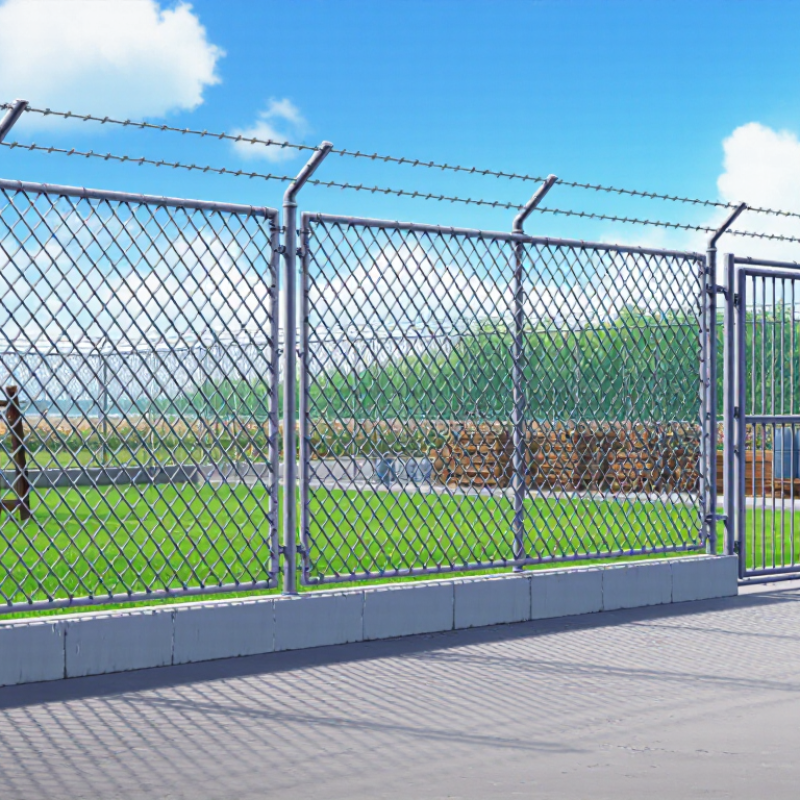
7 Tips for Choosing chain link fence mesh for Your Project
Understanding Chain Link Fence Mesh and Its Main Components
Chain-link mesh is a woven fabric of steel wires, joined into repeating diamond-shaped openings. Its performance depends on more than appearance. Wire gauge affects stiffness, while the opening size influences visibility, airflow, and how easily small objects pass through. Coatings, such as zinc or a polymer layer, help the wire resist moisture and surface wear. The mesh edges also matter: knuckled edges fold wire ends over, while twisted edges leave sharper points. Details are easy to overlook.
Tip: Match the opening size to what the fence must contain or screen. Check wire gauge and coating together, not separately. A heavy-looking mesh may still need suitable posts and tensioning to stay straight.
Posts, rails, and tension bands support the mesh, but they are separate components. For a windy site, consider how the open weave reduces wind pressure compared with a solid barrier, while remembering that loose installation can still sag. Near salty air or frequent sprinklers, inspect coating specifications and maintenance needs. Ask for the mesh’s actual gauge and opening measurements; product descriptions can be vague. I would not choose by price alone, though I have to admit that comparing specifications takes patience. A small sample helps reveal coating feel and diamond shape before ordering.

Define the fence’s job before choosing mesh. A garden boundary, dog enclosure, and equipment yard require different heights, openings, and wire gauges. Then assess the site: slope, drainage, salt exposure, and prevailing weather can affect installation and service life. NOAA’s 1991–2020 U.S. Climate Normals report local temperature and precipitation patterns. Check the nearest station; regional averages can miss a windy ridge or a persistently wet corner.
Tips: Walk the proposed line after rain. Look for soft soil, standing water, rocks, and roots. Compare those observations with the USDA NRCS Web Soil Survey, which maps soil properties and drainage. Measure slopes and mark gates before ordering. A map helps, but it cannot replace a site visit.
For security, consider who or what the fence must contain, and where visibility matters. Tighter mesh may reduce footholds, but it does not make a fence impossible to climb. CISA physical-security guidance treats barriers as one layer of protection, alongside access control and monitoring. Check ASTM A392 when comparing zinc-coated chain-link fabric; its specifications distinguish coating classes. Also verify local project requirements with the relevant authority. The detail people often overlook is the gate: a strong mesh panel is less useful if the latch or post is poorly matched.
Illustrative planning scores from 1 (lower priority) to 5 (higher priority), not measured test results. Match mesh opening and wire gauge to the level of containment or deterrence needed, and consider fence height, site conditions, and coating exposure before choosing.
Tip 1: Match the wire material to the site conditions. Galvanized steel is a practical choice for many yards and work areas. Its zinc coating helps slow rust, especially where rain is occasional and soil stays fairly dry. Near salt air or frequent irrigation, inspect samples for coating quality. A small label alone cannot tell you how well mesh will hold up.
Tip 2: Compare coatings, not just appearance. Vinyl-coated mesh adds a protective layer and can soften the look of a fence. Check that the coating covers the wire evenly, including bends and cut ends. Scratches matter. I have seen a tiny damaged spot become the first place rust appears, though the surrounding mesh still looked sound. That detail is easy to miss.
Tip 3: Think about maintenance and exposure together. Stainless steel may suit persistently damp or corrosive settings, but it usually costs more. For ordinary conditions, a well-coated galvanized option may be enough. Ask about wire gauge, coating type, and expected exposure, then compare written specifications. If the fence stands beside sprinklers, check it after the first wet season. Real sites can be messier than product descriptions.
| Tip | Wire Material or Finish | Corrosion Resistance | Suitable Applications | What to Check |
|---|---|---|---|---|
| 1. Match the mesh to the exposure | Carbon-steel wire with a protective coating | Depends on the coating, coating thickness, installation details, and local conditions. | General residential, commercial, and recreational fencing | Consider rainfall, humidity, salt exposure, pollutants, and contact with soil before selecting a finish. |
| 2. Consider zinc-coated wire for everyday use | Galvanized steel, with zinc applied before or after the mesh is woven | Zinc protects steel by acting as a barrier and corroding preferentially when the coating is damaged. Service life varies with coating amount and environment. | Many inland projects with ordinary weather exposure | Confirm the specified zinc-coating class or mass and whether the mesh is galvanized before or after weaving. |
| 3. Look at aluminum-coated wire for certain environments | Steel wire with an aluminum-based coating | The aluminum coating forms a protective oxide layer; performance depends on the exposure and product specification. | Projects where an aluminum-coated finish is specified and compatible with site conditions | Check the applicable product standard and verify suitability for coastal or industrial exposure rather than assuming all aluminum coatings perform alike. |
| 4. Choose a polymer finish for added surface protection | Galvanized steel with a PVC or other polymer coating | The polymer layer provides a barrier over the metal coating. Cuts, cracks, or poorly finished edges can expose the underlying wire. | Residential areas, parks, and installations where color or a smoother surface is desired | Inspect coating continuity, adhesion, cut ends, and the underlying metallic coating; compare the product's stated UV and weathering performance. |
| 5. Consider stainless steel for demanding conditions | Stainless-steel wire, commonly specified by alloy grade | Chromium in stainless steel supports formation of a passive surface film. Chlorides can still cause pitting or crevice corrosion; molybdenum-bearing grades generally improve resistance to chlorides compared with common 304-grade stainless. | Specialized installations where corrosion resistance is a priority | Specify the alloy grade based on actual exposure, and avoid assuming stainless steel is immune to corrosion. |
| 6. Compare mesh opening and wire gauge | Any suitable material or finish | Smaller openings or heavier wire do not by themselves guarantee better corrosion resistance; finish quality and exposure remain important. | Applications ranging from boundary fencing to areas requiring smaller openings | Check the opening size, wire diameter, height, and applicable project requirements together. Gauge systems can vary, so confirm the stated diameter. |
| 7. Check edges, fittings, and maintenance needs | Mesh, posts, ties, fasteners, and fittings with compatible finishes | Unprotected cuts, scratches, dissimilar-metal contact, and water traps can create local corrosion risks. | All projects, especially wet, coastal, or chemically exposed sites | Use compatible components, follow installation guidance for cut edges, keep drainage areas clear, and inspect periodically for coating damage or corrosion. |
Mesh opening controls what the fence can contain and how easily people can see through it. For small pets or loose materials, a tighter opening may reduce gaps, but it can collect leaves and make the fence feel less open. Check the actual opening dimensions, not just a product label; measurement conventions can vary. On uneven ground, a small gap beneath the mesh may matter more than a slightly smaller opening. Measure twice.
Wire gauge affects rigidity and resistance to bending. In common gauge systems, a lower number usually means thicker wire, though specifications should confirm the actual diameter. A heavier wire can feel reassuring, but it is not automatically the best choice. Consider expected contact, span length, and the strength of the posts and fittings together. I have seen mesh selected by gauge alone, only for weak end posts to become the real problem.
Choose fence height based on the barrier’s purpose and the site’s slope. A level installation can leave a noticeable gap on a changing grade, so check the ground at several points before ordering. Taller mesh may improve containment, but it also catches more wind and needs suitable support. The right dimensions are rarely perfect on paper; verify them against a measured site plan.
Before ordering chain link fence mesh, check the project specification and the standards that apply to its intended use. Requirements can differ for residential boundaries, sports areas, and industrial sites. Confirm mesh opening, wire diameter, coating type, and permitted tolerances against the plans. A small opening can improve containment, but it also adds weight and may need stronger supports. Check product documentation, too. It should identify materials and coating details clearly, not just say “weather resistant.”
Durability depends on more than wire thickness. Galvanized or coated mesh can resist corrosion, but cut ends and scratched areas may still need attention. Look closely at the site: damp soil, salty air, and standing water can shorten service life. Installation matters just as much. Measure post spacing, allow for corners and gates, and check whether the ground rises or dips. A taut fence over uneven ground may leave gaps below. Don’t rush this part. I still think specifications can make installation seem simpler than it is; a sloped corner often changes the plan. Before work begins, confirm tensioning methods, required tools, and whether the posts can hold the selected mesh under expected loads.


For those larger-sized parts, or smaller quantity runs, we have 2 independent powder coat booths and ovens. The quality, durability and affordability of today’s powder coating finishes make this the process of choice for world-class companies.
Powder coating advantages over other forms of coating are many. Materials used in the Powder coating process can be metals and non-metals that come in a multitude of thicknesses, textures, colors, etc. Another of Powder coating’s biggest advantages over conventional coatings is its ability to create finishes in many different textures. Powder Coating Booths allow us the ability to apply these advantages to large products.
Tri-State Fabricators runs a full-service conveyor line for painting. Wet painting can provide protection or decoration to many different part styles. From start to finish, every project is easier to undergo random and point-based inspection by our skilled painting team.
Advantages to our Wet Paint Line are these lines start with product prep and ends with a thorough inspection of a high quality finished product. Our ability to complete large and small projects with a superior finish and doing so in a timely and economical fashion. This passes along the savings in production to our customers. When powder coating ins not an option, our Wet Paint Line gets the job done right the first time.
When the parts get big and heavy we roll-out our custom paint racks and oversize booth. By utilizing our partnerships with all the major paint brands, we can match virtually any color with wet paint.
The advantages of having access to a Wet Paint Booth are many. Large projects of many different shapes can be loaded into the booth. The Wet Paint Booth offers an environment that is much more controlled than a typical parts painting operation.
Not only are they used because of their controlled environment, but they’re are also advantageous when it comes to applying paint to parts that are needed in industries that require specialty coatings such as medical, aerospace, etc.
Our military forces have some very high standards when it comes to the finish of their vehicles and equipment. From the first pre-treatment step to final coat, it takes a great deal of knowledge and experience to protect the men and women of our armed forces. They deserve only the best, and Tri-State Fabricators provides it.
All of our processes are closely monitored by our staff and management teams. Both of which are highly trained in the processes of metal fabrication and finishing. Tri-State Fabricators’ goal is to always fully satisfy each and every customer, including the military. We will always put a 110% into what we do.
Abrasive media blasting is an excellent way to remove old paint, rust, and increase the paint/powder adhesion. Glass beads produce a much smoother and brighter finish than angular abrasives; leaving the part clean yet without any dimensional change. Chemically inert and environmentally friendly, we can recycle our beads approximately 30 times; making them a more preferred method of metal cleaning or surface finishing.
Advantages to Glass Bead Blasting are many. Glass bead blast media is used when a project is needing rough surfaces need to become smooth for applications of coatings such as paint. It is typically used to clean paint and rust from a product surface without deforming the surface it is being used on. Overall, compared to many other blasting media, Glass Bead Blasting is a very economical choice and those savings are always passed on to our customers.
Tri-State Fabricators utilize a zinc phosphate wash to clean and etch the material to ensure the best paint adhesion possible. The unique design of our 3-stage wash system does the work like a 5-stage. From Cleaning and rinsing to conversion coating and post-treatment, Our Part Washing process is a complete service and works throughout the fabrication service and the finishing service.
Along with the previously mentioned benefits, Curing is a vital chemical reaction that leaves the product finish hard and relatively safe from mild abrasion and aggressive corrosion. This process can be done in more than one way; ambient air-dry or in curing ovens at temps that exceed 240°.
From fixing paint mistakes (someone else’s of course) to simply cleaning our paint line hooks, our burn-off oven is put to good use. After a quick burn-off, a little clean up, and a fresh coat of paint, your parts will look better than new.
Why does our Burn-Off Oven work so well? Because super heating the air around parts turns the materials into ashes. From paint and powder coatings to rubber and machining oils, high temps do the job without degrading the integrity of the part.
Masking is a vital part of producing high quality products. We have die-cut masking patterns to protect machined surfaces as well as a wide range of plugs and caps to protect threaded holes and bolts. We provide permanent and temporary masking.
Masking allows the selected sections of a product to be protected from a fabrication or finishing service. This can be with both chemicals when etching and tapes, paints when only finishing just a section of the product. Masking is great in aiding the customization process of a project.
Screen printing is a photographic process that transfers artwork onto a porous nylon screen which allows colored ink to flow through the screen and be deposited on an aluminum or plastic component. We can generally have just about any design created onto a screen for your parts.
Some of the advantages of Screen Printing are, brand recognition for your business displaying on your products, assembly instructions, product warnings/hazards, etc. Tri-State Fabricators produces Screen Printing of the highest quality so you know it’s durable.
Metal Finishing is the art of treating the exterior portion of product, often metal but can also be made of other materials, so that the surface is clean and free of any debris. Then the process of applying coats or either paint of powder coat takes place. This coating process improves the quality of the product in both appearance and resistance to wear and corrosion.
Tri-State Fabricators, Inc., understands that a project typically isn’t complete until a high-quality finish has been added to your product. This is why our painting and powder coating teams continuously inspect the products throughout the Metal Finishing process.

