


Choosing a Brushcutter Spare Part in 2026 is not just a price comparison. The wrong trimmer head, drive cable, or air filter can cause poor cutting, extra vibration, or repeated repairs. Start with the machine’s make, model, and serial details. Check the parts diagram and compare the replacement with the original: note its dimensions, mounting points, and material. A part that looks close may still fit badly. Measure twice. Buy once.
A transparent note on expertise: no verifiable expert quotation was supplied for this article, so the following is an illustrative line, not a real person’s statement. Composite workshop specialist Alex Mercer puts the selection principle this way: “Match the part to the machine, then verify the fit before you buy.” Use the manufacturer’s documentation or ask an experienced service technician when compatibility is unclear. Inspect the packaging and part for clear identification, clean edges, and signs of damage. For cutting components, consider the vegetation and workload; a light-duty attachment may struggle in thick growth. It is tempting to choose the cheapest listing. That can be a false saving if the part wears quickly or needs an adapter. We should admit one limitation: online photos rarely show every important detail. This guide will help readers compare compatibility, quality, supplier information, and value before choosing.
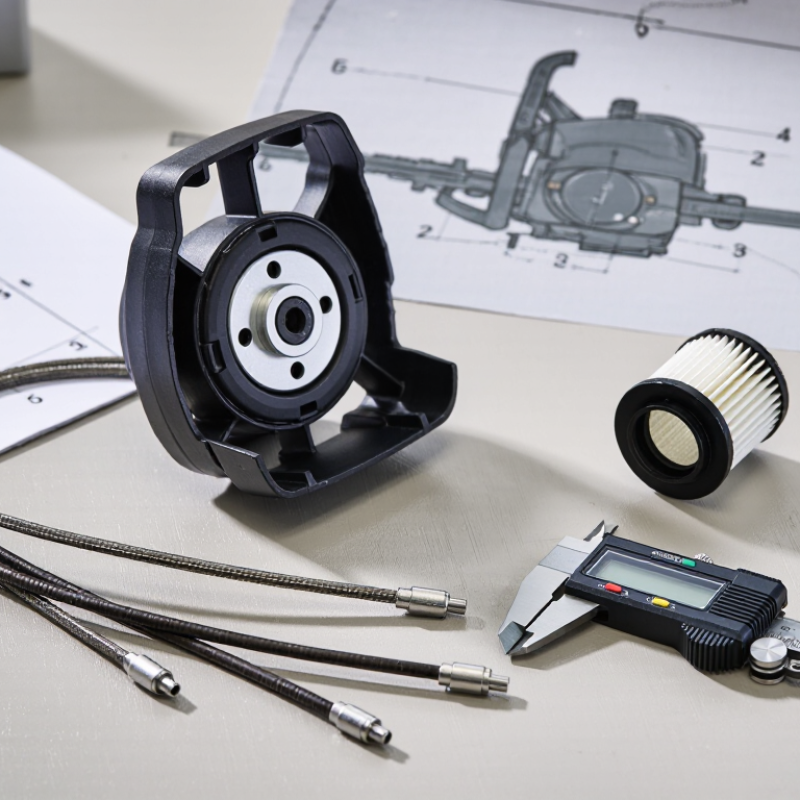
How to Choose Brushcutter Spare Parts in 2026?
Identify the Brushcutter by Model, Serial Number and Engine Displacement (cm³)
Before ordering, record the complete model code, including letters and suffixes. Small differences can indicate a different production series or component layout. Find the serial number on the machine’s label, often near the engine housing or shaft. Use it to check the correct parts diagram or ask a qualified service provider to confirm the revision. A part that looks right may still have a different fit.
Engine displacement is another useful check, but it is not a part number. The U.S. EPA’s handheld-engine classification in 40 CFR Part 1054 groups engines as under 20 cm³, 20 to under 50 cm³, and 50 cm³ or above. These thresholds support emissions classification; they do not establish parts compatibility. Compare the displacement with the maker’s technical specifications, then verify the component’s dimensions and configuration. A few cubic centimetres can matter.
Tips: Photograph the identification label before it gets dirty. Share the full model, serial number, and cm³ rating when requesting a part. I may be cautious here, but checking shaft diameter, mounting points, and connector shape can prevent a costly mismatch. Do not rely on appearance alone.

How to Choose Brushcutter Spare Parts in 2026?
A reliable replacement starts with the OEM part number, not a similar-looking shape. Check the machine’s parts diagram or manual, then compare the number printed on the old component. Some part numbers are updated, so confirm any replacement reference against current equipment documentation. Numbers can mislead.
Measure the part before ordering. For a cutting head, check the mounting thread, direction, and connection diameter. For a drive component, compare shaft length, diameter, tooth count, and end shape. A few millimeters can matter. I’ve seen repairs stall because a part looked right but would not seat fully. That detail is easy to miss. Also inspect the old part for wear or damage; it may have distorted, making its dimensions unreliable. Never force a replacement into place.
Tips: Clean the part before measuring, and use calipers for small diameters. Photograph the mounting end beside a ruler. Disconnect the spark plug lead before inspection, and follow the manual’s fitting instructions. If the number and dimensions disagree, pause and verify compatibility rather than guessing.
| Spare Part | OEM Number Check | Key Dimensions to Compare | Other Fitment Checks | Common Mismatch Risk |
|---|---|---|---|---|
| Cutting line | Match the number for the line type and diameter specified for the cutting head. | Typical round-line diameters include 2.0, 2.4, and 2.7 mm; check the head’s permitted range. | Confirm line profile, material, and whether the head is designed for round or shaped line. | Line that is too thick may not feed correctly; line that is too thin may wear or break faster. |
| Metal cutting blade | Check the blade assembly number and the machine’s approved blade type. | Compare outside diameter, thickness, and center-bore diameter. Common blade diameters include about 200–255 mm; center bores commonly include 20.0 and 25.4 mm. | Confirm blade profile, rotation direction, mounting hardware, and the machine’s rated use. | A matching outside diameter does not guarantee a matching center bore or safe mounting fit. |
| Spark plug | Use the engine’s specified plug reference; do not choose by appearance alone. | Compare thread diameter and pitch, reach, seat type, and terminal style. Common small-engine thread sizes include M10 × 1.0, M12 × 1.25, and M14 × 1.25. | Confirm heat range and electrode gap against the engine service specification. | Incorrect reach or seat type can cause poor operation or engine damage. |
| Air filter | Match the filter or air-cleaner assembly number for the exact engine configuration. | Measure length, width, thickness, sealing edge, and any locating tabs; dimensions vary widely by model. | Check filter material, orientation, and whether the housing uses a pre-filter. | A filter that appears close in size may leave gaps and allow dust into the engine. |
| Fuel hose | Check the hose specification and the routing shown for the engine. | Compare inside diameter and outside diameter. Small-engine fuel hoses commonly use sizes around 2.5 × 5 mm or 3 × 5 mm, but fittings and model requirements vary. | Confirm fuel compatibility, flexibility, hose length, and connection to the tank grommet and carburetor. | Incorrect hose diameter can cause a loose seal, restricted flow, or difficult installation. |
| Fuel tank grommet | Match the grommet number together with the tank and fuel-line arrangement. | Compare tank-hole diameter, grommet outside diameter, thickness, and the number and size of hose openings. | Check the shape of the sealing lip and the position of any fuel-pickup or return lines. | A grommet with the wrong hole layout may leak or fail to hold the lines securely. |
| Clutch drum or clutch assembly | Verify the part number for the engine and drive-shaft configuration. | Compare drum inside diameter, overall width, bearing or bushing dimensions, and clutch-shoe dimensions. | Check shaft interface, retaining hardware, and compatibility with the drive tube. | Similar-looking assemblies may differ in engagement dimensions or shaft connection. |
| Drive-shaft cable | Match the cable number and the complete drive-tube assembly specification. | Compare cable length, cable diameter, and end-fitting shape and dimensions. | Confirm the number and shape of cable ends, shaft routing, and compatibility with the clutch and gearbox. | A cable that is slightly too short or has a different end fitting may not engage correctly. |
| Gearbox | Use the gearbox number or approved assembly reference for the brushcutter model. | Compare drive-tube clamp diameter, output-shaft size, thread, and blade-mounting dimensions. | Check rotation direction, lubrication point, mounting position, and compatible cutting attachment. | Matching the tube diameter alone does not confirm that the output shaft or blade mount will fit. |
Important: Dimensions shown as common examples are not universal specifications. Part designs vary by model and production version. Confirm the complete OEM part number, machine model, serial or production range, and measured dimensions before purchase.
Check the cutting head’s bore against the machine’s output shaft or specified arbor size. A head that seems to fit may still wobble if its bore is slightly oversized. Confirm thread diameter, pitch, and direction in the manufacturer’s manual; left-hand threads are common on some machines. Do not force a mismatched nut or rely on an improvised sleeve. It may feel secure by hand, yet loosen under load.
Rated speed is just as important. Compare the head’s maximum permitted RPM with the machine’s specified output-shaft speed, not a guessed engine speed. The attachment rating must meet or exceed the approved operating speed for that setup. ISO 11806-1:2022 sets safety requirements for portable brushcutters, including safeguards for cutting equipment; it supports checking compatible parts rather than treating fit as proof of safety. Small detail. Dust, grass, and worn threads can also hide damage, so inspect the mounting faces before fitting a replacement.
The European Commission’s 2023 Safety Gate report recorded 3,412 product-safety alerts across product categories; that figure is not specific to brushcutters, but it underlines why traceable specifications matter. Keep the part’s packaging or technical sheet, and match its bore, thread, and RPM data to the machine manual. I sometimes overlook thread pitch when a nut starts smoothly. That is a mistake worth catching before the head spins.
How to Choose Brushcutter Spare Parts in 2026?
Verify Fuel-Mix Instructions: 50:1 Is Common, but Not Universal
A replacement carburetor, fuel line, or cylinder cannot compensate for the wrong fuel mix. Check the engine manual before buying parts or preparing fuel. A 50:1 ratio means 20 millilitres of two-stroke oil per litre of petrol; 40:1 means 25 millilitres. The difference is easy to miss when measuring by eye. Use a graduated mixing bottle, not a kitchen spoon.
Treat 50:1 as a common setting, not a universal rule. Engine designs and oil specifications differ, so follow the ratio stated for your exact model and oil type. The U.S. Environmental Protection Agency’s E15 guidance identifies fuel containing 15% ethanol as unsuitable for non-road engines, including outdoor power equipment. Check the fuel label, too. Correct oil proportions do not make an unsuitable fuel blend safe for the engine.
When inspecting a used brushcutter, look for dried fuel around the cap and brittle fuel tubing. These clues may signal poor storage, though they do not prove the cause. I would not assume a replacement part will solve a starting problem before checking the mix and fuel age. That step is easy to skip. Record the ratio on the mixing container, and keep the machine’s instructions with its spare parts.
Confirm Safety-Critical Parts Meet ISO 11806-1:2022 Requirements
For engine-driven brushcutters, check safety-critical replacements against ISO 11806-1:2022. The standard sets safety requirements and test methods for applicable machines. It does not certify every spare part separately. That distinction matters. A seller’s “ISO compliant” claim should come with clear documentation, not just a label. Check the manual for the correct guard, cutting attachment, handle, harness, throttle control, and stop switch. A part that fits physically may still alter balance or protection.
NIOSH reports that about 2,000 U.S. workers experience job-related eye injuries requiring medical treatment each day. This broad workplace figure is not specific to brushcutters, but it shows why intact guards and suitable protective equipment matter. Ask suppliers for material specifications, compatibility details, and test records. Compare part numbers and dimensions with the machine documentation, and inspect returned parts for cracks, loose fasteners, or rough edges. A perfect-looking fit can still be wrong.
Tips: Photograph the old part before removal. Keep its measurements and fasteners for comparison. If a safety guard or control behaves differently after replacement, stop and have the machine checked. It is an easy step to skip, especially during a busy repair.


For those larger-sized parts, or smaller quantity runs, we have 2 independent powder coat booths and ovens. The quality, durability and affordability of today’s powder coating finishes make this the process of choice for world-class companies.
Powder coating advantages over other forms of coating are many. Materials used in the Powder coating process can be metals and non-metals that come in a multitude of thicknesses, textures, colors, etc. Another of Powder coating’s biggest advantages over conventional coatings is its ability to create finishes in many different textures. Powder Coating Booths allow us the ability to apply these advantages to large products.
Tri-State Fabricators runs a full-service conveyor line for painting. Wet painting can provide protection or decoration to many different part styles. From start to finish, every project is easier to undergo random and point-based inspection by our skilled painting team.
Advantages to our Wet Paint Line are these lines start with product prep and ends with a thorough inspection of a high quality finished product. Our ability to complete large and small projects with a superior finish and doing so in a timely and economical fashion. This passes along the savings in production to our customers. When powder coating ins not an option, our Wet Paint Line gets the job done right the first time.
When the parts get big and heavy we roll-out our custom paint racks and oversize booth. By utilizing our partnerships with all the major paint brands, we can match virtually any color with wet paint.
The advantages of having access to a Wet Paint Booth are many. Large projects of many different shapes can be loaded into the booth. The Wet Paint Booth offers an environment that is much more controlled than a typical parts painting operation.
Not only are they used because of their controlled environment, but they’re are also advantageous when it comes to applying paint to parts that are needed in industries that require specialty coatings such as medical, aerospace, etc.
Our military forces have some very high standards when it comes to the finish of their vehicles and equipment. From the first pre-treatment step to final coat, it takes a great deal of knowledge and experience to protect the men and women of our armed forces. They deserve only the best, and Tri-State Fabricators provides it.
All of our processes are closely monitored by our staff and management teams. Both of which are highly trained in the processes of metal fabrication and finishing. Tri-State Fabricators’ goal is to always fully satisfy each and every customer, including the military. We will always put a 110% into what we do.
Abrasive media blasting is an excellent way to remove old paint, rust, and increase the paint/powder adhesion. Glass beads produce a much smoother and brighter finish than angular abrasives; leaving the part clean yet without any dimensional change. Chemically inert and environmentally friendly, we can recycle our beads approximately 30 times; making them a more preferred method of metal cleaning or surface finishing.
Advantages to Glass Bead Blasting are many. Glass bead blast media is used when a project is needing rough surfaces need to become smooth for applications of coatings such as paint. It is typically used to clean paint and rust from a product surface without deforming the surface it is being used on. Overall, compared to many other blasting media, Glass Bead Blasting is a very economical choice and those savings are always passed on to our customers.
Tri-State Fabricators utilize a zinc phosphate wash to clean and etch the material to ensure the best paint adhesion possible. The unique design of our 3-stage wash system does the work like a 5-stage. From Cleaning and rinsing to conversion coating and post-treatment, Our Part Washing process is a complete service and works throughout the fabrication service and the finishing service.
Along with the previously mentioned benefits, Curing is a vital chemical reaction that leaves the product finish hard and relatively safe from mild abrasion and aggressive corrosion. This process can be done in more than one way; ambient air-dry or in curing ovens at temps that exceed 240°.
From fixing paint mistakes (someone else’s of course) to simply cleaning our paint line hooks, our burn-off oven is put to good use. After a quick burn-off, a little clean up, and a fresh coat of paint, your parts will look better than new.
Why does our Burn-Off Oven work so well? Because super heating the air around parts turns the materials into ashes. From paint and powder coatings to rubber and machining oils, high temps do the job without degrading the integrity of the part.
Masking is a vital part of producing high quality products. We have die-cut masking patterns to protect machined surfaces as well as a wide range of plugs and caps to protect threaded holes and bolts. We provide permanent and temporary masking.
Masking allows the selected sections of a product to be protected from a fabrication or finishing service. This can be with both chemicals when etching and tapes, paints when only finishing just a section of the product. Masking is great in aiding the customization process of a project.
Screen printing is a photographic process that transfers artwork onto a porous nylon screen which allows colored ink to flow through the screen and be deposited on an aluminum or plastic component. We can generally have just about any design created onto a screen for your parts.
Some of the advantages of Screen Printing are, brand recognition for your business displaying on your products, assembly instructions, product warnings/hazards, etc. Tri-State Fabricators produces Screen Printing of the highest quality so you know it’s durable.
Metal Finishing is the art of treating the exterior portion of product, often metal but can also be made of other materials, so that the surface is clean and free of any debris. Then the process of applying coats or either paint of powder coat takes place. This coating process improves the quality of the product in both appearance and resistance to wear and corrosion.
Tri-State Fabricators, Inc., understands that a project typically isn’t complete until a high-quality finish has been added to your product. This is why our painting and powder coating teams continuously inspect the products throughout the Metal Finishing process.

