How to Choose the Best Steel Pipe Mill for Your Needs?
Choosing the right Steel Pipe Mill is crucial for any manufacturing business. According to industry expert Dr. John Smith, "The right mill can significantly enhance production efficiency." When selecting a Steel Pipe Mill, it's essential to consider your unique needs. Not all mills produce the same quality or type of pipe.
Optimize your production line by assessing various factors. Think about production capacity, pipe specifications, and technology used. Dr. Smith emphasizes the importance of evaluating support and maintenance services as well. Sometimes, less expensive mills may lead to more costs down the road.
Take time to analyze different options thoroughly. A hasty decision might bring unexpected challenges. Engage with suppliers, read reviews, and seek expert advice. Ultimately, investing in the right Steel Pipe Mill can transform your operational efficiency.
Understanding the Types of Steel Pipes and Their Applications
When choosing the right steel pipe, it's essential to understand the different types and their uses. Steel pipes are broadly categorized into seamless and welded types. Seamless pipes offer better strength and durability, making them ideal for high-pressure applications. On the other hand, welded pipes are generally more cost-effective and suitable for low-pressure environments. Knowing the requirements of your project helps in making the right choice.
Different applications require specific pipe types. For example, water transportation often uses galvanized steel pipes to resist corrosion. In contrast, oil and gas sectors prefer pipes like API 5L that can handle extreme pressures. Each application has distinct standards and specifications, which greatly influence the manufacturing process. Evaluating the material, thickness, and pipe grade will ensure better performance in your specific use case. Understanding these nuances is crucial for reliability and safety in your projects.
Evaluating Steel Pipe Mill Production Capacities and Efficiency
When evaluating steel pipe mills, it's crucial to consider their production capacities and efficiency. A mill's output can vary significantly based on its design and technology. An efficient mill produces high-quality pipes at a rapid pace. Look for specifics in production rates and the variety of sizes and grades offered. These details directly impact project timelines and material availability.
Another aspect is energy consumption. An efficient mill minimizes wasted energy, leading to lower operational costs. Investigate how energy-efficient the machinery is. Balance this with how well the mill can adapt to changes in demand. Sometimes, a mill may excel in capacity but struggle with flexibility. This can lead to delays in fulfilling orders.
Lastly, assess the maintenance track record of the mills you consider. Frequent breakdowns can hinder productivity. Regular maintenance indicates reliability. A mill may have impressive capacity on paper but fail in practice without proper upkeep. Finding the right balance between capacity, efficiency, and maintenance will ensure you choose a mill that meets your needs effectively.
Assessing the Quality Control Standards in Steel Pipe Manufacturing
Quality control is critical in steel pipe manufacturing. It influences product performance, durability, and safety. High standards ensure that pipes can withstand pressure and resist corrosion. According to the American Society for Testing and Materials (ASTM), 80% of pipe failures stem from substandard manufacturing practices. These failures can lead to significant financial losses and safety hazards.
In steel pipe mills, quality control involves rigorous testing processes. Mills often implement methods such as ultrasonic testing and hydrostatic testing. These practices assess pipe integrity before delivery. A study by the International Organization for Standardization (ISO) found that mills adhering to ISO 9001 standards report 30% fewer defects. This statistic highlights the importance of certification in maintaining high-quality outputs.
However, not all mills consistently achieve these standards. Some may prioritize speed over quality, resulting in compromised products. This can be a glaring issue in rapidly growing markets where demand surges. Buyers must be vigilant. Understanding a mill's quality control measures can help avoid the pitfalls of subpar manufacturing. Exploring detailed certifications and testing methods is essential for making an informed decision.
Quality Control Standards in Steel Pipe Manufacturing
Identifying Key Technologies Used in Modern Steel Pipe Mills
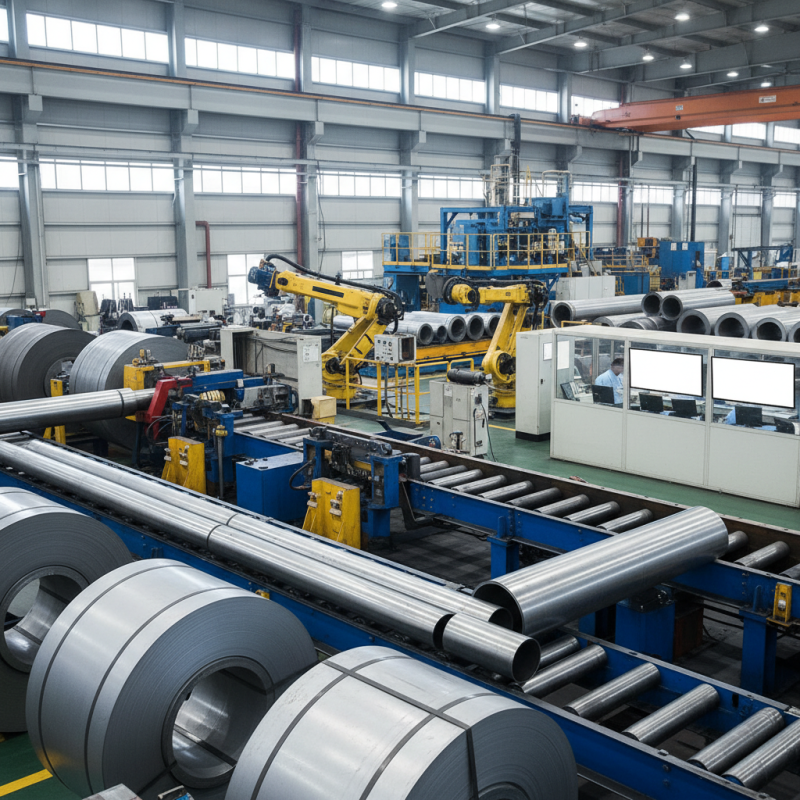
When selecting a steel pipe mill, understanding the key technologies is crucial. Modern mills utilize advanced automation systems. These systems enhance efficiency and reduce human error. Automated processes allow for precise control over the production cycle. Robotics are also prominently featured, performing tasks such as welding and inspection. This minimizes the risk of defects in the final product.
Another significant technology is the use of high-quality materials in tandem with cutting-edge forming techniques. Technologies like spiral welding and seamless pipe production are common. These methods increase the strength and durability of the pipes. They also allow for customization in sizes and shapes. However, the challenge remains in ensuring these technologies are suited to specific production needs. Not every mill can effectively implement every technology.
Environmental considerations are increasingly important too. Many modern mills employ eco-friendly practices, reducing waste and energy consumption. Yet, not all mills prioritize sustainability. It's essential to weigh these factors when choosing a mill. Balancing technology, efficiency, and environmental impact can be complex. Each choice warrants careful reflection and consideration.
How to Choose the Best Steel Pipe Mill for Your Needs? - Identifying Key Technologies Used in Modern Steel Pipe Mills
| Dimension | Specification | Technology | Efficiency | Cost |
| Pipe Diameter | 1/2" - 24" | Seamless/Straight Weld | High | $$$ |
| Wall Thickness | 0.5" - 2" | ERW/LSAW | Medium | $ |
| Material Grade | API 5L, ASTM A53 | Heat Treatment | High | $$$ |
| Production Speed | Up to 100 m/min | Automation | Very High | $$$ |
| Energy Consumption | Low to Medium | Energy Recovery | Medium | $ |
Analyzing Cost Factors: Initial Investment vs. Long-term Value in Steel Pipes
When selecting a steel pipe mill, initial cost is a critical factor. Many mills offer competitive pricing, but hidden expenses can surface later. According to a recent report by the Steel Industry Association, maintenance costs can add up to 20% of total investment over time. This emphasizes the need for a thorough cost analysis beyond the initial purchase price.
Long-term value should be prioritized. A mill built with advanced technology may have a higher upfront cost. However, it can yield significant savings on energy consumption and production efficiency. Research indicates that more efficient mills can reduce operational costs by up to 30%. This figure demonstrates the importance of choosing quality over a low initial price.
Investing in a reliable steel pipe mill enhances not only productivity but also the product's quality. It is essential to reflect on these aspects. There’s often a trade-off between low-cost options and long-term efficiency. A cheaper mill might seem beneficial at first glance, but could lead to increased expenses and compromised output quality later. Evaluating long-term benefits ensures smarter investment decisions.