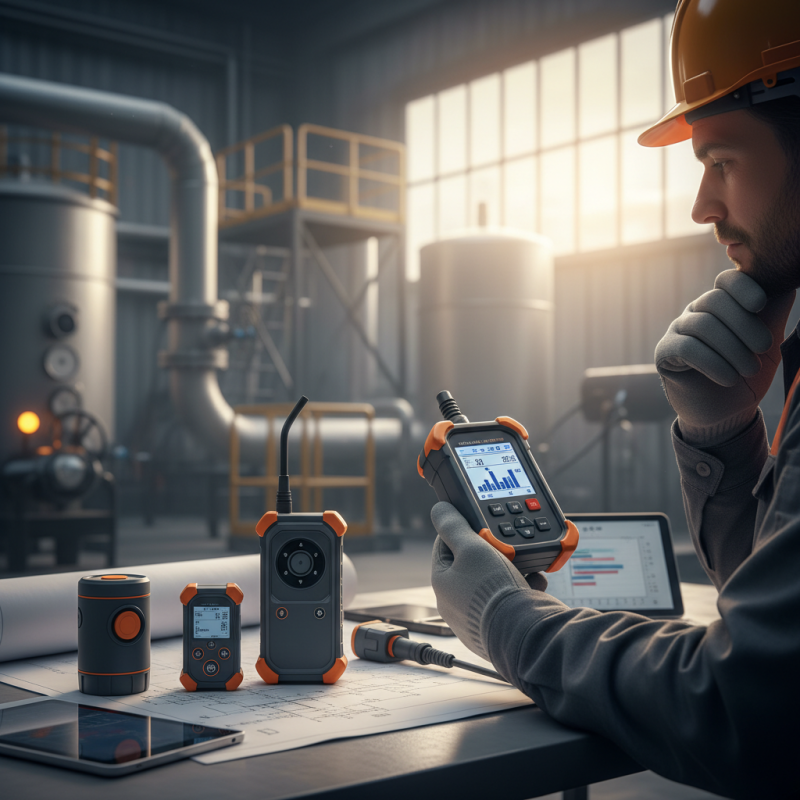
How to Choose the Best Portable Gas Detector for Your Needs?
Choosing a Portable Gas Detector can seem overwhelming. Many options are available, each with unique features. The right choice depends on your specific needs and environment.
Consider factors such as sensitivity, range, and durability. These elements are crucial for effective performance. A reliable Portable Gas Detector offers peace of mind, ensuring safety in various working conditions. Moreover, knowing the types of gases you may encounter is vital. Different detectors target specific gas types.
Don’t rush the decision. Take time to research and understand what features you truly need. Reflect on past experiences with gas detectors. What worked? What didn’t? A well-informed choice is essential for safety and reliability.
What is a Portable Gas Detector and Its Importance?
A portable gas detector is an essential instrument used to identify and measure the concentration of hazardous gases in various environments. These devices play a critical role in ensuring safety in workplaces, like construction sites, oil refineries, and confined spaces. According to the National Institute for Occupational Safety and Health (NIOSH), nearly 500 workplace fatalities occur yearly due to exposure to toxic gases. Regular monitoring with a portable gas detector can reduce these risks significantly.
When considering a portable gas detector, prioritize features such as sensitivity, battery life, and detection range. Many devices come equipped with alarms that alert users when gas concentrations exceed safe levels. Research indicates that gas detectors with real-time monitoring capabilities enhance safety protocols. It's vital to regularly calibrate and maintain your detector for accuracy. Underestimating maintenance can lead to device failure in critical situations.
Tips: Always review the manufacturer's guidelines before use. Familiarize yourself with potential gas threats in your environment. Remember to assess the detector’s sensor technology; some sensors may struggle with specific gas types. Knowing these details can enhance your safety strategy.
How to Choose the Best Portable Gas Detector for Your Needs?
| Feature | Importance | Considerations |
| Type of Gas Detected | Identification of potential hazards | Ensure the detector covers the specific gases of concern (e.g., CO, CH4, H2S). |
| Sensitivity Levels | Accuracy in detecting low concentration levels | Select a detector that offers the sensitivity needed for safety. |
| Battery Life | Operational reliability during prolonged use | Check battery type and lifespan to ensure continuous monitoring. |
| Calibration and Maintenance | Ensures accurate readings over time | Look for ease of calibration and frequency of maintenance required. |
| Portability | Convenience for use in various environments | Choose lightweight models with compact designs. |
| Display and Alarms | Immediate awareness of gas presence | Ensure clear display and reliable alarm systems for alerts. |
| Price Range | Budget considerations | Determine best value for features required. |
Key Features to Consider When Selecting a Gas Detector
Choosing the right portable gas detector involves understanding key features that cater to your specific requirements. A good detector should have a responsive sensor that can quickly identify different types of gases. Sensitivity and calibration are crucial for accurate readings. Many users overlook these aspects, leading to potential safety hazards.
Battery life is another factor to consider. A long-lasting battery ensures the detector functions during extended periods. Rechargeable options can save costs in the long run. Moreover, portability should align with your daily activities. Lightweight devices are easier to carry, especially for fieldwork. Yet, they might lack some robust features found in heavier models.
User interface plays a significant role too. A clear display and intuitive controls help in emergencies. Complex systems can slow you down. Often, users rush through manuals, missing important operational details. Reliability is paramount; you need a detector that performs consistently under various conditions. Regular testing and maintenance are necessary but frequently neglected. A portable gas detector is only as efficient as its upkeep.
Types of Portable Gas Detectors and Their Applications
When considering portable gas detectors, it’s essential to understand the different types and their specific applications. There are various detectors designed for particular gases, such as carbon monoxide, methane, or hydrogen sulfide. Each type serves a unique purpose. For instance, carbon monoxide detectors are crucial in confined spaces like garages, where the gas can accumulate unnoticed.
Another type is the multi-gas detector, which can monitor several gases simultaneously. This is particularly useful in industrial settings where workers may encounter various hazardous substances. Additionally, there are specific detectors for volatile organic compounds (VOCs). These devices are great for assessing air quality in environments like laboratories or manufacturing facilities.
Choosing the right detector isn't always straightforward. Not all detectors accurately read low concentrations. Some may miss gases altogether in certain conditions. It’s important to assess your environment carefully. Think about gas types you'll be detecting and the detector's calibration needs. Read user reviews or consult with professionals. Their insights can help clarify any uncertainties around the features that may suit your specific needs.
Factors Influencing Battery Life and Durability
When choosing a portable gas detector, battery life and durability are critical factors. The type of battery impacts how long the detector operates. Lithium-ion batteries typically offer a longer lifespan and faster charging times. However, they can be sensitive to extreme temperatures. This sensitivity can lead to unreliable readings or quicker depletion.
Durability plays a vital role in the detector’s effectiveness. Look for models designed to withstand rough conditions. Many detectors feature rugged casings that resist impacts and water exposure. However, even with durable designs, they may still fail under excessive wear. Regular calibration and maintenance are essential. Neglecting these tasks can result in inaccurate readings.
Environmental conditions influence both battery life and the detector's durability. High humidity or exposure to corrosive substances can degrade battery efficiency. The choice of materials in construction affects overall resilience. Some detectors may look robust but lack internal protection. Therefore, thorough research is necessary. Users should evaluate reviews and real-world performance. This helps in making an informed decision for their specific needs.
Battery Life and Durability Comparison of Portable Gas Detectors
Understanding Calibration and Maintenance Requirements
Calibration and maintenance of portable gas detectors are crucial for safety and efficiency. Regular calibration ensures accuracy in detecting hazardous gas levels. According to a report by the National Institute for Occupational Safety and Health (NIOSH), failure to calibrate gas detectors can lead to a 30% reduction in their effectiveness. This stark statistic highlights the need for routine checks.
Maintenance is equally important. The Occupational Safety and Health Administration (OSHA) emphasizes that maintenance schedules should be followed diligently. Inspecting sensors and replacing batteries enhances reliability. Some users overlook these aspects, risking unpredictable performance. A typical maintenance cycle may vary from weekly to monthly, depending on usage. Not all portable detectors provide the same ease of maintenance. Users should consider models that allow for straightforward upkeep.
Many gas detection devices now incorporate self-diagnostics. However, reliance solely on technology is dangerous. Users must still perform manual checks. Neglecting such practices may lead to significant oversights. The balance between technological advantages and human oversight is vital for optimal performance. Understanding these calibration and maintenance requirements will empower users to make informed choices.