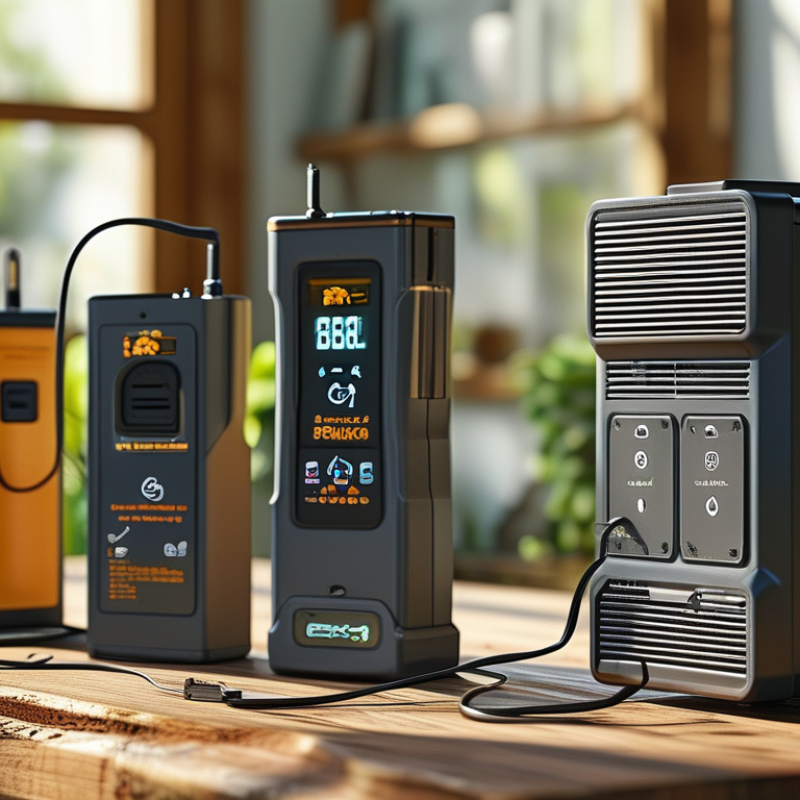
How to Choose the Best Portable EV Charger for Your Needs?
Choosing the best Portable EV Charger can be daunting. With various models and features, making the right selection is crucial. Tessa Greene, a leading expert in electric vehicle technology, emphasizes, "A Portable EV Charger should match your lifestyle and driving habits."
When looking for a charger, consider your specific needs. Do you often travel long distances? A charger with a higher amperage could be beneficial. Frequent short trips? A lighter model may suffice. Understanding your requirements is vital.
The world of Portable EV Chargers isn’t just about specs. It also involves practicality. Some chargers may seem advanced but may lack durability. It's essential to evaluate their performances in real-life scenarios. In the end, finding a suitable Portable EV Charger means striking a balance between advanced features and personal convenience.
Understanding Different Types of Portable EV Chargers
When selecting a portable EV charger, it’s vital to understand the different types available. Level 1 chargers are the simplest. They plug into a standard household outlet. This charger is slower, requiring more time for a full charge. However, it’s convenient for overnight use at home. Level 2 chargers provide faster charging, often found in public charging stations. They require a dedicated circuit but suit those needing quicker power.
DC fast chargers are another type. They provide rapid charging capability and can recharge an EV in just minutes. However, they are less common for personal use and usually found in commercial settings. Each type has its advantages and drawbacks. The key is to analyze your needs. Do you charge at home or on the go?
Cost and portability are also notable factors. Some chargers are lightweight and easy to carry, while others are more robust. Consider your daily driving habits and emergency needs, as this impacts your choice. Additionally, remember that charger compatibility with your EV model matters. Reflect on these aspects, as they will guide you toward the charger that best fits your lifestyle.
Comparison of Different Types of Portable EV Chargers
Evaluating Charging Speed and Power Output for Efficiency
When choosing a portable EV charger, evaluating charging speed and power output is crucial. Charging speed is often measured in kilowatts (kW) and typically ranges from 1.4 kW to 22 kW. Most home chargers operate at 7.2 kW, while fast chargers can reach up to 22 kW. According to recent industry reports, a 7.2 kW charger can fully replenish a standard EV battery in about 4-8 hours, making it ideal for overnight charging.
Power output affects charging efficiency significantly. Higher output generally means faster charging. However, not all EVs support high kW charging. For example, a vehicle with a maximum charging capacity of 6.6 kW will not benefit from a 22 kW charger. Understanding your EV's specifications ensures you select a charger that meets your needs effectively.
Tip: Check the amperage rating on the charger. Many portable chargers come in either 16A or 32A options. A 32A charger reduces charging time by half but requires proper electrical setup at home to handle the increase in load.
Choosing the right charger involves assessing your daily driving range and how often you intend to charge. If you only need to top off your battery occasionally, a lower-powered charger may suffice. However, frequent long-distance travel demands more robust options. Consider both current and future EV needs before making your selection.
Assessing Portability and Ease of Use in Charger Design
When selecting a portable EV charger, considering portability and ease of use is crucial. Recent reports indicate that about 70% of EV owners prioritize these features when purchasing chargers. A lightweight design is essential. Many chargers weigh less than 10 pounds, making them easy to transport. A compact size also allows for convenient storage in your vehicle.
Ease of use is another vital factor. Chargers with user-friendly interfaces and straightforward installation processes garner higher satisfaction rates. A study found that 85% of users prefer chargers that can be set up within minutes. Look for chargers with clear indicators for charging status. Many optimal designs include LED lights to show charge levels and troubleshooting can be simplified by clear, visual instructions.
However, portability comes with challenges. Some users report that very small models can be less powerful. This can lead to longer charging times, which may not suit everyone’s needs. Balancing size, weight, and power is an important consideration. Evaluate your lifestyle and charging habits. Understanding these nuances helps in choosing the right portable EV charger.
Considering Compatibility with Your Electric Vehicle Model
Choosing a portable EV charger requires careful consideration of compatibility with your electric vehicle (EV) model. Many EVs, especially those from different manufacturers, use unique charging standards. According to the U.S. Department of Energy, there are three main types of EV charging connectors: Type 1, Type 2, and CCS (Combined Charging System). Ensuring your charger matches your EV’s specifications is crucial. For instance, a Tesla uses a proprietary connector while other brands may favor CCS.
Moreover, charging speed matters. A Level 2 charger can typically deliver up to 240 volts and charge faster than a standard Level 1 charger. However, some EVs have limits on their charging capacity. Reports from the International Energy Agency indicate that not all models can handle the maximum output of these chargers. This mismatch can lead to inefficiencies or longer charging times.
Lastly, evaluate the portability of the charger. Some models are lightweight and compact, making them easy to transport. But you must ask yourself if these characteristics align with your charging habits. Situations arise where a charger that is supposedly portable can be cumbersome when in use at home or on the go. Reflect on your lifestyle and charging needs.
How to Choose the Best Portable EV Charger for Your Needs?
| Feature | Description | Compatibility | Charging Speed | Portability |
| Level 1 Charging | Standard household outlet charging, usually 120V. | Most EVs | 2-5 miles of range per hour | Very portable; no special equipment needed. |
| Level 2 Charging | Faster charging using 240V outlets. | Most EVs | 10-30 miles of range per hour | Portable, but requires a 240V outlet. |
| DC Fast Charging | Rapid charging option using direct current. | Limited to certain EVs | Up to 80% charge in 30 minutes | Not portable; typically found in public charging stations. |
| Smart Charger | Wi-Fi enabled for monitoring and scheduling. | Most EVs | Varies by model | Moderately portable; check power requirements. |
Analyzing Safety Features and Certifications in Portable Chargers
When selecting a portable EV charger, safety features are crucial. Look for chargers with safety certifications like UL or CE. These certifications indicate rigorous testing. They ensure the product meets industry standards. A charger without proper certifications can pose risks; you want to avoid overheating or electrical hazards.
In addition to certifications, consider built-in safety features. An automatic shutoff function can prevent overcharging. Ground fault protection is also essential; it stops current flow if a fault occurs. These details can greatly enhance safety.
Check for user reviews to gauge real-world reliability. Users often share experiences that highlight safety aspects. Not every charger on the market is perfect. Some may have issues with plug compatibility or user interface.
Take the time to read feedback and identify trends. This research can reveal hidden drawbacks. It's essential to weigh these factors before making a purchase. A thoughtful choice in a charger ensures safer charging experiences.