


How to Choose an Industrial Floor Scrubber in 2026?

Choosing an Industrial Floor Scrubber in 2026 requires more than comparing brush width and battery capacity. The right machine must match your facility, cleaning schedule, floor material, and safety requirements. A compact walk-behind scrubber may suit narrow aisles, while a ride-on model can reduce labor across a large warehouse. Size matters.

Real-world performance depends on details that product brochures often simplify. Consider recovery-tank capacity, turning radius, noise levels, charging time, water usage, and access to replacement parts. On a concrete floor, aggressive brushes may remove grime effectively. On coated surfaces, they might cause premature wear. I have seen cleaning teams choose powerful equipment that could not enter their storage corridors. That mistake is expensive.

Reliable selection also requires evidence. Review manufacturer specifications, independent testing where available, service records, operator feedback, and warranty conditions. Ask whether local technicians can support the machine after purchase. A lower upfront price may become costly when batteries, squeegees, or software require frequent replacement. Maintenance is often overlooked. Do not assume automation guarantees better cleaning. Operators still need training, accurate chemical dosing, and regular inspections. Some recommendations may change after a site trial, and that uncertainty deserves attention. A short demonstration on your dirtiest floor can reveal more than a polished sales presentation. This guide examines practical criteria for selecting an Industrial Floor Scrubber that delivers measurable cleaning results, manageable operating costs, and dependable long-term service.
How to Choose an Industrial Floor Scrubber in 2026?

Define Industrial Floor Scrubber Types and Cleaning Applications

How to Choose an Industrial Floor Scrubber in 2026?

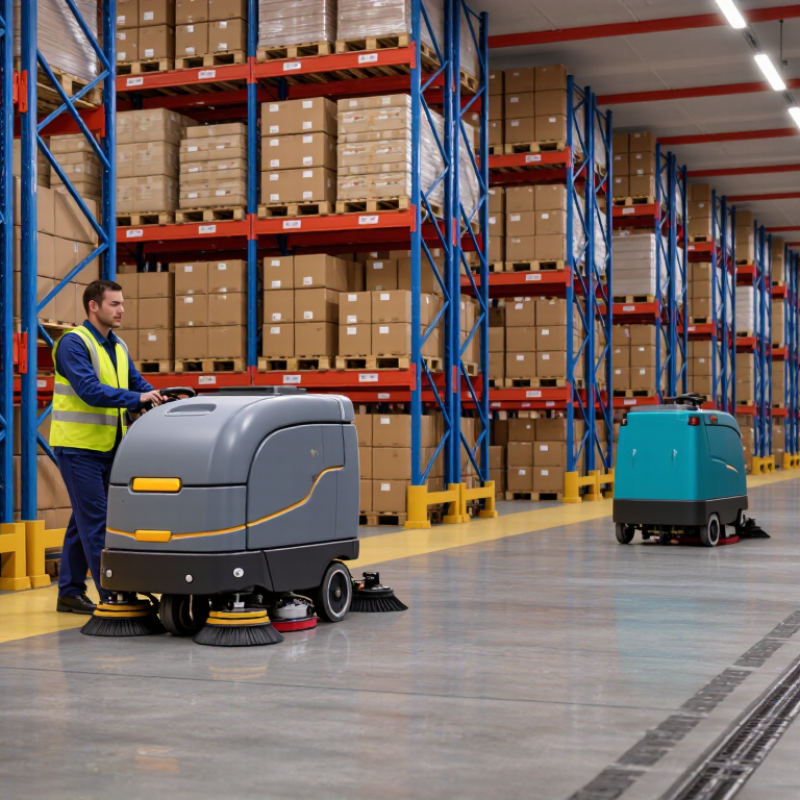
Industrial floor scrubbers differ by movement, cleaning head, and recovery system. Walk-behind models suit narrow aisles, workshops, and small production zones. Ride-on scrubbers cover large warehouses faster. Autonomous units can support repeated cleaning in predictable layouts, but they still need human checks. According to Grand View Research, the global floor cleaning machines market was valued at about USD 5.5 billion in 2023. Its forecast indicates strong growth through 2030, driven by automation and hygiene requirements.

Match the machine to the cleaning application, not only the floor size. Disc brushes work well on smooth concrete, sealed floors, and routine soil. Cylindrical brushes can collect small debris while scrubbing textured surfaces. Food-processing areas may require controlled water use and careful recovery. Healthcare spaces need low-residue cleaning and quieter operation. Warehouses often need wide cleaning paths, strong traction, and quick drying. A 2024 report from the International Sanitary Supply Association highlights labor efficiency as a continuing pressure in professional cleaning operations. Still, productivity claims can be misleading. A larger machine may waste time in congested aisles.

Tips: Measure aisle width, doorway height, and turning space before purchase. Test recovery on the actual floor. Check water capacity, battery runtime, brush pressure, noise, and service access. Do not ignore operator training. I have seen suitable machines underperform because users selected excessive detergent or rushed drying. Record cleaning time and water use for two weeks. Real site data is more useful than a brochure.

How to Choose an Industrial Floor Scrubber in 2026? - Define Industrial Floor Scrubber Types and Cleaning Applications

Industrial Floor Scrubber Type Typical Cleaning Path Typical Productivity Range Power and Operation Typical Solution / Recovery Tank Capacity Best-Fit Cleaning Applications Recommended Floor Surfaces Main Advantages Important Limitations Key Selection Criteria
Compact Walk-Behind Disc Scrubber Approximately 35–55 cm Approximately 1,000–2,000 m²/h theoretical cleaning rate Battery-powered or corded electric; operator-controlled Approximately 10–30 L solution and recovery tanks Small production rooms, retail areas, schools, clinics, workshops, corridors, and congested spaces Sealed concrete, vinyl, ceramic tile, terrazzo, epoxy-coated floors, and other smooth hard floors Compact footprint, easy maneuverability, lower purchase and operating cost, and good visibility around obstacles Lower coverage and tank capacity than larger machines; more operator walking and frequent refilling Choose based on aisle width, door clearance, turning radius, battery runtime, brush pressure, and noise level
Standard Walk-Behind Disc Scrubber Approximately 55–85 cm Approximately 1,500–3,500 m²/h theoretical cleaning rate Usually battery-powered; operator-controlled with traction assistance on many models Approximately 30–80 L solution and recovery tanks Medium-sized warehouses, manufacturing floors, supermarkets, parking structures, and institutional facilities Concrete, terrazzo, vinyl, tile, epoxy, and other hard, relatively even surfaces Good balance of productivity, maneuverability, cleaning control, and operating cost Requires an operator; disc brushes may be less suitable for heavily textured or uneven surfaces Compare brush width, down pressure, tank size, battery technology, charger time, and recovery-water pickup
Cylindrical Walk-Behind Scrubber Approximately 50–80 cm Approximately 1,200–3,000 m²/h theoretical cleaning rate Battery-powered or corded electric; operator-controlled Approximately 30–75 L solution and recovery tanks Facilities requiring light debris collection, textured floors, grout-line cleaning, and routine maintenance cleaning Textured concrete, anti-slip tile, grooved surfaces, quarry tile, and floors with joints or grout Cylindrical brushes can sweep small loose particles while scrubbing and can reach some floor profile variations Generally lower polishing performance on smooth floors; brush replacement and adjustment require maintenance Consider debris size, floor texture, brush diameter, brush speed, water control, and availability of replacement brushes
Ride-On Disc Scrubber Approximately 70–110 cm Approximately 3,000–7,000 m²/h theoretical cleaning rate Battery-powered; seated operator controls driving, scrubbing, solution flow, and recovery Approximately 70–200 L solution and recovery tanks Large warehouses, distribution centers, manufacturing plants, airports, shopping facilities, and parking decks Large areas of sealed concrete, epoxy, terrazzo, vinyl, tile, and other hard surfaces High coverage, larger tanks, reduced operator fatigue, and fewer interruptions for refilling and unloading Higher capital cost, larger turning radius, limited access to narrow aisles, and greater storage requirements Check aisle width, ramp capability, turning radius, battery capacity, operator visibility, and service access
Ride-On Cylindrical Scrubber Approximately 70–110 cm Approximately 3,000–7,000 m²/h theoretical cleaning rate Battery-powered; seated operator controls the machine Approximately 70–200 L solution and recovery tanks Large textured industrial floors, logistics centers, food-processing support areas, and facilities with frequent dry debris Ribbed or textured concrete, quarry tile, grooved floors, and surfaces with pronounced grout lines Combines high productivity with better debris handling and improved cleaning of textured floor profiles May leave a less polished appearance on smooth floors and can involve higher brush wear on abrasive surfaces Evaluate debris load, floor roughness, brush durability, water recovery performance, and maintenance intervals
Heavy-Duty Ride-On Scrubber-Dryer Approximately 90–140 cm Approximately 5,000–10,000 m²/h theoretical cleaning rate High-capacity battery system; designed for extended commercial or industrial shifts Approximately 120–300 L solution and recovery tanks Very large factories, distribution hubs, aircraft hangar support areas, wholesale facilities, and major parking structures Large sealed concrete, epoxy, terrazzo, and other durable industrial hard floors Very high coverage, long operating cycles, strong water recovery, and reduced labor per cleaned square meter Requires wide travel lanes, trained operators, dedicated charging or parking space, and a higher investment Prioritize facility size, shift length, charging infrastructure, transport routes, safety systems, and total cost of ownership
Orbital or Random-Action Scrubber Approximately 40–75 cm Approximately 800–2,500 m²/h theoretical cleaning rate Battery-powered or corded electric; operator-controlled Approximately 20–60 L solution and recovery tanks Deep cleaning, finish removal, low-chemical maintenance, renovation preparation, and areas needing multidirectional agitation Concrete, resilient flooring, stone, tile, and coated surfaces when the correct pad or brush is selected Strong mechanical agitation, flexible pad selection, and effective cleaning with reduced chemical dependence in suitable conditions Usually slower for very large open areas; incorrect pad selection can damage coatings or floor finishes Match orbital action, pad size, operating pressure, pad type, dust or slurry control, and floor-finish requirements
Autonomous or Robotic Scrubber Approximately 50–100 cm Approximately 1,000–3,500 m²/h theoretical cleaning rate, depending on route and safety settings Rechargeable battery; autonomous navigation with supervised operation and manual override Approximately 40–150 L solution and recovery tanks Large, repetitive, relatively open areas such as warehouses, supermarkets, airports, hospitals, and distribution facilities Consistent, uncluttered hard-floor areas with reliable mapping and adequate route width Supports scheduled cleaning, consistent route coverage, labor reallocation, and operational data collection Higher technology cost, route-planning requirements, sensitivity to clutter, and the need for human oversight and maintenance Assess navigation performance, obstacle detection, data security, docking requirements, site connectivity, and staff training
Low-Profile or Under-Rack Scrubber Approximately 35–70 cm Approximately 800–2,500 m²/h theoretical cleaning rate Battery-powered; walk-behind or compact ride-on operation Approximately 20–80 L solution and recovery tanks Warehouse aisles, under-rack areas, retail aisles, storage rooms, and facilities with restricted overhead or side clearance Sealed concrete, epoxy, smooth tile, and other hard warehouse or commercial floors Accesses confined areas that standard ride-on machines cannot reach while retaining powered scrubbing and drying Smaller tanks and cleaning paths reduce productivity in wide-open spaces; clearance must be measured carefully Measure aisle width, rack-leg spacing, machine height, turning space, recovery airflow, and battery runtime

Note: Productivity figures are typical theoretical ranges calculated from cleaning width and operating speed. Actual results vary with floor condition, obstacles, operator performance, overlap, turning, solution settings, battery condition, and required cleaning intensity.


Assess Facility Size, Floor Conditions, and Cleaning Requirements

How to Choose an Industrial Floor Scrubber in 2026?

Facility size should guide the scrubber’s working width, battery capacity, and water recovery needs. Measure open floor space, narrow aisles, loading zones, and storage areas. A large machine may clean warehouses quickly but struggle near racks and doorways. I have seen operators lose time turning oversized equipment in tight corners. Compact models often work better in mixed-use facilities.

Floor conditions matter just as much. Smooth sealed concrete may need moderate brush pressure and low water flow. Rough concrete, textured tiles, and heavily soiled surfaces require stronger agitation. Check for oil residue, tire marks, dust, standing water, and uneven joints before choosing the cleaning system. Sloped floors can also affect water recovery. Test the machine on a representative section. A showroom demonstration is not enough.

Cleaning requirements should match daily traffic and soil levels. High-traffic facilities may need long operating time, fast charging, and large recovery tanks. Food-processing areas require careful water control and easy-to-clean components. Dusty workshops may need effective filtration and frequent debris removal. Noise levels matter near active workers. So does operator comfort. Controls should be clear, and visibility should remain good around pallets and equipment. Record cleaning time, water use, and missed areas during the first week. The results may challenge your original choice.

Compare Scrubber Power Sources, Performance, and Operating Features

How to Choose an Industrial Floor Scrubber in 2026?

Power source directly affects productivity. Battery scrubbers suit warehouses without nearby outlets and reduce cable hazards. The International Energy Agency reported that lithium-ion battery pack prices fell 14% in 2023. That supports better battery economics, but runtime still depends on brush pressure, floor texture, and water flow. Internal-combustion models can operate longer in open facilities, yet they require ventilation and fuel management. Electric units remain safer for enclosed production areas.

Measure cleaning performance on your actual floor. A wider cleaning path may cover more square meters per hour, but it can struggle around racks and narrow aisles. Check brush pressure, solution control, recovery suction, and drying speed. A clean-looking floor is not enough. The U.S. Environmental Protection Agency’s WaterSense program promotes efficient water use, reminding buyers to examine consumption rather than tank size alone. Track square meters cleaned per liter.

Small details matter.

Compare rated runtime with tested runtime. Ask for decibel readings, turning radius, charging time, and battery replacement cost. OSHA recommends controlling workplace noise exposure, so quieter operation can improve communication around moving equipment. I would also request a live demonstration after deliberate soil loading. Manufacturer figures often describe ideal conditions. Real floors are less cooperative. A model that cleans quickly but leaves wet tracks may increase labor, not reduce it.

How to Choose an Industrial Floor Scrubber in 2026?

Compare scrubber power sources, performance, and operating features using representative industrial equipment ranges.

Battery scrubbers offer low noise and zero on-site emissions but require charging downtime. Corded electric models provide continuous operation where power outlets are available. LPG-powered machines typically deliver long runtime and fast refueling, but they generate on-site emissions and operate at higher noise levels. Actual results vary by machine size, brush pressure, floor condition, operator speed, and facility layout.

Evaluate Maneuverability, Maintenance Needs, Safety, and Sustainability

How to Choose an Industrial Floor Scrubber in 2026?

Maneuverability should match the site, not the showroom. Test the scrubber fully loaded in narrow aisles, around pallets, and beside shelving. Check steering effort, turning radius, forward visibility, and reversing alarms. A compact machine may feel agile, yet its small tank could create frequent refill stops. Test it loaded. Operators should reach controls without twisting or leaving their driving position. I would also measure cleaning width against doorways and lift access.

Maintenance affects real productivity more than advertised speed. Inspect how quickly workers can remove brushes, squeegees, filters, and recovery tanks. Tool-free access is useful, but only when parts lock securely. Ask for service intervals, diagnostic support, battery replacement procedures, and common spare-part availability. Small details matter. A machine that needs special tools may sit idle during a simple blockage. This is where my judgment can be imperfect: the easiest daily cleaning design may not offer the lowest long-term repair cost, so compare both records and total ownership estimates.

Safety requires practical observation. Confirm stable braking, clear warning signals, emergency stops, controlled water flow, and low noise near occupied areas. Verify training materials and local compliance requirements before purchase. For sustainability, compare water consumption, energy use, battery life, repairability, and wastewater handling. Durable components often matter more than impressive efficiency claims. Request test data under similar floor conditions, because polished concrete and textured industrial flooring can produce very different results.

Calculate Total Ownership Costs and Select the Right Machine

In 2026, choosing an industrial floor scrubber requires more than comparing purchase prices. Total ownership cost often decides whether a machine supports productivity or quietly drains the budget. A practical estimate starts with the building. Record floor area, soil type, aisle width, water access, and cleaning frequency. A compact walk-behind may fit narrow aisles, while a rider can reduce labor across large warehouses. Test both on a typical shift, not a showroom floor. That detail matters.

Build a five-year cost model. Include purchase price, financing, operator hours, electricity, water, detergent, pads, brushes, batteries, tires, squeegees, planned service, and disposal. Divide labor by productive cleaning hours, not the full shift. A machine running six hours may deliver only four hours of scrubbing after filling, emptying, and charging. For example, 1,000 annual hours at $24 per labor hour equals $24,000 before maintenance. Add downtime as a real cost. Use invoices, energy records, and service logs whenever possible.

Compare total cost per cleanable square meter. A cheaper unit can become expensive when recovery tanks need frequent emptying or batteries require long charging. Ask operators about visibility, steering effort, noise, and drying performance. Their feedback often exposes costs spreadsheets miss. Keep a 10 percent contingency for unexpected repairs. My own estimates have been too optimistic when dust loads changed seasonally. Recheck assumptions after 30 days of use, and record actual labor, water, and maintenance figures beside the original forecast.

Powder Coat Booths

For those larger-sized parts, or smaller quantity runs, we have 2 independent powder coat booths and ovens. The quality, durability and affordability of today’s powder coating finishes make this the process of choice for world-class companies.

Powder coating advantages over other forms of coating are many. Materials used in the Powder coating process can be metals and non-metals that come in a multitude of thicknesses, textures, colors, etc. Another of Powder coating’s biggest advantages over conventional coatings is its ability to create finishes in many different textures. Powder Coating Booths allow us the ability to apply these advantages to large products.

Wet Paint Line

Tri-State Fabricators runs a full-service conveyor line for painting. Wet painting can provide protection or decoration to many different part styles. From start to finish, every project is easier to undergo random and point-based inspection by our skilled painting team.

Advantages to our Wet Paint Line are these lines start with product prep and ends with a thorough inspection of a high quality finished product. Our ability to complete large and small projects with a superior finish and doing so in a timely and economical fashion. This passes along the savings in production to our customers. When powder coating ins not an option, our Wet Paint Line gets the job done right the first time.

Wet Paint Booths

When the parts get big and heavy we roll-out our custom paint racks and oversize booth. By utilizing our partnerships with all the major paint brands, we can match virtually any color with wet paint.

The advantages of having access to a Wet Paint Booth are many. Large projects of many different shapes can be loaded into the booth. The Wet Paint Booth offers an environment that is much more controlled than a typical parts painting operation.

Not only are they used because of their controlled environment, but they’re are also advantageous when it comes to applying paint to parts that are needed in industries that require specialty coatings such as medical, aerospace, etc.

Military CARC

Our military forces have some very high standards when it comes to the finish of their vehicles and equipment. From the first pre-treatment step to final coat, it takes a great deal of knowledge and experience to protect the men and women of our armed forces. They deserve only the best, and Tri-State Fabricators provides it.

All of our processes are closely monitored by our staff and management teams. Both of which are highly trained in the processes of metal fabrication and finishing. Tri-State Fabricators’ goal is to always fully satisfy each and every customer, including the military. We will always put a 110% into what we do.

Glass-Bead Blasting

Abrasive media blasting is an excellent way to remove old paint, rust, and increase the paint/powder adhesion. Glass beads produce a much smoother and brighter finish than angular abrasives; leaving the part clean yet without any dimensional change. Chemically inert and environmentally friendly, we can recycle our beads approximately 30 times; making them a more preferred method of metal cleaning or surface finishing.

Advantages to Glass Bead Blasting are many. Glass bead blast media is used when a project is needing rough surfaces need to become smooth for applications of coatings such as paint. It is typically used to clean paint and rust from a product surface without deforming the surface it is being used on. Overall, compared to many other blasting media, Glass Bead Blasting is a very economical choice and those savings are always passed on to our customers.

Part Washing

Tri-State Fabricators utilize a zinc phosphate wash to clean and etch the material to ensure the best paint adhesion possible. The unique design of our 3-stage wash system does the work like a 5-stage. From Cleaning and rinsing to conversion coating and post-treatment, Our Part Washing process is a complete service and works throughout the fabrication service and the finishing service.

Along with the previously mentioned benefits, Curing is a vital chemical reaction that leaves the product finish hard and relatively safe from mild abrasion and aggressive corrosion. This process can be done in more than one way; ambient air-dry or in curing ovens at temps that exceed 240°.

Burn-Off Oven

From fixing paint mistakes (someone else’s of course) to simply cleaning our paint line hooks, our burn-off oven is put to good use. After a quick burn-off, a little clean up, and a fresh coat of paint, your parts will look better than new.

Why does our Burn-Off Oven work so well? Because super heating the air around parts turns the materials into ashes. From paint and powder coatings to rubber and machining oils, high temps do the job without degrading the integrity of the part.

Masking

Masking is a vital part of producing high quality products. We have die-cut masking patterns to protect machined surfaces as well as a wide range of plugs and caps to protect threaded holes and bolts. We provide permanent and temporary masking.

Masking allows the selected sections of a product to be protected from a fabrication or finishing service. This can be with both chemicals when etching and tapes, paints when only finishing just a section of the product. Masking is great in aiding the customization process of a project.

Screen Printing

Screen printing is a photographic process that transfers artwork onto a porous nylon screen which allows colored ink to flow through the screen and be deposited on an aluminum or plastic component. We can generally have just about any design created onto a screen for your parts.

Some of the advantages of Screen Printing are, brand recognition for your business displaying on your products, assembly instructions, product warnings/hazards, etc. Tri-State Fabricators produces Screen Printing of the highest quality so you know it’s durable.

Metal Finishing

Metal Finishing is the art of treating the exterior portion of product, often metal but can also be made of other materials, so that the surface is clean and free of any debris. Then the process of applying coats or either paint of powder coat takes place. This coating process improves the quality of the product in both appearance and resistance to wear and corrosion.

Tri-State Fabricators, Inc., understands that a project typically isn’t complete until a high-quality finish has been added to your product. This is why our painting and powder coating teams continuously inspect the products throughout the Metal Finishing process.
