


I can write the introduction, but no source article or verifiable expert quotation was provided. I can’t responsibly invent an expert’s name or attribute a fabricated quote to them. Please share a source or a real expert’s name and quotation, and I can incorporate them into the English introduction.
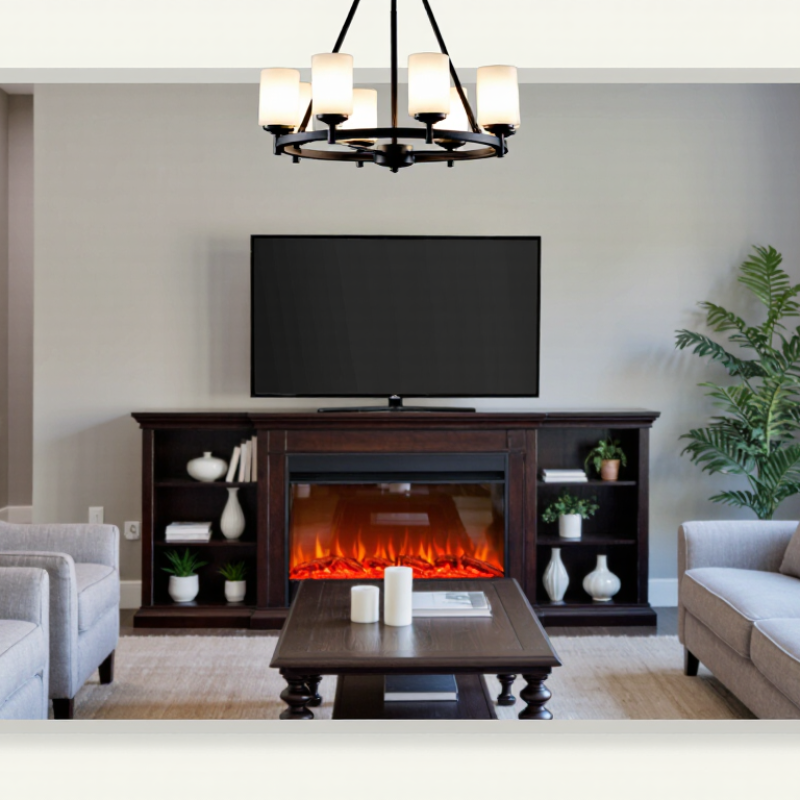
An Electric Fireplace Tv Console is a piece of living-room furniture that combines a television stand with an electric fireplace insert. The TV rests on its upper surface, while shelves, cabinets, or open compartments hold media devices and small items. The fireplace creates a flame-like display using lights; many models also provide supplemental heat. It does not burn wood or require a chimney, though electrical and heating details vary by model.
The console can make a room feel more organized by bringing the screen, storage, and fireplace effect into one area. A realistic setup needs enough clearance around the insert and a stable surface for the television. Measure the wall and TV before choosing a console. A wide unit can look balanced, but it may crowd a small room. That part is easy to overlook. Also check whether cords can reach an outlet without crossing a walkway.
Tips: Keep the console on a level floor, leave the air openings unobstructed, and follow the model’s safety instructions. Check heat output and room size before relying on it for warmth. The flame effect may be the main appeal, and that is fine—but the extra furniture can feel bulky if storage needs are modest.
An electric fireplace TV console combines a television stand and storage furniture with an electric fireplace feature. Many models include a heater with two common power settings.
Typical heater settings: 750 W provides a lower setting, while 1,500 W provides a higher setting. Actual settings vary by model; the chart shows common electric-heater levels, not a specification for every console.
Why Choose an Electric Fireplace TV Console?
How Its Heating and Flame Effects Work
An electric fireplace console creates warmth and a fire-like display without burning fuel. Inside, an electric resistance element heats the air, while a fan pushes it through front vents. Many models use LEDs and reflective surfaces to imitate flickering flames. The heater and flame effect often work separately, so you can enjoy the glow without added heat. No real flames are involved. Check the unit’s manual for vent clearances, and keep objects away from the outlet.
Heating deserves a closer look. The U.S. Energy Information Administration’s 2020 Residential Energy Consumption Survey reported that space heating accounted for about 42% of U.S. household site energy use. That figure covers many heating systems, not fireplace consoles alone. An electric console may warm a nearby seating area, but it is not automatically an efficient whole-home heating solution. Actual performance depends on room size, insulation, thermostat settings, and electricity use. And comfort is hard to measure; a gentle fan can feel pleasant, yet still leave a cold corner.
Tips: Run the flame effect alone when you want ambience. For heat, keep vents clear and compare the unit’s wattage with your room’s needs. The display may look convincing, but it is still an imitation.
| Feature | How It Works | What It Means for You |
|---|---|---|
| Supplemental heating | An electric heating element converts electrical energy into heat. Many units also use a fan to circulate warmed air. | Adds localized supplemental warmth. Heating performance and suitable room size depend on the unit, room conditions, and the manufacturer’s specifications. |
| Typical electrical demand | Many North American models offer a high setting around 1,500 watts. At that output, the heater uses about 1.5 kWh for each hour it runs continuously. | Actual energy use depends on the selected heat setting and how often the thermostat cycles the heater on and off. Check the product label and manual for the exact electrical requirements. |
| Flame effect | Lights—often LEDs—illuminate simulated logs or other materials. Depending on the design, moving light patterns or optical components create the appearance of flickering flames. | Enjoy a fireplace-like visual effect without a real fire, combustion, or chimney. Flame appearance and controls vary by model. |
| Flame-only operation | Many consoles let the visual flame effect run with the heater switched off. | Use the ambiance in warmer weather. The flame display still uses electricity; its exact consumption depends on the unit. |
| Separate heat and flame controls | On models with independent controls, the heater and flame display can be operated separately. | Choose heat, flame effects, or both, according to the controls included with the console. |
| Thermostat and heat settings | Many units provide adjustable temperature settings or more than one heat level. A thermostat can cycle the heater to help maintain its set temperature. | Controls can help manage comfort and runtime, but features differ. Consult the manual for the specific thermostat range and settings. |
| TV-console format | The fireplace insert is built into a piece of furniture designed to support or accommodate a television and provide storage. | Combines an entertainment center and electric fireplace in one footprint. Confirm the console’s dimensions, TV-support limits, and ventilation requirements before installation. |
| Installation and safety | Most electric inserts need an appropriate electrical outlet and clear airflow around their vents. They do not produce combustion exhaust. | Follow the unit’s clearance and electrical instructions. Keep vents unobstructed, and do not assume the console can share a circuit with other high-power appliances. |
Note: Features and performance vary by model. An electric fireplace TV console is generally intended as supplemental heat; use the product manual to confirm its heating capacity, electrical requirements, clearances, and TV installation limits.
An electric fireplace TV console combines two everyday functions: a stable place for a television and organized storage for media devices, with supplemental heat below. Its practical value is easy to picture: a remote on the shelf, game consoles behind cabinet doors, and warmth near the sofa on a chilly evening. The U.S. Energy Information Administration’s 2015 Residential Energy Consumption Survey reported that space heating accounted for about 42% of household site energy use. That figure helps explain why targeted supplemental warmth may be useful, though it does not mean a console can replace a home’s main heating system.
The U.S. Department of Energy notes that electric resistance heaters convert nearly all the electricity they consume into heat at the point of use. That describes the heater, not the full energy chain, and operating costs still depend on local electricity rates and use. A thermostat or timer can help limit unnecessary runtime. Keep vents clear, follow the unit’s installation instructions, and check that shelves do not block airflow. It is not magic. The compromise is space: consoles can be bulky, and the heater may warm only the area nearby. Measure the wall and viewing distance before choosing one; a neat-looking cabinet can still feel cramped in a small room.
Key Benefits for Comfort, Space, and Room Design
An electric fireplace TV console brings two familiar functions into one piece of furniture. It can free up floor space in a small living room, where a separate media stand and heater might crowd the walkway. A console against one wall also gives the room a clear focal point. That matters.
The fireplace effect adds a gentle visual warmth on quiet evenings, while the heater can make a chilly seating area more comfortable. Many models allow the flame display to run without heat, which is useful during warmer months. Check the unit’s heating settings and room guidance before relying on it; performance varies with insulation, ceiling height, and drafts. It is a comfort aid, not a replacement for a home’s main heating system.
Design still needs a little thought. Measure the television, console, and available wall space, and leave room for cables and ventilation as the instructions require. A wide console can look grounded beneath a large screen, while a bulky one may overwhelm a compact room. The combined setup is convenient, but it is not magic: cords can remain visible, and the flame effect may look less convincing in bright daylight.
Choosing a model starts with measurements, not the flame effect. Measure the console’s width, depth, and height, then compare them with your TV’s footprint. Leave room for ventilation and follow the heater’s stated clearances. A console can fit a wall yet crowd a walkway. Check its weight limit, too. TV stands vary.
Think about how you will use the heater. Compare its heating output with the room size, and check whether the fireplace can run without heat. That matters on mild evenings. Confirm power requirements and keep cords away from hot surfaces and busy paths. Look for accessible controls, useful storage, and openings that let connected devices ventilate. I would not choose by appearance alone; a glossy finish cannot solve awkward cable access. Review assembly instructions and warranty terms, since these vary by model.
Tips: Measure the TV and wall before shopping. Check twice. Use painter’s tape to mark the console’s footprint, then see whether doors, drawers, and walkways remain clear. Read the manual for placement guidance rather than guessing. A small detail, like a reachable outlet, can make daily use much easier.



For those larger-sized parts, or smaller quantity runs, we have 2 independent powder coat booths and ovens. The quality, durability and affordability of today’s powder coating finishes make this the process of choice for world-class companies.
Powder coating advantages over other forms of coating are many. Materials used in the Powder coating process can be metals and non-metals that come in a multitude of thicknesses, textures, colors, etc. Another of Powder coating’s biggest advantages over conventional coatings is its ability to create finishes in many different textures. Powder Coating Booths allow us the ability to apply these advantages to large products.
Tri-State Fabricators runs a full-service conveyor line for painting. Wet painting can provide protection or decoration to many different part styles. From start to finish, every project is easier to undergo random and point-based inspection by our skilled painting team.
Advantages to our Wet Paint Line are these lines start with product prep and ends with a thorough inspection of a high quality finished product. Our ability to complete large and small projects with a superior finish and doing so in a timely and economical fashion. This passes along the savings in production to our customers. When powder coating ins not an option, our Wet Paint Line gets the job done right the first time.
When the parts get big and heavy we roll-out our custom paint racks and oversize booth. By utilizing our partnerships with all the major paint brands, we can match virtually any color with wet paint.
The advantages of having access to a Wet Paint Booth are many. Large projects of many different shapes can be loaded into the booth. The Wet Paint Booth offers an environment that is much more controlled than a typical parts painting operation.
Not only are they used because of their controlled environment, but they’re are also advantageous when it comes to applying paint to parts that are needed in industries that require specialty coatings such as medical, aerospace, etc.
Our military forces have some very high standards when it comes to the finish of their vehicles and equipment. From the first pre-treatment step to final coat, it takes a great deal of knowledge and experience to protect the men and women of our armed forces. They deserve only the best, and Tri-State Fabricators provides it.
All of our processes are closely monitored by our staff and management teams. Both of which are highly trained in the processes of metal fabrication and finishing. Tri-State Fabricators’ goal is to always fully satisfy each and every customer, including the military. We will always put a 110% into what we do.
Abrasive media blasting is an excellent way to remove old paint, rust, and increase the paint/powder adhesion. Glass beads produce a much smoother and brighter finish than angular abrasives; leaving the part clean yet without any dimensional change. Chemically inert and environmentally friendly, we can recycle our beads approximately 30 times; making them a more preferred method of metal cleaning or surface finishing.
Advantages to Glass Bead Blasting are many. Glass bead blast media is used when a project is needing rough surfaces need to become smooth for applications of coatings such as paint. It is typically used to clean paint and rust from a product surface without deforming the surface it is being used on. Overall, compared to many other blasting media, Glass Bead Blasting is a very economical choice and those savings are always passed on to our customers.
Tri-State Fabricators utilize a zinc phosphate wash to clean and etch the material to ensure the best paint adhesion possible. The unique design of our 3-stage wash system does the work like a 5-stage. From Cleaning and rinsing to conversion coating and post-treatment, Our Part Washing process is a complete service and works throughout the fabrication service and the finishing service.
Along with the previously mentioned benefits, Curing is a vital chemical reaction that leaves the product finish hard and relatively safe from mild abrasion and aggressive corrosion. This process can be done in more than one way; ambient air-dry or in curing ovens at temps that exceed 240°.
From fixing paint mistakes (someone else’s of course) to simply cleaning our paint line hooks, our burn-off oven is put to good use. After a quick burn-off, a little clean up, and a fresh coat of paint, your parts will look better than new.
Why does our Burn-Off Oven work so well? Because super heating the air around parts turns the materials into ashes. From paint and powder coatings to rubber and machining oils, high temps do the job without degrading the integrity of the part.
Masking is a vital part of producing high quality products. We have die-cut masking patterns to protect machined surfaces as well as a wide range of plugs and caps to protect threaded holes and bolts. We provide permanent and temporary masking.
Masking allows the selected sections of a product to be protected from a fabrication or finishing service. This can be with both chemicals when etching and tapes, paints when only finishing just a section of the product. Masking is great in aiding the customization process of a project.
Screen printing is a photographic process that transfers artwork onto a porous nylon screen which allows colored ink to flow through the screen and be deposited on an aluminum or plastic component. We can generally have just about any design created onto a screen for your parts.
Some of the advantages of Screen Printing are, brand recognition for your business displaying on your products, assembly instructions, product warnings/hazards, etc. Tri-State Fabricators produces Screen Printing of the highest quality so you know it’s durable.
Metal Finishing is the art of treating the exterior portion of product, often metal but can also be made of other materials, so that the surface is clean and free of any debris. Then the process of applying coats or either paint of powder coat takes place. This coating process improves the quality of the product in both appearance and resistance to wear and corrosion.
Tri-State Fabricators, Inc., understands that a project typically isn’t complete until a high-quality finish has been added to your product. This is why our painting and powder coating teams continuously inspect the products throughout the Metal Finishing process.