


How to Choose an Axial Piston Pump in 2026?

Choosing an Axial Piston Pump in 2026 starts with the machine’s real operating conditions, not a catalog headline. The pump must deliver the required flow and pressure across the expected speed range. Record the duty cycle, fluid type, inlet conditions, mounting space, and control requirements before comparing models. A pump sized for peak pressure alone may perform poorly during long, lower-pressure cycles. That detail matters.

Consider how the pump will connect to the rest of the hydraulic system. Check shaft dimensions, port locations, rotation, control options, and compatibility with the motor or engine. Review the manufacturer’s performance curves for the intended fluid viscosity and operating temperature. A small pressure drop at a fitting can affect performance. Noise, heat, and contamination also deserve attention; they are easy to overlook during selection, then harder to ignore in daily use.

Efficiency is important, but it is not the only deciding factor. Service access, replacement parts, technical support, and maintenance intervals can shape the pump’s lifetime cost. Ask suppliers for documented ratings and clarify the conditions behind them. If possible, compare data against measurements from your application or a representative test. A spreadsheet helps, but it cannot capture every installation detail. I would not treat one ideal operating point as the whole story. This guide explains how to weigh capacity, controls, durability, and service needs, so you can shortlist an Axial Piston Pump that fits the system rather than simply chasing the largest rating.
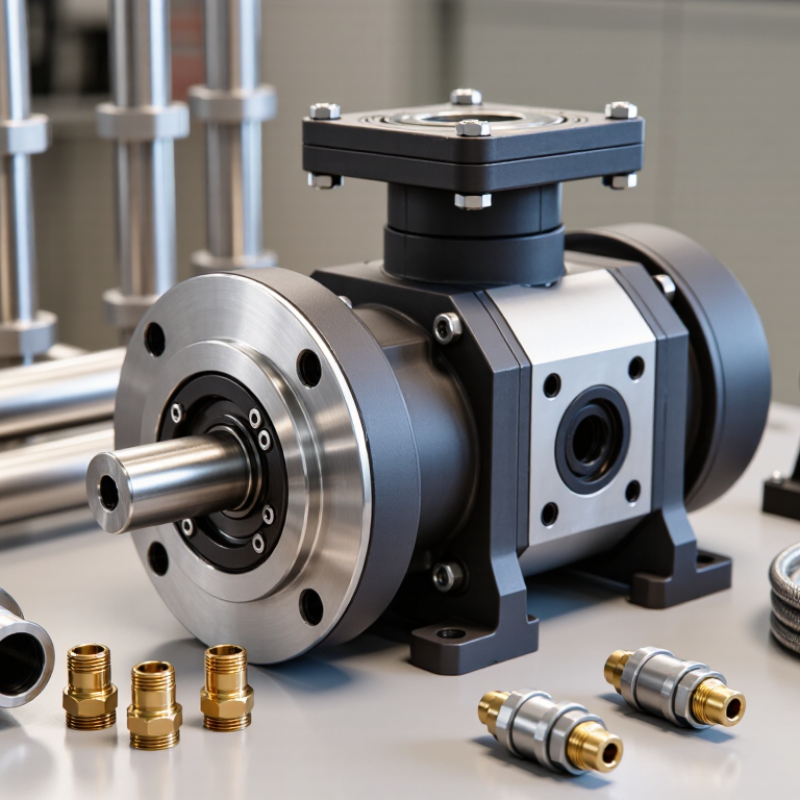
How to Choose an Axial Piston Pump in 2026?

Understand Axial Piston Pump Types and Operating Principles

Axial piston pumps turn shaft rotation into hydraulic flow. Several pistons sit parallel to the drive shaft inside a rotating cylinder block. As the block turns, each piston moves in and out, drawing fluid in and pushing it toward the outlet. A valve plate directs these alternating flows. The basic idea is simple. Pressure comes from the system’s resistance, not from the pump alone.

Two common designs are swash-plate and bent-axis pumps. In a swash-plate pump, an angled plate makes the pistons reciprocate as the cylinder block rotates. Changing the plate angle changes piston travel and displacement. Bent-axis designs place the cylinder block at an angle to the shaft, producing the same piston motion through a different geometry. Pumps may also have fixed or variable displacement. Fixed-displacement units deliver a set volume per revolution; variable units can adjust output to match demand.

When choosing a pump, connect its operating principle to the machine’s real duty cycle. Check required flow, operating pressure, shaft speed, fluid viscosity, and available control options. A variable pump may reduce wasted flow when demand changes, but its controls add complexity. Don’t assume it is always the better fit. Installation details matter too: restricted inlet lines or poor fluid cleanliness can shorten service life. Compare the pump’s operating range with measured system needs, and leave room for conditions that change with temperature or load.

How to Choose an Axial Piston Pump in 2026? — Understand Axial Piston Pump Types and Operating Principles
Configuration or Type Operating Principle Typical Characteristics Selection Considerations Common Applications
Swash-plate design Pistons rotate with the cylinder block and reciprocate as they follow an angled swash plate. Changing the plate angle changes piston stroke and, in variable-displacement designs, flow output. Compact construction; available in fixed- and variable-displacement versions. Many designs support reversible flow when configured for the application. Check rated pressure and speed, control method, case-drain requirements, noise limits, and compatibility with the hydraulic fluid. Mobile machinery, industrial hydraulic systems, and hydrostatic drives.
Bent-axis design The cylinder block is set at an angle to the drive shaft. This angle causes the pistons to reciprocate as the block rotates; displacement is related to the geometry and operating angle. Available as fixed- or variable-displacement designs. Construction and packaging differ from swash-plate units. Compare installation space, shaft and mounting arrangement, allowable speed, pressure rating, and service access. Mobile equipment and applications requiring a compact rotating group or hydrostatic transmission component.
Fixed-displacement pump Each shaft revolution displaces a nominally fixed volume. Flow is primarily determined by displacement and rotational speed; actual delivery is affected by operating conditions and volumetric efficiency. Simple output behavior and control; flow generally changes with shaft speed rather than a displacement-control mechanism. Confirm that the system can use the delivered flow. Account for flow-control, relief, and heat-management requirements where applicable. Systems with steady flow demand, auxiliary circuits, and applications where pump output is controlled through drive speed.
Variable-displacement pump A control mechanism changes the swash-plate angle or equivalent geometry, varying piston stroke and pump displacement while the pump rotates. Can match output more closely to demand and reduce unnecessary flow compared with a fixed-displacement pump in suitable systems. Choose a control that matches the circuit, and verify response, minimum displacement, control stability, and system pressure limits. Mobile and industrial systems with changing flow demand.
Pressure-compensated control A pressure-responsive control reduces displacement as system pressure reaches its control setting, helping the pump maintain pressure without continuously delivering full displacement. Useful where pressure must be maintained while demand varies; it does not replace correctly sized pressure protection. Set the control in accordance with the system design and confirm coordination with relief valves, actuators, and operating pressure limits. Clamping, pressing, and other circuits that require pressure maintenance.
Load-sensing control The control responds to a load-sensing signal and adjusts pump displacement to provide flow at a pressure margin above the sensed load, within the system's control range. Can supply flow according to demand across multiple functions when the circuit is designed for load sensing. Check signal-line design, pressure margin requirements, valve compatibility, control response, and simultaneous-function behavior. Mobile machinery and multi-function hydraulic systems.
Open-circuit arrangement The pump draws fluid from a reservoir and sends it to the hydraulic circuit; return fluid flows back to the reservoir. Common circuit arrangement for general hydraulic power systems; filtration and reservoir design are important. Evaluate reservoir capacity, inlet conditions, filtration, cooling, return-line pressure, and pump inlet limits. Industrial power units, presses, and many mobile hydraulic circuits.
Closed-circuit hydrostatic arrangement The main pump circulates fluid between the two sides of a hydraulic motor circuit. Auxiliary charge-flow and flushing provisions are commonly used to support the loop and manage heat and leakage. Enables hydrostatic drive and direction or speed control when paired with compatible controls and components. Confirm loop pressure ratings, charge-pump requirements, flushing and cooling provisions, motor compatibility, and operating envelope. Hydrostatic vehicle drives and variable-speed machinery.
Key sizing inputs Required flow is determined by actuator demand and motion requirements; pressure is determined by the load and system design. Pump input power depends on pressure, flow, and overall efficiency. Displacement, shaft speed, pressure, duty cycle, and efficiency must be considered together rather than selected independently. Document continuous and peak pressure, required flow, drive speed and power, fluid and temperature range, mounting, shaft, and duty cycle. All applications; use the equipment manufacturer's rated limits and application data for final selection.
Installation and operating checks Correct inlet conditions, clean fluid, proper alignment, and suitable case drainage help the rotating group operate within its design limits. Contamination, aeration, excessive inlet restriction, misalignment, and unsuitable fluid conditions can contribute to wear or failure. Follow the pump documentation for fluid cleanliness, filtration, inlet pressure, case-drain routing, shaft alignment, start-up, and maintenance. Commissioning and maintenance of any axial piston pump installation.
Note: These categories describe different design and system features and can be combined. For example, a variable-displacement swash-plate pump may use pressure-compensated or load-sensing control in either an open- or closed-circuit application. Verify all operating limits against the selected pump's technical documentation.

Define Flow, Pressure, Speed, and Duty-Cycle Requirements

Before selecting an axial piston pump, measure the machine’s actual flow demand, not just its peak figure. Record actuator speeds during normal operation and note which functions run together. Pump flow depends on displacement, shaft speed, and volumetric efficiency, so allow for leakage and operating conditions. A cylinder that moves slowly under load may need different flow than its unloaded test suggests. Small detail. It matters.

Define pressure using the load at the actuator, then account for losses through hoses, valves, and fittings. Separate continuous pressure from brief peaks; a short spike is not the same as a steady operating requirement. Check the pump’s pressure limits and confirm the rest of the circuit can handle the intended conditions. If measurements are uncertain, verify them with suitable gauges under representative loads. Guessing from a system’s rated pressure can lead to an oversized selection.

Match the required flow to shaft speed and the pump’s permitted speed range. Check the prime mover’s available power, especially when high flow and pressure occur together. Describe the duty cycle clearly: operating hours, loaded time, idle periods, and frequent starts all affect heat and wear. Then consider the reservoir, cooling capacity, and fluid temperature during a full work shift. A brief trial can be misleading. I would revisit the assumptions after testing, because real machines rarely follow a perfect duty-cycle estimate.

Compare Displacement, Controls, and Efficiency Options

Start by matching pump displacement to the machine’s actual flow demand, not a brochure’s peak figure. At a fixed speed, larger displacement moves more oil per revolution, but it can also raise input torque and heat. Check typical and intermittent pressure, engine speed range, and actuator cycle time together. Small mismatches matter. If the pump spends much of its day supplying low flow, a large fixed displacement may waste power through throttling.

Compare controls against the work cycle. A pressure-compensated control can reduce flow when demand falls, while load-sensing control adjusts output to the required flow and pressure margin. Electronic controls offer more adjustment, but add setup and diagnostic considerations. Efficiency is not one number: volumetric losses, mechanical friction, and control strategy all affect energy use. Ask for performance data near your expected operating points, and compare heat generation as well as rated efficiency. Real duty cycles are messy; test data is only a starting point. A careful review of logged pressure and flow can reveal that the “best” setting needs another look.

Check Fluid, Mounting, Drive, and System Compatibility

How to Choose an Axial Piston Pump in 2026?

An axial piston pump should match the real operating conditions, not just the catalog rating. Start with the hydraulic fluid. Check its viscosity across cold starts and normal operating temperatures. Confirm that the fluid is compatible with the pump’s seals and materials. Cleanliness matters, too: fine contamination can wear internal surfaces and reduce performance. It is easy to rush this step.

Next, compare mounting and drive details with your machine. Verify the flange, shaft dimensions, rotation direction, and port locations against the installation drawing. Check that the drive can handle the pump’s required speed and torque. Then review system compatibility: expected pressure and flow, control type, case-drain requirements, and available cooling. A pump may fit the space but still run poorly if its control setup or heat-rejection capacity is wrong. Small details matter.

Tips: Measure the shaft and mounting face before ordering. Confirm fluid temperature and viscosity at startup, not only during steady operation. Ask a qualified hydraulic technician to review uncertain pressure, speed, or case-drain limits. A little extra checking now can prevent an awkward retrofit later.

How to Choose an Axial Piston Pump in 2026? Check Fluid, Mounting, Drive, and System Compatibility

ISO viscosity grades indicate nominal fluid kinematic viscosity at 40°C. Use this chart as a fluid-selection reference—not as a pump recommendation: confirm the fluid’s operating-temperature viscosity and compatibility with the pump’s specified limits. Also verify mounting, drive speed and torque, pressure, and flow requirements.

Evaluate Reliability, Serviceability, and Total Ownership Cost

How to Choose an Axial Piston Pump in 2026?

Reliability starts with matching the pump to its real duty cycle, not just its rated pressure. Record operating pressure, speed, fluid temperature, and hours under heavy load. A unit that runs near its limits may wear faster, even if the specification sheet looks suitable. Small details matter. Clean fluid and effective filtration can reduce wear on precision components, while poor inlet conditions may contribute to noise, heat, or unstable output.

Serviceability affects how quickly a pump can return to work. Check whether inspection points are accessible and whether routine tasks require specialized tools. Ask for clear service instructions, parts availability, and realistic repair lead times. Downtime is expensive. Still, easy access does not guarantee a simple repair, and local technician experience can vary. No scorecard captures every site.

Compare total ownership cost over the expected service period, not only the purchase price. Include energy use, filter and fluid changes, planned maintenance, spare parts, labor, and potential production losses. Where possible, estimate costs using your own operating hours and load profile. A more efficient pump may offset a higher initial price, but the result depends on how it is actually used. It is easy to overvalue a neat spreadsheet; confirm assumptions with maintenance records and operating data.

Powder Coat Booths

For those larger-sized parts, or smaller quantity runs, we have 2 independent powder coat booths and ovens. The quality, durability and affordability of today’s powder coating finishes make this the process of choice for world-class companies.

Powder coating advantages over other forms of coating are many. Materials used in the Powder coating process can be metals and non-metals that come in a multitude of thicknesses, textures, colors, etc. Another of Powder coating’s biggest advantages over conventional coatings is its ability to create finishes in many different textures. Powder Coating Booths allow us the ability to apply these advantages to large products.

Wet Paint Line

Tri-State Fabricators runs a full-service conveyor line for painting. Wet painting can provide protection or decoration to many different part styles. From start to finish, every project is easier to undergo random and point-based inspection by our skilled painting team.

Advantages to our Wet Paint Line are these lines start with product prep and ends with a thorough inspection of a high quality finished product. Our ability to complete large and small projects with a superior finish and doing so in a timely and economical fashion. This passes along the savings in production to our customers. When powder coating ins not an option, our Wet Paint Line gets the job done right the first time.

Wet Paint Booths

When the parts get big and heavy we roll-out our custom paint racks and oversize booth. By utilizing our partnerships with all the major paint brands, we can match virtually any color with wet paint.

The advantages of having access to a Wet Paint Booth are many. Large projects of many different shapes can be loaded into the booth. The Wet Paint Booth offers an environment that is much more controlled than a typical parts painting operation.

Not only are they used because of their controlled environment, but they’re are also advantageous when it comes to applying paint to parts that are needed in industries that require specialty coatings such as medical, aerospace, etc.

Military CARC

Our military forces have some very high standards when it comes to the finish of their vehicles and equipment. From the first pre-treatment step to final coat, it takes a great deal of knowledge and experience to protect the men and women of our armed forces. They deserve only the best, and Tri-State Fabricators provides it.

All of our processes are closely monitored by our staff and management teams. Both of which are highly trained in the processes of metal fabrication and finishing. Tri-State Fabricators’ goal is to always fully satisfy each and every customer, including the military. We will always put a 110% into what we do.

Glass-Bead Blasting

Abrasive media blasting is an excellent way to remove old paint, rust, and increase the paint/powder adhesion. Glass beads produce a much smoother and brighter finish than angular abrasives; leaving the part clean yet without any dimensional change. Chemically inert and environmentally friendly, we can recycle our beads approximately 30 times; making them a more preferred method of metal cleaning or surface finishing.

Advantages to Glass Bead Blasting are many. Glass bead blast media is used when a project is needing rough surfaces need to become smooth for applications of coatings such as paint. It is typically used to clean paint and rust from a product surface without deforming the surface it is being used on. Overall, compared to many other blasting media, Glass Bead Blasting is a very economical choice and those savings are always passed on to our customers.

Part Washing

Tri-State Fabricators utilize a zinc phosphate wash to clean and etch the material to ensure the best paint adhesion possible. The unique design of our 3-stage wash system does the work like a 5-stage. From Cleaning and rinsing to conversion coating and post-treatment, Our Part Washing process is a complete service and works throughout the fabrication service and the finishing service.

Along with the previously mentioned benefits, Curing is a vital chemical reaction that leaves the product finish hard and relatively safe from mild abrasion and aggressive corrosion. This process can be done in more than one way; ambient air-dry or in curing ovens at temps that exceed 240°.

Burn-Off Oven

From fixing paint mistakes (someone else’s of course) to simply cleaning our paint line hooks, our burn-off oven is put to good use. After a quick burn-off, a little clean up, and a fresh coat of paint, your parts will look better than new.

Why does our Burn-Off Oven work so well? Because super heating the air around parts turns the materials into ashes. From paint and powder coatings to rubber and machining oils, high temps do the job without degrading the integrity of the part.

Masking

Masking is a vital part of producing high quality products. We have die-cut masking patterns to protect machined surfaces as well as a wide range of plugs and caps to protect threaded holes and bolts. We provide permanent and temporary masking.

Masking allows the selected sections of a product to be protected from a fabrication or finishing service. This can be with both chemicals when etching and tapes, paints when only finishing just a section of the product. Masking is great in aiding the customization process of a project.

Screen Printing

Screen printing is a photographic process that transfers artwork onto a porous nylon screen which allows colored ink to flow through the screen and be deposited on an aluminum or plastic component. We can generally have just about any design created onto a screen for your parts.

Some of the advantages of Screen Printing are, brand recognition for your business displaying on your products, assembly instructions, product warnings/hazards, etc. Tri-State Fabricators produces Screen Printing of the highest quality so you know it’s durable.

Metal Finishing

Metal Finishing is the art of treating the exterior portion of product, often metal but can also be made of other materials, so that the surface is clean and free of any debris. Then the process of applying coats or either paint of powder coat takes place. This coating process improves the quality of the product in both appearance and resistance to wear and corrosion.

Tri-State Fabricators, Inc., understands that a project typically isn’t complete until a high-quality finish has been added to your product. This is why our painting and powder coating teams continuously inspect the products throughout the Metal Finishing process.


