


How to Choose an Aluminum Bidirectional Gear Pump in 2026

Choosing an Aluminum Bidirectional Gear Pump in 2026 means matching the pump to the real duty cycle, not just its advertised flow rate. A unit may run forward and reverse, but that does not guarantee equal performance in both directions. Check the manufacturer’s operating curves for each rotation direction, including pressure, speed, and temperature limits. Small differences matter.

Start with the hydraulic system. Record the required flow, peak and continuous pressure, fluid type, viscosity range, and expected operating hours. Then compare those figures with the pump’s displacement and rated speed. A pump selected only by its maximum pressure may run hot or wear quickly in everyday use. Look closely at port size, shaft dimensions, mounting pattern, seals, and relief-valve arrangements. These details can turn a promising specification into a poor fit.

Aluminum housings offer low weight and can suit mobile equipment, but the housing material alone does not establish durability. Ask about gear materials, surface treatment, seal compatibility, filtration requirements, and performance testing. Request documented data rather than relying on broad claims. If the system reverses under load, confirm that the pump is designed for that condition and that pressure control remains safe in both directions. Check noise and temperature during a representative test, too. Real conditions can surprise you.

There is no universal best choice. A compact pump that works well in a clean, moderate-duty circuit may struggle with contaminated fluid or frequent pressure spikes. Share the application details with a qualified supplier, and verify the final selection against the equipment manufacturer’s requirements. A little uncertainty is honest; overlooking it is expensive.
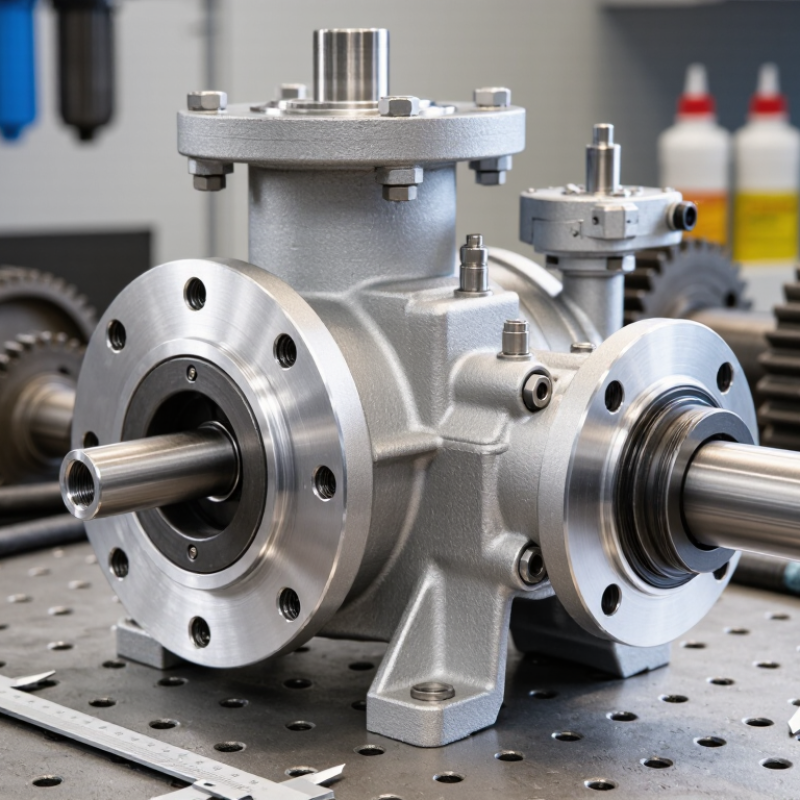
How to Choose an Aluminum Bidirectional Gear Pump in 2026

Define Operating Requirements and Bidirectional Flow Needs

Define the duty before comparing aluminum bidirectional gear pumps. Record required flow, continuous and peak pressure, shaft speed, operating hours, and fluid temperature. A pump sized only for a machine’s average load may run hot during repeated starts or brief pressure spikes. Check the fluid’s viscosity at both cold startup and normal operating temperature. Thin oil can increase internal leakage; thick oil can strain the drive.

Bidirectional flow needs more than a reversible motor. Confirm that the pump supports rotation in both directions, and ask whether its inlet and outlet ports exchange roles when rotation changes. Check seal design, porting, and any relief-valve arrangement for each direction. Reversal under load can cause pressure surges, so note how quickly the system changes direction and whether the circuit unloads first. A short test with a pressure gauge and flow meter can reveal problems that a tidy specification sheet misses. It is easy to overlook cold starts; record them too. Also compare the pump’s rated pressure at your actual speed, since aluminum construction alone does not define a safe operating limit.


Compare Aluminum Pump Designs and Construction Materials

When comparing aluminum bidirectional gear pump designs, look beyond the housing material. External gear designs are often straightforward and compact, with two meshing gears moving fluid between inlet and outlet ports. For reversing flow, confirm that the pump supports operation in both directions; a reversible shaft alone does not guarantee equivalent performance either way.

Aluminum alloy housings reduce weight and shed heat quickly, useful on mobile equipment where every kilogram matters. But aluminum is softer than steel and can be less suitable for abrasive fluids or demanding pressures. Gear materials matter too: hardened steel gears resist wear, while bronze bushings can help manage friction. Check how the end plates, shaft seals, and ports are constructed, since these parts influence leakage and durability. Details matter.

Compare the stated pressure and speed ratings for both flow directions, then match them to the fluid’s viscosity and operating temperature. A workshop check can be simple: inspect port faces for scratches and look for shaft play before installation. Ask whether the housing alloy and internal parts are specified, not merely described as “heavy duty.” That phrase tells you little. I would not choose by weight alone; lighter construction can be a compromise, and the right balance depends on the duty cycle. One detail is easy to miss: seal materials must suit the fluid, or a sound metal design may still leak.

Check Pressure, Flow, Speed, and Fluid Compatibility

How to Choose an Aluminum Bidirectional Gear Pump in 2026
Check Pressure, Flow, Speed, and Fluid Compatibility

Start with the machine’s actual pressure and flow requirements, not just its nominal rating. A pump may handle the target pressure briefly but overheat during sustained operation. Compare its published performance curve with the system’s working conditions. Allow for pressure spikes and losses through hoses, valves, and fittings. A few extra bar on paper does not automatically mean a safer choice.

Check that the pump is designed to deliver flow in both rotation directions. Some models reverse flow; others need specific porting or a suitable valve arrangement. Confirm this detail before installation. Match operating speed to the pump’s rated range, then check how flow changes under load. Too much speed can increase heat, noise, and wear. Too little may leave the actuator sluggish. Small differences matter.

Fluid compatibility deserves equal attention. Verify that the fluid works with the aluminum housing, internal parts, and seal materials. Consider viscosity at both startup and normal operating temperature. Cold, thick fluid can make a pump work harder, while thin fluid may increase internal leakage. Keep contamination low with suitable filtration. Still, a tidy specification sheet can miss a cold morning start. Check the real duty cycle, and ask for test data when conditions are unusual.

How to Choose an Aluminum Bidirectional Gear Pump in 2026 - Check Pressure, Flow, Speed, and Fluid Compatibility
Selection Factor Practical Screening Guidance Calculation or Verification
Displacement Common example sizes for comparing compact, medium, and higher-flow applications are 4–8, 8–16, and 16–32 cm³/rev. These are comparison bands, not a universal product range. Choose displacement from required flow and shaft speed; confirm the available size and pressure rating on the specific pump datasheet.
Flow at 1,500 rpm At an assumed 90% volumetric efficiency: 4–8 cm³/rev ≈ 5.4–10.8 L/min; 8–16 cm³/rev ≈ 10.8–21.6 L/min; 16–32 cm³/rev ≈ 21.6–43.2 L/min. Estimated delivered flow = displacement × rpm × volumetric efficiency ÷ 1,000. Actual efficiency varies with pressure, speed, fluid viscosity, temperature, and pump design.
Operating speed Use the pump manufacturer’s permitted minimum and maximum speeds. A speed such as 1,500 rpm is a useful calculation point, not a universal rated speed. Check the ratings at the intended fluid viscosity and pressure. Also verify the drive speed during startup and any overspeed conditions.
Pressure rating There is no single pressure rating that applies to all aluminum gear pumps. Continuous, intermittent, and peak pressure limits depend on the specific model and operating conditions. Compare system working pressure and pressure spikes with the pump’s published limits. Confirm inlet-pressure or vacuum limits as well as the rating in both flow directions.
Bidirectional operation A reversible pump must be approved for operation in both rotational directions and for the intended porting arrangement. Check whether case drainage, shaft seals, relief valves, and any built-in valves support reversal. A system relief valve may need protection for pressure in either direction.
Fluid compatibility Many aluminum gear pumps are designed for hydraulic mineral oils, but compatibility depends on the pump’s metals, seals, coatings, and the fluid formulation. For water-glycol, phosphate-ester, biodegradable, or other specialty fluids, obtain written material-compatibility confirmation for the pump and seals.
Viscosity and temperature Use the selected fluid’s viscosity at both cold-start and normal operating temperatures. Viscosity that is too high can impair inlet filling; viscosity that is too low can increase internal leakage and wear. Compare the full temperature-dependent viscosity range with the pump manufacturer’s limits, including startup conditions.
Inlet and filtration A flooded, adequately sized inlet line helps reduce restriction and the risk of cavitation. Filtration requirements depend on the pump clearances and system cleanliness target. Check inlet pressure, line size, fluid aeration, and the specified filtration level. Avoid selecting a filter solely by nominal micron rating; verify its performance and pressure drop.
Power and drive Required drive power rises with pressure and flow. Allow for pump efficiency and the duty cycle when sizing the motor or other prime mover. Hydraulic power (kW) ≈ pressure (bar) × flow (L/min) ÷ 600. Input power must be higher to account for losses.

Screening figures are illustrative calculations, not guaranteed pump ratings. Use the selected pump’s datasheet to confirm pressure, speed, flow, fluid, temperature, and bidirectional-operation limits.

Review Controls, Installation, and Applicable Safety Standards

Controls, installation, and safety deserve as much attention as pump capacity. For a bidirectional aluminum gear pump, confirm that the drive and control circuit support flow in both directions. Check the relief-valve arrangement for each operating direction; a single relief path may not protect both sides. Use pressure and flow ratings that match the pump, fluid, and duty cycle. Keep reversal gradual. Sudden changes can create pressure spikes.

Mount the pump on a rigid, clean surface, and align the shaft carefully to reduce bearing stress. Verify port connections and the rotation marking before starting. Keep the suction line short, unrestricted, and sealed against air leaks. Use compatible, filtered hydraulic fluid, then prime the pump as specified for its design. Start at low speed and inspect for leaks, unusual noise, or excessive heat. Small details matter.

Guard rotating couplings and provide a safe way to isolate power before maintenance. Review the machine’s risk assessment and applicable local requirements; ISO 4413 offers guidance for hydraulic system safety, but it does not replace jurisdiction-specific rules. Document pressure settings, control logic, and commissioning checks. A missed note can cause confusion later. Recheck the setup after the first operating cycle, especially if the pump runs in both directions. This extra check may feel repetitive, but it can reveal a loose fitting or an unexpected temperature rise.

How to Choose an Aluminum Bidirectional Gear Pump in 2026

Use this checklist to review the pump’s operating envelope, controls, installation, and applicable safety requirements. The bars show the number of review items in each category—not pump ratings or manufacturer specifications.

Confirm pressure, speed, viscosity, temperature, fluid compatibility, and inlet conditions against the selected pump’s documentation. Check mounting, alignment, port orientation, and suction-line design before installation. Review ISO 4413 for hydraulic-system safety and ISO 12100 for machinery risk assessment; apply electrical and control-system standards where relevant to the machine design.

Compare Supplier Support, Maintenance, and Total Ownership Costs

How to Choose an Aluminum Bidirectional Gear Pump in 2026

Compare supplier support before comparing purchase prices. Confirm the pump’s pressure, speed, fluid compatibility, and temperature limits match your system. For bidirectional operation, ask how the supplier specifies performance in both directions. Request clear guidance on shaft rotation, port connections, and installation. Small details matter. Check whether technical staff can help diagnose noise, leakage, or pressure loss, and ask how quickly common replacement parts are available. A polished product sheet is useful, but it cannot answer every setup question.

Maintenance and downtime can outweigh a modest price difference. Check the recommended filtration level and inspection schedule, then compare seal and bearing replacement requirements. Dusty environments, frequent reversals, and hot fluid may increase wear. Track service intervals and fluid condition; a simple log can reveal problems before a pump stops production. Consider installation labor, spare parts, energy use, and the cost of unscheduled downtime in your ownership estimate. Estimates are imperfect, especially when operating conditions change, so leave room for uncertainty.

Tips: Ask for written maintenance guidance and parts lead times. Compare total costs over your expected service period, not just the invoice. Keep a spare seal kit only if storage conditions and shelf life are understood.

Powder Coat Booths

For those larger-sized parts, or smaller quantity runs, we have 2 independent powder coat booths and ovens. The quality, durability and affordability of today’s powder coating finishes make this the process of choice for world-class companies.

Powder coating advantages over other forms of coating are many. Materials used in the Powder coating process can be metals and non-metals that come in a multitude of thicknesses, textures, colors, etc. Another of Powder coating’s biggest advantages over conventional coatings is its ability to create finishes in many different textures. Powder Coating Booths allow us the ability to apply these advantages to large products.

Wet Paint Line

Tri-State Fabricators runs a full-service conveyor line for painting. Wet painting can provide protection or decoration to many different part styles. From start to finish, every project is easier to undergo random and point-based inspection by our skilled painting team.

Advantages to our Wet Paint Line are these lines start with product prep and ends with a thorough inspection of a high quality finished product. Our ability to complete large and small projects with a superior finish and doing so in a timely and economical fashion. This passes along the savings in production to our customers. When powder coating ins not an option, our Wet Paint Line gets the job done right the first time.

Wet Paint Booths

When the parts get big and heavy we roll-out our custom paint racks and oversize booth. By utilizing our partnerships with all the major paint brands, we can match virtually any color with wet paint.

The advantages of having access to a Wet Paint Booth are many. Large projects of many different shapes can be loaded into the booth. The Wet Paint Booth offers an environment that is much more controlled than a typical parts painting operation.

Not only are they used because of their controlled environment, but they’re are also advantageous when it comes to applying paint to parts that are needed in industries that require specialty coatings such as medical, aerospace, etc.

Military CARC

Our military forces have some very high standards when it comes to the finish of their vehicles and equipment. From the first pre-treatment step to final coat, it takes a great deal of knowledge and experience to protect the men and women of our armed forces. They deserve only the best, and Tri-State Fabricators provides it.

All of our processes are closely monitored by our staff and management teams. Both of which are highly trained in the processes of metal fabrication and finishing. Tri-State Fabricators’ goal is to always fully satisfy each and every customer, including the military. We will always put a 110% into what we do.

Glass-Bead Blasting

Abrasive media blasting is an excellent way to remove old paint, rust, and increase the paint/powder adhesion. Glass beads produce a much smoother and brighter finish than angular abrasives; leaving the part clean yet without any dimensional change. Chemically inert and environmentally friendly, we can recycle our beads approximately 30 times; making them a more preferred method of metal cleaning or surface finishing.

Advantages to Glass Bead Blasting are many. Glass bead blast media is used when a project is needing rough surfaces need to become smooth for applications of coatings such as paint. It is typically used to clean paint and rust from a product surface without deforming the surface it is being used on. Overall, compared to many other blasting media, Glass Bead Blasting is a very economical choice and those savings are always passed on to our customers.

Part Washing

Tri-State Fabricators utilize a zinc phosphate wash to clean and etch the material to ensure the best paint adhesion possible. The unique design of our 3-stage wash system does the work like a 5-stage. From Cleaning and rinsing to conversion coating and post-treatment, Our Part Washing process is a complete service and works throughout the fabrication service and the finishing service.

Along with the previously mentioned benefits, Curing is a vital chemical reaction that leaves the product finish hard and relatively safe from mild abrasion and aggressive corrosion. This process can be done in more than one way; ambient air-dry or in curing ovens at temps that exceed 240°.

Burn-Off Oven

From fixing paint mistakes (someone else’s of course) to simply cleaning our paint line hooks, our burn-off oven is put to good use. After a quick burn-off, a little clean up, and a fresh coat of paint, your parts will look better than new.

Why does our Burn-Off Oven work so well? Because super heating the air around parts turns the materials into ashes. From paint and powder coatings to rubber and machining oils, high temps do the job without degrading the integrity of the part.

Masking

Masking is a vital part of producing high quality products. We have die-cut masking patterns to protect machined surfaces as well as a wide range of plugs and caps to protect threaded holes and bolts. We provide permanent and temporary masking.

Masking allows the selected sections of a product to be protected from a fabrication or finishing service. This can be with both chemicals when etching and tapes, paints when only finishing just a section of the product. Masking is great in aiding the customization process of a project.

Screen Printing

Screen printing is a photographic process that transfers artwork onto a porous nylon screen which allows colored ink to flow through the screen and be deposited on an aluminum or plastic component. We can generally have just about any design created onto a screen for your parts.

Some of the advantages of Screen Printing are, brand recognition for your business displaying on your products, assembly instructions, product warnings/hazards, etc. Tri-State Fabricators produces Screen Printing of the highest quality so you know it’s durable.

Metal Finishing

Metal Finishing is the art of treating the exterior portion of product, often metal but can also be made of other materials, so that the surface is clean and free of any debris. Then the process of applying coats or either paint of powder coat takes place. This coating process improves the quality of the product in both appearance and resistance to wear and corrosion.

Tri-State Fabricators, Inc., understands that a project typically isn’t complete until a high-quality finish has been added to your product. This is why our painting and powder coating teams continuously inspect the products throughout the Metal Finishing process.
