Why Choose Aluminum Profiles for Your Project?
Choosing Aluminum Profiles can shape a project’s weight, appearance, and assembly process. Their long, consistent sections suit applications such as equipment frames, display systems, partitions, and machine enclosures. A profile with a built-in channel can accept brackets or panels, reducing the need for some custom parts. That can simplify installation. It does not guarantee a faster build, though; the design still needs careful planning.
The right choice depends on loads, dimensions, environment, and finish requirements. Compare profile geometry and alloy details against the supplier’s technical data, and check tolerances before ordering. For a frame carrying equipment, for example, span and connection points matter as much as the profile’s outside dimensions. A neat-looking section may flex too much in use. This is easy to overlook. Ask how the profiles will be cut, joined, and maintained, too. Anodized or coated surfaces may suit particular appearance or exposure needs, but no finish is universally best. Experienced suppliers can clarify specifications, yet project teams should verify that advice against their own drawings and operating conditions. Aluminum Profiles offer useful design flexibility, but they are not a shortcut around engineering judgment. A small prototype or sample assembly can reveal awkward joints, tool access issues, or unexpected movement before the full order is placed.
What Aluminum Profiles Are and How They Are Made
Why Choose Aluminum Profiles for Your Project?
What Aluminum Profiles Are and How They Are Made
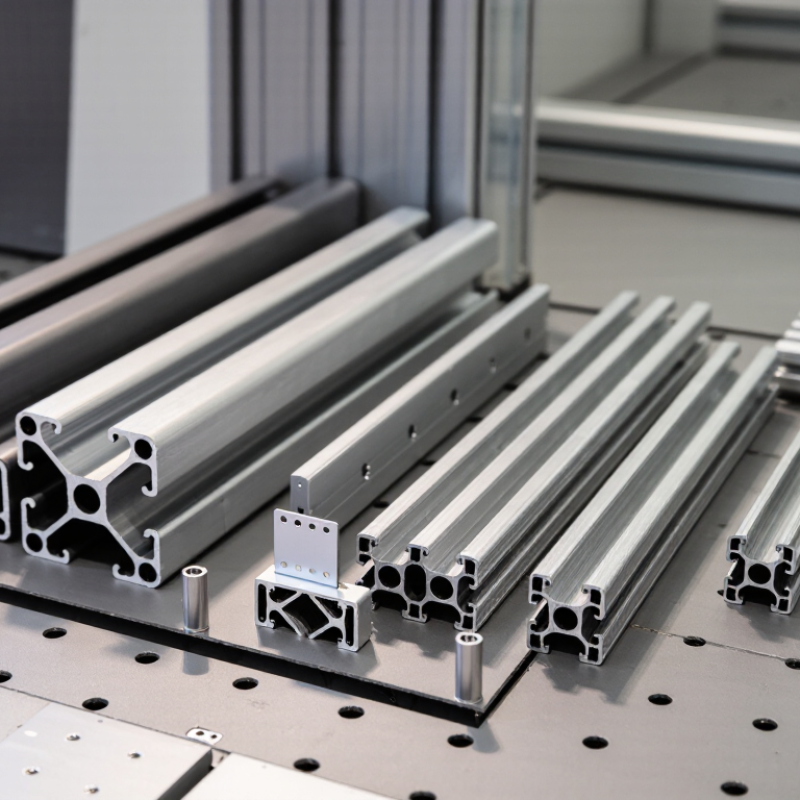
An aluminum profile is a long component with a fixed cross-section. It may have simple square edges or channels for panels, fasteners, and seals. The shape comes from a metal die, not from cutting every feature separately. That matters.
Manufacturing usually begins with a solid aluminum billet. The billet is heated until it can be shaped, then pressed through the die. The emerging profile is cooled, cut to length, and straightened if needed. A controlled aging treatment can improve its strength. Alloy choice and processing conditions affect the final properties, so two profiles that look alike may perform differently.
Finishing adds another practical layer. Profiles may be anodized or coated to improve appearance and surface protection. The right option depends on where the part will be used, how it will be handled, and whether it faces moisture or abrasion. Small details count. A thin wall can reduce weight, but may also flex under load; a complex shape can simplify assembly, yet demand tighter process control. A drawing can look perfect. Real production still needs checks for dimensions, straightness, and fit, and it is worth reviewing those details before ordering.
Why Choose Aluminum Profiles for Your Project?
Aluminum profiles are shaped sections made by forcing heated aluminum through a die. Their low density makes them a lightweight option for many structural and design applications.
Typical material densities are approximate; values vary by alloy and grade. Aluminum profiles are produced by heating an aluminum billet, pressing it through a shaped die, then cooling, cutting, and finishing the extrusion.
Key Properties of Aluminum Profiles
Why Choose Aluminum Profiles for Your Project?
Aluminum profiles combine low weight with useful structural strength, making them practical for frames, guards, shelving, and equipment supports. Their strength depends on alloy, temper, and profile geometry, so a thick-looking section is not automatically the strongest choice. Lightweight matters. Profiles can be extruded into channels, slots, and other shapes, reducing the need for multiple parts. Aluminum also forms a protective oxide layer in air, which helps resist corrosion. It is not immune to damage, though; harsh chemicals, trapped moisture, or contact with dissimilar metals may cause problems.
Tips: Check the load, span, and connection points before choosing a profile. A small joint can become the weak link. For outdoor use, ask about the finish and consider how water will drain. Anodizing or coating can improve surface protection, but neither replaces sound design.
Profiles are easy to cut and machine with suitable tools, and their thermal conductivity can help spread heat in some assemblies. That same conductivity may be undesirable near heat-sensitive components. I have seen projects focus on the profile dimensions and overlook fasteners, brackets, or vibration. That is an easy mistake. Review the full assembly, and verify manufacturer load data for the exact alloy and configuration before installation.
Benefits of Using Aluminum Profiles in Projects
Aluminum profiles offer a practical balance of low weight, useful strength, and design flexibility. They are often easier to carry and position than steel sections, which can simplify work on frames, equipment guards, display units, and workstations. Less handling effort can matter when a project involves many repeated parts. Light matters.
Extruded profiles come in varied shapes, with slots and channels that accept compatible brackets, fasteners, or panels. This can make adjustments easier: a shelf can move, a guard can be replaced, or a frame can be extended without rebuilding the entire assembly. Cutting and drilling are also straightforward with suitable tools and careful measurement. Clean edges still need attention.
The material resists corrosion in many everyday settings, and surface finishes can provide added protection or a more uniform appearance. Performance depends on the alloy, finish, exposure, and maintenance. Aluminum is not automatically the best choice. Long spans, heavy loads, vibration, and heat require proper sizing and connection design; a lightweight section may flex more than expected. Thermal expansion is another detail worth checking, especially in outdoor installations where profiles face large temperature changes. A small test assembly can reveal awkward joints or access problems before parts are cut for the full project.
Why Choose Aluminum Profiles for Your Project? - Benefits of Using Aluminum Profiles in Projects
| Project consideration | Aluminum profile characteristic | Potential project benefit | Design note |
| Weight | Aluminum has a density of about 2.7 g/cm³, compared with about 7.85 g/cm³ for common carbon steel. | Can reduce the mass of frames, enclosures, and support structures, making components easier to handle and transport. | Check load and deflection requirements; a lighter material does not automatically mean a lighter finished design. |
| Profile design | The extrusion process can form complex cross-sections, including channels, grooves, and integrated features. | May combine several functions into one profile and reduce the number of separate parts or machining steps. | Profile complexity, tolerances, and production feasibility should be reviewed with the extruder. |
| Corrosion resistance | Aluminum naturally forms a thin oxide layer that helps protect the surface from further oxidation. | Can be suitable for many indoor and outdoor applications, with anodizing or coating available for added surface protection. | Select the alloy and finish for the environment; salt exposure and contact with dissimilar metals require special consideration. |
| Surface finish | Profiles can be anodized, painted, or powder coated, subject to the alloy and finishing process. | Offers options for appearance, color, and surface durability without changing the profile’s basic geometry. | Specify finish, color, and any applicable performance requirements before production. |
| Thermal performance | Aluminum alloys generally conduct heat more readily than common structural steels. | Useful for applications such as heat sinks and thermal-management components. | For building frames or insulated enclosures, account for thermal bridging and consider thermal breaks where needed. |
| Assembly and modification | Many profile systems use slots or channels that accept compatible fasteners and accessories. | Can make structures easier to assemble, adjust, or reconfigure without welding. | Confirm connector compatibility, joint strength, and fastening requirements for the intended loads. |
| Recyclability | Aluminum can be recycled repeatedly, although collection, sorting, and alloy separation affect the process. | Can support material recovery at the end of a product’s service life and the use of recycled feedstock. | Environmental impact depends on the source of the metal, recycled content, manufacturing, and end-of-life practices. |
Note: Performance varies by alloy, temper, profile geometry, surface treatment, and operating conditions. Confirm project-specific requirements with the relevant material and design specifications.
Common Applications Across Industries
Aluminum profiles appear in buildings, vehicles, factories, and electrical systems because they combine low weight with adaptable shapes. The International Aluminium Institute’s 2022 global end-use breakdown attributes about 24% of aluminum demand to building and construction, and 26% to transport. These figures cover aluminum products broadly, not profiles alone, but they show where profile design can matter. In a window frame, a narrow section can support glazing while leaving more room for daylight. In a vehicle, shaped rails and brackets can reduce mass, though each part still needs testing for impact and fatigue.
Factories use profiles for machine guards, workstations, conveyor frames, and adjustable equipment supports. Standard grooves let technicians reposition brackets with ordinary hand tools. That can shorten modifications on a busy production floor. Electrical applications include cable enclosures and heat-dissipating housings, where profile geometry helps manage space and heat flow. Packaging and consumer products also use extruded sections, though their requirements differ sharply from structural frames. A detail worth questioning: “lightweight” does not automatically mean lower-cost or lower-impact. Alloy choice, wall thickness, finishing, and service life all affect the result. A poorly specified profile can flex, corrode, or waste material. It happens.
How to Select the Right Aluminum Profile for Your Project
Why Choose Aluminum Profiles for Your Project?
How to Select the Right Aluminum Profile for Your Project
Start with the job the profile must do. A frame holding a light sensor has different needs from a long-span machine guard. Note the load, unsupported span, expected movement, and available fixing points. Then compare cross-sections: deeper ribs can improve stiffness, while thin walls may reduce weight but dent more easily. Small details matter.
Choose alloy and temper for the forces and environment involved. For outdoor use, consider corrosion exposure, drainage, and surface finish; for repeated assembly, check how fasteners engage with the profile. The International Aluminium Institute’s Global Aluminium Cycle 2021 report estimates that about 75% of all aluminium ever produced remains in use. That supports aluminium’s durability, but it does not mean every profile suits every application. Check the supplier’s technical tables, especially load and deflection limits, rather than judging strength by appearance.
Think about fabrication before finalizing dimensions. Can the profile be cut, drilled, joined, and installed with tools available on site? A quick prototype can reveal awkward access or unexpected flex. It may feel like extra work. It often saves rework. Aluminum recycling also uses about 95% less energy than primary production, according to the Aluminum Association. Specify recycled content only when verified documentation is available, and test the finished assembly under realistic conditions. A neat drawing is not proof of performance.





