


Choosing airless packaging solutions is not a simple matter of selecting a premium-looking bottle. The package must protect the formula, support accurate dosing, match consumer habits, and strengthen the brand’s identity. A lightweight pump may suit a daily moisturizer, while a rigid, high-barrier container may better protect a sensitive serum. Small details matter, including actuator pressure, dispensing consistency, residual product, decoration quality, and compatibility with recycled materials.
David Luttenberger, Global Packaging Director at Mintel, has described packaging as “the silent salesman.” That idea remains useful when evaluating airless packaging solutions. The package communicates quality before the customer reads the label. It also influences how confidently users apply the product. A smooth pump stroke, clean nozzle, and controlled dose can make a routine feel more trustworthy.
Still, airless packaging is not automatically the best choice. It can increase component complexity, cost, and recycling challenges. Some systems also leave a small amount of product inside. That is easy to overlook. Brands should test real formulas, temperatures, transport conditions, and repeated consumer use before making a decision. Ask difficult questions. Does the pump work after months of storage? Can the components be separated? Will the material claims withstand independent verification?
This guide explains how to compare airless packaging solutions through performance, sustainability, user experience, and brand positioning. The goal is not perfection. It is a practical choice supported by testing, supplier transparency, and clear evidence.
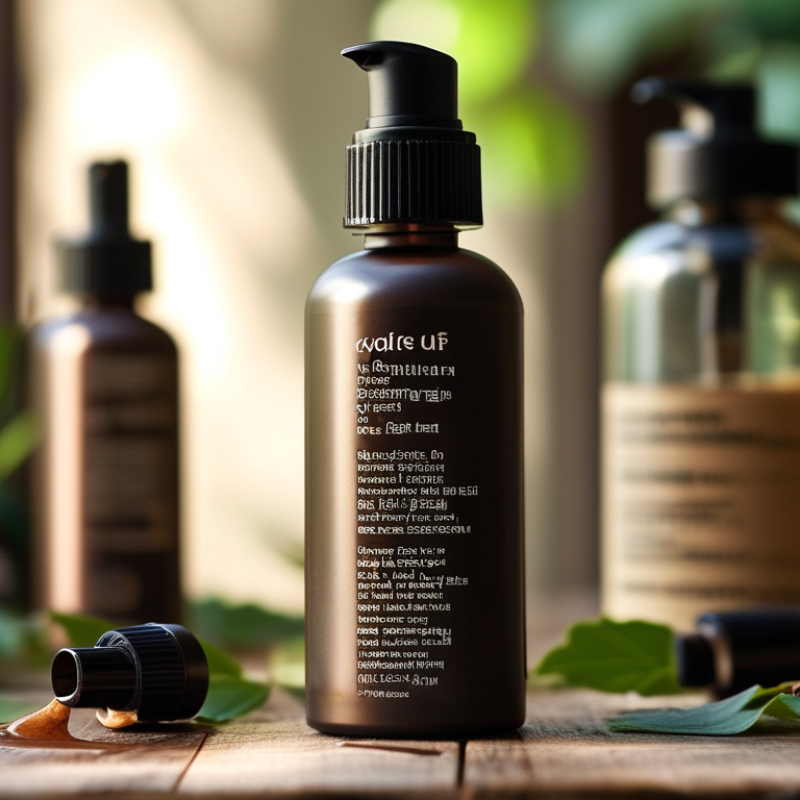
Airless packaging protects formulas by reducing their contact with air, dust, and repeated hand contact. It commonly uses a piston or collapsible inner pouch. As the product is dispensed, the container empties from the bottom upward. This helps limit oxidation and supports more consistent dosing. Sensitive creams and serums may benefit from this controlled environment. Less residual product can also reduce consumer frustration. It is not magic. Some formulas need little air protection.
Choosing the right system requires more than reviewing its appearance. Packaging teams should test formula compatibility, viscosity, pump performance, leakage, and closure strength. Accelerated stability testing can reveal changes in color, scent, texture, or performance. Dose consistency matters too. A package that releases too much product can weaken user trust. A tamper-evident feature may provide additional protection when appropriate.
Airless systems can protect both the product and the brand’s quality promise. However, they may cost more and include components that complicate recycling. Their filling process also needs careful control. This trade-off deserves honest consideration. A sleek package can still fail if the actuator clogs or the piston sticks. Real-world trials, including storage in warm rooms and transport vibration, often reveal problems that laboratory checks miss. Better decisions come from evidence, not appearance.
| Evaluation Dimension | Typical Airless Packaging Data | Brand-Protection Benefit | Selection Guidance |
|---|---|---|---|
| Airless Operating Principle | A piston or collapsible pouch moves upward as the product is dispensed, while the container remains substantially closed to outside air. | Limits repeated exposure to oxygen, moisture, dust, and other environmental contaminants. | Choose airless technology when formula stability is affected by oxidation, contamination, or frequent opening. |
| Typical Product Evacuation | Approximately 95–99% for many well-designed systems; actual results depend on viscosity, formula rheology, actuator design, and filling accuracy. | Helps reduce residual product and improves the consistency of the final user doses. | Run a pack-and-formula compatibility test instead of relying only on a stated theoretical evacuation rate. |
| Common Fill Volumes | Typical commercial formats include approximately 15 mL, 30 mL, 50 mL, 75 mL, 100 mL, and 150 mL. Larger formats are also available for selected applications. | Supports different usage periods, portability requirements, and product price points. | Match the fill volume to the recommended dosage, expected number of uses, and product shelf-life target. |
| Dose per Actuation | Common pump outputs range from approximately 0.15 mL to 1.5 mL per actuation, depending on the pump and actuator configuration. | Improves dose repeatability and can help consumers apply the intended amount. | Validate output over multiple actuations and at the beginning, middle, and end of the pack life. |
| Formula Viscosity | Suitable systems can handle low-viscosity liquids, emulsions, creams, gels, and some thicker products. Very high-viscosity or particulate formulas may require custom testing. | Reduces the risk of inconsistent dispensing, clogging, or excessive product remaining in the pack. | Test the complete formula, including oils, powders, pigments, beads, salts, and volatile ingredients where applicable. |
| Typical Contact Materials | Common material options include polypropylene, polyethylene, multilayer plastic structures, elastomers, and selected metal components. | Material selection affects chemical resistance, barrier performance, odor transfer, and product stability. | Request extractables and leachables assessment where required, especially for sensitive, leave-on, or regulated products. |
| Oxygen and Moisture Protection | Protection varies by structure. Standard plastic systems provide limited-to-moderate barrier performance; multilayer or barrier structures can provide higher protection. | Helps protect oxygen-sensitive ingredients, fragrances, colorants, and moisture-sensitive formulas. | Use measured oxygen transmission rate and water vapor transmission rate data when barrier performance is critical. |
| Preservative Strategy | Airless packaging can reduce contamination opportunities, but it does not automatically make a product self-preserving or preservative-free. | Supports a broader microbiological-control strategy by limiting product exposure during use. | Complete preservative efficacy, microbial challenge, stability, and in-use testing for the finished product and pack. |
| Recommended Product Categories | Common applications include facial creams, serums, lotions, gels, foundations, sun-care products, and other sensitive personal-care formulas. | Provides controlled dispensing and helps maintain formula quality throughout regular use. | Confirm compatibility with pigments, mineral filters, acids, retinoid-type ingredients, alcohols, oils, and other active components. |
| Package Orientation | Many systems can dispense in upright, angled, or selected inverted positions, but performance is design-dependent. | Improves convenience and may support use in travel or on-the-go situations. | Test dispensing after storage, transportation, temperature cycling, and extended periods in the chosen orientation. |
| Closure and Refill Options | Available configurations may include integrated pumps, protective caps, removable cartridges, and refillable outer shells. | Can improve hygiene, protect the actuator, and support reduced material use in selected designs. | Evaluate refill cleanliness, replacement steps, component wear, leak resistance, and consumer handling behavior. |
| Sustainability Considerations | Recyclability depends on local infrastructure and whether the package uses a separable, mono-material, or multilayer construction. | Efficient product evacuation can reduce unused contents, while optimized material weight can reduce packaging mass. | Assess the full package system, including pump parts, springs, elastomers, labels, coatings, and end-of-life instructions. |
| Quality and Performance Testing | Key tests include leakage, actuation force, dose accuracy, evacuation, compatibility, stability, transport, temperature cycling, and microbial performance. | Reduces the risk of dispensing failure, package deformation, contamination, and inconsistent consumer experience. | Test the filled commercial pack under both laboratory conditions and simulated real-use conditions. |
| Main Trade-Off | Higher system complexity than a basic jar or conventional tube, with more components and tighter assembly requirements. | The added complexity may be justified when protection, dose control, and product evacuation are high priorities. | Balance performance benefits against tooling, filling, assembly, cost, recyclability, and supply-chain requirements. |
| Note: The values shown are typical industry ranges or practical evaluation guidelines, not universal specifications. Final selection should be based on testing with the exact formula, pack configuration, filling process, storage conditions, and intended market requirements. | |||

Choosing an airless packaging solution starts with the product, not the container’s appearance. Assess viscosity, particle size, oil content, and sensitivity to oxygen or light. A rich cream may need a wider pathway and stronger actuator. A fluid serum may require tighter dose control. Check formula compatibility through accelerated stability testing, because attractive packaging can still trigger swelling, leakage, or scent changes.
Review the dispensing experience in real conditions. Test the first pump, repeated doses, upside-down use, and the final product level. Measure dose consistency across several units, not just one sample. Confirm that the pump can recover after storage and that the piston moves smoothly. One lesson I learned is simple: laboratory performance may not match bathroom performance. Temperature, wet hands, and rushed use expose weak assumptions.
Tips:
Match the dose to the application area. Record priming time and leftover formula. Ask the packaging supplier for material data, tolerance ranges, and test methods. Keep a retained sample from each trial batch. If the formula contains abrasive particles, test wear over hundreds of actuations. If the package feels difficult to use, investigate before launch. Small usability flaws often become repeated customer complaints. Consider refill handling carefully, too; a clean transfer process may matter more than a lower unit cost.
Choosing an airless package starts with the formula, not the appearance. In development trials, I check viscosity, oil content, pH, and sensitivity to oxygen. These factors influence material selection. Polypropylene offers strong chemical resistance and low weight. High-density polyethylene can provide a softer feel and good durability. Glass gives a premium impression, but it adds weight and breakage risk. Some formulas may also require a barrier layer to reduce oxygen or moisture transfer.
Format affects daily use. A pump bottle suits lotions, serums, and other fluid products. An airless jar can feel more familiar for thicker creams. A tube works well for controlled dispensing and travel-friendly use. The pump should deliver a consistent dose without excessive force. I usually test the package at different temperatures and after repeated dispensing. Small details matter.
Size should match the recommended usage period. A 15 ml container may suit a concentrated treatment or trial format. A 30 ml size supports portability and regular use. Larger 50 ml or 100 ml formats reduce refill frequency but may increase exposure during long storage. Oversized packaging can also leave more product behind. It happens.
Before production, evaluate the final formula inside the actual container. Check leakage, actuator recovery, residual product, and decoration durability. A package that performs well in a sample room may behave differently during shipping. I have seen attractive prototypes fail after vibration testing. That result is inconvenient, but useful. Packaging decisions should balance material performance, format, size, user habits, and realistic testing evidence.
Sustainability should begin with the full pack, not only the outer shell. The OECD’s Global Plastics Outlook reports that packaging created about 40% of global plastic waste in 2019. It also found that only 9% of plastic waste was recycled. This makes material simplicity important. A mono-material airless pack may support easier sorting, while mixed springs and components can complicate recovery. Recycled content sounds attractive, but it can affect color, strength, and dispensing performance. Test it early.
Usability is equally practical. An airless pump should deliver consistent doses, protect sensitive formulas, and work when held upside down. The actuator must not feel stiff or slippery. Leave enough product visibility for consumer confidence, even when full opacity improves protection. Conduct hand tests with different users, including people with limited grip strength. Small failures matter. A pump that leaves eight percent of the formula behind may damage trust.
Brand design should express quality without creating unnecessary material layers. Use molded texture, restrained color, or a clear information hierarchy instead of decorative overpackaging. NielsenIQ’s 2023 sustainability research found that 78% of U.S. consumers consider a sustainable lifestyle important. However, interest does not guarantee purchase. Consumers still judge convenience, appearance, and price. I would avoid calling any airless solution “fully sustainable” without supplier data, disposal guidance, and lifecycle evidence. The best design is often less impressive in a sample room, but easier to use and explain.
Choosing an airless pack starts with evidence, not a polished sample. Supplier screening should cover resin traceability, manufacturing controls, change-notification rules, and batch records. Ask for recent audits and complete test methods. ISO 22716 provides cosmetic GMP guidance, but it does not prove dispensing performance. That distinction matters. The OECD’s Global Plastics Outlook reports that only 9% of plastic waste was recycled in 2019. Request material composition and realistic end-of-life guidance before approving a complex pump.
Build a pre-launch test matrix with filled units, not empty shells. Measure dose consistency across the container’s life. Test the first, middle, and final actuations. Check priming, leakage, paneling, air return, and residual product. Run compatibility studies under heat, cold, light, and humidity. ASTM D4169 can structure distribution testing. ISO 22715 supports cosmetic packaging and labeling considerations. Use an independent laboratory when supplier data seems selective. It happens.
Performance also depends on viscosity, surfactants, alcohol, oils, and suspended particles. Test production-equivalent formulas across at least three lots. Record dose variation and define acceptance limits before testing begins. The OECD data also shows why material reduction deserves attention, not just marketing language. A package that passes one climate cycle may fail after six weeks in a hot delivery van. Forecasts are not guarantees. Recheck artwork, claims, instructions, and closure security during transport simulations. Keep retain samples for later investigation. Launch only when results are repeatable, documented, and clear to someone outside the project.
Recommended pre-launch evaluation weight for testing suppliers, compliance, and packaging performance.
Prioritize formula compatibility and regulatory documentation before assessing dispensing and transport performance. Supplier evidence should include material declarations, stability results, microbiological protection data, leakage testing, and transport validation records.


For those larger-sized parts, or smaller quantity runs, we have 2 independent powder coat booths and ovens. The quality, durability and affordability of today’s powder coating finishes make this the process of choice for world-class companies.
Powder coating advantages over other forms of coating are many. Materials used in the Powder coating process can be metals and non-metals that come in a multitude of thicknesses, textures, colors, etc. Another of Powder coating’s biggest advantages over conventional coatings is its ability to create finishes in many different textures. Powder Coating Booths allow us the ability to apply these advantages to large products.
Tri-State Fabricators runs a full-service conveyor line for painting. Wet painting can provide protection or decoration to many different part styles. From start to finish, every project is easier to undergo random and point-based inspection by our skilled painting team.
Advantages to our Wet Paint Line are these lines start with product prep and ends with a thorough inspection of a high quality finished product. Our ability to complete large and small projects with a superior finish and doing so in a timely and economical fashion. This passes along the savings in production to our customers. When powder coating ins not an option, our Wet Paint Line gets the job done right the first time.
When the parts get big and heavy we roll-out our custom paint racks and oversize booth. By utilizing our partnerships with all the major paint brands, we can match virtually any color with wet paint.
The advantages of having access to a Wet Paint Booth are many. Large projects of many different shapes can be loaded into the booth. The Wet Paint Booth offers an environment that is much more controlled than a typical parts painting operation.
Not only are they used because of their controlled environment, but they’re are also advantageous when it comes to applying paint to parts that are needed in industries that require specialty coatings such as medical, aerospace, etc.
Our military forces have some very high standards when it comes to the finish of their vehicles and equipment. From the first pre-treatment step to final coat, it takes a great deal of knowledge and experience to protect the men and women of our armed forces. They deserve only the best, and Tri-State Fabricators provides it.
All of our processes are closely monitored by our staff and management teams. Both of which are highly trained in the processes of metal fabrication and finishing. Tri-State Fabricators’ goal is to always fully satisfy each and every customer, including the military. We will always put a 110% into what we do.
Abrasive media blasting is an excellent way to remove old paint, rust, and increase the paint/powder adhesion. Glass beads produce a much smoother and brighter finish than angular abrasives; leaving the part clean yet without any dimensional change. Chemically inert and environmentally friendly, we can recycle our beads approximately 30 times; making them a more preferred method of metal cleaning or surface finishing.
Advantages to Glass Bead Blasting are many. Glass bead blast media is used when a project is needing rough surfaces need to become smooth for applications of coatings such as paint. It is typically used to clean paint and rust from a product surface without deforming the surface it is being used on. Overall, compared to many other blasting media, Glass Bead Blasting is a very economical choice and those savings are always passed on to our customers.
Tri-State Fabricators utilize a zinc phosphate wash to clean and etch the material to ensure the best paint adhesion possible. The unique design of our 3-stage wash system does the work like a 5-stage. From Cleaning and rinsing to conversion coating and post-treatment, Our Part Washing process is a complete service and works throughout the fabrication service and the finishing service.
Along with the previously mentioned benefits, Curing is a vital chemical reaction that leaves the product finish hard and relatively safe from mild abrasion and aggressive corrosion. This process can be done in more than one way; ambient air-dry or in curing ovens at temps that exceed 240°.
From fixing paint mistakes (someone else’s of course) to simply cleaning our paint line hooks, our burn-off oven is put to good use. After a quick burn-off, a little clean up, and a fresh coat of paint, your parts will look better than new.
Why does our Burn-Off Oven work so well? Because super heating the air around parts turns the materials into ashes. From paint and powder coatings to rubber and machining oils, high temps do the job without degrading the integrity of the part.
Masking is a vital part of producing high quality products. We have die-cut masking patterns to protect machined surfaces as well as a wide range of plugs and caps to protect threaded holes and bolts. We provide permanent and temporary masking.
Masking allows the selected sections of a product to be protected from a fabrication or finishing service. This can be with both chemicals when etching and tapes, paints when only finishing just a section of the product. Masking is great in aiding the customization process of a project.
Screen printing is a photographic process that transfers artwork onto a porous nylon screen which allows colored ink to flow through the screen and be deposited on an aluminum or plastic component. We can generally have just about any design created onto a screen for your parts.
Some of the advantages of Screen Printing are, brand recognition for your business displaying on your products, assembly instructions, product warnings/hazards, etc. Tri-State Fabricators produces Screen Printing of the highest quality so you know it’s durable.
Metal Finishing is the art of treating the exterior portion of product, often metal but can also be made of other materials, so that the surface is clean and free of any debris. Then the process of applying coats or either paint of powder coat takes place. This coating process improves the quality of the product in both appearance and resistance to wear and corrosion.
Tri-State Fabricators, Inc., understands that a project typically isn’t complete until a high-quality finish has been added to your product. This is why our painting and powder coating teams continuously inspect the products throughout the Metal Finishing process.

