


How to Choose a Wire Rope Thread Lifting Loop in 2026?

Choosing a Wire Rope Thread Lifting Loop in 2026 starts with the load, not the catalogue. The loop must match the required working load, lifting angle, connection hardware, and operating environment. A small mismatch can matter. A loop that looks substantial may still be unsuitable for a particular lift.

Check the rope diameter, thread specification, eye dimensions, and material finish against the equipment manufacturer’s documentation. Look closely at the threaded section and wire-rope termination. Burrs, corrosion, flattened strands, or a poorly fitting connector deserve attention. So does the lifting path: sharp edges and side loading can place stress where the assembly was not designed to carry it. Real jobs are rarely as tidy as product photographs.

A reliable selection also depends on traceable product information, clear inspection guidance, and compatibility with the rest of the rigging system. Ask the supplier for specifications rather than relying on appearance or a broad “heavy-duty” claim. Before publication, any named expert quotation should be verified against a primary source; none was supplied for this introduction, so no quotation is attributed. That may feel less persuasive. It is more honest. The sections ahead explain how to compare key specifications, assess fit and condition, and choose a loop suited to the actual lift—not just the one on paper.
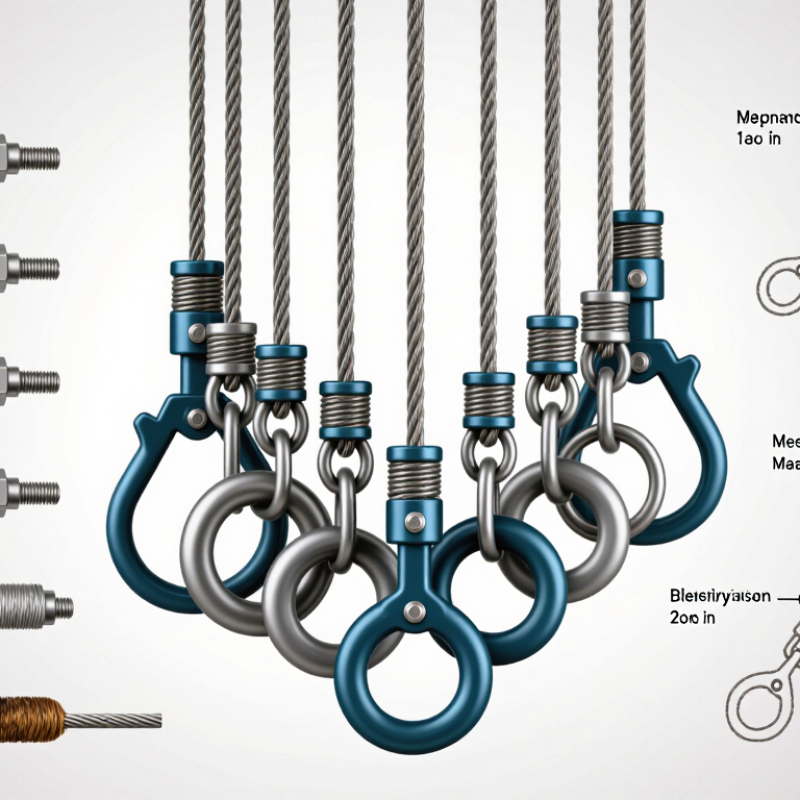
How to Choose a Wire Rope Thread Lifting Loop in 2026?

What Is a Wire Rope Thread Lifting Loop?

A wire rope thread lifting loop is a lifting assembly that combines flexible steel wire rope with a threaded end fitting. The rope forms a loop or eye for attaching to a load, while the threaded section connects to a compatible, rated tapped hole or lifting point. Designs vary: some have an integrated threaded terminal, while others use a separate connector. The exact construction matters.

It is not just a cable. The rope carries tension, and the threaded connection transfers force into the load. Before use, check the assembly’s marked working load limit and confirm that the thread size, pitch, and engagement match the lifting point. A fitting that starts to screw in easily may still be incorrect. Small details matter.

Inspect the rope for broken wires, kinks, flattening, or corrosion. Check the termination for movement and the threads for damage or contamination. Keep the pull aligned with the assembly; side loading can reduce capacity unless the product is specifically rated for it. In practice, thread compatibility is easy to overlook, especially when fittings look similar. If the rating or fit is unclear, pause and consult the equipment documentation or a qualified lifting professional.


How to Determine the Required Load Capacity

How to Choose a Wire Rope Thread Lifting Loop in 2026?

How to Determine the Required Load Capacity

Start with the complete load, not just the heaviest component. Include the item, attachments, and any material held inside it. An 800-kilogram assembly may place more than 800 kilograms of demand on a loop when lifting geometry or movement affects the load. Check the loop’s marked working load limit (WLL) and confirm it applies to your lifting direction and configuration. A rating for a straight pull may not cover a side pull. Never guess.

Tips: Check the load’s weight records, then verify the loop’s marking and supporting documentation. If either is unclear, pause and ask a qualified lifting professional.

Consider the full rigging setup. Angled legs, uneven load sharing, sudden starts, and snagging can increase force on individual parts. Do not assume two loops share weight equally; small differences in length or position can shift the load. The weakest rated component limits the assembly. I still double-check the lift plan against the actual setup, because the drawing can miss a tilted load or an awkward connection. Inspect the wire rope, fittings, and threads for broken wires, deformation, corrosion, or damage before use. If the WLL, condition, or intended loading is uncertain, do not lift until it is verified.

How to Choose a Wire Rope Thread Lifting Loop in 2026? — How to Determine the Required Load Capacity
Sling Angle from Horizontal Tension Multiplier per Leg Example: Load of 4.0 t, Two Symmetrical Legs Capacity Selection Guidance
90° (vertical) 0.500 × load 2.00 t per leg Use the rated working load limit (WLL) for the exact wire rope loop assembly and hitch configuration.
60° 0.577 × load 2.31 t per leg Select each leg for at least the calculated tension, allowing for the load’s actual distribution and applicable lifting rules.
45° 0.707 × load 2.83 t per leg Lower sling angles increase leg tension; verify the angle limits and capacity reductions specified for the assembly.
30° 1.000 × load 4.00 t per leg High tension can result at shallow angles. Reconfigure the lift or use a properly rated solution if capacity is insufficient.
Below 30° Greater than 1.000 × load Greater than 4.00 t per leg Avoid unless the lift plan, equipment ratings, and applicable regulations specifically allow it.
Calculation: For two equally loaded legs, estimated tension per leg = total load ÷ (2 × sin of the sling angle measured from horizontal). This is a geometry-based estimate, not a substitute for a rated WLL.
Before selecting a loop: Confirm the assembly’s marked WLL, rope construction and diameter, termination type, hitch, lifting-point compatibility, bend radius, inspection condition, and any reductions required for side loading, sharp edges, temperature, or dynamic effects. Do not assume the load is shared equally if the rigging geometry or load balance is uncertain.

How to Match Rope Construction and Loop Dimensions

A wire rope lifting loop should match both the load and the way it will bend in service. Start with the rope’s construction, diameter, core, and rated capacity. More outer wires can allow a rope to bend more easily, but the exact performance depends on its design. Check the rope maker’s technical data rather than choosing by appearance.

A compact rope may resist crushing, while a more flexible construction may suit repeated bending around a small pin. Not every lift needs the same balance.

Measure the loop’s inside length and width, then compare them with the hook, pin, or lifting point. Allow enough clearance for the loop to seat fully without twisting or pinching. Too small, and contact concentrates at the edges. Too large, and the loop may shift during handling. Fit matters.

Also verify the threaded end and its mating component are compatible, fully engaged, and rated for the intended load. Capacity can change with the termination and loading angle, so confirm the complete assembly’s rating from its technical documentation. A tape measure helps, but it cannot confirm strength.

I have seen dimensions look right on a bench and bind once the loop is loaded; that is worth checking before use.

How to Check Compatibility With Lifting Equipment

Before connecting a wire rope thread lifting loop, match its threaded end to the equipment’s tapped hole. Check the diameter, thread pitch, and usable thread length against the equipment documentation. Similar-looking threads can still differ. Do not force a loop that binds or rocks; damaged threads can weaken the connection.

Check the loop’s working load limit against the load and the planned lift direction. Side loading or an angled pull may reduce capacity, depending on the design. Keep the rope clear of sharp edges, and confirm the loop can align with the pull without twisting. Check that the hook, shackle, or other lifting attachment fits freely and cannot press against the loop’s body. No forced fit. Inspect the wire rope, termination, and threaded section for broken wires, kinks, corrosion, or deformation before use. The equipment manual should define any limits for rotation, angle, and installation torque. It is easy to focus on thread size and miss the load path; that check deserves equal care. If the specifications are unclear, pause and verify compatibility with a qualified lifting professional rather than guessing.

How to Verify Safety, Certification, and Condition Before Use

How to Choose a Wire Rope Thread Lifting Loop in 2026?

Before use, match the loop’s identification tag to its inspection record and certificate. Check the rated capacity, size, rope construction, and intended lifting configuration. The paperwork should identify the same item, not merely a similar model. If the tag is missing or unreadable, stop and ask a qualified person to confirm its status. A neat-looking certificate is not proof that the hardware in front of you is covered.

Inspect it closely. Look for broken or crushed wires, kinks, corrosion, heat damage, and movement near the end fittings. Check the threaded connection for dirt, flattened threads, or visible cracks. It should engage correctly with the compatible lifting point, without forcing or improvised packing. Keep the load aligned with the rated direction; side loading can create stresses the loop was not designed to carry. Small defects can be easy to dismiss. That is exactly why a second set of eyes helps. Follow the manufacturer’s inspection criteria and applicable site requirements, and remove questionable equipment from service until assessed. A quick visual check is useful, but it cannot replace documented inspections by a competent person.

How to Choose a Wire Rope Thread Lifting Loop in 2026?

Verify safety, certification, and condition before use. The chart shows OSHA removal thresholds for broken wires in wire rope slings.

Remove a wire rope sling from service when it reaches either threshold shown. Before lifting, also inspect the sling and its attachments for damage, confirm its identification tag and rated capacity are legible, and verify that the sling is suitable for the lift. Follow applicable local requirements and your competent person’s inspection procedures.

Source: OSHA 29 CFR 1910.184(f)(5). Thresholds are broken wires in one rope lay.

Powder Coat Booths

For those larger-sized parts, or smaller quantity runs, we have 2 independent powder coat booths and ovens. The quality, durability and affordability of today’s powder coating finishes make this the process of choice for world-class companies.

Powder coating advantages over other forms of coating are many. Materials used in the Powder coating process can be metals and non-metals that come in a multitude of thicknesses, textures, colors, etc. Another of Powder coating’s biggest advantages over conventional coatings is its ability to create finishes in many different textures. Powder Coating Booths allow us the ability to apply these advantages to large products.

Wet Paint Line

Tri-State Fabricators runs a full-service conveyor line for painting. Wet painting can provide protection or decoration to many different part styles. From start to finish, every project is easier to undergo random and point-based inspection by our skilled painting team.

Advantages to our Wet Paint Line are these lines start with product prep and ends with a thorough inspection of a high quality finished product. Our ability to complete large and small projects with a superior finish and doing so in a timely and economical fashion. This passes along the savings in production to our customers. When powder coating ins not an option, our Wet Paint Line gets the job done right the first time.

Wet Paint Booths

When the parts get big and heavy we roll-out our custom paint racks and oversize booth. By utilizing our partnerships with all the major paint brands, we can match virtually any color with wet paint.

The advantages of having access to a Wet Paint Booth are many. Large projects of many different shapes can be loaded into the booth. The Wet Paint Booth offers an environment that is much more controlled than a typical parts painting operation.

Not only are they used because of their controlled environment, but they’re are also advantageous when it comes to applying paint to parts that are needed in industries that require specialty coatings such as medical, aerospace, etc.

Military CARC

Our military forces have some very high standards when it comes to the finish of their vehicles and equipment. From the first pre-treatment step to final coat, it takes a great deal of knowledge and experience to protect the men and women of our armed forces. They deserve only the best, and Tri-State Fabricators provides it.

All of our processes are closely monitored by our staff and management teams. Both of which are highly trained in the processes of metal fabrication and finishing. Tri-State Fabricators’ goal is to always fully satisfy each and every customer, including the military. We will always put a 110% into what we do.

Glass-Bead Blasting

Abrasive media blasting is an excellent way to remove old paint, rust, and increase the paint/powder adhesion. Glass beads produce a much smoother and brighter finish than angular abrasives; leaving the part clean yet without any dimensional change. Chemically inert and environmentally friendly, we can recycle our beads approximately 30 times; making them a more preferred method of metal cleaning or surface finishing.

Advantages to Glass Bead Blasting are many. Glass bead blast media is used when a project is needing rough surfaces need to become smooth for applications of coatings such as paint. It is typically used to clean paint and rust from a product surface without deforming the surface it is being used on. Overall, compared to many other blasting media, Glass Bead Blasting is a very economical choice and those savings are always passed on to our customers.

Part Washing

Tri-State Fabricators utilize a zinc phosphate wash to clean and etch the material to ensure the best paint adhesion possible. The unique design of our 3-stage wash system does the work like a 5-stage. From Cleaning and rinsing to conversion coating and post-treatment, Our Part Washing process is a complete service and works throughout the fabrication service and the finishing service.

Along with the previously mentioned benefits, Curing is a vital chemical reaction that leaves the product finish hard and relatively safe from mild abrasion and aggressive corrosion. This process can be done in more than one way; ambient air-dry or in curing ovens at temps that exceed 240°.

Burn-Off Oven

From fixing paint mistakes (someone else’s of course) to simply cleaning our paint line hooks, our burn-off oven is put to good use. After a quick burn-off, a little clean up, and a fresh coat of paint, your parts will look better than new.

Why does our Burn-Off Oven work so well? Because super heating the air around parts turns the materials into ashes. From paint and powder coatings to rubber and machining oils, high temps do the job without degrading the integrity of the part.

Masking

Masking is a vital part of producing high quality products. We have die-cut masking patterns to protect machined surfaces as well as a wide range of plugs and caps to protect threaded holes and bolts. We provide permanent and temporary masking.

Masking allows the selected sections of a product to be protected from a fabrication or finishing service. This can be with both chemicals when etching and tapes, paints when only finishing just a section of the product. Masking is great in aiding the customization process of a project.

Screen Printing

Screen printing is a photographic process that transfers artwork onto a porous nylon screen which allows colored ink to flow through the screen and be deposited on an aluminum or plastic component. We can generally have just about any design created onto a screen for your parts.

Some of the advantages of Screen Printing are, brand recognition for your business displaying on your products, assembly instructions, product warnings/hazards, etc. Tri-State Fabricators produces Screen Printing of the highest quality so you know it’s durable.

Metal Finishing

Metal Finishing is the art of treating the exterior portion of product, often metal but can also be made of other materials, so that the surface is clean and free of any debris. Then the process of applying coats or either paint of powder coat takes place. This coating process improves the quality of the product in both appearance and resistance to wear and corrosion.

Tri-State Fabricators, Inc., understands that a project typically isn’t complete until a high-quality finish has been added to your product. This is why our painting and powder coating teams continuously inspect the products throughout the Metal Finishing process.
