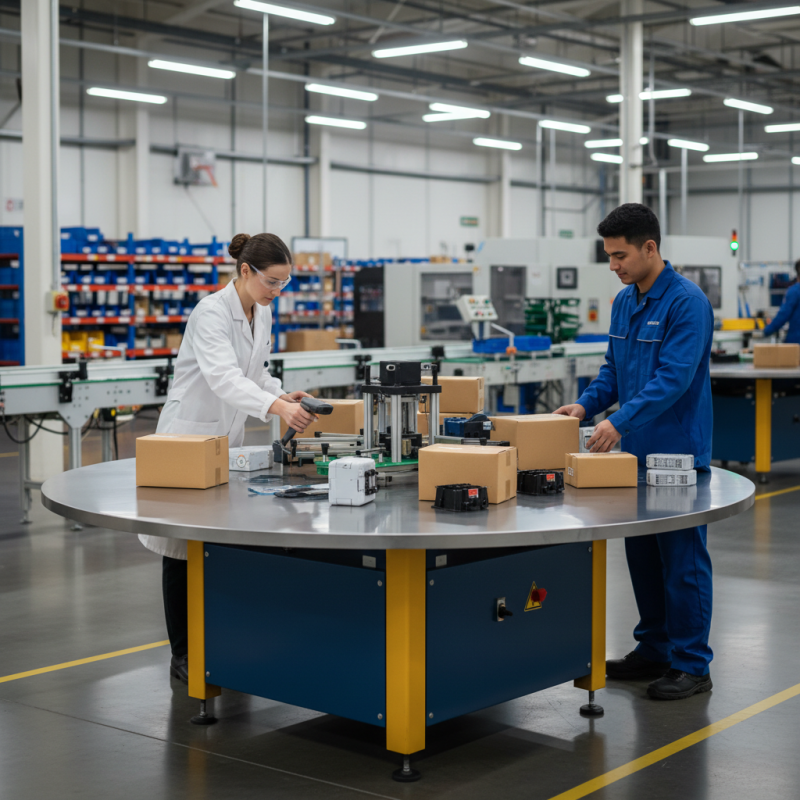
Why Choose a Turning Rotating Table for Your Business Needs?
In today’s dynamic business environment, the efficiency of operations is crucial. A Turning Rotating Table can significantly enhance productivity. This versatile equipment meets various business needs across industries, from manufacturing to hospitality.
Implementing a Turning Rotating Table can streamline processes. It allows easy access to items, reducing time spent searching. This feature often leads to improved workflow and happier employees. However, it requires thoughtful integration into existing setups. Proper training is essential to maximize its benefits.
Many businesses hesitate to adopt new solutions. Fear of disruption or unexpected costs can hold them back. A Turning Rotating Table offers tangible advantages, yet potential users should weigh these against their unique situations. With careful consideration, this tool could transform how your business operates.
Understanding the Functionality of a Turning Rotating Table
Turning rotating tables play a crucial role in various industries. They enhance efficiency by allowing easy access to multiple sides of a workpiece. This feature is especially useful in manufacturing and assembly processes. When workers can rotate pieces without moving, productivity increases. The ergonomic design minimizes physical strain.
Consider these tips when selecting a turning rotating table. Assess the load capacity carefully. Choosing equipment that cannot handle the weight may lead to accidents. Look for adjustable height options. This flexibility improves comfort for different users. Additionally, think about the surface material. Non-slip surfaces increase safety and prevent items from slipping off.
Turning rotating tables can sometimes have limitations too. They may not fit all spaces due to size constraints. If your workspace is small, consider compact designs. Regular maintenance is also critical. Worn components could lead to performance issues over time. A proactive approach will keep operations running smoothly.
Why Choose a Turning Rotating Table for Your Business Needs? - Understanding the Functionality of a Turning Rotating Table
| Feature | Description | Benefits |
| Space Efficiency | Compact design allows utilization of limited workspace. | Maximizes available space while maintaining functionality. |
| Versatility | Can be used for various tasks, from assembly to packaging. | Accommodates different processes, saving money on multiple machines. |
| Improved Productivity | Allows operators to work around products with ease. | Increases efficiency and reduces time taken for tasks. |
| Ease of Use | Intuitive controls and operation. | Minimizes training time for new employees. |
| Cost-Effectiveness | Reduces the need for multiple types of equipment. | Lower operational costs over time. |
Key Benefits of Using a Turning Rotating Table in Business
Turning rotating tables offer significant advantages for various business operations. These innovative tools enhance productivity by streamlining processes. Businesses utilizing these tables can experience improved efficiency, making operations smoother and faster. For instance, in assembly lines, these tables allow easier access to materials, minimizing downtime during operations.
Moreover, the flexibility provided by turning rotating tables cannot be overlooked. They cater to various workflows and can be adjusted easily. This adaptability ensures that businesses can respond quickly to changing demands. However, some organizations may underestimate the learning curve involved in incorporating such equipment. Proper training is essential for maximizing their benefits.
Additionally, the use of turning rotating tables can significantly reduce physical strain on workers. By keeping essential tools and components within easy reach, employees avoid unnecessary movements. Yet, some may find it challenging to adapt to this new ergonomic design. Regular assessments and adjustments might be needed to fit specific operational needs.
Embracing this technology can lead to transformative changes in efficiency and worker well-being.
Essential Features to Consider When Selecting a Rotating Table
When considering a turning rotating table for your business, essential features should be evaluated carefully. One key factor is the table's weight capacity. Data from industry reports indicate that a rotating table must support at least 500 pounds for most industrial applications. Selecting a table with appropriate weight limits ensures efficiency and safety, especially in manufacturing environments. A mismatch in capacity can lead to operational inefficiencies or potential accidents.
Another crucial aspect is the rotation mechanism. Tables with ball bearing systems offer smoother and quieter operation compared to simpler designs. According to studies, a smooth rotation can enhance productivity by reducing worker fatigue. Ergonomics also play a role. Tables that adjust in height can cater to various tasks and user preferences. This consideration is vital since according to the Occupational Safety and Health Administration, poor ergonomics can lead to repetitive strain injuries over time.
The durability of materials used is also important. Tables made from stainless steel or heavy-duty plastic can withstand harsh environments. However, it’s essential to weigh cost against longevity. A cheaper model might not endure wear and tear. Regular inspection and maintenance are critical, regardless of the initial choice made. These factors illustrate that while selecting a rotating table seems straightforward, deeper reflection on these features is necessary for making an informed decision.
Applications of Turning Rotating Tables Across Various Industries
Turning rotating tables offer significant advantages across various industries. They enhance efficiency and precision in production lines. In assembly operations, these tables minimize the need for workers to change stances. This leads to improved ergonomics and reduced fatigue.
The automotive sector frequently utilizes these tables. Reports indicate that using rotating tables can boost assembly speed by 30%. Workers can easily access various components without unnecessary movement. Additionally, in the food industry, rotating tables streamline packing processes. They handle multiple products and maintain steady flow rates, ensuring freshness and quality.
Challenges exist when integrating these solutions. Training employees to adapt to new technologies can take time. There is also the potential for mechanical failures, which may disrupt operations. Companies must weigh these factors against the efficiency gains. Data shows that businesses investing in automation, including turning tables, often see a 20% return on investment within two years. This is especially relevant in industries aiming for lean manufacturing.
Cost-Effectiveness and ROI of Implementing Rotating Tables in Operations
Implementing rotating tables in operations can significantly enhance cost-effectiveness. These tables improve workflow efficiency by allowing easier access to tools and materials. Businesses can reduce labor costs by minimizing unnecessary movements. When workers can rotate items with ease, tasks take less time. This streamlining can lead to faster production cycles, ultimately impacting profitability.
Moreover, the return on investment (ROI) for rotating tables is noteworthy. While initial costs may seem high, the benefits soon outweigh these expenses. Companies often see a quick recovery on their investment due to increased productivity. Fewer workplace injuries also lead to lower medical expenses. However, it's essential to consider how these systems fit specific operational needs. Not every setup will benefit equally from rotating tables; a critical evaluation is necessary.
In real-world scenarios, some users find initial adjustments challenging. Staff training may be required to harness the full potential of these tables. Furthermore, without proper maintenance, the effectiveness can diminish over time. Businesses should plan for ongoing assessments to ensure these systems remain beneficial. Transition strategies can also be complex, requiring thoughtful implementation. Nonetheless, the potential for cost savings and enhanced efficiency makes rotating tables worth considering.