


Choosing a Tungsten Alloy Vibration Absorber starts with the vibration problem, not the material’s impressive density. A motor, pump, or spindle may transmit unwanted motion through its mount, frame, or connected equipment. The right absorber depends on operating frequency, moving mass, available space, temperature, and how the assembly is supported. Small details count.
Tungsten heavy alloys are often selected when compact mass is useful. Commercial grades commonly offer densities around 17–18.5 g/cm³, though exact values depend on composition and supplier specifications. That can help designers add mass where space is tight. It does not guarantee vibration reduction. The USGS Mineral Commodity Summaries 2025 estimates global tungsten mine production at 81,000 metric tons in 2024, a useful reminder to consider material sourcing and lead times alongside performance. Check the actual grade data sheet; alloy names alone are not enough.
Standards help frame the measurements. ISO 20816 provides guidance for evaluating machine vibration, while ISO 2041 defines vibration and shock terminology. Neither standard selects an absorber for a specific installation. Engineers still need measured operating conditions and, where practical, testing on the assembled system. Not by calculation alone. A bracket that looks rigid on a drawing may flex under real loads, and a changed operating speed can shift the result. That uncertainty deserves attention. This guide explains how to compare alloy, geometry, mounting, and test data before choosing a Tungsten Alloy Vibration Absorber.
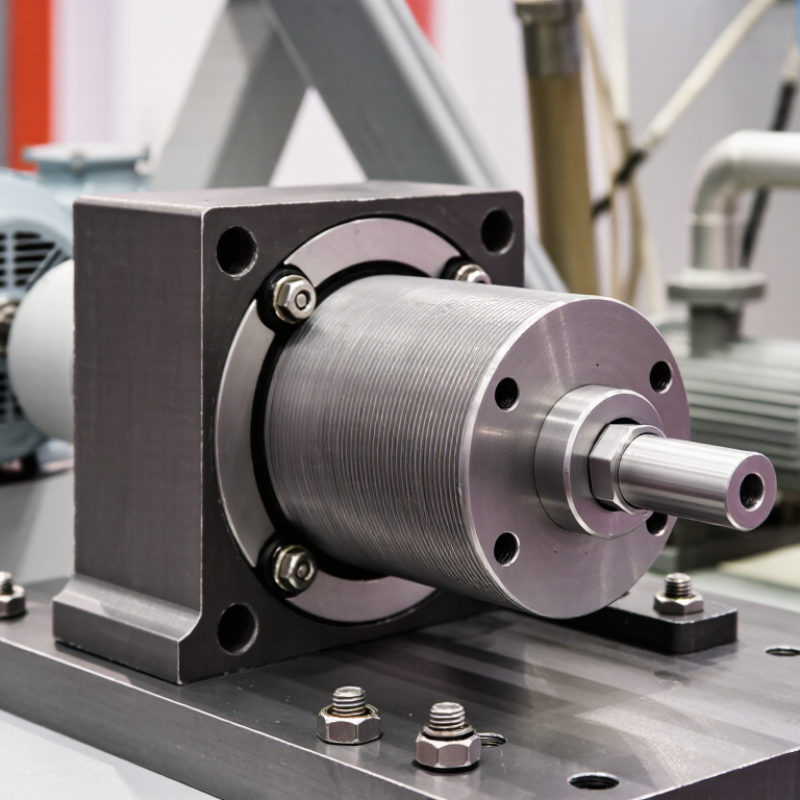
Mechanical vibration can begin with a small, repeated movement. A pump housing shivers; a motor bracket hums at one narrow frequency. A tungsten alloy vibration absorber packs substantial mass into limited space. Attached to the vibrating part, its moving mass is designed to respond near the troublesome frequency. As the structure moves, the absorber mass moves out of phase, reducing motion at the attachment point. Not magic. Just controlled motion.
The alloy supplies compact mass, while springs, flexures, and damping elements govern how energy is redirected and dissipated. That distinction matters: tungsten alone does not cancel vibration. An absorber tuned too far from the machine’s operating speed may do little, or amplify motion elsewhere. Select one by checking the vibration spectrum, available mounting area, temperature, and allowable added load. Then test it under real operating conditions with repeatable acceleration readings before and after installation. Sensor placement and machine load can affect results, so even a promising comparison deserves a second look.
Use this engineering guide to screen material and design options. Reference figures are typical ranges or calculated examples, not guaranteed product specifications.
| Selection Dimension | Typical Value or Relationship | How It Affects Vibration Control | Practical Selection Check |
|---|---|---|---|
| Tungsten heavy-alloy density | Approximately 17.0–18.5 g/cm³ for many tungsten heavy alloys | High density provides substantial mass in a compact volume. Added mass can reduce vibration response or help tune a mass-based absorber. | Compare the required absorber mass with available space, mounting capacity, and allowable equipment weight. |
| Illustrative mass by absorber volume | 10 cm³: about 170–185 g 25 cm³: about 425–463 g 50 cm³: about 850–925 g | Calculated by multiplying volume by the density range above. Actual mass depends on the alloy grade, geometry, and any holes or inserts. | Use the supplier’s certified density and the final machined dimensions for a precise mass estimate. |
| Elastic modulus | Often approximately 300–400 GPa for tungsten heavy alloys; grade and processing affect the value | A stiff absorber body can maintain its shape, but stiffness alone does not guarantee effective vibration damping. | Check stress, deflection, attachment stiffness, and fatigue requirements for the operating load case. |
| Absorber tuning frequency | For a simplified mass-spring absorber: fn = (1/2π)√(k/m), where k is support stiffness and m is absorber mass | Increasing mass lowers the tuned natural frequency if support stiffness stays constant. A tuned absorber is most effective near its design frequency. | Measure the target vibration frequency and determine the effective stiffness of the complete mount-and-absorber assembly. |
| Energy dissipation | Depends on the complete system, including damping elements, joints, and interface materials | Tungsten alloy mainly contributes compact mass and stiffness; it should not be assumed to provide high damping by itself. | If resonance reduction is required, evaluate a viscoelastic layer, frictional interface, or other suitable damping mechanism. |
| Operating frequency and excitation | Determine from measured or specified vibration spectra; rotating machinery may produce running-speed and harmonic components | A mass absorber tuned away from the dominant excitation may provide limited benefit or amplify response at another frequency. | Collect frequency, amplitude, duty-cycle, and transient data before finalizing the absorber design. |
| Attachment and load path | Design-specific; bolts, clamps, bonded interfaces, and mounting surfaces create different stiffness and damping | Loose or flexible attachments can shift the tuning frequency, introduce impact, or reduce vibration transfer to the absorber. | Check fastener preload, contact pressure, surface flatness, joint fatigue, and retention under shock and vibration. |
| Environment and compatibility | Assess temperature, corrosion exposure, fluids, and contact with dissimilar materials for the actual installation | Environmental conditions can affect the alloy, fasteners, coatings, and especially any polymer damping layer. | Verify material compatibility and the temperature range of every component in the assembly. |
| Validation method | Modal or frequency-response testing before and after installation | Testing confirms whether the absorber shifts or reduces the target response and reveals unwanted resonances. | Compare measurements at the same operating conditions and inspect the full frequency range, not only one peak. |

Design note: Final absorber performance depends on mass, support stiffness, damping, attachment, and excitation. Confirm material properties with the selected alloy specification and validate the assembled design by analysis or testing.
Define the vibration before selecting the absorber. Record the excitation frequency, acceleration or velocity, direction, and duty cycle at the mounting point. Include startup, shutdown, and load changes; a steady-state reading can miss a damaging resonance. ISO 20816-1:2016 provides guidance for measuring and evaluating machine vibration, but it does not set one universal acceptance limit for every machine. Compare readings under repeatable operating conditions.
Use an accelerometer to capture time histories and frequency spectra, not just a single overall value. Note the sensor location, mounting method, sampling rate, and measurement duration so later tests remain comparable. For a compact assembly, mass matters: NIST lists tungsten’s density at about 19.3 g/cm³, allowing substantial absorber mass in limited space. That advantage does not guarantee better control. Poorly matched mass or stiffness can shift a resonance into the operating range.
Translate the measurements into performance targets: which frequency band needs reduction, how much attenuation is required, and what motion remains acceptable at nearby components? Set limits for temperature, available clearance, and attachment loads too. A test on the actual structure is valuable, since joint flexibility can change the response. I would not rely on one bench result alone. Real installations are rarely that tidy.
ASTM B777 classifies tungsten-base heavy alloys into four density classes. Their specified minimum densities are 17.0, 17.5, 18.0, and 18.5 g/cm³. These figures help estimate absorber mass from its dimensions. A denser grade can fit more mass into a compact space. Small differences matter. However, density alone does not predict vibration reduction.
Compare the supplier’s certified density, tensile strength, hardness, and elastic modulus data. Nickel-iron or nickel-copper binder content and manufacturing processes can change mechanical properties between products. A missed point: higher density does not automatically mean better damping. Match the grade and absorber geometry to the operating frequency, available space, and mounting conditions. Where possible, check performance with a vibration test under representative conditions.
Tips: Ask for a material test certificate citing the applicable ASTM B777 class. Weigh a finished sample and check its dimensions against the stated density. Then test the assembled absorber at its actual operating frequency; bench results may not transfer perfectly.
Choose the absorber around the vibration you need to control, not around available space alone. A tungsten alloy’s high density can provide useful mass in a compact package. A short cylindrical slug may suit a narrow machine frame, while a broader block can fit a flat panel. Geometry also affects stiffness and resonance, so dimensions should be checked with the supporting structure.
Select mass using measured vibration data where possible. The absorber’s tuned frequency should be close to the troublesome vibration frequency, but not guessed from motor speed alone. Operating loads, frame flexibility, and temperature can shift the response. More mass is not automatically better. It can add stress to the mount or move the problem elsewhere.
Mounting matters just as much. Bolts provide a firm connection when the base is strong and flat; a compliant layer may help when isolation is part of the design. Keep contact surfaces clean, use suitable fasteners, and check for movement after installation. Small gaps matter. Even a careful calculation can miss a real-world resonance, so test the assembly under normal operating conditions and adjust if vibration remains.
How to select absorber geometry, mass, and mounting method
Reading the chart: Mass is calculated as density × volume. The tungsten heavy alloy estimate uses a representative density of 17.5 g/cm³; actual alloys vary by composition. Steel is shown at 7.85 g/cm³. These are theoretical masses for equal material volumes, not vibration-performance ratings.
Selection notes: Choose a shape that fits the available space and provides a secure attachment interface; cylinders, blocks, and custom profiles can have different practical mounting needs. Select absorber mass and mounting stiffness for the target vibration mode, then verify performance with modal analysis or testing. A heavier absorber alone does not guarantee better damping.
A tungsten alloy vibration absorber should be judged by test evidence, not density alone. Ask how the part was evaluated under the frequencies, loads, and temperatures expected in service. A useful test report identifies the fixture, measurement method, and operating conditions. Look for acceleration or displacement data before and after installation, plus repeat runs that show whether results are consistent. Real equipment rarely behaves like a laboratory setup. That gap matters.
Manufacturing quality affects whether test results hold up in the finished component. Check material certificates, alloy composition, dimensions, and records of machining or joining operations. Inspect critical surfaces for cracks, voids, and uneven finishes; small defects can become stress points under repeated vibration. Confirm that the absorber fits its mounting location without forcing or looseness. Ask how the supplier tracks batches and handles out-of-tolerance parts. Paperwork can look complete, yet still miss a practical issue.
Service life depends on the vibration spectrum, operating environment, mounting method, and maintenance schedule. Request durability or fatigue data that resembles your actual use, and clarify what failure criteria were applied. Monitor the assembly for changes in vibration, noise, or fastener condition after installation. No test predicts every field condition. That limitation deserves attention, not a footnote. A cautious selection pairs documented testing with traceable production checks and a realistic inspection plan.


For those larger-sized parts, or smaller quantity runs, we have 2 independent powder coat booths and ovens. The quality, durability and affordability of today’s powder coating finishes make this the process of choice for world-class companies.
Powder coating advantages over other forms of coating are many. Materials used in the Powder coating process can be metals and non-metals that come in a multitude of thicknesses, textures, colors, etc. Another of Powder coating’s biggest advantages over conventional coatings is its ability to create finishes in many different textures. Powder Coating Booths allow us the ability to apply these advantages to large products.
Tri-State Fabricators runs a full-service conveyor line for painting. Wet painting can provide protection or decoration to many different part styles. From start to finish, every project is easier to undergo random and point-based inspection by our skilled painting team.
Advantages to our Wet Paint Line are these lines start with product prep and ends with a thorough inspection of a high quality finished product. Our ability to complete large and small projects with a superior finish and doing so in a timely and economical fashion. This passes along the savings in production to our customers. When powder coating ins not an option, our Wet Paint Line gets the job done right the first time.
When the parts get big and heavy we roll-out our custom paint racks and oversize booth. By utilizing our partnerships with all the major paint brands, we can match virtually any color with wet paint.
The advantages of having access to a Wet Paint Booth are many. Large projects of many different shapes can be loaded into the booth. The Wet Paint Booth offers an environment that is much more controlled than a typical parts painting operation.
Not only are they used because of their controlled environment, but they’re are also advantageous when it comes to applying paint to parts that are needed in industries that require specialty coatings such as medical, aerospace, etc.
Our military forces have some very high standards when it comes to the finish of their vehicles and equipment. From the first pre-treatment step to final coat, it takes a great deal of knowledge and experience to protect the men and women of our armed forces. They deserve only the best, and Tri-State Fabricators provides it.
All of our processes are closely monitored by our staff and management teams. Both of which are highly trained in the processes of metal fabrication and finishing. Tri-State Fabricators’ goal is to always fully satisfy each and every customer, including the military. We will always put a 110% into what we do.
Abrasive media blasting is an excellent way to remove old paint, rust, and increase the paint/powder adhesion. Glass beads produce a much smoother and brighter finish than angular abrasives; leaving the part clean yet without any dimensional change. Chemically inert and environmentally friendly, we can recycle our beads approximately 30 times; making them a more preferred method of metal cleaning or surface finishing.
Advantages to Glass Bead Blasting are many. Glass bead blast media is used when a project is needing rough surfaces need to become smooth for applications of coatings such as paint. It is typically used to clean paint and rust from a product surface without deforming the surface it is being used on. Overall, compared to many other blasting media, Glass Bead Blasting is a very economical choice and those savings are always passed on to our customers.
Tri-State Fabricators utilize a zinc phosphate wash to clean and etch the material to ensure the best paint adhesion possible. The unique design of our 3-stage wash system does the work like a 5-stage. From Cleaning and rinsing to conversion coating and post-treatment, Our Part Washing process is a complete service and works throughout the fabrication service and the finishing service.
Along with the previously mentioned benefits, Curing is a vital chemical reaction that leaves the product finish hard and relatively safe from mild abrasion and aggressive corrosion. This process can be done in more than one way; ambient air-dry or in curing ovens at temps that exceed 240°.
From fixing paint mistakes (someone else’s of course) to simply cleaning our paint line hooks, our burn-off oven is put to good use. After a quick burn-off, a little clean up, and a fresh coat of paint, your parts will look better than new.
Why does our Burn-Off Oven work so well? Because super heating the air around parts turns the materials into ashes. From paint and powder coatings to rubber and machining oils, high temps do the job without degrading the integrity of the part.
Masking is a vital part of producing high quality products. We have die-cut masking patterns to protect machined surfaces as well as a wide range of plugs and caps to protect threaded holes and bolts. We provide permanent and temporary masking.
Masking allows the selected sections of a product to be protected from a fabrication or finishing service. This can be with both chemicals when etching and tapes, paints when only finishing just a section of the product. Masking is great in aiding the customization process of a project.
Screen printing is a photographic process that transfers artwork onto a porous nylon screen which allows colored ink to flow through the screen and be deposited on an aluminum or plastic component. We can generally have just about any design created onto a screen for your parts.
Some of the advantages of Screen Printing are, brand recognition for your business displaying on your products, assembly instructions, product warnings/hazards, etc. Tri-State Fabricators produces Screen Printing of the highest quality so you know it’s durable.
Metal Finishing is the art of treating the exterior portion of product, often metal but can also be made of other materials, so that the surface is clean and free of any debris. Then the process of applying coats or either paint of powder coat takes place. This coating process improves the quality of the product in both appearance and resistance to wear and corrosion.
Tri-State Fabricators, Inc., understands that a project typically isn’t complete until a high-quality finish has been added to your product. This is why our painting and powder coating teams continuously inspect the products throughout the Metal Finishing process.

