


Choosing a reliable China Tin Bar Casting Machine supplier requires more than comparing prices and catalog photographs. The right partner should understand molten tin behavior, mold design, cooling control, bar dimensions, and production continuity. Small details matter. A poorly aligned mold can create uneven bars, surface marks, or difficult demolding. Unstable temperature control may also increase oxidation and material waste.
Casting authority John Campbell has written, “The quality of a casting is determined by the quality of the liquid metal.” This principle applies directly to every Tin Bar Casting Machine evaluation. A capable supplier should explain how the machine controls melting temperature, pouring speed, cooling time, and bar cutting accuracy. Ask for test videos, technical drawings, material specifications, and measurable output data. Better still, request a sample run using your actual tin grade and target bar size.
Experience reveals what brochures often omit. Check the supplier’s installation records, technician response time, spare-parts availability, and factory quality procedures. Visit the workshop when possible. Look closely at welding quality, electrical cabinets, insulation, and emergency controls. These visible details can indicate deeper manufacturing discipline.
No supplier is perfect. That is worth remembering. A machine may achieve high output but require more maintenance. Another may offer excellent customization but need longer delivery times. The strongest choice balances performance, service, safety, and transparent communication. A careful comparison can prevent expensive redesigns later. The best supplier is not merely the cheapest manufacturer. It is the partner that can prove its claims, support your operators, and improve the process when real production becomes less predictable.
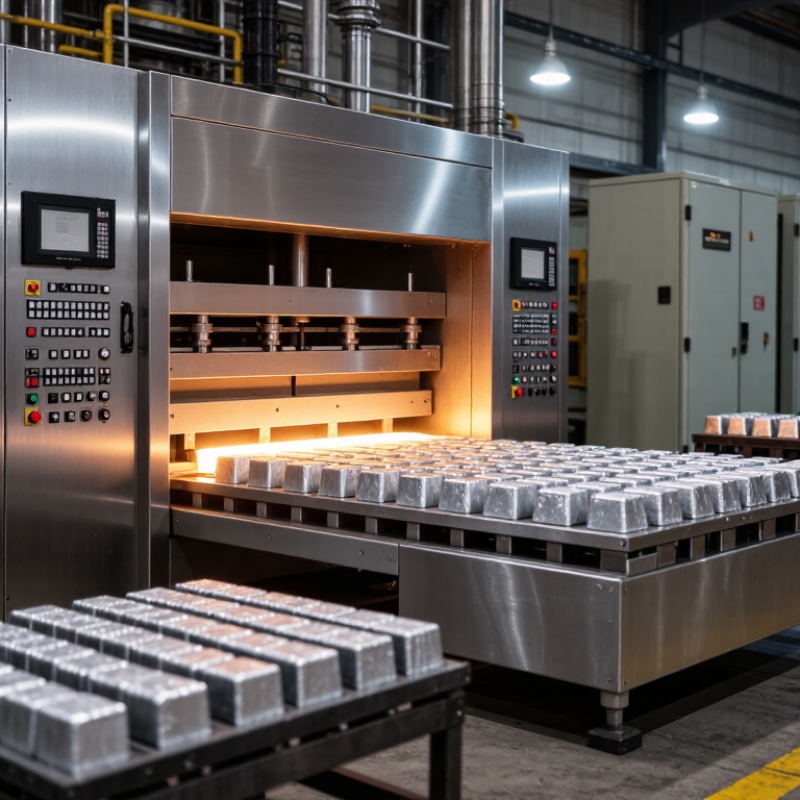
Choosing a Chinese tin-bar casting machine supplier starts with the alloy, not the catalog. 99.99% Sn is nearly pure tin, while SAC305 contains 96.5% tin, 3% silver, and 0.5% copper. According to the NIST Chemistry WebBook, pure tin melts at approximately 231.9°C. IPC J-STD-006 places SAC305’s melting range near 217–220°C. This difference affects furnace insulation, temperature control, mold release, and cooling speed. The International Tin Association’s 2023 market review identifies solder as roughly half of global refined-tin demand, making composition control commercially important.
A 99.99% Sn bar may suit high-purity applications, but tin-whisker risk requires documented evaluation. SAC305 generally supports strong solder joints and lower processing temperatures, although its silver content increases material cost. Ask suppliers for furnace uniformity records, alloy sampling procedures, mold-temperature data, and calibration certificates. A perfect-looking bar can still contain segregation or excessive dross. Do not assume a lower melting point guarantees better production. The machine must match the selected grade, casting volume, and required bar dimensions.
Tips: Request a trial using your exact alloy. Check the first and last bars from one casting run. Compare chemical analysis, surface finish, weight variation, and cooling marks. Require traceable batch records. One overlooked detail can distort the decision.

Choosing a top China tin bar casting machine supplier requires measurable performance targets, not attractive catalog language. Temperature stability should remain within ±1°C during normal casting. Ask for test records from the heating zone, holding furnace, and mold area. A single reading proves little. Continuous data matters more.
Confirm the rated kg/h output under realistic conditions. Request the alloy type, bar dimensions, pouring temperature, cooling method, and operating speed used during testing. A machine rated at 500 kg/h may produce less with smaller molds, frequent changes, or cautious operators. I have seen impressive figures fail on the factory floor. The reason was simple: testing used ideal conditions.
Visit the supplier’s production site, if possible, and inspect thermocouples, control cabinets, insulation, and cooling lines. Ask how often sensors are calibrated and how quickly the system responds to temperature drift. Stable temperature protects bar shape and reduces surface defects. Output records should include hourly weight, downtime, and rejected pieces. Do not accept only a short demonstration. A longer trial is better. Still, even a long trial has limits. Your raw material and shift habits may differ. Include acceptance testing before shipment, with agreed ±1°C stability and rated kg/h criteria. Keep the data.
How to Choose a Top China Tin Bar Casting Machine Supplier?
When evaluating a tin bar casting machine supplier, product compliance deserves close attention. Ask for a current RoHS declaration and supporting laboratory reports. The lead limit is 0.1% in each homogeneous material under RoHS requirements. It does not mean 0.1% across the entire machine. This distinction matters when checking cables, control panels, coatings, and metal parts.
Request the test method, sample identification, and report date. Reliable suppliers should connect each report with a production model or component list. During factory visits, inspect labels, wiring, and incoming-material records. Small inconsistencies can reveal weak document control. I have seen impressive machines with incomplete compliance files. Appearance is not proof.
ISO 9001 certification should also be verified carefully. Check the certificate number, validity period, certification body, and stated business scope. The scope should cover relevant design, manufacturing, or service activities. ISO 9001 confirms a quality management system, not automatic RoHS compliance or casting performance. Ask how the supplier controls temperature records, mold maintenance, calibration, and corrective actions. Good answers include measurable procedures and traceable records. Be cautious when responses remain vague. A supplier may have valid certification but still need stronger product-level evidence. Keep every declaration, test report, and agreed specification in the purchasing file.
How to Choose a Top China Tin Bar Casting Machine Supplier?
When auditing a China tin bar casting machine supplier, begin with material evidence, not polished photographs. Request ASTM B32-related composition data for each production lot, including tin content, alloying elements, test methods, and laboratory identification. Check whether the records are traceable to heat numbers and delivery dates. A credible supplier should explain sampling points clearly. Do not accept vague certificates.
Review the Factory Acceptance Test reports line by line. The FAT should show furnace temperature stability, casting speed, cooling performance, bar weight, surface condition, and emergency shutdown tests. Calibration dates matter. So do recorded machine settings. Ask for videos, raw measurements, and signed acceptance criteria, rather than a one-page pass statement. Short reports can hide long problems.
Casting tolerances need practical verification. Specify bar length, cross-section, weight variation, straightness, and allowable surface defects. Confirm the gauges used and their calibration status. Ask for repeated samples from different production cycles. One successful bar proves little. No audit is flawless. In practice, suppliers sometimes report average values while overlooking edge results. That weakness deserves discussion, not automatic rejection. A stronger supplier will show deviations, corrective actions, and retest results. Before approval, compare FAT data with independent incoming inspection plans and the tolerances your customers actually require.
Anonymous supplier comparison based on document completeness, measurable factory acceptance results, and contract-defined casting quality criteria.
| Audit Dimension | Supplier Profile A | Supplier Profile B | Supplier Profile C | Supplier Profile D |
|---|---|---|---|---|
| ASTM B32 grade identification Material grade, revision, and product form stated in the technical offer | Pass Grade and applicable ASTM B32 revision identified; alloy designation matches the purchase specification. | Conditional Grade stated, but the revision and permitted composition limits require confirmation. | Pass Grade, product form, and inspection basis are listed in the quality plan. | Incomplete Only “commercial tin bar” is stated; no ASTM B32 grade is defined. |
| Chemical composition evidence Heat or lot number, certificate of analysis, and independent test traceability | Heat number linked to the bar batch; laboratory certificate includes Sn, Sb, Cu, Pb, Bi, and impurity results. Third-party verification available on request. | Supplier laboratory report supplied for each batch; test method and instrument calibration record are not attached. | Independent laboratory report provided for the pre-shipment sample and cross-referenced to the melt number. | No lot-specific chemical report included in the quotation package. |
| Melt temperature control Measured furnace operating range during FAT | Set point 280°C; recorded operating range 278–282°C over a 60-minute stability test. | Set point 285°C; recorded operating range 280–289°C over a 30-minute test. | Set point 275°C; recorded operating range 273–277°C over a 60-minute stability test. | Temperature range not recorded; only a controller screenshot was provided. |
| FAT documentation Approved procedure, signed checklist, raw data, and punch-list closure | Pass Procedure, checklist, video evidence, raw measurements, and signed punch-list closure included. | Conditional Checklist and photographs provided; raw measurement records are incomplete. | Pass FAT protocol includes safety, heating, cooling, drive, lubrication, and product inspection sections. | Incomplete General inspection summary supplied without an approved FAT acceptance matrix. |
| FAT production run Continuous operating demonstration under agreed load | 8-hour continuous run completed; no unplanned stoppage; product discharge remained stable. | 4-hour run completed; one manual reset was recorded during the cooling-cycle test. | 8-hour continuous run completed; no critical alarm or drive trip recorded. | 2-hour no-load demonstration only; production-load endurance was not demonstrated. |
| Bar length tolerance Contract acceptance criterion: ±2.0 mm from nominal length | Measured range: −0.8 mm to +0.9 mm; 30 samples inspected. | Measured range: −1.6 mm to +1.8 mm; 20 samples inspected. | Measured range: −0.7 mm to +0.6 mm; 30 samples inspected. | Measured range: −2.4 mm to +2.7 mm; corrective action required. |
| Bar cross-section tolerance Contract acceptance criterion: ±0.5 mm on width and height | Width deviation: ±0.24 mm; height deviation: ±0.21 mm. | Width deviation: ±0.43 mm; height deviation: ±0.46 mm. | Width deviation: ±0.18 mm; height deviation: ±0.20 mm. | Width deviation: ±0.72 mm; height deviation: ±0.65 mm. |
| Surface quality inspection Visual check for cracks, cold shuts, excessive oxide, and sharp flash | 30 of 30 samples accepted; minor removable flash recorded on two samples. | 28 of 30 samples accepted; two samples showed visible surface porosity. | 30 of 30 samples accepted; no visible cracks or cold shuts. | 24 of 30 samples accepted; recurring oxide inclusions were recorded. |
| Dimensional measurement system Calibration status and measurement method | Calibrated digital calipers and micrometers used; calibration certificates were valid on the FAT date. | Digital calipers used; calibration certificate was available but due for renewal within 30 days. | Calibrated micrometers, vernier calipers, and a temperature-controlled inspection area documented. | Measurement tools were listed, but calibration status was not demonstrated. |
| Process traceability Link between raw material, machine settings, inspection records, and finished bars | Complete traceability through heat number, recipe, machine settings, inspection lot, and packing record. | Traceability available from inspection lot to packing record; furnace batch link requires improvement. | Complete electronic and paper traceability system demonstrated during the audit. | Manual packing records only; furnace and inspection records could not be linked reliably. |
| Overall engineering audit result | Recommended Strong document control, repeatable FAT data, and dimensional results within the stated acceptance criteria. | Conditionally Recommended Acceptable performance, subject to closing calibration, raw-data, and temperature-stability gaps. | Recommended Best overall evidence package and the tightest demonstrated dimensional control. | Not Recommended Insufficient ASTM B32 traceability, limited FAT coverage, and dimensional results outside the stated criteria. |
When evaluating a China tin bar casting machine supplier, do not compare only the purchase price. Request a written three-year spare parts plan. It should cover heaters, thermocouples, molds, belts, sensors, and control relays. Ask which parts remain locally available and which require overseas shipping. A low-cost machine becomes expensive when one failed sensor stops production for ten days.
Service response deserves measurable terms. Confirm the first response time, remote diagnosis process, and technician availability. A reliable supplier should provide wiring diagrams, maintenance videos, and clear troubleshooting steps. Ask for references from factories with similar output and tin alloy requirements. Speak with operators, not only sales staff. Their comments often reveal delayed replies or unclear repair instructions.
Energy costs need practical testing. Request power consumption in kilowatt-hours per ton under a defined production rate. Compare furnace insulation, heating control, cooling water use, and standby consumption. If possible, review test records from a loaded machine. Empty-machine figures can look impressive but mislead. No comparison is perfect. Ambient temperature, operator habits, and alloy composition also affect results. I would keep a simple three-year worksheet, including electricity, planned parts, downtime, and emergency freight. Many buyers forget downtime. That mistake can outweigh a small difference in the original quotation.


For those larger-sized parts, or smaller quantity runs, we have 2 independent powder coat booths and ovens. The quality, durability and affordability of today’s powder coating finishes make this the process of choice for world-class companies.
Powder coating advantages over other forms of coating are many. Materials used in the Powder coating process can be metals and non-metals that come in a multitude of thicknesses, textures, colors, etc. Another of Powder coating’s biggest advantages over conventional coatings is its ability to create finishes in many different textures. Powder Coating Booths allow us the ability to apply these advantages to large products.
Tri-State Fabricators runs a full-service conveyor line for painting. Wet painting can provide protection or decoration to many different part styles. From start to finish, every project is easier to undergo random and point-based inspection by our skilled painting team.
Advantages to our Wet Paint Line are these lines start with product prep and ends with a thorough inspection of a high quality finished product. Our ability to complete large and small projects with a superior finish and doing so in a timely and economical fashion. This passes along the savings in production to our customers. When powder coating ins not an option, our Wet Paint Line gets the job done right the first time.
When the parts get big and heavy we roll-out our custom paint racks and oversize booth. By utilizing our partnerships with all the major paint brands, we can match virtually any color with wet paint.
The advantages of having access to a Wet Paint Booth are many. Large projects of many different shapes can be loaded into the booth. The Wet Paint Booth offers an environment that is much more controlled than a typical parts painting operation.
Not only are they used because of their controlled environment, but they’re are also advantageous when it comes to applying paint to parts that are needed in industries that require specialty coatings such as medical, aerospace, etc.
Our military forces have some very high standards when it comes to the finish of their vehicles and equipment. From the first pre-treatment step to final coat, it takes a great deal of knowledge and experience to protect the men and women of our armed forces. They deserve only the best, and Tri-State Fabricators provides it.
All of our processes are closely monitored by our staff and management teams. Both of which are highly trained in the processes of metal fabrication and finishing. Tri-State Fabricators’ goal is to always fully satisfy each and every customer, including the military. We will always put a 110% into what we do.
Abrasive media blasting is an excellent way to remove old paint, rust, and increase the paint/powder adhesion. Glass beads produce a much smoother and brighter finish than angular abrasives; leaving the part clean yet without any dimensional change. Chemically inert and environmentally friendly, we can recycle our beads approximately 30 times; making them a more preferred method of metal cleaning or surface finishing.
Advantages to Glass Bead Blasting are many. Glass bead blast media is used when a project is needing rough surfaces need to become smooth for applications of coatings such as paint. It is typically used to clean paint and rust from a product surface without deforming the surface it is being used on. Overall, compared to many other blasting media, Glass Bead Blasting is a very economical choice and those savings are always passed on to our customers.
Tri-State Fabricators utilize a zinc phosphate wash to clean and etch the material to ensure the best paint adhesion possible. The unique design of our 3-stage wash system does the work like a 5-stage. From Cleaning and rinsing to conversion coating and post-treatment, Our Part Washing process is a complete service and works throughout the fabrication service and the finishing service.
Along with the previously mentioned benefits, Curing is a vital chemical reaction that leaves the product finish hard and relatively safe from mild abrasion and aggressive corrosion. This process can be done in more than one way; ambient air-dry or in curing ovens at temps that exceed 240°.
From fixing paint mistakes (someone else’s of course) to simply cleaning our paint line hooks, our burn-off oven is put to good use. After a quick burn-off, a little clean up, and a fresh coat of paint, your parts will look better than new.
Why does our Burn-Off Oven work so well? Because super heating the air around parts turns the materials into ashes. From paint and powder coatings to rubber and machining oils, high temps do the job without degrading the integrity of the part.
Masking is a vital part of producing high quality products. We have die-cut masking patterns to protect machined surfaces as well as a wide range of plugs and caps to protect threaded holes and bolts. We provide permanent and temporary masking.
Masking allows the selected sections of a product to be protected from a fabrication or finishing service. This can be with both chemicals when etching and tapes, paints when only finishing just a section of the product. Masking is great in aiding the customization process of a project.
Screen printing is a photographic process that transfers artwork onto a porous nylon screen which allows colored ink to flow through the screen and be deposited on an aluminum or plastic component. We can generally have just about any design created onto a screen for your parts.
Some of the advantages of Screen Printing are, brand recognition for your business displaying on your products, assembly instructions, product warnings/hazards, etc. Tri-State Fabricators produces Screen Printing of the highest quality so you know it’s durable.
Metal Finishing is the art of treating the exterior portion of product, often metal but can also be made of other materials, so that the surface is clean and free of any debris. Then the process of applying coats or either paint of powder coat takes place. This coating process improves the quality of the product in both appearance and resistance to wear and corrosion.
Tri-State Fabricators, Inc., understands that a project typically isn’t complete until a high-quality finish has been added to your product. This is why our painting and powder coating teams continuously inspect the products throughout the Metal Finishing process.

