


Why Choose a Standard Conveyor for Your Business?

A Standard Conveyor can look simple on a plant floor: a belt carries cartons past workstations, or rollers move pallets toward dispatch. Yet that steady motion can shape labor needs, throughput, and the space available for other equipment. MHI’s 2024 Annual Industry Report found that 55% of respondents were increasing investment in supply chain innovation. The report also found that 88% viewed supply chain technology as a source of competitive advantage over the next five years. These figures cover a broad range of technologies, not conveyors alone. They still show why practical material flow deserves attention.

Shigeo Shingo, a manufacturing-engineering expert, warned, “The most dangerous kind of waste is the waste we do not recognize.” A poorly planned conveyor can hide waste in waiting, unnecessary transfers, and awkward handoffs. A well-matched Standard Conveyor may help make those movements more predictable. The right choice depends on real operating details: product size, peak volume, floor layout, cleaning needs, and maintenance access. No system fixes a weak process by itself. That part is easy to overlook. Before comparing models, businesses should map where items pause, turn, or pile up. That simple exercise can reveal whether a standard conveyor fits—or whether another approach deserves a closer look.
Why Choose a Standard Conveyor for Your Business?

What a Standard Conveyor Is and How It Works

Why Choose a Standard Conveyor for Your Business?

What a Standard Conveyor Is and How It Works

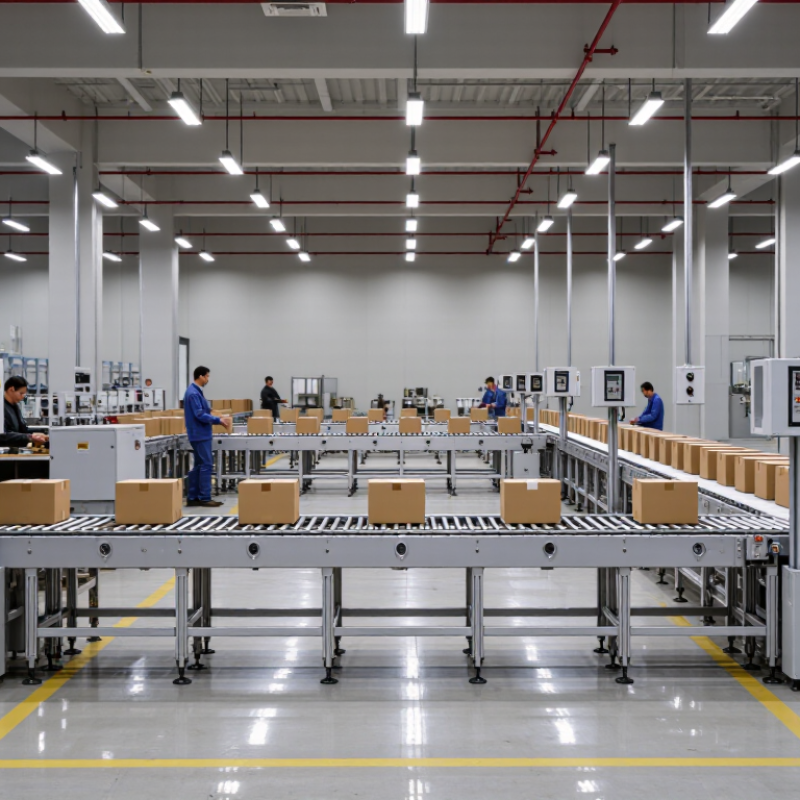
A standard conveyor moves items along a set path using a belt or rollers supported by a frame. Its main parts typically include the conveying surface, a drive system, support structure, and controls. A motor turns a drive pulley or roller, creating movement. On a belt conveyor, the belt loops around pulleys and carries products across the line. Roller conveyors use rotating rollers, often suited to cartons with flat bottoms. It moves steadily.

At the loading point, workers or upstream equipment place items onto the conveyor. The drive sets the surface in motion, while guides can help keep packages aligned. Some systems include sensors or emergency stops, but these features depend on the design. Speed, belt material, and conveyor length should match the product and working conditions. A small box may travel smoothly, while a soft bag can shift or snag.

In day-to-day use, alignment and cleanliness matter. A belt that drifts toward one side can wear unevenly, and dust around rollers may affect movement. Regular checks can reveal loose fasteners, unusual noise, or damaged surfaces before they disrupt work. Standard conveyors are straightforward, but they are not one-size-fits-all. Measuring the load and route carefully is easy to overlook.


The Main Components of a Standard Conveyor System

Why Choose a Standard Conveyor for Your Business?
The Main Components of a Standard Conveyor System

A standard conveyor system is built from several parts that work together to move materials steadily. The frame supports the load and keeps the belt or rollers aligned. For a belt conveyor, the belt carries products, while drive and tail pulleys guide its path. Roller conveyors use closely spaced rollers instead. The right choice depends on product shape, weight, and how items need to move.

The drive motor provides motion, and bearings help rotating parts turn with less friction. A tensioning system keeps the belt from slipping, while tracking adjustments help prevent it from drifting sideways. Small parts matter. A sensor or control panel can start, stop, or coordinate movement with nearby equipment. Guards around pinch points also make routine operation safer.

In practice, the neat diagram rarely tells the whole story. Dust, uneven loading, or a slightly misaligned frame can cause wear and interruptions. A quick visual check may catch a loose fastener or belt edge rubbing against the frame. I would not call every standard setup simple; maintenance access and product changes deserve attention before installation. Choosing components around real working conditions usually makes the system more dependable.

Why Choose a Standard Conveyor for Your Business?

Main Components of a Standard Conveyor System

This illustrative example shows the quantities in a simple 10-meter straight belt conveyor: one continuous belt loop and drive assembly, two head and tail pulleys, 20 carrying idler stations at approximately 0.5-meter spacing, and five 2-meter frame sections. Actual component quantities depend on the conveyor layout, load, and operating requirements.

Common Materials and Products It Can Transport

A standard conveyor can handle many everyday materials, especially when loads are dry, stable, and reasonably uniform. Common examples include cartons, parcels, plastic totes, and packaged parts moving between workstations. Its belt can also carry paper goods, textiles, and light components without requiring complex handling. Small details matter. A box with a loose flap may catch at a transfer point, while a smooth container can slide if the belt runs too quickly.

Some systems are designed for bulk materials such as grain, pellets, or dry aggregates. The right belt surface, conveyor angle, and side guards depend on particle size and flow. Food ingredients may also be conveyed, but the belt and cleaning setup must suit the product and operating conditions. I would not assume that one standard configuration fits every load. Moisture, heat, sharp edges, and uneven weight can change what works; even a familiar product may behave differently when stacked or moving quickly. Checking samples and actual load dimensions before choosing a conveyor is a practical step, though it is sometimes overlooked.

Why Choose a Standard Conveyor for Your Business? - Common Materials and Products It Can Transport

Material or Product Common Examples Why a Standard Belt Conveyor Works Typical Belt or Setup Handling Considerations
Cartons and boxes Shipping cartons, cases, and boxed goods Provides a continuous, stable path for moving unit loads between packing, sorting, and shipping areas. Flat belt with a general-purpose surface Match belt width and load rating to the largest box and expected throughput; keep cartons evenly spaced.
Parcels and mailers Packages, padded envelopes, and small parcels Supports straightforward movement through dispatch and order-fulfillment operations. Flat belt; side guides may help keep items aligned Small or irregular items may need guides or controlled transfer points to prevent shifting or snagging.
Food products Packaged foods, produce, and baked goods Can move products between processing, inspection, and packing stations when the conveyor is configured for the application. Food-contact-compatible belt where required; smooth or textured surface as appropriate Select materials and construction suitable for the product, cleaning routine, temperature, and applicable food-safety requirements.
Bottles and containers Plastic bottles, cans, jars, and empty containers Offers continuous transport between filling, labeling, inspection, and packaging areas. Flat belt or a suitable modular plastic belt Use appropriate guides and transfer arrangements to reduce tipping, collisions, and product damage.
Components and parts Light manufactured parts, fittings, and assemblies Moves work between production, inspection, and assembly stations with a consistent flow. Flat belt selected for the part's size, weight, and surface Consider sharp edges, oil exposure, static sensitivity, and whether parts require trays or fixtures.
Bags and sacks Bags of grain, animal feed, fertilizer, or other dry goods Carries bagged products through filling, storage, and loading operations. Flat belt; a higher-grip surface may be useful on inclines Check bag weight, seam strength, incline angle, and belt grip to limit sliding or tearing.
Bulk solids Grain, sand, gravel, and similar loose materials A belt conveyor can provide continuous movement of bulk material when designed for the material and required capacity. Troughing idlers, suitable belt cover, and loading-zone support as needed Account for particle size, abrasiveness, dust, moisture, belt loading, and spillage control.
Recyclables Sorted paper, cardboard, and selected plastic items Provides a continuous feed path for sorting and material-recovery operations. Durable belt with guards and access suited to the sorting process Plan for variable item sizes, contamination, dust, safe access, and cleaning requirements.

Operational Benefits for Different Business Needs

A standard conveyor can make everyday movement more predictable for businesses handling cartons, ingredients, or small components. Its fixed route helps staff understand where items enter and leave the process. That matters during busy shifts, when a misplaced tote can slow packing or create extra handling. Keep it simple.

For a small warehouse, a straight conveyor may connect picking tables to packing benches and reduce repeated carrying. In food preparation, suitable belt materials and cleanable surfaces can support routine sanitation, but the equipment must match the product and cleaning method. A conveyor can also help manufacturers maintain a steady pace between workstations. Operators still need clear access to stops, guards, and maintenance points.

Standard systems are often easier to plan around than highly customized layouts. Common components may simplify replacement and service, though availability depends on the supplier and installation. Measure the actual load, speed, and floor space before choosing; a conveyor that is too fast can create a queue rather than remove one. This part gets overlooked. Needs can change as order volumes shift, so leave room for practical adjustments where possible. A short trial with real products can reveal awkward transfers, noisy sections, or bottlenecks that drawings miss.

Key Factors in Choosing a Standard Conveyor

Why Choose a Standard Conveyor for Your Business?

Key Factors in Choosing a Standard Conveyor

A standard conveyor can suit a business with predictable product sizes and steady material flow. Start by measuring the items it will carry, including their weight, width, and shape. A carton that shifts on a narrow belt may cause jams, even when the conveyor’s rated capacity looks sufficient. Check the distance between loading and unloading points, too. A few centimeters can affect where operators stand and how easily they reach controls.

Match the belt material, speed, and drive system to the working environment. Dust, moisture, temperature changes, and frequent cleaning can all influence component life. Consider peak demand, not just an average shift. A line that handles 20 boxes per minute most days may struggle during a seasonal rush. Keep the layout in view. Space for access matters.

Maintenance needs deserve a close look. Ask how belts are tensioned, where motors sit, and whether common wear parts can be reached without moving nearby equipment. Request operating and load information, then compare it with your actual products. A tidy specification sheet is useful, but it can miss awkward packages or uneven loading. Test representative items if possible. Real handling may reveal something the drawing does not.

Powder Coat Booths

For those larger-sized parts, or smaller quantity runs, we have 2 independent powder coat booths and ovens. The quality, durability and affordability of today’s powder coating finishes make this the process of choice for world-class companies.

Powder coating advantages over other forms of coating are many. Materials used in the Powder coating process can be metals and non-metals that come in a multitude of thicknesses, textures, colors, etc. Another of Powder coating’s biggest advantages over conventional coatings is its ability to create finishes in many different textures. Powder Coating Booths allow us the ability to apply these advantages to large products.

Wet Paint Line

Tri-State Fabricators runs a full-service conveyor line for painting. Wet painting can provide protection or decoration to many different part styles. From start to finish, every project is easier to undergo random and point-based inspection by our skilled painting team.

Advantages to our Wet Paint Line are these lines start with product prep and ends with a thorough inspection of a high quality finished product. Our ability to complete large and small projects with a superior finish and doing so in a timely and economical fashion. This passes along the savings in production to our customers. When powder coating ins not an option, our Wet Paint Line gets the job done right the first time.

Wet Paint Booths

When the parts get big and heavy we roll-out our custom paint racks and oversize booth. By utilizing our partnerships with all the major paint brands, we can match virtually any color with wet paint.

The advantages of having access to a Wet Paint Booth are many. Large projects of many different shapes can be loaded into the booth. The Wet Paint Booth offers an environment that is much more controlled than a typical parts painting operation.

Not only are they used because of their controlled environment, but they’re are also advantageous when it comes to applying paint to parts that are needed in industries that require specialty coatings such as medical, aerospace, etc.

Military CARC

Our military forces have some very high standards when it comes to the finish of their vehicles and equipment. From the first pre-treatment step to final coat, it takes a great deal of knowledge and experience to protect the men and women of our armed forces. They deserve only the best, and Tri-State Fabricators provides it.

All of our processes are closely monitored by our staff and management teams. Both of which are highly trained in the processes of metal fabrication and finishing. Tri-State Fabricators’ goal is to always fully satisfy each and every customer, including the military. We will always put a 110% into what we do.

Glass-Bead Blasting

Abrasive media blasting is an excellent way to remove old paint, rust, and increase the paint/powder adhesion. Glass beads produce a much smoother and brighter finish than angular abrasives; leaving the part clean yet without any dimensional change. Chemically inert and environmentally friendly, we can recycle our beads approximately 30 times; making them a more preferred method of metal cleaning or surface finishing.

Advantages to Glass Bead Blasting are many. Glass bead blast media is used when a project is needing rough surfaces need to become smooth for applications of coatings such as paint. It is typically used to clean paint and rust from a product surface without deforming the surface it is being used on. Overall, compared to many other blasting media, Glass Bead Blasting is a very economical choice and those savings are always passed on to our customers.

Part Washing

Tri-State Fabricators utilize a zinc phosphate wash to clean and etch the material to ensure the best paint adhesion possible. The unique design of our 3-stage wash system does the work like a 5-stage. From Cleaning and rinsing to conversion coating and post-treatment, Our Part Washing process is a complete service and works throughout the fabrication service and the finishing service.

Along with the previously mentioned benefits, Curing is a vital chemical reaction that leaves the product finish hard and relatively safe from mild abrasion and aggressive corrosion. This process can be done in more than one way; ambient air-dry or in curing ovens at temps that exceed 240°.

Burn-Off Oven

From fixing paint mistakes (someone else’s of course) to simply cleaning our paint line hooks, our burn-off oven is put to good use. After a quick burn-off, a little clean up, and a fresh coat of paint, your parts will look better than new.

Why does our Burn-Off Oven work so well? Because super heating the air around parts turns the materials into ashes. From paint and powder coatings to rubber and machining oils, high temps do the job without degrading the integrity of the part.

Masking

Masking is a vital part of producing high quality products. We have die-cut masking patterns to protect machined surfaces as well as a wide range of plugs and caps to protect threaded holes and bolts. We provide permanent and temporary masking.

Masking allows the selected sections of a product to be protected from a fabrication or finishing service. This can be with both chemicals when etching and tapes, paints when only finishing just a section of the product. Masking is great in aiding the customization process of a project.

Screen Printing

Screen printing is a photographic process that transfers artwork onto a porous nylon screen which allows colored ink to flow through the screen and be deposited on an aluminum or plastic component. We can generally have just about any design created onto a screen for your parts.

Some of the advantages of Screen Printing are, brand recognition for your business displaying on your products, assembly instructions, product warnings/hazards, etc. Tri-State Fabricators produces Screen Printing of the highest quality so you know it’s durable.

Metal Finishing

Metal Finishing is the art of treating the exterior portion of product, often metal but can also be made of other materials, so that the surface is clean and free of any debris. Then the process of applying coats or either paint of powder coat takes place. This coating process improves the quality of the product in both appearance and resistance to wear and corrosion.

Tri-State Fabricators, Inc., understands that a project typically isn’t complete until a high-quality finish has been added to your product. This is why our painting and powder coating teams continuously inspect the products throughout the Metal Finishing process.
