


How do you choose a manufacturer for a Sheet Metal Top Cover that fits, protects, and lasts? The answer depends on more than the quoted price. A cover may look simple, yet a small bend error can leave a visible gap or interfere with an enclosure. Material thickness, alloy, forming method, cutout locations, and surface finish all affect the finished part.
Start by checking whether the supplier understands your drawings and intended use. Ask how they control dimensions, inspect bends, and manage changes between prototype and production. A capable team should explain its process in practical terms, not just promise “high quality.” Details matter. Request samples or production records when appropriate, and clarify how defects are reported and corrected. For outdoor or washdown environments, discuss corrosion resistance and coating performance; for visible equipment, inspect color consistency and edge quality. Small gaps matter.
Price still matters, but compare quotes with the same material, tolerances, finish, packaging, and delivery assumptions. Ask about tooling charges, minimum order quantities, lead times, and the ability to scale without changing the approved design. Communication is part of manufacturing quality. A delayed question about a drawing can become scrap later. Still, no checklist guarantees a perfect partnership, and a polished sample may not represent every production run. Use a trial order, review the results, and keep the requirements documented. This guide outlines the questions that help identify a reliable Sheet Metal Top Cover manufacturer and avoid costly surprises.
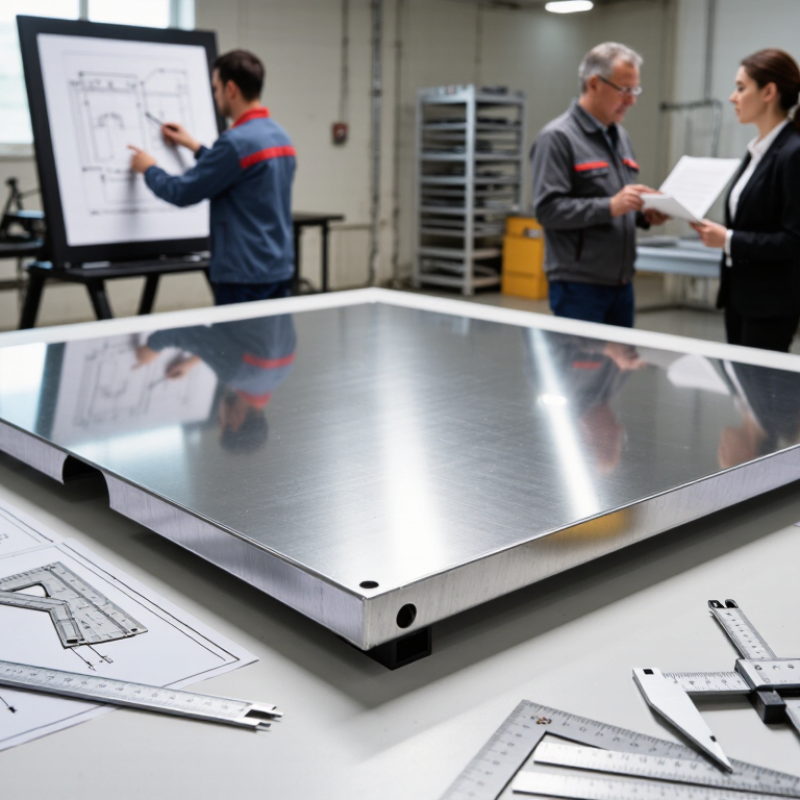
Define the Sheet Metal Top Cover Requirements
Start with the cover’s job, not a preferred material. Record its overall dimensions, mounting points, openings, load, and access needs. A cover protecting a dusty control box may need folded edges and a gasket land; a cosmetic panel may prioritize a smooth visible face. Small gaps matter. Specify the operating temperature, moisture, cleaning agents, and expected vibration. These details influence material, thickness, coating, and fastening choices.
Give the manufacturer a dimensioned drawing with hole locations, bend directions, edge conditions, and critical tolerances. Identify the material grade and finish, or ask the supplier to propose options with trade-offs. State whether sharp edges, weld marks, or visible scratches are acceptable. Include the quantity and inspection criteria. World Steel Association’s World Steel in Figures 2024 reports 1,888.2 million tonnes of crude steel production in 2023. That scale indicates a broad material supply, but it does not tell you which sheet suits your cover. A specification must do that work.
Be precise about fit. If the cover must align with a gasket or neighboring panels, provide the mating dimensions and allowable gap, rather than writing “close fit.” Ask how the supplier controls bend variation and checks hole positions. One detail teams sometimes miss: a coating adds thickness and can affect fastener fit. Review a sample or first article before approving a full run. Some requirements may change after assembly; record those revisions instead of relying on memory.
| Requirement | What to Define | Practical Example or Acceptance Criteria | How to Verify |
|---|---|---|---|
| Function and operating conditions | Explain what the cover protects, how it is installed, and the conditions it will encounter, such as indoor or outdoor use, temperature, moisture, dust, or vibration. | State whether the cover is cosmetic, protective, structural, or part of an enclosure. Define any required ingress-protection rating for the complete assembled enclosure. | Review the application description, assembly drawings, and any applicable enclosure test requirements. |
| Material and thickness | Specify the material grade, sheet thickness, and any material-property or certification requirements. | For example, specify a particular steel or aluminum grade and a nominal thickness such as 1.5 mm. Confirm whether the thickness is measured before or after coating. | Check material certificates or inspection records, and measure sheet thickness with a suitable calibrated gauge. |
| Geometry and dimensions | Provide a dimensioned 2D drawing and, where useful, a 3D model. Define overall size, bends, flanges, radii, cutouts, and formed features. | Identify critical dimensions and datum references. State the dimensional tolerance standard or specify tolerances directly on the drawing; do not assume one tolerance fits every feature. | Inspect samples using calibrated measuring tools, templates, or a coordinate-measuring system where appropriate. |
| Mounting and interfaces | Define hole locations, slot sizes, fastener types, mating surfaces, clearances, and required alignment with the base or chassis. | Show hole-center dimensions from defined datums and identify threaded, countersunk, or clearance holes. Include mating-part information when fit is critical. | Compare the part with the drawing and perform a trial assembly using representative mating components. |
| Edges, burrs, and formed features | Set expectations for deburring, sharp edges, bend quality, corner treatment, and any louvered or embossed features. | Specify that cut edges are free of harmful burrs and sharp projections. Define any required edge radius or limits for visible deformation. | Use visual and tactile inspection, plus dimensional checks for bends and formed features. |
| Surface finish and appearance | Specify the finish process, color, gloss, texture, and which surfaces are cosmetic or concealed. | Identify the required coating type and color reference, if applicable. Set acceptance criteria for visible scratches, dents, coating defects, and color variation. | Inspect under agreed lighting and viewing conditions. Measure coating thickness or color when those properties are specified. |
| Strength and load requirements | Describe expected loads, support points, deflection limits, and any handling or impact conditions. | Provide a defined load case and allowable deflection where the cover supports equipment or must resist pressure, vibration, or handling forces. | Review the design analysis or conduct a documented load or fit test using the agreed method. |
| Joining and assembly | Identify required welds, clinch features, inserts, studs, adhesives, or other joining methods, along with their locations and acceptance criteria. | Show joining locations and dimensions on the drawing. Specify weld appearance or strength requirements only where they are relevant to the part’s function. | Inspect joining features and verify assembly fit; use a defined strength test if required by the application. |
| Production volume and delivery | State prototype quantity, expected production volume, batch size, packaging needs, and delivery schedule. | Distinguish one-time samples from recurring production quantities, since tooling and process choices can vary with volume. | Request a quotation that identifies lead time, minimum order quantity, tooling charges, and packaging assumptions. |
| Quality records and compliance | Define inspection documents, traceability, material declarations, and any market-specific regulatory requirements. | List required records, such as an inspection report or material declaration. Name applicable substance or product regulations only when they apply to the finished product and target market. | Review sample records and confirm that the manufacturer can provide the specified documentation for production lots. |

A sheet metal top cover may look simple, but its flatness, edge quality, and mounting-hole accuracy depend on the equipment behind it. Ask for the working ranges of the laser or punch, press brake, and finishing line—not just their model names. Can the shop form your cover’s material thickness and bend radius without cracking or visible distortion? Request a sample made from the same grade and thickness as your order. Check the hole positions and bend angles yourself.
Capacity matters as much as machine type. Ask how many shifts run, which processes are in-house, and what happens when a key machine needs maintenance. Deloitte’s 2024 Smart Manufacturing Survey found that 92% of manufacturers view smart manufacturing as a driver of competitiveness over the next three years. For a buyer, that makes practical traceability worth checking: can the manufacturer link a batch to its material certificate, machine settings, and inspection record? A digital dashboard is useful only when its data reflects the actual job.
Request a production trial or a short first-article inspection report. Look for measured dimensions, not a vague “passed” note. Ask how operators check flatness after forming and protect painted surfaces during stacking. A polished factory tour can still hide bottlenecks. I would also ask for recent delivery and defect figures, but treat them as evidence to verify, not promises.
A sheet-metal top cover can look flawless and still warp after bending. Ask the manufacturer which grades and thicknesses it regularly processes, and how it controls variation. For stainless steel or aluminum, request material certificates showing alloy, temper, and thickness. Then compare the stated grade with the production order. The wrong temper can crack at a tight bend. Keep it practical. ASQ’s quality-cost guidance places poor-quality costs at 15–20% of sales in some organizations. That figure is not a prediction for every supplier, but it shows why inspection records matter.
Quality control should cover incoming sheets, cutting, forming, finishing, and final inspection. ISO’s 2022 Survey counted about 1.26 million valid ISO 9001 certificates worldwide; certification indicates a management system, not a defect-free part. Ask for a control plan, inspection frequency, gauge calibration records, and traceability from sheet batch to finished cover. On a sample part, check hole positions, flatness, burrs, coating coverage, and fit against the mating frame. Inspect the cut edge closely. One uncomfortable gap can be a supplier’s reliance on visual checks alone. Ask how nonconforming parts are recorded and corrected. No process is flawless. The response to a missed tolerance often reveals more than a polished audit binder.
Choosing a sheet metal top cover manufacturer means comparing the details behind the quote, not just the unit price. Ask which materials, thicknesses, finishes, and forming methods are available. A cover with narrow bends, ventilation slots, or recessed mounting holes may need different tooling than a flat panel. Small details matter. Share a drawing with tolerances and ask what features may affect fit or appearance.
Lead times depend on more than machine capacity. Confirm when production starts, how long samples take, and whether the schedule includes finishing and packing. Ask for dates. A supplier’s estimate should identify approval steps and possible delays, such as waiting for sample feedback or material availability. I would not treat a polished timeline as a guarantee; even a small drawing revision can reset the clock.
Compare total costs using the same specification and order quantity. Include setup or tooling charges, prototypes, coatings, packaging, freight, and fees for design changes. A lower per-piece price may cost more if the minimum order is large or the finish requires extra handling. Request an itemized quotation and clarify what happens if a sample needs adjustment. Some estimates still leave gray areas, so get those assumptions in writing before approving production.
Clear communication and dependable delivery are essential when a sheet metal top cover must fit an existing assembly. Ask how the manufacturer confirms drawings, tolerances, finish, and revision changes before production. A practical supplier should identify a contact person and provide dated updates when materials arrive, fabrication begins, and inspection is complete. A brief message with a revised shipping date is better than silence.
MHI’s 2024 Annual Industry Report found that 88% of surveyed supply chain leaders expected technology investment to increase over the next five years. For buyers, that trend makes digital order tracking and accessible inspection records useful questions to raise. Still, software alone cannot prevent a missed shipment. Ask for recent on-time delivery performance, how delays are escalated, and what happens if a cover arrives scratched or out of tolerance. No checklist removes every risk. Some details may only become clear after the first order.
Tips: Request a sample inspection report and a written response-time commitment. Confirm packaging for sharp edges and painted surfaces, plus the process for replacement parts. Keep one approved drawing revision on file. Then compare the supplier’s promises with actual updates during a small trial order.


For those larger-sized parts, or smaller quantity runs, we have 2 independent powder coat booths and ovens. The quality, durability and affordability of today’s powder coating finishes make this the process of choice for world-class companies.
Powder coating advantages over other forms of coating are many. Materials used in the Powder coating process can be metals and non-metals that come in a multitude of thicknesses, textures, colors, etc. Another of Powder coating’s biggest advantages over conventional coatings is its ability to create finishes in many different textures. Powder Coating Booths allow us the ability to apply these advantages to large products.
Tri-State Fabricators runs a full-service conveyor line for painting. Wet painting can provide protection or decoration to many different part styles. From start to finish, every project is easier to undergo random and point-based inspection by our skilled painting team.
Advantages to our Wet Paint Line are these lines start with product prep and ends with a thorough inspection of a high quality finished product. Our ability to complete large and small projects with a superior finish and doing so in a timely and economical fashion. This passes along the savings in production to our customers. When powder coating ins not an option, our Wet Paint Line gets the job done right the first time.
When the parts get big and heavy we roll-out our custom paint racks and oversize booth. By utilizing our partnerships with all the major paint brands, we can match virtually any color with wet paint.
The advantages of having access to a Wet Paint Booth are many. Large projects of many different shapes can be loaded into the booth. The Wet Paint Booth offers an environment that is much more controlled than a typical parts painting operation.
Not only are they used because of their controlled environment, but they’re are also advantageous when it comes to applying paint to parts that are needed in industries that require specialty coatings such as medical, aerospace, etc.
Our military forces have some very high standards when it comes to the finish of their vehicles and equipment. From the first pre-treatment step to final coat, it takes a great deal of knowledge and experience to protect the men and women of our armed forces. They deserve only the best, and Tri-State Fabricators provides it.
All of our processes are closely monitored by our staff and management teams. Both of which are highly trained in the processes of metal fabrication and finishing. Tri-State Fabricators’ goal is to always fully satisfy each and every customer, including the military. We will always put a 110% into what we do.
Abrasive media blasting is an excellent way to remove old paint, rust, and increase the paint/powder adhesion. Glass beads produce a much smoother and brighter finish than angular abrasives; leaving the part clean yet without any dimensional change. Chemically inert and environmentally friendly, we can recycle our beads approximately 30 times; making them a more preferred method of metal cleaning or surface finishing.
Advantages to Glass Bead Blasting are many. Glass bead blast media is used when a project is needing rough surfaces need to become smooth for applications of coatings such as paint. It is typically used to clean paint and rust from a product surface without deforming the surface it is being used on. Overall, compared to many other blasting media, Glass Bead Blasting is a very economical choice and those savings are always passed on to our customers.
Tri-State Fabricators utilize a zinc phosphate wash to clean and etch the material to ensure the best paint adhesion possible. The unique design of our 3-stage wash system does the work like a 5-stage. From Cleaning and rinsing to conversion coating and post-treatment, Our Part Washing process is a complete service and works throughout the fabrication service and the finishing service.
Along with the previously mentioned benefits, Curing is a vital chemical reaction that leaves the product finish hard and relatively safe from mild abrasion and aggressive corrosion. This process can be done in more than one way; ambient air-dry or in curing ovens at temps that exceed 240°.
From fixing paint mistakes (someone else’s of course) to simply cleaning our paint line hooks, our burn-off oven is put to good use. After a quick burn-off, a little clean up, and a fresh coat of paint, your parts will look better than new.
Why does our Burn-Off Oven work so well? Because super heating the air around parts turns the materials into ashes. From paint and powder coatings to rubber and machining oils, high temps do the job without degrading the integrity of the part.
Masking is a vital part of producing high quality products. We have die-cut masking patterns to protect machined surfaces as well as a wide range of plugs and caps to protect threaded holes and bolts. We provide permanent and temporary masking.
Masking allows the selected sections of a product to be protected from a fabrication or finishing service. This can be with both chemicals when etching and tapes, paints when only finishing just a section of the product. Masking is great in aiding the customization process of a project.
Screen printing is a photographic process that transfers artwork onto a porous nylon screen which allows colored ink to flow through the screen and be deposited on an aluminum or plastic component. We can generally have just about any design created onto a screen for your parts.
Some of the advantages of Screen Printing are, brand recognition for your business displaying on your products, assembly instructions, product warnings/hazards, etc. Tri-State Fabricators produces Screen Printing of the highest quality so you know it’s durable.
Metal Finishing is the art of treating the exterior portion of product, often metal but can also be made of other materials, so that the surface is clean and free of any debris. Then the process of applying coats or either paint of powder coat takes place. This coating process improves the quality of the product in both appearance and resistance to wear and corrosion.
Tri-State Fabricators, Inc., understands that a project typically isn’t complete until a high-quality finish has been added to your product. This is why our painting and powder coating teams continuously inspect the products throughout the Metal Finishing process.

