How to Choose a Galvanized Steel Wire Supplier
Choosing a Galvanized Steel Wire Supplier can affect product quality, production schedules, and the useful life of finished components. A low quotation may look attractive, but it tells you little about coating consistency or dimensional control. Start with the wire’s intended use. Fencing, binding, construction, and industrial fabrication can require different diameters, tensile strengths, and zinc coatings. Details matter.
Ask potential suppliers for current product specifications, test reports, and traceable material documentation. Check that the stated wire diameter and coating weight match your requirements. If possible, inspect a sample for smooth surface finish, even coating, and consistent winding. A coil with tangled turns or visible bare spots can cause trouble on the production floor. Small defects add up.
A capable Galvanized Steel Wire Supplier should explain its manufacturing and quality-control process in plain terms. Ask how it checks coating thickness, tensile strength, and dimensional tolerance, and how it handles rejected batches. Clear answers are useful. Vague promises are not. Also confirm lead times, packaging, minimum order quantities, and how changes to specifications are communicated. These practical points can matter as much as the material itself.
Compare suppliers against the same written specification, rather than relying on broad claims such as “premium quality.” Review recent orders or request references where appropriate. Keep in mind that no supplier is perfect, and one successful sample cannot guarantee every future shipment. That part deserves thought. A careful evaluation reduces avoidable risk and helps you choose a partner that fits both your technical needs and purchasing process.
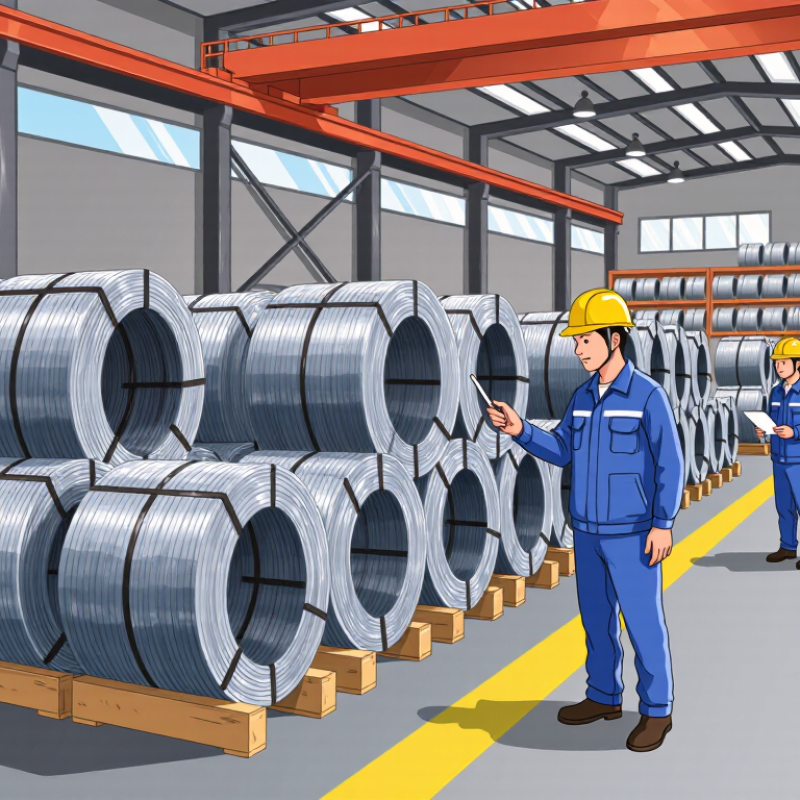
Define Project Requirements for Galvanized Steel Wire
Before comparing suppliers, write down how the galvanized steel wire will be used. A fence, cable assembly, and agricultural support line do not need the same diameter or tensile strength. Specify the wire diameter, coil weight, required length, and acceptable dimensional tolerance. Small details matter. If the wire will be bent repeatedly, say so; a grade suited to a static support may crack or deform during forming.
Describe the working environment, too. Outdoor exposure, moisture, soil contact, and nearby chemicals can affect how quickly a zinc coating wears. State whether you need hot-dip or electro-galvanized wire, and request the coating mass or thickness rather than relying on “heavy coating.” Ask for relevant test reports and confirm which product standard applies to your project. On a fencing job, for example, inconsistent coil lengths can delay installation even when the wire itself meets specification. It is easy to overlook packaging and delivery conditions. Check how coils are protected from water, how they are labeled, and whether the supplier can provide the quantity and cut lengths you actually need. If requirements are still uncertain, mark them as provisional and ask the supplier to clarify options in writing. A little uncertainty is better stated plainly than hidden in a vague specification.
Check Wire Specifications, Coating, and Compliance Standards
How to Choose a Galvanized Steel Wire Supplier
Start with the wire’s intended use, then compare diameter, tensile strength, and tolerance against your drawings. A small diameter mismatch can affect fitting, load performance, or production speed. Ask for a specification sheet and confirm how measurements are taken. Do not rely on a catalog description alone. Details matter.
Check the zinc coating by asking about its stated mass or thickness and the test method used. Compare the supplier’s results with the relevant project specification, not just a general claim of “heavy coating.” Request recent inspection records and traceability details for the batch. Compliance documents should identify the applicable standard and product scope; a certificate without those details is hard to assess. No checklist catches every mismatch, so clarify anything that seems vague before placing an order.
Tips: Request a sample coil and inspect its surface, winding, and labels. Ask how defects are handled. Keep one requirement in writing: it may prevent confusion later. I would also check that the paperwork matches the actual shipment, not merely the supplier’s usual product range.
How to Choose a Galvanized Steel Wire Supplier
Suggested evaluation weights for comparing suppliers. These are a planning framework, not industry survey data.
What to check: Compare wire diameter and tolerances, mechanical properties, and zinc coating requirements with your purchase specification. Confirm the applicable standard and edition—for example, ASTM A641/A641M for zinc-coated carbon steel wire—and review relevant inspection and test records. Adjust the suggested weights to suit your application.
Assess Supplier Production Capacity and Quality Control
A supplier’s stated monthly output is only a starting point. Ask how many drawing lines are running, which wire diameters they can produce, and how often equipment stops for maintenance. A facility may quote impressive capacity while several orders compete for the same line. Request a realistic lead time for your specification, not a general estimate. That detail matters.
Quality control should be visible in records and routine checks. Ask how the supplier measures wire diameter, tensile strength, and zinc coating weight. Look for calibration dates on gauges and test equipment, plus inspection results tied to specific production batches. A sample coil can feel smooth and look bright, yet appearance alone cannot confirm coating consistency. I would check whether the supplier keeps retained samples and can trace a finished coil back to its production record.
Visit the production area if possible. Notice whether coils are clearly labeled, protected from moisture, and kept apart by grade or size. Ask what happens when a test result falls outside the agreed range. A useful answer describes quarantine, retesting, and documented corrective action—not just a promise to “be careful.” One factory visit can still miss problems, so compare its claims with recent inspection reports and a small trial order. I would not treat a polished presentation as proof; capacity and control need evidence.
Compare Pricing, Lead Times, and Customer Support
A galvanized steel wire quote is useful only when its details match your requirements. Compare the same wire diameter, coating specification, tensile range, and order quantity across suppliers. A low price may exclude packaging, testing documents, or delivery charges. Ask for an itemized quotation, and check how long the price remains valid. Small differences matter.
Lead times deserve the same scrutiny. Ask whether the quoted date covers production, inspection, and dispatch, or only factory completion. For a custom order, request a realistic schedule and updates if materials or production are delayed. Compare the promised delivery window with your project dates, not just another supplier’s estimate. A tidy spreadsheet can still hide assumptions; check them directly.
Tips: Request a sample or specification sheet. Confirm stock status in writing. Ask who will handle order updates, and how quickly they usually respond.
Customer support is easiest to judge through specific questions. Ask how the supplier resolves quantity discrepancies, damaged packaging, or a shipment that misses its agreed date. Clear answers and a named contact can make routine coordination easier. If replies are vague before the order, support may feel uncertain later. Service quality is hard to measure from a quote alone, so keep written records of commitments and follow-up dates.
How to Choose a Galvanized Steel Wire Supplier - Compare Pricing, Lead Times, and Customer Support
Example comparison: Illustrative quote figures for a hypothetical 20-metric-ton order of 2.0 mm low-carbon galvanized steel wire. Prices are shown in USD per metric ton, EXW, with freight excluded. These are not live market quotations; actual prices and lead times vary by specification, order volume, location, and market conditions.
| Comparison Factor | Option A | Option B | Option C | What to Check |
| Indicative EXW price | $1,180 / metric ton | $1,245 / metric ton | $1,310 / metric ton | Confirm currency, Incoterm, taxes, packaging, and any tooling or testing charges. |
| Quoted lead time | 4–6 weeks | 3–4 weeks | 2–3 weeks, subject to stock | Ask when the clock starts and whether production, inspection, and dispatch are included. |
| Minimum order quantity | 5 metric tons | 10 metric tons | 20 metric tons | Check whether smaller orders carry a surcharge or require standard sizes. |
| Zinc coating documentation | Certificate available on request | Mill test certificate included | Batch report and coating test results included | Specify the required coating mass and test method before placing the order. |
| Quality assurance details | Diameter and visual checks | Diameter, tensile, and coating checks | Documented inspection plan; pre-shipment report by request | Agree tolerances, sampling frequency, and acceptance criteria in writing. |
| Customer support | Email support; replies within 2 business days | Named sales contact; replies within 1 business day | Named account contact; replies within 1 business day; shipment updates | Confirm response hours, escalation contacts, and support after delivery. |
| Packaging and shipment readiness | Standard coils; export packing quoted separately | Coils with basic moisture protection | Export packing and coil labels specified in quote | Check coil weight, dimensions, labeling, protection, and loading requirements. |
| Best fit | Cost-focused buyers with flexible schedules | Buyers seeking a balance of price and documentation | Buyers prioritizing speed and more detailed shipment support | Compare total landed cost and delivery risk, not unit price alone. |
Practical tip: Send every supplier the same wire diameter, zinc-coating requirement, tensile range, coil specification, packaging instructions, order quantity, and delivery terms so the quotations are comparable.
Verify Supplier Reliability Before Making a Selection
How to Choose a Galvanized Steel Wire Supplier
Verify Supplier Reliability Before Making a Selection
A reliable supplier should explain how its galvanized steel wire is made, tested, and traced. Ask for recent inspection records and a sample material certificate. Check that the stated wire diameter, coating weight, tensile strength, and packaging match your requirements. Details should agree across documents, not just sound reassuring in a sales call. A polished brochure proves little. Request clear answers about production capacity, typical lead times, and how delays are communicated. Small gaps matter.
Tips: Compare documents from the same production batch, if available. Confirm that sample wire matches the quoted specifications. Ask how coils are protected from moisture and handling damage during storage and shipping. Note response times, too. A supplier who answers technical questions clearly may be easier to work with when an issue arises.
Reliability is also visible in what a supplier will not promise. Be cautious of guaranteed delivery dates without a production schedule or vague claims about quality control. Request a small trial order before committing to larger volumes. Inspect the coil labels, surface finish, and packaging on arrival, then record any differences from the agreed specification. One imperfect shipment does not tell the whole story, but the supplier’s response does. Document the conversation and agree on corrective steps in writing. The process takes time, and I’d still recheck the details before placing a repeat order.





