


How to Choose a Helical External Gear Pump in 2026?

Choosing a Helical External Gear Pump in 2026 requires more than comparing catalog prices or advertised efficiency. The correct choice begins with the fluid, duty cycle, and complete operating system. A pump handling warm hydraulic oil behaves differently from one transferring syrup, polymer, fuel, or abrasive chemical liquid.

Pump specialist Heinz P. Bloch offers a useful engineering principle: “A pump must be selected for the system, not for the catalog alone.” That principle remains practical. Check viscosity across the full temperature range. Confirm required flow, differential pressure, shaft speed, startup conditions, and maximum allowable slip. Small errors here can create overheating, cavitation, noise, or premature seal failure.

Look closely at the details.

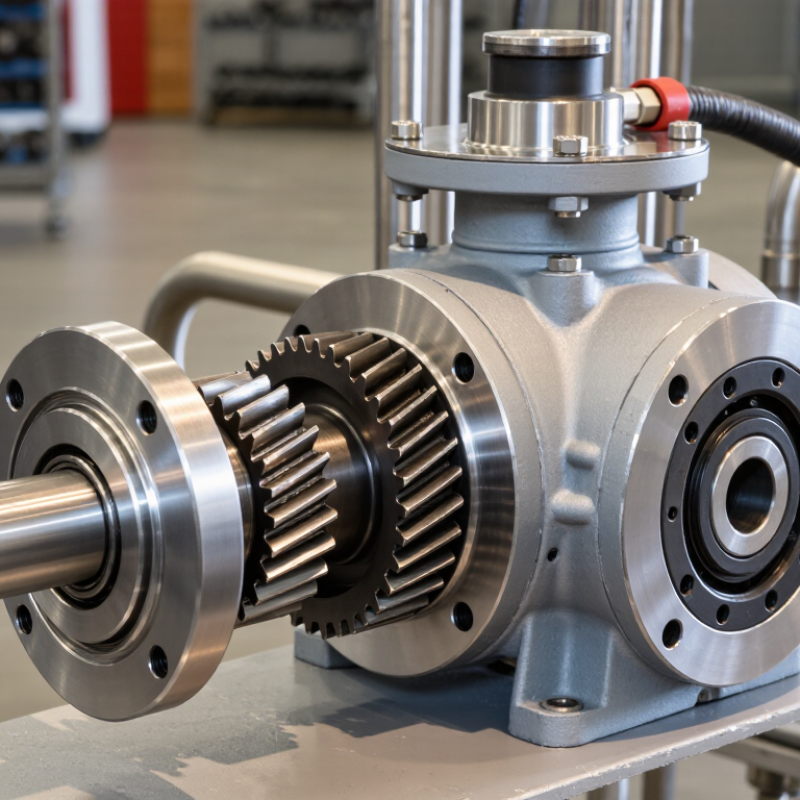
Helical teeth can reduce pulsation and operating noise. However, they do not remove every design risk. Internal clearances, housing material, bearing arrangement, seal compatibility, and motor control still matter. A stainless-steel pump may suit corrosive service, while hardened steel gears may better tolerate demanding industrial fluids. Neither option is automatically superior.

Real-world maintenance also deserves attention. Can technicians replace seals without dismantling the entire line? Are spare parts available locally? Does the supplier publish performance curves based on your actual viscosity? Some selection guides remain too optimistic. That is a weakness worth admitting.

A dependable Helical External Gear Pump should deliver stable performance, efficient operation, and predictable service life. In 2026, buyers should evaluate lifecycle cost, documentation quality, energy use, digital monitoring options, and supplier support—not just the first quotation.
How to Choose a Helical External Gear Pump in 2026?

Define the Operating Requirements for a Helical External Gear Pump

Before choosing a helical external gear pump in 2026, define its real operating conditions. Start with fluid type, viscosity, temperature, and cleanliness. A thin hydraulic fluid behaves differently from a thick lubricant. Record viscosity at startup, normal operation, and the coldest expected condition. Do not rely on room temperature. That mistake is common.

State flow and pressure together. Specify required flow in liters per minute, discharge pressure, inlet pressure, and speed range. Include peak demand, not only average load. A pump sized for average conditions may struggle during acceleration or cold starts.

Measure, do not guess. Check whether the fluid contains abrasive particles, water, solvents, or additives. These details affect gear, shaft, seal, and housing materials.

Installation constraints deserve equal attention. Note available space, shaft alignment, mounting direction, pipe diameter, and inlet length. A restrictive suction line can create cavitation, even with a correctly rated pump. Define the duty cycle, including continuous running, reversing, and frequent starts. Leave room for inspection and seal replacement. Maintenance access is often underestimated.

Use the operating data to calculate displacement, torque, power, and relief requirements. Verify the calculations against actual measurements. Performance curves are useful, but system losses and temperature changes can shift results. I have seen promising selections fail after a small viscosity change. Keep that possibility visible. A short test under cold, normal, and peak conditions can reveal more than a polished specification sheet.


Compare Pump Materials, Fluids, and Temperature Compatibility

How to Choose a Helical External Gear Pump in 2026?

Selecting a helical external gear pump starts with fluid behavior, not catalog pressure. Check viscosity at both startup and operating temperature. A thick oil may overload the motor during a cold morning start. Heat changes everything. As temperature rises, viscosity usually falls, increasing internal slip and reducing volumetric efficiency. Pump materials must also match the fluid. Carbon steel suits many lubricating oils, while stainless steel offers better resistance to water-based or mildly corrosive liquids. Bronze can help with selected fluids, but compatibility must be verified. Do not assume “stainless” means universal chemical protection.

Seal material deserves equal attention. Elastomers can swell, harden, or crack when exposed to solvents, additives, or high heat. Review chemical compatibility data at the actual concentration and temperature. Particles are unforgiving. Abrasive solids can damage tooth surfaces and reduce clearances, even when the fluid appears clean. Install suitable filtration and confirm the allowed particle size before choosing the pump.

Temperature compatibility includes the casing, gears, bearings, seals, and drive coupling. A pump rated for the fluid may still fail if its seal limit is lower. Thermal expansion can tighten internal clearances and raise starting torque. I once saw a selection based only on normal temperature; winter startup exposed the mistake. Ask for viscosity curves, material data, pressure limits, and tested temperature ranges. Leave room for uncertainty, especially when fluid additives or cleaning chemicals may change over time.

How to Choose a Helical External Gear Pump in 2026?

Typical Continuous Temperature Compatibility by Pump Material and Fluid

Stainless steel is generally preferred for water-based, mildly corrosive, and food-process fluids, while carbon steel and cast iron are commonly used with clean mineral oils and hydraulic fluids. Thermal oils require materials, seals, and bearings rated for elevated temperatures. The values shown are typical engineering screening limits; the actual operating limit is determined by pressure, viscosity, fluid chemistry, seal material, lubrication, and manufacturer specifications.

Select Displacement, Speed, Pressure, and Flow Capacity

How to Choose a Helical External Gear Pump in 2026?

Select the displacement from required flow, not catalog size. Use Qtheoretical = displacement × speed ÷ 1,000 for litres per minute. Then correct it for volumetric efficiency, oil temperature, and viscosity. A 12 cm³/rev pump at 1,500 rpm produces 18 L/min theoretically. Actual delivery may be lower. The U.S. Department of Energy’s Pumping System Sourcebook reports that pumping systems can consume 25–50% of electricity in some industrial facilities. Small sizing errors can therefore increase energy waste.

Check speed beside inlet conditions. Higher speed raises flow, but it can worsen filling, noise, and cavitation risk. Keep pressure below the continuous rating, not merely the short-term peak. Compare required pressure at startup, normal operation, and relief-valve setting. ISO 4409:2019 provides methods for measuring hydraulic pump displacement, flow, pressure, and efficiency. Use its principles when reviewing test data. Helical teeth may reduce pulsation, yet they do not remove losses caused by excessive clearance or contaminated fluid.

Field experience suggests selecting the largest pump is rarely safer. It may create unnecessary throttling and heat. I still see flow calculated at room temperature, then ignored at 80°C. That is a mistake. Recheck viscosity, shaft speed, filtration, and motor torque together. Leave a modest operating margin, but avoid vague oversizing. Cite: U.S. Department of Energy, Improving Pumping System Performance: A Sourcebook for Industry; ISO 4409:2019.

Evaluate Efficiency, Noise, Sealing, and Installation Features

How to Choose a Helical External Gear Pump in 2026?

Efficiency begins with the operating point, not the catalog’s maximum rating. Match displacement, speed, pressure, and fluid viscosity to the actual duty cycle. A helical external gear pump can deliver smooth flow with limited pulsation. However, excessive speed may increase slip, heat, and wear. Check volumetric efficiency at both start-up and normal temperature. Cold oil can overload the motor, while thin oil can reduce internal sealing. Ask for tested performance data, not only theoretical curves. Small differences matter in continuous applications. They accumulate quickly.

Noise depends on gear accuracy, tooth engagement, bearings, and mounting rigidity. Helical teeth usually reduce impact noise, but poor alignment can cancel that advantage. Listen for tonal changes during acceleration. A steady hum is acceptable; sharp whining deserves investigation. Sealing requires equal attention. Select seal materials according to temperature, pressure, fluid chemistry, and shaft speed. A seal that works well in clean mineral oil may fail in a biodegradable fluid. This is often overlooked. Inspect the shaft finish and provide filtration suitable for the pump’s clearance. Installation should include accessible ports, correct rotation, short suction lines, and protection against dry running. Leave space for seal replacement and coupling checks. Designers sometimes optimize the pump envelope too tightly. That saves installation space, but maintenance becomes unnecessarily difficult. Ensure the base can absorb vibration and the piping does not load the pump casing. Check these details before commissioning, when corrections remain affordable.

How to Choose a Helical External Gear Pump in 2026? — Evaluate Efficiency, Noise, Sealing, and Installation Features
Selection Profile Typical Displacement Recommended Flow Range Operating Pressure Speed Range Typical Volumetric Efficiency Typical Noise Level Recommended Fluid Viscosity Sealing Configuration Installation Features Best-Fit Applications
Compact Low-Flow Helical Pump 0.5–2.0 cm³/rev 0.8–6 L/min Up to 160 bar 500–3,000 rpm 88–94% 62–70 dB(A) at 1 m 20–300 cSt PTFE or FKM shaft seal; pressure-balanced lip seal Compact SAE-style flange; optional rear mounting; easy cartridge replacement Small lubrication units, laboratory equipment, compact hydraulic power packs
General-Purpose Medium-Flow Pump 3–10 cm³/rev 5–30 L/min Up to 200 bar 400–2,500 rpm 90–95% 65–73 dB(A) at 1 m 15–460 cSt FKM or NBR shaft seal; optional mechanical seal for compatible fluids Standard SAE or metric flange; multiple shaft-end options; horizontal or vertical mounting Industrial hydraulics, machine tools, material-handling systems
High-Efficiency Variable-Speed Pump 8–25 cm³/rev 12–75 L/min Up to 250 bar 300–2,000 rpm 91–96% 67–75 dB(A) at 1 m 20–680 cSt Low-friction FKM seal; optional high-temperature seal package Direct motor coupling; IEC motor adapters; alignment-friendly housing; inverter-duty compatibility Energy-saving hydraulic systems, automated production lines, servo-assisted machinery
High-Pressure Industrial Pump 10–40 cm³/rev 15–100 L/min Up to 300 bar 300–1,800 rpm 86–93% 70–80 dB(A) at 1 m 25–460 cSt Reinforced FKM seal; optional tandem seal and drain port Rigid mounting flange; heavy-duty shaft; external pressure and temperature ports Presses, clamping systems, injection equipment, demanding hydraulic circuits
Low-Noise Precision Pump 2–12 cm³/rev 3–35 L/min Up to 180 bar 500–2,500 rpm 90–95% 58–68 dB(A) at 1 m 15–220 cSt Low-leakage FKM or PTFE seal; optimized internal clearances Anti-vibration mounting options; compact front-face installation; reduced pulsation design Noise-sensitive factory automation, test benches, indoor mobile equipment
High-Viscosity Fluid Pump 15–80 cm³/rev 10–120 L/min Up to 150 bar 100–1,200 rpm 80–92% 68–82 dB(A) at 1 m 100–2,000 cSt PTFE, FKM, or mechanical seal selected for fluid compatibility Large suction port; optional jacketed housing; low-speed direct-drive arrangement Lubricants, polymers, resins, heavy oils, and temperature-controlled process fluids
Corrosion-Resistant Process Pump 2–30 cm³/rev 3–70 L/min Up to 120 bar 200–1,800 rpm 82–92% 66–78 dB(A) at 1 m 1–500 cSt PTFE-based static seals; chemical-resistant dynamic seal options Stainless or coated wetted parts; flush ports; easy access for seal inspection Chemical dosing, coating systems, food-compatible process equipment, specialty fluids
Engineering note: The figures above are representative selection ranges for helical external gear pumps, not guaranteed product ratings. Actual efficiency, sound pressure, pressure capability, seal life, and installation limits depend on fluid viscosity, temperature, inlet conditions, rotational speed, filtration, mounting alignment, and operating duty cycle.

Verify Supplier Quality, Maintenance Needs, and 2026 Standards

How to Choose a Helical External Gear Pump in 2026?

Supplier quality should be verified beyond a polished website or low quotation. Request material certificates, dimensional records, pressure-test results, and serial-number traceability. Confirm that the supplier controls gear tooth accuracy, shaft hardness, sealing surfaces, and assembly cleanliness. Ask for a sample inspection report from a recent production batch. It reveals more than general promises.

Maintenance needs should match your actual operating environment. Check oil compatibility, allowable viscosity, temperature range, start-up conditions, and expected service intervals. A removable coupling guard and accessible seals can reduce downtime near a crowded skid. Ask whether replacement parts remain available and whether technicians receive clear service drawings. Small details matter. Do not ignore noise trends, rising leakage, or unusual vibration during routine checks.

For 2026 projects, request the latest applicable compliance documents for your region and industry. Requirements may involve machinery safety, pressure equipment, electrical areas, environmental limits, or quality management systems. Verify document validity directly with the issuing body when practical. A certificate alone does not prove pump performance. Compare tested flow, pressure, efficiency, and noise data with your duty point. I have seen selections fail because engineers trusted catalog figures without checking fluid temperature. That mistake is easy to repeat. Leave a reasonable operating margin, but avoid excessive oversizing, which can increase heat, cost, and wear.

Powder Coat Booths

For those larger-sized parts, or smaller quantity runs, we have 2 independent powder coat booths and ovens. The quality, durability and affordability of today’s powder coating finishes make this the process of choice for world-class companies.

Powder coating advantages over other forms of coating are many. Materials used in the Powder coating process can be metals and non-metals that come in a multitude of thicknesses, textures, colors, etc. Another of Powder coating’s biggest advantages over conventional coatings is its ability to create finishes in many different textures. Powder Coating Booths allow us the ability to apply these advantages to large products.

Wet Paint Line

Tri-State Fabricators runs a full-service conveyor line for painting. Wet painting can provide protection or decoration to many different part styles. From start to finish, every project is easier to undergo random and point-based inspection by our skilled painting team.

Advantages to our Wet Paint Line are these lines start with product prep and ends with a thorough inspection of a high quality finished product. Our ability to complete large and small projects with a superior finish and doing so in a timely and economical fashion. This passes along the savings in production to our customers. When powder coating ins not an option, our Wet Paint Line gets the job done right the first time.

Wet Paint Booths

When the parts get big and heavy we roll-out our custom paint racks and oversize booth. By utilizing our partnerships with all the major paint brands, we can match virtually any color with wet paint.

The advantages of having access to a Wet Paint Booth are many. Large projects of many different shapes can be loaded into the booth. The Wet Paint Booth offers an environment that is much more controlled than a typical parts painting operation.

Not only are they used because of their controlled environment, but they’re are also advantageous when it comes to applying paint to parts that are needed in industries that require specialty coatings such as medical, aerospace, etc.

Military CARC

Our military forces have some very high standards when it comes to the finish of their vehicles and equipment. From the first pre-treatment step to final coat, it takes a great deal of knowledge and experience to protect the men and women of our armed forces. They deserve only the best, and Tri-State Fabricators provides it.

All of our processes are closely monitored by our staff and management teams. Both of which are highly trained in the processes of metal fabrication and finishing. Tri-State Fabricators’ goal is to always fully satisfy each and every customer, including the military. We will always put a 110% into what we do.

Glass-Bead Blasting

Abrasive media blasting is an excellent way to remove old paint, rust, and increase the paint/powder adhesion. Glass beads produce a much smoother and brighter finish than angular abrasives; leaving the part clean yet without any dimensional change. Chemically inert and environmentally friendly, we can recycle our beads approximately 30 times; making them a more preferred method of metal cleaning or surface finishing.

Advantages to Glass Bead Blasting are many. Glass bead blast media is used when a project is needing rough surfaces need to become smooth for applications of coatings such as paint. It is typically used to clean paint and rust from a product surface without deforming the surface it is being used on. Overall, compared to many other blasting media, Glass Bead Blasting is a very economical choice and those savings are always passed on to our customers.

Part Washing

Tri-State Fabricators utilize a zinc phosphate wash to clean and etch the material to ensure the best paint adhesion possible. The unique design of our 3-stage wash system does the work like a 5-stage. From Cleaning and rinsing to conversion coating and post-treatment, Our Part Washing process is a complete service and works throughout the fabrication service and the finishing service.

Along with the previously mentioned benefits, Curing is a vital chemical reaction that leaves the product finish hard and relatively safe from mild abrasion and aggressive corrosion. This process can be done in more than one way; ambient air-dry or in curing ovens at temps that exceed 240°.

Burn-Off Oven

From fixing paint mistakes (someone else’s of course) to simply cleaning our paint line hooks, our burn-off oven is put to good use. After a quick burn-off, a little clean up, and a fresh coat of paint, your parts will look better than new.

Why does our Burn-Off Oven work so well? Because super heating the air around parts turns the materials into ashes. From paint and powder coatings to rubber and machining oils, high temps do the job without degrading the integrity of the part.

Masking

Masking is a vital part of producing high quality products. We have die-cut masking patterns to protect machined surfaces as well as a wide range of plugs and caps to protect threaded holes and bolts. We provide permanent and temporary masking.

Masking allows the selected sections of a product to be protected from a fabrication or finishing service. This can be with both chemicals when etching and tapes, paints when only finishing just a section of the product. Masking is great in aiding the customization process of a project.

Screen Printing

Screen printing is a photographic process that transfers artwork onto a porous nylon screen which allows colored ink to flow through the screen and be deposited on an aluminum or plastic component. We can generally have just about any design created onto a screen for your parts.

Some of the advantages of Screen Printing are, brand recognition for your business displaying on your products, assembly instructions, product warnings/hazards, etc. Tri-State Fabricators produces Screen Printing of the highest quality so you know it’s durable.

Metal Finishing

Metal Finishing is the art of treating the exterior portion of product, often metal but can also be made of other materials, so that the surface is clean and free of any debris. Then the process of applying coats or either paint of powder coat takes place. This coating process improves the quality of the product in both appearance and resistance to wear and corrosion.

Tri-State Fabricators, Inc., understands that a project typically isn’t complete until a high-quality finish has been added to your product. This is why our painting and powder coating teams continuously inspect the products throughout the Metal Finishing process.
