How to Choose a Floating Pump Aerator in 2026?
Choosing a Floating Pump Aerator in 2026 requires more than comparing horsepower and price. Pond size, stocking density, water depth, climate, electricity, and maintenance access all influence performance. A machine that creates a bright spray may still leave oxygen-poor water near the bottom.
The need is substantial. The FAO’s The State of World Fisheries and Aquaculture 2024 reported 185.4 million tonnes of global aquatic animal production in 2022. Aquaculture supplied 94.4 million tonnes, exceeding capture fisheries for the first time. More intensive production increases the importance of dependable dissolved oxygen management. Claude E. Boyd, a leading aquaculture water-quality specialist, states in Water Quality: An Introduction that dissolved oxygen is “the most important water quality variable in aquaculture.” His point remains practical, especially before sunrise, when oxygen levels often reach their lowest point.
Look beyond advertised oxygen-transfer figures. Ask how the Floating Pump Aerator performs in muddy water, shallow ponds, heavy algae, and changing water levels. Check motor efficiency, corrosion protection, float stability, emergency shutoff, noise, and spare-parts availability. The U.S. Environmental Protection Agency’s nutrient-management guidance also highlights the connection between excess nutrients, algal growth, and oxygen depletion. That relationship matters in real ponds, not only in laboratory testing.
No single model wins every site. A compact unit may suit a small ornamental pond, while a robust, low-maintenance system may better serve commercial aquaculture. Some product claims remain difficult to compare fairly. That deserves careful skepticism. This 2026 guide examines the evidence, operating conditions, and ownership costs behind a safer Floating Pump Aerator decision.
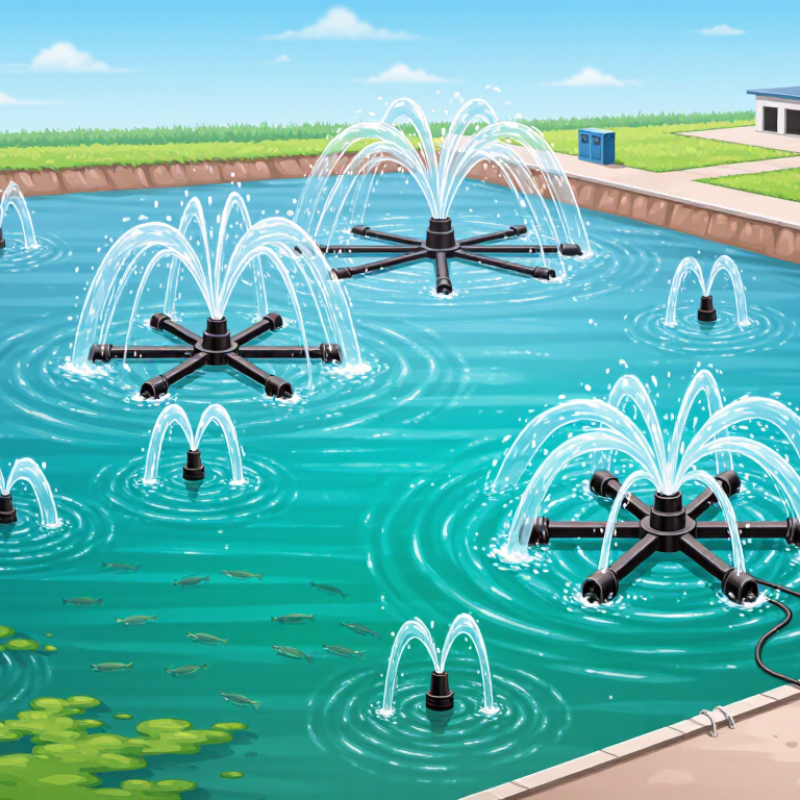
What Is a Floating Pump Aerator and How Does It Work?
A floating pump aerator is a water device that improves oxygen levels in ponds, tanks, and decorative lakes. Its pump rests on a buoyant frame, while an electric motor drives an impeller below the surface. The impeller pulls water through an intake screen. It then pushes water upward through a nozzle or outlet. The moving stream breaks across the surface, increasing contact between water and air. Some models also draw air through a venturi opening. This creates finer bubbles and improves oxygen transfer below the surface.
Choosing one in 2026 requires more than checking horsepower. Match the flow rate to the pond’s volume and shape. A larger spray is not automatically better. Check the aerator’s energy use, float stability, intake protection, and operating depth.
A stable float matters during wind or sudden rain. Fine screens help reduce debris, but they require regular cleaning.
Look for clear electrical protection details and serviceable parts. These points often matter more than a dramatic fountain pattern.
During practical pond inspections, I watch the circulation around edges and shallow corners. A strong central plume can leave stagnant areas behind.
I once focused too much on motor size and overlooked a partially blocked intake. The unit sounded normal but moved less water. That mistake was expensive in time, not money.
Now I check current draw, surface movement, and water temperature together. Night operation also deserves attention, because oxygen demand can rise while photosynthesis stops.
Keep hands away from moving parts, and disconnect power before cleaning.
Which Pond Conditions Require a Floating Pump Aerator?
How to Choose a Floating Pump Aerator in 2026?
Which Pond Conditions Require a Floating Pump Aerator?
A floating pump aerator suits ponds with weak circulation, warm surface water, or recurring oxygen crashes. These problems often appear after still nights, heavy rain, or sudden algae growth. The U.S. Environmental Protection Agency’s 2017 National Lakes Assessment found that 21% of assessed lakes had poor biological condition. Nutrient stress was a major concern. A cloudy green pond can therefore hide serious oxygen instability.
Choose this equipment when fish gather near inlets, surface gasping appears before sunrise, or bottom water smells like rotten eggs. A floating unit can move oxygen-rich surface water and break thermal layering. It works especially well in shallow farm ponds, ornamental ponds, and irregular basins without reliable circulation. FAO aquaculture guidance commonly treats dissolved oxygen below 3 mg/L as stressful for many cultured fish. Test the water before purchasing. Appearance is not enough.
Tips: Measure dissolved oxygen at dawn, midday, and near the bottom. Select capacity for the pond’s deepest zone, not only its surface area. Keep a backup plan for power interruptions. I have seen aerators oversized for small ponds, creating splashing without solving bottom oxygen loss. That mistake wastes energy. Also, algae die-offs can increase oxygen demand quickly, so seasonal testing matters. Use a calibrated meter when possible, and record temperature beside every reading.
How to Select Materials, Safety Features, and Installation Options
Selecting a floating pump aerator in 2026 starts with water conditions, not motor size. Stainless steel or UV-stable engineered plastic resists corrosion in sunny ponds and fertilizer runoff. For brackish water, inspect submerged fittings and choose marine-grade fasteners. A strong frame matters. Thin guards can flex near intake screens, causing vibration and repeated maintenance. Check the impeller clearance, cable jacket, float connectors, and intake guard before purchase. Reliable documentation should list flow rate, power draw, protection rating, and suitable water depth. If these details are missing, pause.
Safety features should include thermal overload protection, grounding, and residual-current protection installed by a qualified local professional. Never handle energized equipment. Keep the aerator away from swimmers, livestock, and boat paths. Fixed anchors provide stable circulation, while guided floats suit changing water levels. Use weighted lines instead of loose ropes. An uneven anchor can twist the unit during strong wind. Leave space around the intake for leaves and algae. I sometimes allow too little slack in tether lines, which restricts movement as water levels change. That mistake is easy to overlook.
Tips: Measure water depth twice. Test the float in shallow water first. Check cables after storms. Clean the intake regularly. Photograph the installation for future inspections. Ask whether replacement seals and guards remain available. Small details matter.
How to Choose a Floating Pump Aerator in 2026?
Recommended evaluation weighting for comparing floating pump aerators, based on practical selection priorities for materials, safety, performance, installation, and maintenance.
Safety features receive the highest weighting because floating equipment operates in or near water. Check electrical protection, grounding, overload protection, and emergency shutoff requirements. Choose corrosion-resistant materials suitable for the water chemistry, confirm the pump’s flow and power requirements, and select an installation method that supports stable anchoring and easy maintenance.
How to Maintain and Evaluate a Floating Pump Aerator in 2026
A floating pump aerator should be evaluated in real water, not only from its product sheet. Before operation, inspect the floats for cracks, trapped debris, and uneven buoyancy. Check the intake screen for algae, leaves, and sediment. A blocked intake can reduce circulation while increasing motor strain. Disconnect the power before touching any submerged component. Follow local electrical rules, and keep connections above splash level.
During operation, observe the water pattern, sound, and vibration. Healthy equipment usually produces steady movement without harsh rattling or sudden surges. Measure current draw with a suitable meter and compare it with the manufacturer’s rated range. Record water temperature, operating hours, and visible oxygen improvement. Small changes matter. If the plume weakens, the pump may need cleaning, even when the motor still runs. Do not judge performance by noise alone.
Maintenance should include cleaning the intake, checking fasteners, examining cables, and inspecting anchor lines after storms. Replace worn parts before they fail in the pond. In colder regions, remove and store the unit when ice could damage the floats or housing. I would also review maintenance records every month. A missed inspection is easy to overlook. My own evaluation would not rely on one test, because water depth, stocking levels, and weather can change results. When performance remains uncertain, compare readings over several days and seek advice from a qualified technician.





