How to Choose a Flexible LED Work Light in 2026?

Choosing a Flexible Led Work Light in 2026 means matching the lamp to real work, not just comparing advertised brightness. A light that bends around a crowded engine bay or clips beneath a cabinet can save time. But weak magnets, a stiff neck, or a poorly placed switch can make it frustrating. Small details matter.

The U.S. Department of Energy reports that LEDs use at least 75% less energy and can last up to 25 times longer than incandescent lighting. That broad comparison is useful, but it does not tell buyers how a portable work light performs under vibration, heat, dust, or repeated repositioning. For task lighting, examine measured lumens, beam spread, color rendering, battery runtime, charging options, and tested ingress protection. The Illuminating Engineering Society’s guidance on lighting quality also reinforces an important point: seeing the task clearly matters, not brightness alone.

Lighting researcher Dr. Mariana Figueiro is known for work on how light affects people, but her research is not a product review of flexible work lights. No verifiable, topic-specific quotation from a work-light specialist was supplied for this introduction, so attributing one would be misleading. That gap is worth noting. This guide will focus on practical selection criteria and clearly distinguish published evidence from hands-on claims. A bright lamp can still be the wrong lamp. Look closely at the details.
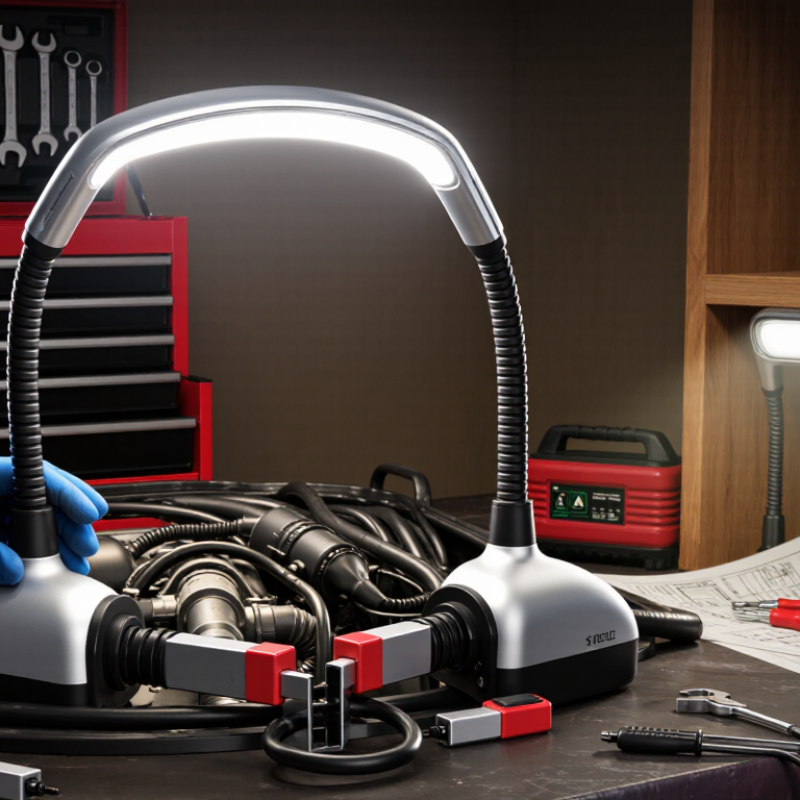
How to Choose a Flexible LED Work Light in 2026?

Understanding the Features of a Flexible LED Work Light

A flexible LED work light is useful when a fixed beam cannot reach behind a pipe or beneath a dashboard. Its defining feature is an adjustable neck or head that directs light into awkward spaces. Check whether it holds its position after bending; a head that slowly droops can become frustrating during detailed work. Too loose, though. A broad, stable base, clip, or magnetic mount can help keep the light steady while your hands are busy.

Look beyond brightness. A focused beam can reveal a small screw, while a wider beam helps illuminate a whole workbench. For close repairs, adjustable output is practical: lower settings reduce glare and may extend battery life. Color rendering also matters when inspecting wiring or matching paint, though specifications do not always tell the whole story. Try to judge the light on the surfaces you actually work with. Small details count.

Power and durability should suit the setting. A rechargeable model avoids disposable batteries, but its runtime depends on brightness and battery condition. Check charging time and whether the light can operate while plugged in. For dusty or damp spaces, review the stated protection rating rather than assuming a sealed housing is waterproof. Heat can build up in compact lights, too. I would favor a comfortable grip and simple controls over extra modes I rarely use. That trade-off is real.

Identifying Your Lighting Needs and Work Environment

How to Choose a Flexible LED Work Light in 2026?

Identifying Your Lighting Needs and Work Environment

Start by defining the task, not by choosing the brightest lamp. Reading small labels, repairing wiring, and inspecting a broad workbench require different beam shapes and light levels. OSHA’s construction illumination table sets benchmarks of 5 foot-candles for general construction areas and 10 for shops. These are minimums for specific settings, not ideal targets for every task. A single lux number can mislead.

Check where the light must reach: inside a cabinet, beneath a vehicle, or across a dusty bench. A flexible neck helps aim the beam, while a stable base or magnetic mount keeps both hands free. Look for a guarded lens and an ingress-protection rating suited to dust or moisture exposure.

Consider battery runtime against the length of a typical shift, and test for glare on shiny surfaces. Small details matter. A very bright beam may create harsh shadows instead of better visibility.

Tips: Map the work area before buying. Place the light where it will be used, then check for blocked beams and reflections. For close inspection, compare adjustable brightness settings and a focused beam; for general tasks, choose broader, even coverage. Record the task duration and charging access, too. That estimate may be imperfect, but it is better than choosing by brightness alone.

Comparing Brightness, Beam Control, and Power Options

A flexible LED work light should be judged by useful illumination, not headline lumens alone. The Illuminating Engineering Society’s RP-7-21 guidance for industrial facilities emphasizes matching light levels to the task. For close inspection, a broad, even beam can reveal scratches without harsh glare. For work beneath a vehicle, a narrower beam may reach into shadowed spaces. Check whether the head pivots smoothly and holds position; a bright lamp aimed at the wrong surface is still frustrating.

Look for measured output and beam information, such as lumens, beam angle, and illuminance at a stated distance. The U.S. Department of Energy’s 2022 Solid-State Lighting R&D Opportunities report notes that laboratory LED packages have surpassed 200 lumens per watt, but finished products lose output through optics and heat. That gap matters. Compare real fixture performance, not package claims, and test whether the light stays comfortable after several minutes of use.

Power choice changes how the lamp fits a job. A rechargeable unit suits mobile repairs, while corded power avoids pauses during long bench work. For battery models, estimate runtime by dividing battery watt-hours by the light’s power draw; actual results vary with brightness and temperature. USB charging is convenient, but charging speed and port protection deserve a closer look. I still find runtime estimates optimistic. Check the manual’s test conditions before relying on them.

Assessing Flexibility, Durability, and Safety Features

When choosing a flexible LED work light in 2026, check how the neck holds its position, not just how far it bends. A joint that slowly sags can push the beam off a bolt, wiring panel, or workbench. Look for a stable base, strain relief near the cable, and a neck that resists repeated repositioning. A very bendable neck can still be a weak point. Test it with the lamp warm, if possible; heat can expose movement that a quick shop-floor check misses.

Durability depends on the job. For dusty garages or damp service areas, check the stated ingress protection rating and inspect the lens, switch, and charging port. The U.S. Department of Energy’s Energy Saver guidance says LEDs use at least 75% less energy and can last up to 25 times longer than incandescent bulbs. Those figures describe LED technology broadly, not every work light, so verify the product’s own runtime and service-life claims. Useful details include a replaceable battery, impact-resistant housing, and a grip that stays secure with oily hands.

Safety deserves equal weight. NIOSH estimates that about 2,000 U.S. workers sustain job-related eye injuries requiring medical treatment each day. A well-aimed beam may improve visibility, but it cannot replace eye protection. Choose diffuse lighting to limit harsh glare, and check that the lamp stays cool around its handle and work surface. Small print matters. Read the manufacturer’s temperature and charging instructions before using a light in confined or cluttered spaces.

Choosing a Model for Your Budget and Intended Use in 2026

In 2026, choose a flexible LED work light for the task, not just its advertised brightness. For close repairs, a moderate output with adjustable brightness can reduce glare on shiny metal. Under a car or inside a cabinet, a narrow head and a stable magnetic base may be more useful than extra lumens. Check whether the magnet holds securely on painted or uneven surfaces. It may not. For larger work areas, look for a wider beam and enough battery runtime to cover a typical shift.

Budget should reflect how often the light will be used. An entry-level model may suit occasional home repairs, but inspect its hinge, cable, and charging port before buying. These parts take daily wear. For regular workshop use, consider a replaceable battery, a sturdy adjustable joint, and a clear warranty. A higher price does not guarantee better handling. If possible, test the grip and balance with one hand; awkward controls become irritating when your other hand is busy. Compare runtime at the brightness you actually need, not only the lowest setting. I would still treat published runtime as an estimate, since cold conditions and aging batteries can shorten it.


Powder Coat Booths

For those larger-sized parts, or smaller quantity runs, we have 2 independent powder coat booths and ovens. The quality, durability and affordability of today’s powder coating finishes make this the process of choice for world-class companies.

Powder coating advantages over other forms of coating are many. Materials used in the Powder coating process can be metals and non-metals that come in a multitude of thicknesses, textures, colors, etc. Another of Powder coating’s biggest advantages over conventional coatings is its ability to create finishes in many different textures. Powder Coating Booths allow us the ability to apply these advantages to large products.

Wet Paint Line

Tri-State Fabricators runs a full-service conveyor line for painting. Wet painting can provide protection or decoration to many different part styles. From start to finish, every project is easier to undergo random and point-based inspection by our skilled painting team.

Advantages to our Wet Paint Line are these lines start with product prep and ends with a thorough inspection of a high quality finished product. Our ability to complete large and small projects with a superior finish and doing so in a timely and economical fashion. This passes along the savings in production to our customers. When powder coating ins not an option, our Wet Paint Line gets the job done right the first time.

Wet Paint Booths

When the parts get big and heavy we roll-out our custom paint racks and oversize booth. By utilizing our partnerships with all the major paint brands, we can match virtually any color with wet paint.

The advantages of having access to a Wet Paint Booth are many. Large projects of many different shapes can be loaded into the booth. The Wet Paint Booth offers an environment that is much more controlled than a typical parts painting operation.

Not only are they used because of their controlled environment, but they’re are also advantageous when it comes to applying paint to parts that are needed in industries that require specialty coatings such as medical, aerospace, etc.

Military CARC

Our military forces have some very high standards when it comes to the finish of their vehicles and equipment. From the first pre-treatment step to final coat, it takes a great deal of knowledge and experience to protect the men and women of our armed forces. They deserve only the best, and Tri-State Fabricators provides it.

All of our processes are closely monitored by our staff and management teams. Both of which are highly trained in the processes of metal fabrication and finishing. Tri-State Fabricators’ goal is to always fully satisfy each and every customer, including the military. We will always put a 110% into what we do.

Glass-Bead Blasting

Abrasive media blasting is an excellent way to remove old paint, rust, and increase the paint/powder adhesion. Glass beads produce a much smoother and brighter finish than angular abrasives; leaving the part clean yet without any dimensional change. Chemically inert and environmentally friendly, we can recycle our beads approximately 30 times; making them a more preferred method of metal cleaning or surface finishing.

Advantages to Glass Bead Blasting are many. Glass bead blast media is used when a project is needing rough surfaces need to become smooth for applications of coatings such as paint. It is typically used to clean paint and rust from a product surface without deforming the surface it is being used on. Overall, compared to many other blasting media, Glass Bead Blasting is a very economical choice and those savings are always passed on to our customers.

Part Washing

Tri-State Fabricators utilize a zinc phosphate wash to clean and etch the material to ensure the best paint adhesion possible. The unique design of our 3-stage wash system does the work like a 5-stage. From Cleaning and rinsing to conversion coating and post-treatment, Our Part Washing process is a complete service and works throughout the fabrication service and the finishing service.

Along with the previously mentioned benefits, Curing is a vital chemical reaction that leaves the product finish hard and relatively safe from mild abrasion and aggressive corrosion. This process can be done in more than one way; ambient air-dry or in curing ovens at temps that exceed 240°.

Burn-Off Oven

From fixing paint mistakes (someone else’s of course) to simply cleaning our paint line hooks, our burn-off oven is put to good use. After a quick burn-off, a little clean up, and a fresh coat of paint, your parts will look better than new.

Why does our Burn-Off Oven work so well? Because super heating the air around parts turns the materials into ashes. From paint and powder coatings to rubber and machining oils, high temps do the job without degrading the integrity of the part.

Masking

Masking is a vital part of producing high quality products. We have die-cut masking patterns to protect machined surfaces as well as a wide range of plugs and caps to protect threaded holes and bolts. We provide permanent and temporary masking.

Masking allows the selected sections of a product to be protected from a fabrication or finishing service. This can be with both chemicals when etching and tapes, paints when only finishing just a section of the product. Masking is great in aiding the customization process of a project.

Screen Printing

Screen printing is a photographic process that transfers artwork onto a porous nylon screen which allows colored ink to flow through the screen and be deposited on an aluminum or plastic component. We can generally have just about any design created onto a screen for your parts.

Some of the advantages of Screen Printing are, brand recognition for your business displaying on your products, assembly instructions, product warnings/hazards, etc. Tri-State Fabricators produces Screen Printing of the highest quality so you know it’s durable.

Metal Finishing

Metal Finishing is the art of treating the exterior portion of product, often metal but can also be made of other materials, so that the surface is clean and free of any debris. Then the process of applying coats or either paint of powder coat takes place. This coating process improves the quality of the product in both appearance and resistance to wear and corrosion.

Tri-State Fabricators, Inc., understands that a project typically isn’t complete until a high-quality finish has been added to your product. This is why our painting and powder coating teams continuously inspect the products throughout the Metal Finishing process.



