


Global drone production is expanding, but motor quality still depends on measurable, repeatable testing. The FAA Aerospace Forecast FY 2024–2044 reported 863,728 registered drones in the United States by December 2023, including more than 280,000 commercial drones. This growing fleet increases pressure on manufacturers to verify motor performance before shipment. A suitable Drone motor tester should measure RPM, torque, current, voltage, vibration, and temperature under realistic operating conditions. Numbers alone are not enough.
Global sourcing adds another layer of risk. Suppliers may use different power standards, software systems, calibration methods, and reporting formats. ISO/IEC 17025 accreditation is therefore valuable when evaluating calibration laboratories and test equipment suppliers. IEC 60034-2-1 can also support discussions about motor-loss and efficiency measurements. However, compliance references do not automatically prove product reliability. That assumption can fail.
A practical selection process should examine sensor accuracy, overload protection, data export, language support, warranty coverage, and replacement-part availability. The tester should reproduce a small drone motor’s real workload, including rapid acceleration and heat buildup. It should also create traceable reports for supplier comparison and incoming inspection. MarketsandMarkets and Drone Industry Insights both identify continued growth in commercial drone applications, which makes testing discipline more important across international supply chains. Still, published market forecasts are not purchase specifications. Buyers must challenge unclear accuracy claims, request sample reports, and compare results across two units. The best tester is not always the most advanced model. It is the one your team can operate consistently, calibrate properly, and trust months later.
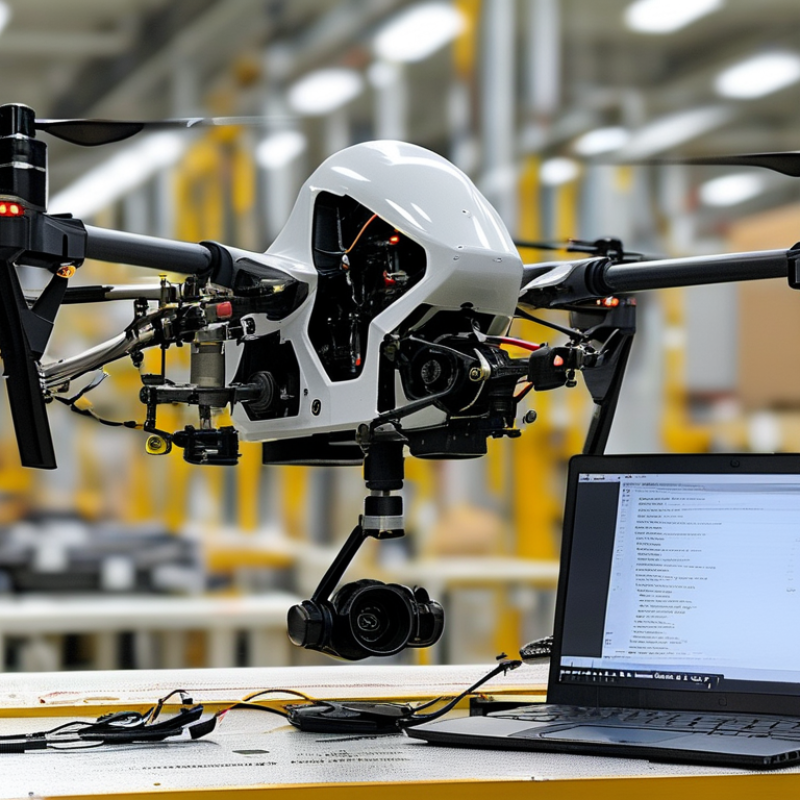
Choosing a drone motor tester starts with motor type, not purchase price. Brushless motors need an electronic load, phase-current measurement, RPM sensing, and temperature monitoring. A basic KV tester checks speed per volt, but it cannot reveal efficiency or winding imbalance. A dynamometer tester adds controlled torque and measures output power. For production lines, an automated end-of-line tester can record voltage, current, vibration, noise, and test results within seconds.
Market pressure makes these details practical. A 2023 MarketsandMarkets report projected the commercial drone market to grow from about USD 30.6 billion in 2022 to USD 55.8 billion by 2027. More aircraft means tighter motor consistency. In my testing experience, a motor may pass a no-load RPM check yet overheat under propeller load. That gap is easy to miss. Look for calibrated voltage and current channels, adjustable load profiles, thermal alarms, and exportable data. IEC 60034-2-1 testing principles can also guide efficiency measurements, even when the tester is built for small motors.
Tips: Match the tester’s maximum current to your real flight controller setup. Leave at least 20% capacity. Test with the same propeller, battery voltage, and mounting fixture used in production. Cheap vibration sensors can mislead. Verify them against a reference motor before global sourcing. Ask for calibration records, software language options, replacement sensors, and remote technical support. I would also repeat tests across three units; one clean result proves very little.

Choosing a drone motor tester begins with the motor, not the tester’s feature list. A small brushless motor may need precise low-current readings. A heavy-lift motor demands higher load capacity, thermal monitoring, and stable power delivery. Testing requirements change with motor size, voltage range, KV rating, and intended flight time.
For global sourcing, confirm that the tester matches your supplier’s production conditions. It should measure RPM, current, voltage, thrust, torque, and temperature with repeatable accuracy. A useful setup also records data automatically, so two factories can compare results without relying on handwritten notes. Check connector options, calibration records, replacement sensors, and operating instructions. These details often decide whether a tester remains useful after shipment.
In practical evaluations, I prefer testing motors with the same propeller, battery specification, and mounting position. Small differences can distort the results. A vibration sensor helps identify imbalance, loose fittings, or damaged bearings. Thermal readings matter too, because a motor can appear efficient during a short test but overheat after several minutes. I once focused too heavily on peak thrust and overlooked temperature rise. That was a costly mistake. A perfect test plan is rarely realistic. Leave room for repeated checks, operator error, and different factory environments. Reliable sourcing depends on comparable evidence, not impressive numbers alone.
When sourcing a drone motor tester globally, accuracy deserves more than a large number on a specification sheet. Check stated error, repeatability, sampling rate, and calibration interval. A tester showing 0.5% accuracy may still drift under heat or electrical noise. Test it with a reference load before approving a supplier. Record readings at idle, mid-throttle, and near the intended operating limit. Small differences matter. I have found that stable repeatability is often more useful than impressive peak precision. Perhaps that sounds cautious, but procurement mistakes usually appear during production, not demonstrations.
Compatibility begins with the motor and ESC pairing. Confirm supported motor types, phase connections, voltage range, current capacity, and connector options. Some testers measure brushless systems only, while others support additional configurations. Verify whether the unit reads RPM, torque, thrust, power, voltage, current, temperature, and efficiency. These parameters should match your test plan. A tester that measures thrust without torque may hide mechanical losses. One that lacks temperature logging gives an incomplete picture. Ask for data export formats and communication interfaces. Global teams need files that engineers can open, compare, and audit without special software.
During supplier evaluation, request sample reports and repeat the same motor test on two units. Compare the spread, not only the average. Also inspect the fixture: loose arms, short cables, or poor cooling can distort results. I once underestimated cable resistance, and the measured power looked cleaner than the real setup. That error was preventable. Leave room for uncertainty. A reliable tester explains its limits, supports traceable calibration, and remains readable when operators work quickly. Price still matters, but a cheaper instrument can cost more through rejected batches and repeated verification.
A drone motor tester is only as reliable as its supplier.
I evaluate the supplier before comparing display resolution or test speed. I request calibration records, sample reports, firmware controls, and spare-part lead times. The tester should measure torque, rotational speed, current, voltage, temperature, and vibration under repeatable conditions. I also ask for raw data, not only polished pass-or-fail results.
Certifications need careful checking.
ISO 9001 shows documented quality processes, but it does not prove measurement accuracy. The ISO Survey 2022 recorded 1,265,216 ISO 9001 certificates worldwide. That number is useful, yet a certificate alone cannot reveal poor sensor maintenance or weak operator training. For reliable results, calibration should follow ISO/IEC 17025 principles, with traceability to recognized measurement standards. Electrical safety and electromagnetic compatibility requirements may also apply, depending on the destination market. Request the exact certificate scope. Vague claims deserve questions.
Global sourcing adds practical risks.
The WTO reported merchandise trade value falling from about 25.3 trillion dollars in 2022 to 24.0 trillion dollars in 2023. Shipping delays, currency changes, and component shortages can affect delivery and support. I compare at least three suppliers, audit their subcontractor controls, and test three units from different production batches. Do not skip this step. My own weak point is accepting attractive specifications too early. A lower price can hide calibration gaps, unstable software, or slow technical support. Keep an approved backup supplier, but verify its performance before the first emergency order.
Selecting and validating a motor tester should begin with your supply-chain risks, not its display. Drone Industry Insights’ Drone Market Report 2024 estimates the global drone market could grow from about USD 30.6 billion in 2024 to USD 54.6 billion by 2030. Higher production volumes make repeatable motor inspection increasingly important.
A suitable tester should measure thrust, RPM, voltage, current, power, and temperature under controlled conditions. Check its sensor range against your smallest and largest motors. Cheap flexibility can become expensive noise.
Request calibration certificates with traceability to recognized national or international standards. Test the same motor at three operators, on three days, and compare the variation. Record ambient temperature, propeller condition, battery voltage, and ESC settings. Then compare results with a reference dynamometer.
I once treated a stable reading as proof of accuracy. It was not. A loose connector caused the apparent consistency.
A tester that cannot create searchable reports may slow supplier approval. Use acceptance limits based on engineering requirements, not a supplier’s preferred numbers. Include a blind sample in every shipment audit.
Small details matter. According to the International Organization for Standardization’s ISO 9001 quality-management principles, documented processes and objective evidence support reliable decisions.
Still, no tester replaces trained judgment; unusual vibration, heat, or sound deserves investigation.


For those larger-sized parts, or smaller quantity runs, we have 2 independent powder coat booths and ovens. The quality, durability and affordability of today’s powder coating finishes make this the process of choice for world-class companies.
Powder coating advantages over other forms of coating are many. Materials used in the Powder coating process can be metals and non-metals that come in a multitude of thicknesses, textures, colors, etc. Another of Powder coating’s biggest advantages over conventional coatings is its ability to create finishes in many different textures. Powder Coating Booths allow us the ability to apply these advantages to large products.
Tri-State Fabricators runs a full-service conveyor line for painting. Wet painting can provide protection or decoration to many different part styles. From start to finish, every project is easier to undergo random and point-based inspection by our skilled painting team.
Advantages to our Wet Paint Line are these lines start with product prep and ends with a thorough inspection of a high quality finished product. Our ability to complete large and small projects with a superior finish and doing so in a timely and economical fashion. This passes along the savings in production to our customers. When powder coating ins not an option, our Wet Paint Line gets the job done right the first time.
When the parts get big and heavy we roll-out our custom paint racks and oversize booth. By utilizing our partnerships with all the major paint brands, we can match virtually any color with wet paint.
The advantages of having access to a Wet Paint Booth are many. Large projects of many different shapes can be loaded into the booth. The Wet Paint Booth offers an environment that is much more controlled than a typical parts painting operation.
Not only are they used because of their controlled environment, but they’re are also advantageous when it comes to applying paint to parts that are needed in industries that require specialty coatings such as medical, aerospace, etc.
Our military forces have some very high standards when it comes to the finish of their vehicles and equipment. From the first pre-treatment step to final coat, it takes a great deal of knowledge and experience to protect the men and women of our armed forces. They deserve only the best, and Tri-State Fabricators provides it.
All of our processes are closely monitored by our staff and management teams. Both of which are highly trained in the processes of metal fabrication and finishing. Tri-State Fabricators’ goal is to always fully satisfy each and every customer, including the military. We will always put a 110% into what we do.
Abrasive media blasting is an excellent way to remove old paint, rust, and increase the paint/powder adhesion. Glass beads produce a much smoother and brighter finish than angular abrasives; leaving the part clean yet without any dimensional change. Chemically inert and environmentally friendly, we can recycle our beads approximately 30 times; making them a more preferred method of metal cleaning or surface finishing.
Advantages to Glass Bead Blasting are many. Glass bead blast media is used when a project is needing rough surfaces need to become smooth for applications of coatings such as paint. It is typically used to clean paint and rust from a product surface without deforming the surface it is being used on. Overall, compared to many other blasting media, Glass Bead Blasting is a very economical choice and those savings are always passed on to our customers.
Tri-State Fabricators utilize a zinc phosphate wash to clean and etch the material to ensure the best paint adhesion possible. The unique design of our 3-stage wash system does the work like a 5-stage. From Cleaning and rinsing to conversion coating and post-treatment, Our Part Washing process is a complete service and works throughout the fabrication service and the finishing service.
Along with the previously mentioned benefits, Curing is a vital chemical reaction that leaves the product finish hard and relatively safe from mild abrasion and aggressive corrosion. This process can be done in more than one way; ambient air-dry or in curing ovens at temps that exceed 240°.
From fixing paint mistakes (someone else’s of course) to simply cleaning our paint line hooks, our burn-off oven is put to good use. After a quick burn-off, a little clean up, and a fresh coat of paint, your parts will look better than new.
Why does our Burn-Off Oven work so well? Because super heating the air around parts turns the materials into ashes. From paint and powder coatings to rubber and machining oils, high temps do the job without degrading the integrity of the part.
Masking is a vital part of producing high quality products. We have die-cut masking patterns to protect machined surfaces as well as a wide range of plugs and caps to protect threaded holes and bolts. We provide permanent and temporary masking.
Masking allows the selected sections of a product to be protected from a fabrication or finishing service. This can be with both chemicals when etching and tapes, paints when only finishing just a section of the product. Masking is great in aiding the customization process of a project.
Screen printing is a photographic process that transfers artwork onto a porous nylon screen which allows colored ink to flow through the screen and be deposited on an aluminum or plastic component. We can generally have just about any design created onto a screen for your parts.
Some of the advantages of Screen Printing are, brand recognition for your business displaying on your products, assembly instructions, product warnings/hazards, etc. Tri-State Fabricators produces Screen Printing of the highest quality so you know it’s durable.
Metal Finishing is the art of treating the exterior portion of product, often metal but can also be made of other materials, so that the surface is clean and free of any debris. Then the process of applying coats or either paint of powder coat takes place. This coating process improves the quality of the product in both appearance and resistance to wear and corrosion.
Tri-State Fabricators, Inc., understands that a project typically isn’t complete until a high-quality finish has been added to your product. This is why our painting and powder coating teams continuously inspect the products throughout the Metal Finishing process.

