


7 Tips for Choosing a Drilling Rig API 6A Check Valve

Choosing a Drilling Rig API 6A Check Valve is a practical decision with serious operational consequences. This valve helps control fluid flow and prevent unwanted backflow in demanding wellhead systems. Its performance depends on pressure ratings, temperature limits, sealing design, materials, and maintenance access. A valve may look suitable on paper yet fail under abrasive fluids, rapid pressure changes, or poor installation conditions. Small details matter.

This guide presents seven practical tips for evaluating the right valve for your drilling application. It considers API 6A compliance, pressure class, bore size, connection type, trim materials, inspection records, and supplier support. Experienced engineers also examine test certificates, traceability documents, and replacement-part availability before approving a purchase. Do not rely on appearance alone. Field conditions are rarely perfect. Mud contamination, vibration, and limited working space can expose weaknesses that factory brochures overlook. A useful selection process compares technical data with actual operating history. That comparison may reveal an uncomfortable truth: the cheapest valve is not always the lowest-cost choice. Still, specifications must be verified independently, not accepted on trust. Qualified personnel should confirm the final selection against the complete wellhead design and applicable company procedures. These recommendations are informative, not a substitute for engineering review. A careful decision protects equipment, reduces downtime, and supports safer drilling operations. Mistakes happen. The goal is to reduce them before installation.
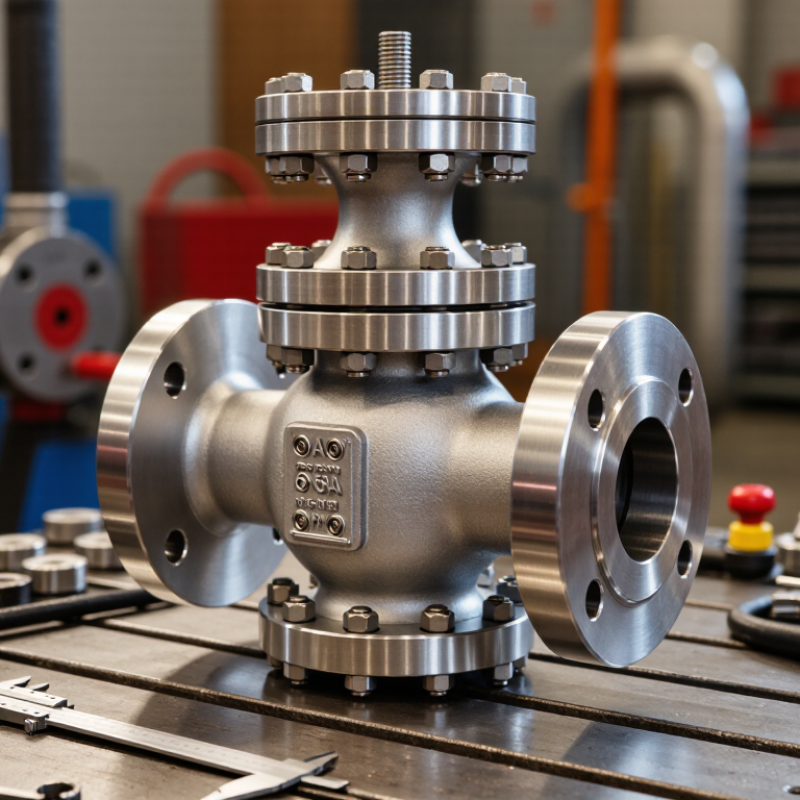
7 Tips for Choosing a Drilling Rig API 6A Check Valve

Understanding API 6A Check Valve Standards for Drilling Rigs

Choosing a drilling rig API 6A check valve requires more than matching the pressure rating.

API Specification 6A defines requirements for wellhead and Christmas tree equipment, including pressure classes, temperature ratings, materials, testing, and documentation. Check the applicable edition and confirm whether the valve meets the required Product Specification Level and Performance Requirement. These details affect inspection depth, qualification, and field reliability.

Tips:

Verify the valve’s working pressure against the actual system pressure, not only the design label. Review body and trim materials for sour-service conditions when applicable. Confirm temperature limits before installation. Ask for pressure-test records, material certificates, and traceability documents. Inspect the flow arrow carefully. A reversed valve can create a serious operating problem.

Practical selection also depends on installation space, connection type, maintenance access, and expected flow direction.

A compact valve may fit the layout but restrict inspection. A stronger material may improve resistance, yet it can increase cost and complicate repair.

API 6A compliance is essential, but it does not remove the need for engineering judgment. Standards can be interpreted differently across projects. That is an uncomfortable detail.

Compare the valve datasheet with the drilling program, purchasing specification, and site conditions before approval.

Keep records for every inspection and test. Small documentation gaps often become larger delays during commissioning.


Matching Valve Design with Pressure, Temperature, and Fluid Conditions

7 Tips for Choosing a Drilling Rig API 6A Check Valve

Matching Valve Design with Pressure, Temperature, and Fluid Conditions

Pressure is the first filter, not the final decision. API Spec 6A lists working pressures from 2,000 to 20,000 psi. Select a rating above the maximum anticipated pressure, including surges. A 5,000 psi valve may fail the application if testing creates higher transient loads. Confirm the pressure class, product specification level, and performance specification level. These details matter.

Temperature changes material behavior and seal performance. Check both minimum startup temperature and maximum operating temperature. Thermal cycling can harden elastomers and reduce sealing force. For fluid conditions, identify hydrogen sulfide, carbon dioxide, chlorides, sand, and drilling chemicals. ISO 15156 provides material guidance for sour-service environments. Do not treat “sour” as a simple checkbox. Concentration, pressure, temperature, and exposure time all influence cracking risk.

Choose wetted materials and trim for the actual chemistry. Hard-facing may improve erosion resistance, but it cannot replace proper corrosion control. Consider a full-bore design when solids may pass through the valve. Verify reverse-pressure capability, fire testing, and low-temperature impact performance. Field inspection teams should review mill certificates, pressure-test records, and traceability documents. I have seen paperwork look complete while heat numbers were inconsistent. That weakness is easy to miss. It should not be. API 6A compliance, independent inspection, and documented maintenance intervals provide stronger evidence than a catalogue rating alone.

Selecting the Right Valve Size, Connection Type, and Flow Capacity

Choosing an API 6A check valve starts with the real operating conditions, not the catalog title. Match the valve size to the required bore, fluid volume, pressure, and temperature. A larger valve is not always better. Excessive internal volume can slow response and increase cost.

Confirm the connection type carefully. Flanged, hub, and threaded connections require different installation methods and sealing details. The end connection must match the mating equipment, pressure rating, bore, and bolt pattern. Check the face-to-face dimension before ordering. A small mismatch can delay rig work. I have seen teams measure pipe size but overlook the valve’s actual bore.

Flow capacity deserves equal attention. Review Cv data, pressure drop, closing speed, and expected flow velocity. High velocity may accelerate erosion near the seat and hinge. Low flow may prevent reliable closure. Ask for pressure-test records, material certificates, and traceability documents. Confirm compatibility with drilling fluids, temperature swings, and the specified service environment. My early selections relied too heavily on nominal size. That was incomplete. A spreadsheet can still mislead when pulsation, solids, or installation angle changes field performance. Have a qualified engineer verify the final selection against the approved API 6A specification and site procedures.

Evaluating Materials, Sealing Performance, and Corrosion Resistance

7 Tips for Choosing a Drilling Rig API 6A Check Valve

Selecting an API 6A check valve starts with material compatibility. Review the valve body, trim, hinge, and fasteners separately. Carbon steel may suit ordinary service, while stainless alloys can better resist saline fluids. Do not guess. Confirm the pressure class, temperature range, and fluid chemistry against actual well conditions. Pressure ratings matter. A valve designed for high pressure still needs correct installation and testing.

Sealing performance depends on more than the gasket material. Inspect the seat design, closure mechanism, and surface finish. Metal-to-metal seats tolerate heat and abrasive particles, but they may require precise machining. Soft seals can improve tight shutoff, yet elastomers may swell or harden.

Ask for pressure-test records and leakage criteria. A practical check includes examining sealing surfaces for scratches, pitting, or uneven contact. Small details matter.

Corrosion resistance deserves careful attention around saltwater, carbon dioxide, hydrogen sulfide, and drilling chemicals. Request material certificates, hardness data, and documented corrosion-control procedures. Protective coatings help, but damaged coating can hide early pitting. Review inspection access, drain arrangements, and replacement requirements before purchase.

In field evaluations, I have found that maintenance assumptions are often too optimistic. A valve can meet its specification and still perform poorly when debris reaches the seat. This is why filtration, flushing, and routine inspection should influence the final selection.

Verifying Certification, Maintenance Needs, and Supplier Reliability

When choosing a drilling rig API 6A check valve, verify the exact certification first. Ask for the API 6A edition, PSL, PR level, material class, and temperature rating. Confirm the certificate matches the valve’s serial number. A stamped document alone proves little. Check traceability records, pressure-test results, and material certificates.

Maintenance needs deserve equal attention. Review the manufacturer’s recommended inspection interval, seal replacement method, and spare-part availability. Ask how the valve performs after repeated pressure cycles, sand exposure, and temperature changes. The World Bank’s Global Gas Flaring Tracker reported 148 billion cubic meters of gas flared in 2023. That figure reflects demanding production conditions, where reliable pressure-control equipment matters. Still, published test data may not represent your wellsite. This is where many buyers become too confident.

Supplier reliability requires evidence, not polished promises. Request references from comparable drilling environments, average lead times, nonconformance rates, and after-sales response targets. Review whether the supplier maintains qualified inspectors and documented corrective actions. The IEA’s Oil 2024 report projects global oil demand near 105.4 million barrels per day by 2030. Higher operating activity can increase replacement pressure and service delays. Choose a supplier with local technical support and realistic inventory. No certificate, no confidence. Yet even a complete checklist can miss poor field communication. Personally, I would test one valve before approving a larger purchase.

7 Tips for Choosing a Drilling Rig API 6A Check Valve - Verifying Certification, Maintenance Needs, and Supplier Reliability

No. Selection Dimension What to Verify Recommended Requirement or Evidence Why It Matters Priority
1 API 6A Certification Confirm that the valve design, manufacturing scope, and supplied configuration are covered by the applicable API Specification 6A requirements. Request a current certificate of conformity, product datasheet, manufacturing scope, and—where applicable—evidence of a valid API Monogram license. Verify certificate numbers, scope, issue dates, and valve model details. A certificate for a different product, pressure rating, or manufacturing site does not prove compliance for the valve being purchased. Critical
2 Pressure and Temperature Rating Match the nominal size, end connection, working pressure, test pressure, and temperature class to the well-control system design. Select only from the API 6A pressure classes specified by the engineering design, such as 2,000, 3,000, 5,000, 10,000, 15,000, or 20,000 psi where applicable. Confirm the temperature class and pressure rating on the nameplate and data sheet. The valve must withstand the maximum anticipated pressure and temperature without compromising sealing or structural integrity. Critical
3 Material and Sour-Service Suitability Evaluate body, trim, spring, seat, and elastomer materials for drilling fluids, pressure, temperature, erosion, and hydrogen-sulfide exposure where relevant. Define the required material class and service conditions. Request material test reports, heat numbers, chemical composition, mechanical properties, hardness results, and NACE MR0175/ISO 15156 compliance evidence when sour service is specified. Incorrect materials can cause corrosion, sulfide-stress cracking, premature seat damage, or loss of pressure containment. Critical
4 Inspection and Pressure Testing Check whether the supplier can provide documented hydrostatic, shell, seat, functional, and dimensional inspection results required by the purchase specification. Require a signed test report identifying the valve serial number, test medium, test pressure, hold time, acceptance criteria, calibrated equipment, inspector, and test date. Use an independent inspection agency when the risk assessment requires it. Traceable test records provide objective evidence that the delivered valve was tested—not merely that a similar valve was tested. Critical
5 Maintenance and Spare-Parts Support Review access for inspection, replacement of seats and seals, lubrication requirements, torque values, and disassembly procedures. Obtain an operation and maintenance manual, exploded drawings, bill of materials, recommended spare-parts list, seal compatibility information, and documented maintenance intervals based on service severity and operating cycles. Clear maintenance instructions reduce downtime and help prevent incorrect reassembly or the use of incompatible seals. High
6 Supplier Reliability and Quality Controls Assess manufacturing capability, quality-management controls, delivery performance, nonconformance handling, and technical support. Review quality-system certification, inspection and test plans, calibration records, welding or heat-treatment controls where applicable, corrective-action history, reference projects, warranty terms, and realistic lead times. A technically suitable valve can still create operational risk if documentation, replacement parts, or after-sales support are unreliable. High
7 Traceability and Delivery Inspection Ensure that the delivered valve can be linked to its manufacturing records and that all markings and documents agree. Check serial number, size, pressure class, material class, temperature class, flow direction, end connection, nameplate, protective caps, packing condition, certificates, and packing list before installation. Receiving inspection can identify wrong configuration, transport damage, missing records, or certification mismatches before the valve enters service. High
Practical acceptance rule: Do not approve the valve for installation until its pressure rating, material suitability, certification, serial-number traceability, pressure-test records, and maintenance documentation have been checked against the approved purchase specification.

Powder Coat Booths

For those larger-sized parts, or smaller quantity runs, we have 2 independent powder coat booths and ovens. The quality, durability and affordability of today’s powder coating finishes make this the process of choice for world-class companies.

Powder coating advantages over other forms of coating are many. Materials used in the Powder coating process can be metals and non-metals that come in a multitude of thicknesses, textures, colors, etc. Another of Powder coating’s biggest advantages over conventional coatings is its ability to create finishes in many different textures. Powder Coating Booths allow us the ability to apply these advantages to large products.

Wet Paint Line

Tri-State Fabricators runs a full-service conveyor line for painting. Wet painting can provide protection or decoration to many different part styles. From start to finish, every project is easier to undergo random and point-based inspection by our skilled painting team.

Advantages to our Wet Paint Line are these lines start with product prep and ends with a thorough inspection of a high quality finished product. Our ability to complete large and small projects with a superior finish and doing so in a timely and economical fashion. This passes along the savings in production to our customers. When powder coating ins not an option, our Wet Paint Line gets the job done right the first time.

Wet Paint Booths

When the parts get big and heavy we roll-out our custom paint racks and oversize booth. By utilizing our partnerships with all the major paint brands, we can match virtually any color with wet paint.

The advantages of having access to a Wet Paint Booth are many. Large projects of many different shapes can be loaded into the booth. The Wet Paint Booth offers an environment that is much more controlled than a typical parts painting operation.

Not only are they used because of their controlled environment, but they’re are also advantageous when it comes to applying paint to parts that are needed in industries that require specialty coatings such as medical, aerospace, etc.

Military CARC

Our military forces have some very high standards when it comes to the finish of their vehicles and equipment. From the first pre-treatment step to final coat, it takes a great deal of knowledge and experience to protect the men and women of our armed forces. They deserve only the best, and Tri-State Fabricators provides it.

All of our processes are closely monitored by our staff and management teams. Both of which are highly trained in the processes of metal fabrication and finishing. Tri-State Fabricators’ goal is to always fully satisfy each and every customer, including the military. We will always put a 110% into what we do.

Glass-Bead Blasting

Abrasive media blasting is an excellent way to remove old paint, rust, and increase the paint/powder adhesion. Glass beads produce a much smoother and brighter finish than angular abrasives; leaving the part clean yet without any dimensional change. Chemically inert and environmentally friendly, we can recycle our beads approximately 30 times; making them a more preferred method of metal cleaning or surface finishing.

Advantages to Glass Bead Blasting are many. Glass bead blast media is used when a project is needing rough surfaces need to become smooth for applications of coatings such as paint. It is typically used to clean paint and rust from a product surface without deforming the surface it is being used on. Overall, compared to many other blasting media, Glass Bead Blasting is a very economical choice and those savings are always passed on to our customers.

Part Washing

Tri-State Fabricators utilize a zinc phosphate wash to clean and etch the material to ensure the best paint adhesion possible. The unique design of our 3-stage wash system does the work like a 5-stage. From Cleaning and rinsing to conversion coating and post-treatment, Our Part Washing process is a complete service and works throughout the fabrication service and the finishing service.

Along with the previously mentioned benefits, Curing is a vital chemical reaction that leaves the product finish hard and relatively safe from mild abrasion and aggressive corrosion. This process can be done in more than one way; ambient air-dry or in curing ovens at temps that exceed 240°.

Burn-Off Oven

From fixing paint mistakes (someone else’s of course) to simply cleaning our paint line hooks, our burn-off oven is put to good use. After a quick burn-off, a little clean up, and a fresh coat of paint, your parts will look better than new.

Why does our Burn-Off Oven work so well? Because super heating the air around parts turns the materials into ashes. From paint and powder coatings to rubber and machining oils, high temps do the job without degrading the integrity of the part.

Masking

Masking is a vital part of producing high quality products. We have die-cut masking patterns to protect machined surfaces as well as a wide range of plugs and caps to protect threaded holes and bolts. We provide permanent and temporary masking.

Masking allows the selected sections of a product to be protected from a fabrication or finishing service. This can be with both chemicals when etching and tapes, paints when only finishing just a section of the product. Masking is great in aiding the customization process of a project.

Screen Printing

Screen printing is a photographic process that transfers artwork onto a porous nylon screen which allows colored ink to flow through the screen and be deposited on an aluminum or plastic component. We can generally have just about any design created onto a screen for your parts.

Some of the advantages of Screen Printing are, brand recognition for your business displaying on your products, assembly instructions, product warnings/hazards, etc. Tri-State Fabricators produces Screen Printing of the highest quality so you know it’s durable.

Metal Finishing

Metal Finishing is the art of treating the exterior portion of product, often metal but can also be made of other materials, so that the surface is clean and free of any debris. Then the process of applying coats or either paint of powder coat takes place. This coating process improves the quality of the product in both appearance and resistance to wear and corrosion.

Tri-State Fabricators, Inc., understands that a project typically isn’t complete until a high-quality finish has been added to your product. This is why our painting and powder coating teams continuously inspect the products throughout the Metal Finishing process.
