


Concrete production depends on consistent batching, reliable mixing, and equipment suited to the actual mix. The Global Cement and Concrete Association’s 2021 Concrete Future roadmap estimates that about 14 billion cubic metres of concrete are produced worldwide each year. That scale makes dependable mixing a production concern, not a minor equipment detail. The International Energy Agency’s 2023 cement-sector analysis attributes roughly 7% of global CO₂ emissions to cement production. This figure describes the wider industry, not the environmental performance of any individual mixer. The distinction matters.
A Double Spiral Twin Shaft Concrete Mixer may suit demanding production, but its name alone cannot confirm it is the right choice. Compare usable batch volume, mixing time, installed power, discharge method, and access to wear parts. Check performance using your own target mix, including its aggregate grading and moisture variation. Do not size by nominal capacity alone. Ask for test results. Then inspect the mixing arms, liners, seals, and maintenance access. A powerful unit can still underperform if the batch size or recipe assumptions are wrong. No mixer is perfect. Supplier data can also be difficult to compare, so buyers should verify what each figure measures. This guide focuses on practical checks that connect published specifications with real plant needs.
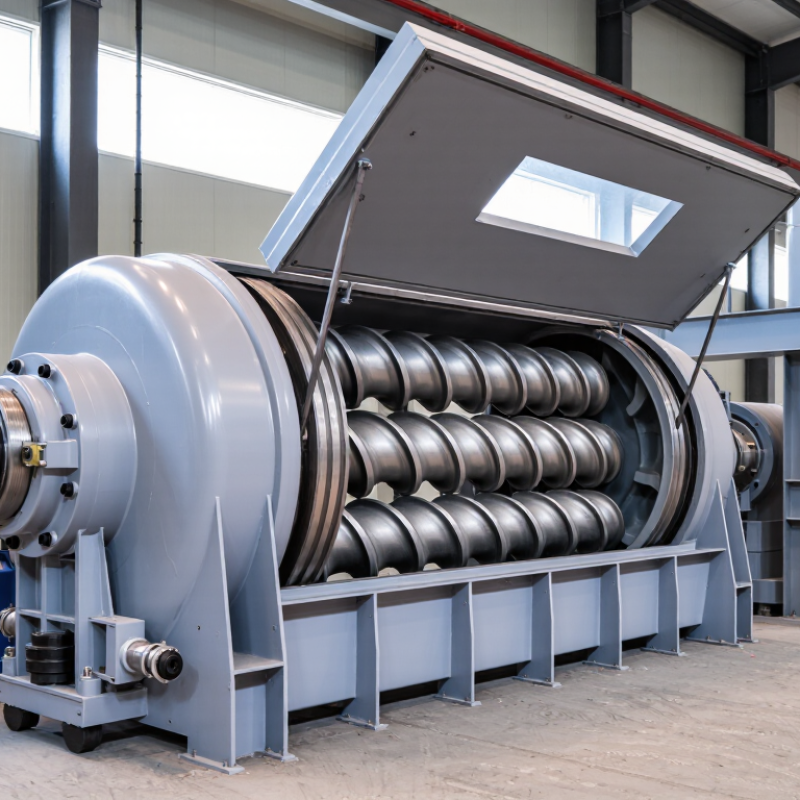
A double spiral twin shaft concrete mixer has two horizontal shafts inside a rigid mixing trough. Mixing arms and replaceable paddles are arranged along each shaft in a spiral pattern. The shafts usually rotate in opposite directions, drawing material toward the central mixing zone and lifting it across the trough. This is not simply a pair of screws conveying concrete from one end to the other. The paddles repeatedly fold and redistribute the batch.
As the shafts turn, aggregates, cement, and water move through overlapping paths. The action helps disperse moisture and coat coarse particles, while the trough walls guide material back into circulation. Look closely at shaft spacing, paddle angle, and the gap between paddles and liners; these details affect flow and wear. The exact pattern varies by machine design.
For selection, compare the mixer’s usable batch volume with your actual production cycle, not just its advertised capacity. Check the permitted aggregate size, access for cleaning, liner replacement, and shaft-seal maintenance. A mixer that produces a uniform batch in a test may behave differently with dry or poorly graded materials. That detail is easy to overlook. Ask how mixing time is measured and inspect sample batches under your expected operating conditions.
| Selection Dimension | Design and Working Principle | What to Check When Choosing | Practical Reference |
|---|---|---|---|
| Shaft arrangement | Two horizontal shafts rotate in opposite directions. Mixing arms and blades move material through the chamber and across the space between the shafts. | Confirm the rotation direction, shaft layout, and mixing-arm arrangement match the intended concrete mix and batch size. | The counter-rotating action helps create intensive circulation and reduces stagnant areas when the mixer is correctly loaded and maintained. |
| Spiral or paddle configuration | Spiral-arranged arms and mixing blades lift, fold, and push material along the chamber while the two shafts produce intersecting mixing flows. | Review blade shape, spacing, adjustment method, and the availability of replaceable wear parts. Ask for test results using a comparable mix. | Blade geometry affects material movement, mixing uniformity, power demand, and wear; no single arrangement is ideal for every mix. |
| Mixing uniformity | Aggregates, cement, water, and admixtures are repeatedly redistributed by forced mechanical action rather than relying on a rotating drum. | Check whether the mixer can handle the required slump, aggregate grading, and admixture sequence. Request a uniformity test where consistency is critical. | Uniformity depends on the mixer design, loading sequence, batch size, mixing time, and material properties. |
| Batch capacity and output | The mixing chamber processes a defined batch; the effective output per hour also depends on loading, mixing, discharge, and plant-cycle time. | Compare rated batch volume with the required compacted concrete output. Check whether the quoted capacity is a mixing volume or a finished-concrete volume. | Do not estimate production from mixing time alone. Include loading, discharge, and the wider batching-plant cycle. |
| Mixing time | Mixing begins after the ingredients have entered the chamber and continues until the concrete reaches the required consistency. | Use the supplier’s recommended cycle as a starting point, then verify performance with the actual recipe and production process. | There is no universal mixing time: mix design, moisture, aggregate size, admixtures, and loading sequence all affect the required duration. |
| Drive system and motor power | A motor and transmission system drive both shafts, commonly through a synchronized gearbox arrangement. | Check installed power, starting method, overload protection, transmission access, and whether the drive is suitable for frequent starts and heavy-duty operation. | Required power varies with chamber size, mix resistance, operating duty, and design. Compare complete technical specifications rather than motor power alone. |
| Maximum aggregate size | Material must pass through the charging opening and move freely around the blades and inside the mixing chamber. | Confirm the permitted maximum aggregate size and check the opening, blade clearances, and discharge arrangement against the project mix. | Oversized aggregate can obstruct material movement or increase wear; follow the mixer’s stated limits. |
| Discharge and residual material | A bottom discharge gate releases the mixed concrete into a receiving hopper, skip, or truck-loading system. | Inspect gate size, opening mechanism, sealing, discharge speed, and compatibility with the plant layout. | A well-matched discharge arrangement helps reduce delays and material build-up between batches. |
| Shaft seals and bearings | Sealing components help keep cement paste and water out of the bearing areas, while bearings support rotating shafts under load. | Ask how seals are inspected, adjusted, and replaced, and whether bearing access is practical for routine maintenance. | Seal condition is important in abrasive, wet concrete service. Follow the operating and maintenance instructions for inspection intervals. |
| Wear protection | Mixing blades, arms, and chamber liners contact abrasive aggregates and cementitious material during operation. | Check liner and blade materials, thickness, replacement access, and whether wear parts can be changed without extensive dismantling. | Wear rate depends on aggregate hardness, mix design, operating hours, and maintenance practices. |
| Cleaning and maintenance | Access doors and wash-down arrangements allow operators to remove concrete residue and inspect the chamber. | Check safe access, cleaning-port locations, lockout provisions, and the manufacturer’s procedure for preventing hardened build-up. | Never enter or service a mixer while it can start. Isolate and lock out the power source before maintenance. |
| Installation and controls | The mixer operates as part of a batching system, coordinating material feeding, water addition, mixing, and discharge. | Verify foundation and clearance requirements, electrical supply, control-system interfaces, and available service access. | Confirm site conditions and plant integration before ordering to avoid installation and commissioning delays. |

Choose capacity from the required hourly output, not the mixer’s advertised volume alone. A double spiral twin shaft mixer must handle the usable batch volume while leaving room for materials to circulate and mix evenly. Estimate demand from batch size, mixing and discharge time, and planned operating hours. Then allow for pauses, cleaning, and uneven delivery schedules. They happen. USGS Mineral Commodity Summaries 2024 estimated U.S. cement production at 91 million metric tons in 2023, a reminder of the scale and variability of material supply. Your own plant’s demand matters more than national production, though.
List every material before comparing mixer specifications. Aggregate size, moisture, grading, cementitious content, fibers, and admixtures can change mixing behavior and cycle time. ASTM C94/C94M sets batching measurement tolerances of approximately ±1% for cementitious materials and water, and ±2% for aggregates. These tolerances make accurate weighing and moisture correction important. Confirm that the proposed mixer and feeding system can maintain them under your actual operating conditions. Check the intended batch size, required slump range, ambient temperatures, and daily production pattern with the supplier or a qualified process engineer. A specification sheet cannot predict every mix. Trial batches may reveal dead zones, slow discharge, or cleaning needs that calculations miss.
When comparing double spiral twin shaft concrete mixers, look beyond the advertised batch size. Ask how much concrete the machine mixes per cycle, and how consistently it distributes cement, water, and aggregate. A practical test uses your actual mix design: take samples from several points after discharge and check for visible differences in color, moisture, or stone distribution. Small variations matter. A short cycle is useful only if the mix is uniform.
Compare installed motor power with usable mixing volume and the materials you plan to process. Larger aggregate, stiff mixes, and frequent heavy batches can change the load. More kilowatts do not automatically mean better output. Check the operating current under a representative load, the duty rating, and whether the drive can handle repeated starts. I would not rely on a no-load test alone; it can give a misleading impression.
Review the equipment specifications against your site: maximum aggregate size, discharge height, opening dimensions, and available maintenance access. Ask for the rated capacity basis, since “capacity” may refer to the mixing chamber rather than finished concrete. Check paddle and liner materials, replacement intervals, and access for cleaning. These details are easy to overlook. A real trial may still expose gaps in the selection, so record cycle time and batch consistency before committing.
Compare nominal discharge capacity per batch with installed motor power across common JS-series mixer sizes.
Larger models generally provide greater batch capacity and require more installed power. Values show representative commonly listed configurations; actual specifications vary by supplier and configuration. Compare discharge capacity, motor power, mixing time, aggregate size, and site power requirements before selecting equipment.
Before selecting a mixer, map the full installation route, not just its footprint. Measure doorways, headroom, service platforms, and the space needed to remove covers or inspect the twin shafts. Allow room for lifting equipment. A machine that fits on paper may still be difficult to position beside existing conveyors. Check foundation capacity, anchor locations, electrical supply, and discharge height against the manufacturer’s technical drawings. Have a qualified site professional verify these details before equipment arrives. Small measurement errors can become expensive delays.
Maintenance access deserves equal attention. Operators should be able to reach wear liners, seals, and inspection points without awkward stretching or climbing around pipes. Ask how routine checks are performed and what clearance is needed to replace major parts. Safety features should include suitable guarding, accessible emergency stops, and interlocks where appropriate. Confirm that isolation procedures can be followed during servicing. Clear sightlines help, too. One planning assumption can still be wrong: a convenient access door may open toward a wall or cable tray. Walk the proposed layout with maintenance staff, mark service zones on the floor, and revise the plan before installation.
When choosing a double spiral twin shaft concrete mixer, compare supplier support as carefully as the quoted price. Ask who handles commissioning, how quickly technicians respond, and whether wear parts are stocked nearby. Request a sample maintenance schedule and a written parts list. A fast answer matters when concrete is waiting in the discharge hopper. So does clear documentation.
Durability depends on more than a heavy frame. Inspect shaft seals, paddle liners, bearings, and access doors; ask how each component is checked and replaced. The U.S. Department of Energy’s Operations & Maintenance Best Practices Guide reports that predictive maintenance programs can reduce maintenance costs by 25–30% and breakdowns by 70–75%. These are broad industrial benchmarks, not mixer-specific guarantees. Still, they show why condition checks and planned service deserve attention.
Look beyond purchase price. NIST Handbook 135 recommends lifecycle cost analysis that accounts for operating, maintenance, and replacement costs over time. Compare power use, expected wear-part intervals, labor hours, downtime, and support fees across suppliers. Get assumptions in writing. A spreadsheet can look precise while hiding optimistic service intervals; real site conditions are messier. Ask for references from plants with similar output and aggregate, then verify the details directly.


For those larger-sized parts, or smaller quantity runs, we have 2 independent powder coat booths and ovens. The quality, durability and affordability of today’s powder coating finishes make this the process of choice for world-class companies.
Powder coating advantages over other forms of coating are many. Materials used in the Powder coating process can be metals and non-metals that come in a multitude of thicknesses, textures, colors, etc. Another of Powder coating’s biggest advantages over conventional coatings is its ability to create finishes in many different textures. Powder Coating Booths allow us the ability to apply these advantages to large products.
Tri-State Fabricators runs a full-service conveyor line for painting. Wet painting can provide protection or decoration to many different part styles. From start to finish, every project is easier to undergo random and point-based inspection by our skilled painting team.
Advantages to our Wet Paint Line are these lines start with product prep and ends with a thorough inspection of a high quality finished product. Our ability to complete large and small projects with a superior finish and doing so in a timely and economical fashion. This passes along the savings in production to our customers. When powder coating ins not an option, our Wet Paint Line gets the job done right the first time.
When the parts get big and heavy we roll-out our custom paint racks and oversize booth. By utilizing our partnerships with all the major paint brands, we can match virtually any color with wet paint.
The advantages of having access to a Wet Paint Booth are many. Large projects of many different shapes can be loaded into the booth. The Wet Paint Booth offers an environment that is much more controlled than a typical parts painting operation.
Not only are they used because of their controlled environment, but they’re are also advantageous when it comes to applying paint to parts that are needed in industries that require specialty coatings such as medical, aerospace, etc.
Our military forces have some very high standards when it comes to the finish of their vehicles and equipment. From the first pre-treatment step to final coat, it takes a great deal of knowledge and experience to protect the men and women of our armed forces. They deserve only the best, and Tri-State Fabricators provides it.
All of our processes are closely monitored by our staff and management teams. Both of which are highly trained in the processes of metal fabrication and finishing. Tri-State Fabricators’ goal is to always fully satisfy each and every customer, including the military. We will always put a 110% into what we do.
Abrasive media blasting is an excellent way to remove old paint, rust, and increase the paint/powder adhesion. Glass beads produce a much smoother and brighter finish than angular abrasives; leaving the part clean yet without any dimensional change. Chemically inert and environmentally friendly, we can recycle our beads approximately 30 times; making them a more preferred method of metal cleaning or surface finishing.
Advantages to Glass Bead Blasting are many. Glass bead blast media is used when a project is needing rough surfaces need to become smooth for applications of coatings such as paint. It is typically used to clean paint and rust from a product surface without deforming the surface it is being used on. Overall, compared to many other blasting media, Glass Bead Blasting is a very economical choice and those savings are always passed on to our customers.
Tri-State Fabricators utilize a zinc phosphate wash to clean and etch the material to ensure the best paint adhesion possible. The unique design of our 3-stage wash system does the work like a 5-stage. From Cleaning and rinsing to conversion coating and post-treatment, Our Part Washing process is a complete service and works throughout the fabrication service and the finishing service.
Along with the previously mentioned benefits, Curing is a vital chemical reaction that leaves the product finish hard and relatively safe from mild abrasion and aggressive corrosion. This process can be done in more than one way; ambient air-dry or in curing ovens at temps that exceed 240°.
From fixing paint mistakes (someone else’s of course) to simply cleaning our paint line hooks, our burn-off oven is put to good use. After a quick burn-off, a little clean up, and a fresh coat of paint, your parts will look better than new.
Why does our Burn-Off Oven work so well? Because super heating the air around parts turns the materials into ashes. From paint and powder coatings to rubber and machining oils, high temps do the job without degrading the integrity of the part.
Masking is a vital part of producing high quality products. We have die-cut masking patterns to protect machined surfaces as well as a wide range of plugs and caps to protect threaded holes and bolts. We provide permanent and temporary masking.
Masking allows the selected sections of a product to be protected from a fabrication or finishing service. This can be with both chemicals when etching and tapes, paints when only finishing just a section of the product. Masking is great in aiding the customization process of a project.
Screen printing is a photographic process that transfers artwork onto a porous nylon screen which allows colored ink to flow through the screen and be deposited on an aluminum or plastic component. We can generally have just about any design created onto a screen for your parts.
Some of the advantages of Screen Printing are, brand recognition for your business displaying on your products, assembly instructions, product warnings/hazards, etc. Tri-State Fabricators produces Screen Printing of the highest quality so you know it’s durable.
Metal Finishing is the art of treating the exterior portion of product, often metal but can also be made of other materials, so that the surface is clean and free of any debris. Then the process of applying coats or either paint of powder coat takes place. This coating process improves the quality of the product in both appearance and resistance to wear and corrosion.
Tri-State Fabricators, Inc., understands that a project typically isn’t complete until a high-quality finish has been added to your product. This is why our painting and powder coating teams continuously inspect the products throughout the Metal Finishing process.

