How to Choose a CNC Milling Supplier in 2026?
Choosing a CNC Milling supplier in 2026 requires more than comparing hourly rates. It requires evidence.
Grand View Research valued the global CNC machine market at approximately USD 83.99 billion in 2023. It forecasts a compound annual growth rate of about 10.3% from 2024 to 2030. Deloitte’s 2024 Smart Manufacturing Survey also reported that 86% of manufacturing leaders expect smart manufacturing to remain a major competitiveness driver within five years. These figures signal stronger demand for connected equipment, repeatable processes, and reliable production partners.
Mikell P. Groover, a respected manufacturing author, explains, “The basic function of CNC is to control the motion of the machine tool.” That principle remains practical. A capable supplier should demonstrate how it controls that motion, verifies dimensions, and documents results. Ask for material certificates, inspection records, machine specifications, and sample parts with visible tolerances. Look closely at the details: clean deburring, consistent surface finish, protected threads, and readable inspection reports.
Price matters. Not alone.
A supplier may offer impressive equipment but lack stable process control. Another may communicate well but struggle with tight tolerances. I have seen apparently minor issues, such as unclear revision control, create expensive delays. This is where many selection guides become too simple. No scorecard can replace technical questions, sample validation, and a realistic pilot order.
The right CNC Milling partner should combine engineering experience, transparent quality systems, responsive communication, and scalable capacity. Verify those claims before production begins. Forecasts are useful, but evidence is better.
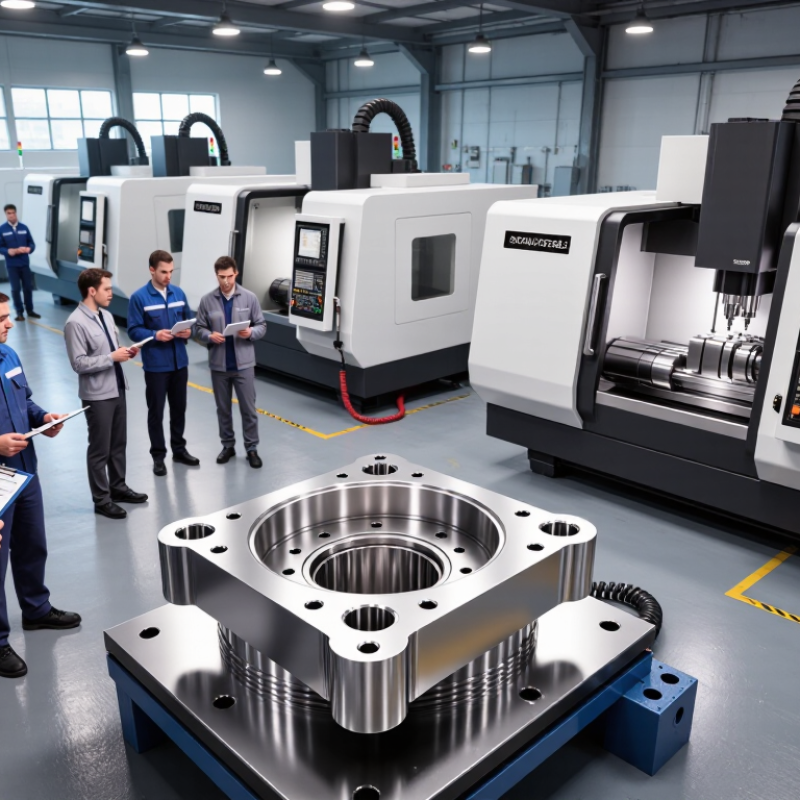
Define Your CNC Milling Requirements
Before comparing CNC milling suppliers, define the part precisely. State the material grade, blank size, finished dimensions, annual quantity, and expected order batches. Include critical tolerances, surface-finish targets, datum references, and thread specifications. A note such as “tight tolerance” is not useful. Write the actual value, such as ±0.02 mm.
The International Federation of Robotics reported 541,302 industrial robots installed worldwide in 2023. This growth shows why suppliers need clear production assumptions. Ask whether your project needs three-axis, four-axis, or five-axis milling. Identify deep pockets, thin walls, angled faces, and difficult-to-reach holes. A 120 mm aluminum housing may fit a machine, yet its 0.5 mm wall can distort during clamping. That detail changes the process plan.
Inspection requirements deserve equal attention. Specify whether you need a first-article report, material certificates, dimensional records, or a coordinate-measuring-machine report. Reference recognized standards when practical, including ISO 2768 for general tolerances and ISO 230-2 for machine-tool positioning accuracy. The 2024 World Robotics report also recorded more than four million industrial robots operating globally, but automation does not replace a clear drawing. It only repeats unclear instructions faster.
Share native CAD files, neutral models, drawings, and revision numbers. Confirm who owns programming changes. In practice, customers often overlook packaging, corrosion protection, and inspection sampling. I have seen small omissions create larger delays. A useful requirement sheet should mark every critical feature, quantity, and acceptance rule. It may feel excessive. It prevents guesswork.
Verify Quality Control, Certifications, and Inspection Methods
When choosing a CNC milling supplier in 2026, quality evidence matters more than polished promises. Ask for the supplier’s ISO 9001 certificate, then verify its validity, scope, site address, and certification body. ISO’s 2022 Survey of Certifications recorded more than 1.2 million ISO 9001 certificates worldwide, but certification alone does not prove machining capability.
Request a documented inspection plan for your part. It should identify critical dimensions, tolerances, datums, sampling frequency, and acceptance criteria. For tight features, the supplier should use calibrated coordinate measuring machines, optical comparators, or surface roughness testers. Ask to see calibration records with traceable standards. Material certificates, first-article inspection reports, and nonconformance records reveal practical discipline. Details matter.
Digital records help.
Deloitte’s 2023 Smart Manufacturing and Operations Survey found that 86% of manufacturing leaders expect smart manufacturing to drive competitiveness within five years. A capable supplier should therefore provide secure measurement data, revision control, and corrective-action tracking. However, more software does not guarantee better parts. I would still request sample reports and inspect a trial batch before approving production. Even experienced teams miss an unclear datum or unrealistic tolerance. That weakness should be discussed openly, not hidden behind a certificate.
How to Choose a CNC Milling Supplier in 2026?
Suggested quality-control screening model: 100-point evaluation framework
Use this buyer-defined weighting model to compare suppliers consistently. Confirm ISO 9001 certification where relevant, request calibration records traceable to ISO/IEC 17025, and review first-article inspection reports, CMM results, material certificates, process-control records, and corrective-action procedures. The percentages are evaluation weights rather than market-share statistics.
Compare Pricing, Lead Times, Capacity, and Communication
How to Choose a CNC Milling Supplier in 2026?
Price should be compared line by line, not by the final number alone. Ask whether tooling, programming, inspection, finishing, and packaging are included. A low quote may hide extra setup charges or weak tolerance control. Request a sample cost breakdown for one typical part. It reveals how the supplier thinks. Still, price is only one signal. The cheapest option can become expensive after rejected parts and repeated shipping.
Lead time needs a practical check. Ask for the current queue, estimated machining hours, and inspection schedule. Separate production time from material purchasing and transport. A supplier promising five days may not have reserved machine capacity. Confirm available equipment, maximum workpiece size, and experience with similar materials. Capacity also includes backup plans. What happens if a key machine stops? The answer may expose an uncomfortable gap.
Communication often decides whether a project stays stable. Send a detailed drawing and observe the response. Does the supplier identify unclear datums, thin walls, or difficult tool access? Ask how revisions are recorded and how often progress updates are shared. Reliable teams provide inspection reports, clear corrective actions, and realistic delivery changes. Fast replies are useful, but thoughtful questions matter more. No supplier predicts every delay. I would rather receive an early warning than a perfect promise that quietly fails.
How to Choose a CNC Milling Supplier in 2026? - Compare Pricing, Lead Times, Capacity, and Communication
Anonymized comparison of typical CNC milling supplier profiles for small-to-medium production programs. Prices are indicative USD ranges for standard 3-axis aluminum parts with drawings supplied in production-ready condition.
| Supplier Profile | Typical Part Price
(USD/pc) | One-Time Setup
(USD) | Prototype Lead Time | Production Lead Time | Monthly CNC Capacity
(Machine Hours) | Quote Response | Communication Score
(1–5) | Quality Documentation | Best Fit |
| Supplier A — Local Job Shop | $85–$160 | $75–$180 | 5–10 business days | 3–5 weeks | 800–1,500 | Same day | 4.8 | Inspection report, material certificate, first-article inspection | Urgent prototypes and close engineering collaboration |
| Supplier B — Regional Production Shop | $52–$110 | $60–$150 | 7–14 business days | 4–7 weeks | 2,000–4,000 | 1–2 business days | 4.3 | Inspection report and material certificate available | Repeat orders requiring balanced cost and delivery |
| Supplier C — High-Capacity Contract Manufacturer | $38–$82 | $45–$120 | 10–18 business days | 5–8 weeks | 5,000–10,000 | 1–3 business days | 4.1 | Inspection plan, certificates, traceability, process reports | Stable production volumes and annual cost reduction |
| Supplier D — Low-Cost Overseas Network | $24–$60 | $30–$100 | 12–22 business days | 6–10 weeks, excluding shipping | 3,000–8,000 | 2–4 business days | 3.6 | Basic inspection report; additional documentation may cost extra | Cost-sensitive orders with flexible schedules |
| Supplier E — Certified Medical/Aerospace Shop | $120–$260 | $150–$400 | 10–20 business days | 5–9 weeks | 1,200–3,000 | 1–2 business days | 4.6 | Full traceability, calibrated inspection, controlled documentation | Regulated parts and demanding quality requirements |
| Supplier F — Prototype Specialist | $95–$210 | $90–$250 | 3–7 business days | 3–6 weeks | 500–1,200 | Same day | 4.7 | Dimensional report and material certificate on request | Complex one-off parts and fast design iterations |
Evaluation notes: Pricing varies with material, tolerances, surface finish, part size, order quantity, programming complexity, inspection requirements, packaging, and freight. Confirm available machine types, effective capacity, quality certifications, delivery terms, revision-control procedures, and escalation contacts before placing an order.





