How to Choose a Circuit Breakers Box for Global Sourcing

Choosing a Circuit Breakers Box for global sourcing requires more than comparing prices, amperage, and exterior size. The wrong enclosure can create heat, moisture, and maintenance problems after installation. A reliable decision begins with the intended load, fault level, installation environment, and local certification requirements. Check whether the assembly supports relevant standards, such as IEC 60947-2 or UL 489, where applicable. Requirements vary by market.

John Cadick, an electrical-safety author and engineer, has stated, “Electrical safety is not an option; it is a necessity.” His point remains practical for purchasing teams. A supplier should provide test reports, wiring diagrams, material specifications, and traceable production records. Ask about copper busbar quality, terminal capacity, ingress protection, thermal performance, and short-circuit ratings. Inspect the box closely. Sharp edges, loose labels, or uneven paint may reveal weak quality control.

Global sourcing also demands careful supplier evaluation. Review factory experience, sample consistency, inspection procedures, packaging strength, and after-sales support. A well-packed Circuit Breakers Box should resist vibration, humidity, and impact during long-distance transport. Still, no checklist is perfect. I have seen technically attractive products fail because their documentation was incomplete or their terminals did not match local cables. That mistake is expensive. It also delays installation.

The strongest choice balances safety, compliance, serviceability, and total ownership cost. Product samples should be tested before large orders. Local electricians should review the design. Price matters, but predictable performance matters more.
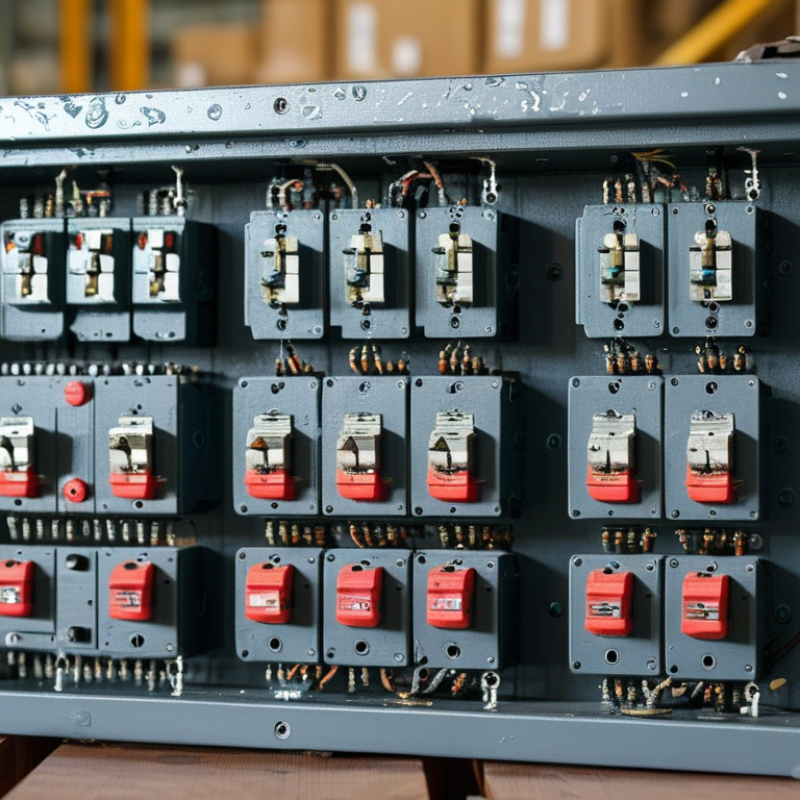
How to Choose a Circuit Breakers Box for Global Sourcing

Define Voltage, Frequency, and Load Needs Under IEC 60038

Choosing a circuit breaker box for global sourcing starts with the supply system, not the enclosure. IEC 60038 defines preferred voltage ranges and system conventions, including common 230/400 V, 50 Hz networks. However, local utility practice can differ. Confirm phase arrangement, line-to-line voltage, neutral availability, and permitted tolerance before selecting breakers. A 60 Hz installation needs different frequency verification, even when its voltage appears similar.

Load calculations must include continuous current, motor starting current, heating equipment, and future circuits. A practical worksheet should record each circuit’s voltage, rated power, power factor, duty cycle, and conductor size. The IEA Electricity 2024 report expects global electricity demand to grow by about 4% annually through 2026. That growth can increase distribution loads in factories, buildings, and charging areas. IRENA’s Renewable Capacity Statistics 2024 recorded 473 GW of renewable capacity added during 2023, which also highlights changing load profiles and possible inverter-based sources. Do not size only for today.

Use the calculated demand to select the box’s busbar rating, interrupting capacity, pole count, and residual-current protection. Short-circuit data must come from the installation point, not a guess. IEC 60038 does not replace national wiring rules or utility requirements. This is where many sourcing plans become weak. A familiar 230 V label is not enough. Check altitude, ambient temperature, enclosure protection, cable entry, testing documents, and certification scope. I would also leave realistic spare capacity, because “fully loaded” designs age badly.

Select Breaker Ratings Using IEC 60898-1: Up to 125 A and 440 V AC

For global sourcing, breaker selection should begin with the electrical system, not the box appearance. IEC 60898-1 covers circuit-breakers for household and similar installations. Its key range includes rated currents up to 125 A and rated voltages up to 440 V AC. These are limits, not automatic approval for every project. Confirm frequency, poles, insulation voltage, and local installation requirements before requesting quotations. A 125 A device is not a universal substitute.

Match the rated current to conductor capacity and expected continuous load. Then check tripping characteristics, breaking capacity, and terminal compatibility. A breaker must interrupt the prospective short-circuit current at its installation point. For example, a 40 A breaker may suit a feeder only when the cable, enclosure, terminals, and fault level support that choice.
Ask suppliers for IEC test evidence, declaration documents, dimensional drawings, and sample labels. Do not rely on a catalogue table alone. Small omissions become costly.

For the box, verify heat dissipation, protection against accidental contact, mounting space, and cable bending radius. Mark each circuit clearly. Leave practical room for inspection and future wiring, even when compact dimensions win the tender. In sourcing checks, copied ratings can look convincing while test documentation remains vague. That is a warning sign. Recheck the 440 V AC figure against the actual line-to-line voltage and system arrangement. If the application falls outside IEC 60898-1, select a more suitable standard and obtain an engineer’s review.

Match Enclosure Protection to Conditions with IEC 60529 IP Codes

When sourcing a circuit breaker box globally, match the enclosure to its real environment, not its catalogue photograph. IEC 60529 defines IP codes through two digits: the first measures protection against solid objects, while the second measures water resistance. IP20 may suit a clean, dry control room. IP54 offers limited dust entry and protection from splashing. IP65 is dust-tight and resists water jets. IP67 adds temporary immersion protection, but it does not guarantee long-term underwater operation.

Conditions matter more than the label.

A 2024 International Energy Agency report forecasts global electricity demand growth of about 4% in 2024 and 2025. More installations will face heat, dust, rain, and rushed maintenance. Select the box after checking site temperature, washdown pressure, condensation, ultraviolet exposure, and cable-entry design. An IP65 box can still fail when its gland seals are poorly fitted. IEC 60529 testing also does not fully address corrosion, sunlight ageing, or chemical exposure. Add suitable materials, drainage, and ventilation where needed. My practical mistake was treating IP66 as a complete outdoor specification. It is not. Ask for test reports, current certificates, gasket details, and installation instructions before comparing prices. A cheaper enclosure becomes expensive when moisture reaches terminals. There is no universal best IP rating.

Verify Assembly Safety Through IEC 61439, UL 67, or UL 891

How to Choose a Circuit Breakers Box for Global Sourcing

Global sourcing should begin with assembly verification, not catalog appearance. The International Energy Agency’s Electricity 2024 report projects global electricity demand to grow by about 4% in 2024 and 2025. More demand increases the need for dependable low-voltage assemblies. IEC 61439 evaluates design verification, routine verification, temperature rise, clearances, and short-circuit performance. Ask for the exact standard edition and product scope. A general certificate may not cover your configuration.

For North American projects, UL 67 applies to panelboards, while UL 891 covers switchboards. Confirm the rated voltage, current, short-circuit current rating, enclosure type, and wiring space. Inspectors should compare drawings with the delivered box.

Check busbar spacing, insulation barriers, torque marks, labels, and protective bonding. Request routine-test records for the actual production unit, not only a factory sample. Small details matter.

Do not trust paperwork alone. On a factory visit, photograph nameplates and match serial numbers with test documents. Review material traceability and change-control records. My checklist is useful, but it is not perfect; unfamiliar local practices can still escape notice.

That weakness deserves a second review by a qualified engineer. A practical sourcing file should include the assembly drawings, verification evidence, test results, deviation list, and installation instructions. These records make technical decisions easier to audit across borders.


Audit SCCR, Certifications, Factory Tests, and Global Logistics Costs

How to Choose a Circuit Breakers Box for Global Sourcing

Audit the short-circuit current rating before comparing prices. Under NFPA 70, equipment must withstand available fault current at its installation point. Request the tested SCCR, not a marketing estimate. Match the rating with the site’s voltage, transformer capacity, and prospective fault current.

IEC 61439 also requires design verification and routine verification for low-voltage assemblies. Factory records should show torque checks, dielectric tests, insulation resistance, and breaker trip tests. Ask for serial-numbered reports. Photos alone are weak evidence.

Certifications need careful review. Confirm the exact enclosure, busbar system, and breaker combination covered by each certificate. A certificate for one configuration may not cover your requested layout. Review local acceptance rules with a qualified engineer.

This step is often skipped. That is risky. Factory acceptance testing can reveal loose terminals, incorrect phase labels, or inadequate clearances before shipment. Require calibrated instruments and dated test results.

Logistics costs extend beyond ocean freight. The World Bank’s Logistics Performance Index 2023 evaluated 139 economies and highlighted major differences in customs, tracking, and delivery reliability. UNCTAD’s Review of Maritime Transport 2023 reported a 0.4% contraction in maritime trade during 2022, followed by an expected 2.4% rebound in 2023.

Build scenarios for freight, insurance, duties, port handling, inland delivery, and replacement parts. A cheaper factory may create higher landed costs. I would also budget for delays, because spreadsheets rarely capture every port disruption.

Powder Coat Booths

For those larger-sized parts, or smaller quantity runs, we have 2 independent powder coat booths and ovens. The quality, durability and affordability of today’s powder coating finishes make this the process of choice for world-class companies.

Powder coating advantages over other forms of coating are many. Materials used in the Powder coating process can be metals and non-metals that come in a multitude of thicknesses, textures, colors, etc. Another of Powder coating’s biggest advantages over conventional coatings is its ability to create finishes in many different textures. Powder Coating Booths allow us the ability to apply these advantages to large products.

Wet Paint Line

Tri-State Fabricators runs a full-service conveyor line for painting. Wet painting can provide protection or decoration to many different part styles. From start to finish, every project is easier to undergo random and point-based inspection by our skilled painting team.

Advantages to our Wet Paint Line are these lines start with product prep and ends with a thorough inspection of a high quality finished product. Our ability to complete large and small projects with a superior finish and doing so in a timely and economical fashion. This passes along the savings in production to our customers. When powder coating ins not an option, our Wet Paint Line gets the job done right the first time.

Wet Paint Booths

When the parts get big and heavy we roll-out our custom paint racks and oversize booth. By utilizing our partnerships with all the major paint brands, we can match virtually any color with wet paint.

The advantages of having access to a Wet Paint Booth are many. Large projects of many different shapes can be loaded into the booth. The Wet Paint Booth offers an environment that is much more controlled than a typical parts painting operation.

Not only are they used because of their controlled environment, but they’re are also advantageous when it comes to applying paint to parts that are needed in industries that require specialty coatings such as medical, aerospace, etc.

Military CARC

Our military forces have some very high standards when it comes to the finish of their vehicles and equipment. From the first pre-treatment step to final coat, it takes a great deal of knowledge and experience to protect the men and women of our armed forces. They deserve only the best, and Tri-State Fabricators provides it.

All of our processes are closely monitored by our staff and management teams. Both of which are highly trained in the processes of metal fabrication and finishing. Tri-State Fabricators’ goal is to always fully satisfy each and every customer, including the military. We will always put a 110% into what we do.

Glass-Bead Blasting

Abrasive media blasting is an excellent way to remove old paint, rust, and increase the paint/powder adhesion. Glass beads produce a much smoother and brighter finish than angular abrasives; leaving the part clean yet without any dimensional change. Chemically inert and environmentally friendly, we can recycle our beads approximately 30 times; making them a more preferred method of metal cleaning or surface finishing.

Advantages to Glass Bead Blasting are many. Glass bead blast media is used when a project is needing rough surfaces need to become smooth for applications of coatings such as paint. It is typically used to clean paint and rust from a product surface without deforming the surface it is being used on. Overall, compared to many other blasting media, Glass Bead Blasting is a very economical choice and those savings are always passed on to our customers.

Part Washing

Tri-State Fabricators utilize a zinc phosphate wash to clean and etch the material to ensure the best paint adhesion possible. The unique design of our 3-stage wash system does the work like a 5-stage. From Cleaning and rinsing to conversion coating and post-treatment, Our Part Washing process is a complete service and works throughout the fabrication service and the finishing service.

Along with the previously mentioned benefits, Curing is a vital chemical reaction that leaves the product finish hard and relatively safe from mild abrasion and aggressive corrosion. This process can be done in more than one way; ambient air-dry or in curing ovens at temps that exceed 240°.

Burn-Off Oven

From fixing paint mistakes (someone else’s of course) to simply cleaning our paint line hooks, our burn-off oven is put to good use. After a quick burn-off, a little clean up, and a fresh coat of paint, your parts will look better than new.

Why does our Burn-Off Oven work so well? Because super heating the air around parts turns the materials into ashes. From paint and powder coatings to rubber and machining oils, high temps do the job without degrading the integrity of the part.

Masking

Masking is a vital part of producing high quality products. We have die-cut masking patterns to protect machined surfaces as well as a wide range of plugs and caps to protect threaded holes and bolts. We provide permanent and temporary masking.

Masking allows the selected sections of a product to be protected from a fabrication or finishing service. This can be with both chemicals when etching and tapes, paints when only finishing just a section of the product. Masking is great in aiding the customization process of a project.

Screen Printing

Screen printing is a photographic process that transfers artwork onto a porous nylon screen which allows colored ink to flow through the screen and be deposited on an aluminum or plastic component. We can generally have just about any design created onto a screen for your parts.

Some of the advantages of Screen Printing are, brand recognition for your business displaying on your products, assembly instructions, product warnings/hazards, etc. Tri-State Fabricators produces Screen Printing of the highest quality so you know it’s durable.

Metal Finishing

Metal Finishing is the art of treating the exterior portion of product, often metal but can also be made of other materials, so that the surface is clean and free of any debris. Then the process of applying coats or either paint of powder coat takes place. This coating process improves the quality of the product in both appearance and resistance to wear and corrosion.

Tri-State Fabricators, Inc., understands that a project typically isn’t complete until a high-quality finish has been added to your product. This is why our painting and powder coating teams continuously inspect the products throughout the Metal Finishing process.



