


How to Choose a Car Wiring Harness Duct Machine in 2026

Choosing a Car Wiring Harness Duct Machine in 2026 starts with the job it must perform, not its headline speed. The production base is large. OICA’s 2024 statistics report approximately 92.5 million motor vehicles manufactured worldwide. The IEA’s Global EV Outlook 2025 reports more than 17 million electric cars sold in 2024, over one-fifth of global new-car sales. These figures do not measure demand for duct-forming machines. They do show why flexible, repeatable harness production deserves attention.

A suitable machine should handle the duct materials, dimensions, bend profiles, and tolerances your actual programs require. Check feeding stability, cut quality, forming repeatability, changeover time, and how operators load and unload parts. Ask for a trial using your own duct samples; a polished demonstration may hide awkward setup steps. Small details matter. A machine that runs quickly but leaves inconsistent bends can create downstream fitting problems and costly rework. Review its controls, safety features, maintenance access, spare-parts support, and compatibility with existing production systems. Request measurable acceptance criteria, such as cycle time and dimensional checks, before purchase. Compare those results across suppliers, rather than relying on catalog claims alone. The best choice may not be the most automated one. In some plants, simpler equipment is easier to maintain; in others, frequent product changes justify automation. There is no universal answer. This guide explains how to weigh those trade-offs and select equipment that fits your production reality, while recognizing that supplier claims still need verification.
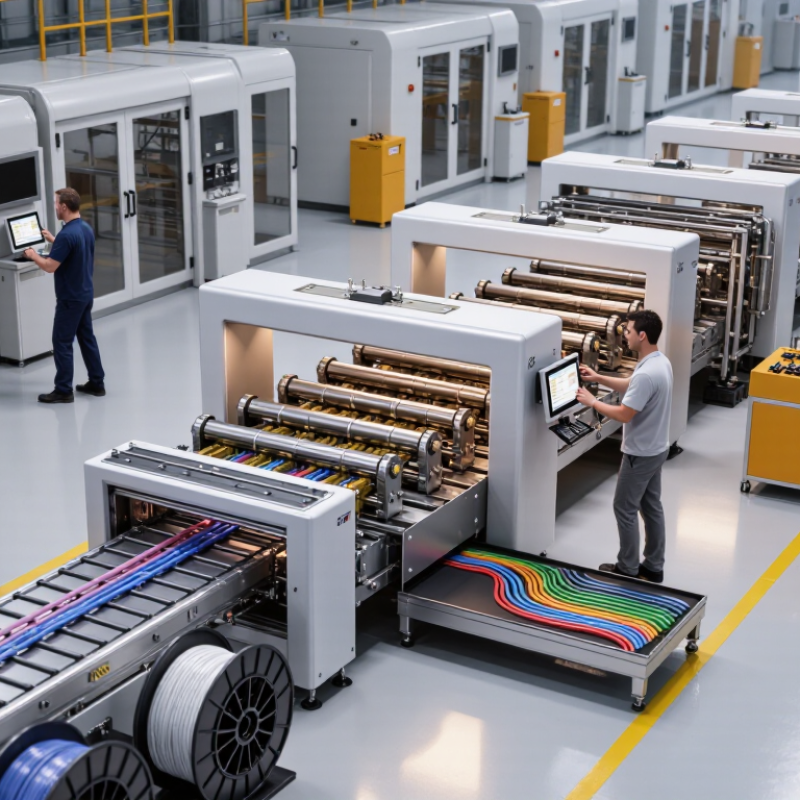
How to Choose a Car Wiring Harness Duct Machine in 2026

Understand What a Car Wiring Harness Duct Machine Does

A car wiring harness duct machine prepares protective channels that route electrical cables through a vehicle. Depending on its design, it may feed duct material, measure and cut it, or handle selected shaping steps. The finished duct helps keep wires organized and reduces exposure to rubbing edges, heat, and movement. It is not the wiring harness itself. That distinction matters when comparing equipment.

Watch a machine run with the duct material you actually use. Does it hold the channel steady? Are cut ends clean, without crushed ribs or loose plastic? Small defects can slow assembly later. Check the usable duct sizes, adjustment time, and how operators clear jams. Ask how measurement accuracy is verified, and request sample parts from a normal production run.

Quiet details matter. A machine that handles one duct profile quickly may struggle with another. Keep that in mind. In 2026, selection should also account for production volume, changeovers, floor space, and maintenance access. I would not judge performance from a short demonstration alone; real shifts reveal inconsistencies that a polished test may miss.


Define Your Duct Materials, Dimensions, and Production Needs

How to Choose a Car Wiring Harness Duct Machine in 2026

Define the duct material before comparing machine specifications. Corrugated ducts made from polypropylene, polyamide, or other polymers can behave differently during forming and cooling. Resin flexibility, heat resistance, and wall thickness all affect tooling and process settings. Small details matter. Bring the machine supplier actual material samples, not just a resin description. Ask whether the line can maintain consistent corrugation and avoid flattened sections at your target speed.

Set the dimensions your production really needs: inner diameter, wall thickness, corrugation pitch, cut length, and whether the duct requires a slit. Check acceptable tolerances against the wiring bundles it must protect. Not always obvious. A machine may cover a broad diameter range, yet frequent tooling changes can slow a mixed-size production schedule. Match its output to your typical order volume, shift pattern, and changeover frequency, rather than its advertised maximum speed alone. I would leave room for a material trial; paper specifications rarely reveal every handling issue. During testing, inspect sample ducts for uniform ribs, clean cuts, and reliable feeding. Record the results before settling on a configuration.

Compare Machine Types, Capabilities, and Key Specifications

Choosing a car wiring harness duct machine in 2026 starts with the duct, not the brochure. Semi-automatic cutters suit smaller batches and frequent product changes. Operators load each corrugated tube, set the cut length, and inspect the end. Fully automatic systems feed, measure, and cut continuously. They can reduce repetitive handling, but need stable material supply and careful setup. There is no universal best choice.

Compare the supported diameter range, cut-length tolerance, feed speed, and changeover time. Confirm the machine handles your duct material and wall thickness without crushing the ribs. Check whether blades, clamps, or guides require adjustment for each size. A fast cycle rate means little if the line pauses for frequent corrections. A tidy specification sheet can still leave out a costly detail: how long a real size change takes. Ask for a trial using your actual duct, then inspect several cut ends for burrs and deformation.

Tips: Measure the smallest and largest duct sizes you run, and bring sample lengths to a machine evaluation. Check safety guarding, fault alerts, and access for routine cleaning. Record cut consistency across a short production run, not just one successful cycle. If operators need extra manual trimming, reassess the setup before choosing a higher-speed model.

Check Safety Features, Maintenance Needs, and Supplier Support

How to Choose a Car Wiring Harness Duct Machine in 2026

A machine’s safety features deserve close inspection before comparing speed or price. Check for fixed guards around cutting and forming areas, accessible emergency stops, and interlocks that halt motion when a cover opens. Controls should be clearly labeled and easy to reach while an operator stands at the normal working position. Small details matter. Ask to see the machine running, and watch how it behaves during a jam or material change. A polished demonstration may not reflect every shift condition, so request practical operating details.

Maintenance needs affect both uptime and operator workload. Look for accessible wear parts, clear lubrication points, and a maintenance schedule with realistic intervals. Ask how quickly common replacement parts can be supplied, and whether the manual includes fault codes and basic troubleshooting steps. Supplier support matters after installation, too. Confirm what training is included, how technical questions are handled, and whether remote assistance is available. If support arrangements sound vague, pause and ask for specific response expectations in writing. I would also compare feedback from similar production lines, while remembering that one plant’s experience may not match your own.

How to Choose a Car Wiring Harness Duct Machine in 2026

Suggested evaluation weights for comparing machine options. These weights are a buyer-planning framework, not market survey results.

Prioritize safety features, then assess maintenance requirements and supplier support. Confirm each machine’s specifications and service terms directly with the supplier.

Assess Total Cost and Verify the Machine Before Purchase

A car wiring harness duct machine should be priced by its lifetime cost, not its quote alone. Include tooling, installation, operator training, energy, maintenance, spare parts, and production downtime. Ask for the cost and lead time of replacement dies. A low purchase price can look less attractive when a worn cutter stops a shift. Small details matter.

The International Federation of Robotics reported 541,302 industrial robots installed worldwide in 2023, with installations averaging 7% annual growth over the previous decade (World Robotics 2024). That figure is not specific to harness duct equipment, but it reflects expanding factory automation. Buyers should check whether the machine integrates with existing feeding, cutting, and inspection processes. Before purchase, run your actual duct material and profile on the machine. Measure cut length, edge quality, cycle time, and repeatability across multiple runs. Request the test results in writing. One successful sample is not enough.

Tips: Bring a representative production batch, including the hardest-to-feed duct. Confirm changeover time with the intended operator, not only the technician. Check guarding, alarms, and maintenance access during the trial. A checklist can still miss awkward daily tasks, so watch a full operating cycle and record any manual adjustments.

How to Choose a Car Wiring Harness Duct Machine in 2026 - Assess Total Cost and Verify the Machine Before Purchase

Evaluation Area What to Assess Practical Data or Acceptance Check How to Verify Before Purchase Cost or TCO Effect
Material and size range Confirm the machine handles the actual duct or conduit materials, diameters, wall thicknesses, and cut lengths used in production. Create a test list from the smallest and largest sizes and each production material. Define allowable cut-length and end-quality tolerances with the product team. Run buyer-supplied samples for every critical size and material. Inspect cut length, burrs, deformation, and fit using the buyer’s drawings and gauges. A wider usable range may reduce the need for separate equipment, but can increase tooling and setup costs.
Actual production rate Assess sustained output on the intended part mix, including feeding, cutting, changeovers, and normal operator tasks. Set the required good parts per hour from the production plan. Record cycle time and rejected pieces during a representative run; do not rely on a no-load speed claim. Agree on the test materials, lengths, run duration, and pass criteria in writing. Record total output, good output, stops, and changeover time. Insufficient output can require extra shifts, labor, or another machine; higher nominal speed is not useful if quality or uptime falls.
Changeover and tooling Check which guides, blades, fixtures, or settings are needed for each duct size and product family. Measure changeover time with the intended operator and document the included tooling, spare tooling, and any size-specific parts. Ask the operator to perform a changeover during the acceptance test, then produce and inspect the first good pieces. Include initial tooling, replacement blades, sharpening or replacement intervals, and the cost of additional product-specific tooling.
Controls and traceability Review length setting, recipe storage, alarms, counters, and any required connection to factory systems. Verify the required recipe count, units, data fields, and communication method against the plant’s actual needs. Test recipe selection, length changes, counter reset, alarm behavior, and any agreed data export or interface using the buyer’s specifications. Extra software, licenses, networking, or custom integration may add upfront and ongoing costs.
Utilities and installation Confirm electrical supply, compressed-air requirements if applicable, footprint, access, and environmental conditions. Compare the machine’s nameplate and installation requirements with the available site supply and layout. Use the supplier’s documented values. Review the installation drawings and utility list with plant maintenance before ordering; confirm who supplies cables, air lines, and guarding connections. Site modifications, electrical work, air preparation, rigging, and floor or layout changes can materially increase delivered cost.
Safety and documentation Review guarding, emergency stops, safe access, electrical documentation, operating instructions, and maintenance instructions. Confirm applicable local requirements and request risk-assessment and electrical documentation relevant to the supplied machine. Inspect the machine during operation and verify that safety devices function. Have qualified personnel review compliance for the installation location. Missing documentation or required safety upgrades can delay commissioning and add engineering or retrofit costs.
Service and spare parts Assess support response, spare-part availability, warranty coverage, and recommended preventive maintenance. Obtain a written list of wear parts, prices, lead times, warranty exclusions, and recommended maintenance tasks. Confirm support hours and escalation contacts in the contract. Check whether critical spares can be stocked locally or shipped within the required time. Long lead times can increase downtime cost; include planned maintenance and spare-part inventory in the ownership estimate.
Illustrative Three-Year TCO Example — USD Planning Assumptions, Not a Market Quote
Machine purchase price Example allowance $38,000 Replace with a written quotation specifying scope and options. $38,000 upfront
Tooling and initial spare parts Example allowance $4,000 List each included tool and spare part; price additional sizes separately. $4,000 upfront
Integration and site preparation Example allowance $3,000 Estimate from the site survey, utility work, layout, and agreed interfaces. $3,000 upfront
Freight and commissioning Example allowance $2,500 Confirm delivery terms, unloading, installation, commissioning, and travel charges. $2,500 upfront
Operator and maintenance training Example allowance $1,000 Confirm the number of trainees, training hours, language, and included materials. $1,000 upfront
Maintenance over three years Example assumption: $1,200 per year $3,600 Replace with the supplier’s maintenance schedule and priced service or parts plan. $1,200 × 3 years
Consumables over three years Example assumption: $1,800 per year $5,400 Estimate from expected production volume and quoted blade or other wear-part life and price. $1,800 × 3 years
Electricity over three years Example: 5.5 kW average load × 1,600 hours/year × $0.12/kWh $3,168 Use measured or supplier-documented average operating load and the plant’s electricity tariff. $1,056 × 3 years
Illustrative three-year TCO Sum of the example costs above $60,668 Recalculate with site-specific quotes, usage, tariffs, taxes, and maintenance assumptions. Excludes financing, taxes, production downtime, and resale value.

Powder Coat Booths

For those larger-sized parts, or smaller quantity runs, we have 2 independent powder coat booths and ovens. The quality, durability and affordability of today’s powder coating finishes make this the process of choice for world-class companies.

Powder coating advantages over other forms of coating are many. Materials used in the Powder coating process can be metals and non-metals that come in a multitude of thicknesses, textures, colors, etc. Another of Powder coating’s biggest advantages over conventional coatings is its ability to create finishes in many different textures. Powder Coating Booths allow us the ability to apply these advantages to large products.

Wet Paint Line

Tri-State Fabricators runs a full-service conveyor line for painting. Wet painting can provide protection or decoration to many different part styles. From start to finish, every project is easier to undergo random and point-based inspection by our skilled painting team.

Advantages to our Wet Paint Line are these lines start with product prep and ends with a thorough inspection of a high quality finished product. Our ability to complete large and small projects with a superior finish and doing so in a timely and economical fashion. This passes along the savings in production to our customers. When powder coating ins not an option, our Wet Paint Line gets the job done right the first time.

Wet Paint Booths

When the parts get big and heavy we roll-out our custom paint racks and oversize booth. By utilizing our partnerships with all the major paint brands, we can match virtually any color with wet paint.

The advantages of having access to a Wet Paint Booth are many. Large projects of many different shapes can be loaded into the booth. The Wet Paint Booth offers an environment that is much more controlled than a typical parts painting operation.

Not only are they used because of their controlled environment, but they’re are also advantageous when it comes to applying paint to parts that are needed in industries that require specialty coatings such as medical, aerospace, etc.

Military CARC

Our military forces have some very high standards when it comes to the finish of their vehicles and equipment. From the first pre-treatment step to final coat, it takes a great deal of knowledge and experience to protect the men and women of our armed forces. They deserve only the best, and Tri-State Fabricators provides it.

All of our processes are closely monitored by our staff and management teams. Both of which are highly trained in the processes of metal fabrication and finishing. Tri-State Fabricators’ goal is to always fully satisfy each and every customer, including the military. We will always put a 110% into what we do.

Glass-Bead Blasting

Abrasive media blasting is an excellent way to remove old paint, rust, and increase the paint/powder adhesion. Glass beads produce a much smoother and brighter finish than angular abrasives; leaving the part clean yet without any dimensional change. Chemically inert and environmentally friendly, we can recycle our beads approximately 30 times; making them a more preferred method of metal cleaning or surface finishing.

Advantages to Glass Bead Blasting are many. Glass bead blast media is used when a project is needing rough surfaces need to become smooth for applications of coatings such as paint. It is typically used to clean paint and rust from a product surface without deforming the surface it is being used on. Overall, compared to many other blasting media, Glass Bead Blasting is a very economical choice and those savings are always passed on to our customers.

Part Washing

Tri-State Fabricators utilize a zinc phosphate wash to clean and etch the material to ensure the best paint adhesion possible. The unique design of our 3-stage wash system does the work like a 5-stage. From Cleaning and rinsing to conversion coating and post-treatment, Our Part Washing process is a complete service and works throughout the fabrication service and the finishing service.

Along with the previously mentioned benefits, Curing is a vital chemical reaction that leaves the product finish hard and relatively safe from mild abrasion and aggressive corrosion. This process can be done in more than one way; ambient air-dry or in curing ovens at temps that exceed 240°.

Burn-Off Oven

From fixing paint mistakes (someone else’s of course) to simply cleaning our paint line hooks, our burn-off oven is put to good use. After a quick burn-off, a little clean up, and a fresh coat of paint, your parts will look better than new.

Why does our Burn-Off Oven work so well? Because super heating the air around parts turns the materials into ashes. From paint and powder coatings to rubber and machining oils, high temps do the job without degrading the integrity of the part.

Masking

Masking is a vital part of producing high quality products. We have die-cut masking patterns to protect machined surfaces as well as a wide range of plugs and caps to protect threaded holes and bolts. We provide permanent and temporary masking.

Masking allows the selected sections of a product to be protected from a fabrication or finishing service. This can be with both chemicals when etching and tapes, paints when only finishing just a section of the product. Masking is great in aiding the customization process of a project.

Screen Printing

Screen printing is a photographic process that transfers artwork onto a porous nylon screen which allows colored ink to flow through the screen and be deposited on an aluminum or plastic component. We can generally have just about any design created onto a screen for your parts.

Some of the advantages of Screen Printing are, brand recognition for your business displaying on your products, assembly instructions, product warnings/hazards, etc. Tri-State Fabricators produces Screen Printing of the highest quality so you know it’s durable.

Metal Finishing

Metal Finishing is the art of treating the exterior portion of product, often metal but can also be made of other materials, so that the surface is clean and free of any debris. Then the process of applying coats or either paint of powder coat takes place. This coating process improves the quality of the product in both appearance and resistance to wear and corrosion.

Tri-State Fabricators, Inc., understands that a project typically isn’t complete until a high-quality finish has been added to your product. This is why our painting and powder coating teams continuously inspect the products throughout the Metal Finishing process.
