


How to Choose a Burr Free Pipe Cutter in 2026?

In 2026, choosing a Burr Free Pipe Cutter is less about appearance. It is about matching the tool to the pipe, workspace, and required finish. Material matters: copper, stainless steel, aluminum, and plastic respond differently to blade pressure and cutting speed. A cutter designed for thin copper may deform soft tubing or struggle with thicker stainless pipe. Check its stated capacity, compatible materials, replacement-wheel availability, and ability to produce a square, clean edge. Details count. A small burr can catch a fitting, slow assembly, or create extra cleanup. In tight spaces, tool clearance may matter as much as cutting performance.

This guide explains how to compare cutter types, size ranges, wheel quality, ergonomics, and maintenance before you buy. It also considers what “burr-free” means in practice: minimal edge cleanup, not a guarantee that every cut will be perfect. Even a quality cutter can leave a rough edge if its wheel is dull, the pipe is unsupported, or the cut is rushed. Results depend on setup. Look for clear product specifications, and test the cutter on scrap pipe when possible. Inspect the edge under good light and check how it fits before installation. Price alone is a weak guide. A modest tool may suit occasional work, while frequent cutting may justify sturdier construction and accessible spare wheels. Product claims deserve a little skepticism. Use this guide to compare evidence and trade-offs before they appear in the finished joint.
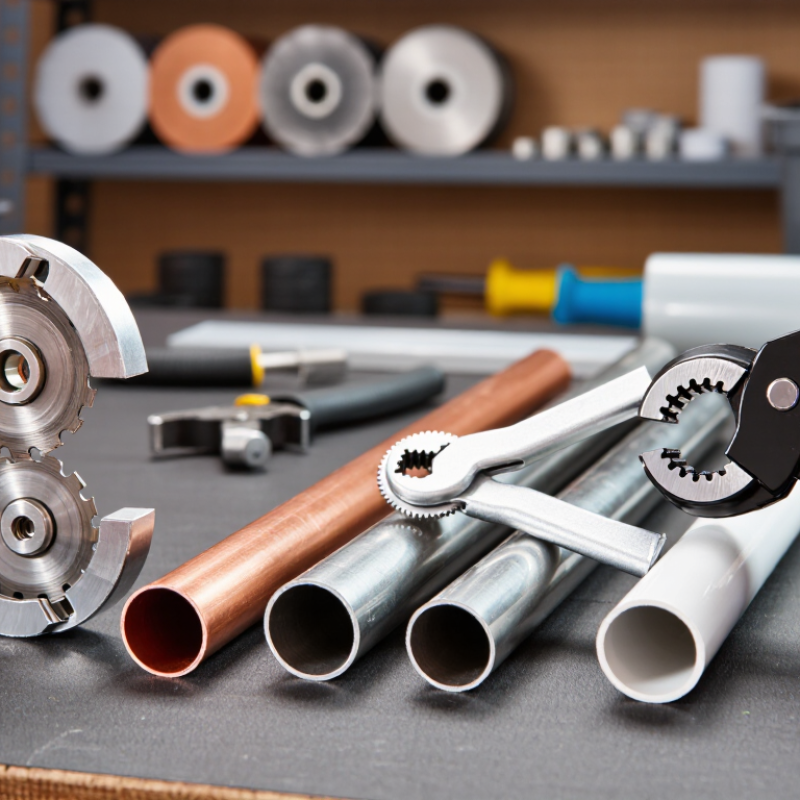
How to Choose a Burr Free Pipe Cutter in 2026?

Define the Pipe Materials, Diameters, and Work Conditions

Before choosing a burr-free pipe cutter, identify the pipe material and its wall thickness. Copper, aluminum, stainless steel, and plastic respond differently to cutting pressure. A cutter suited to soft copper may deform thin plastic or struggle with harder metal. Check the pipe specification, not just its appearance. That detail matters.

Measure the outside diameter and confirm the cutter’s stated range. Also check whether it can accommodate the pipe’s wall thickness; two pipes with the same diameter can need different cutting force. For repeated cuts, a ratcheting design may reduce hand strain. For tight spaces, note the tool’s turning clearance. Measure twice.

Work conditions shape the choice, too. Dust, moisture, overhead positioning, and limited bench space can affect grip and control. A clean, square cut depends on steady alignment and a sharp, suitable cutting wheel, not the tool alone. Inspect the wheel and test the cutter on a spare piece when possible. “Burr-free” describes a goal, not a guarantee: material condition, technique, and wheel wear can still leave a rough edge. I would allow time to inspect the cut, especially before joining pipe. A small imperfection here can become a frustrating leak later.


Compare Cutter Types and Cutting Mechanisms

How to Choose a Burr Free Pipe Cutter in 2026?

Compare Cutter Types and Cutting Mechanisms

A rotary wheel cutter turns around the pipe and gradually presses a hardened wheel through its wall. It suits many metal tubes and leaves a fairly controlled edge when the wheel is sharp and aligned. But forcing it can deform thin-wall tubing or leave a raised lip. Small detail. Check the inside edge, too.

A ratcheting cutter uses a blade that closes through plastic pipe in short strokes. It is quick for soft materials, but a dull blade may crush the pipe instead of making a clean cut. For thicker metal, an abrasive saw cuts quickly, yet heat and abrasive action can leave slag or burrs that need removal.

Material scale matters. The World Steel Association’s World Steel in Figures 2025 reports 1,882.6 million tonnes of crude steel production in 2024. USGS Mineral Commodity Summaries 2025 estimates global copper mine production at about 23 million tonnes that year. These figures describe broad material supply, not cutter performance; pipe wall thickness and material still guide the choice.

For a clean edge, secure the tube, use a cutter rated for its material and diameter, and feed the wheel or blade steadily. I would not trust “burr-free” on a package alone. Inspect a test cut under bright light, especially around the inner rim, where small burrs can hide.

Assess Burr Control and Cut-End Quality

A burr-free pipe cutter should leave an end that is square, smooth, and ready for its next step. Inspect the cut under bright light. Look for a raised lip, a rolled edge, or a rough ridge inside the pipe. Feel the edge carefully; even a small burr can catch a cloth or interfere with a fitting. That matters.

Test the cutter on the pipe material and diameter you actually use. Make several cuts, then compare the ends for squareness and consistency. A cutter that produces little outside burr may still leave a sharp internal edge. Check both sides. For critical fit-up, use a square or fitting as a practical check, and confirm that the cut end does not obstruct the pipe opening. The result can vary with tool condition, cutting pressure, and how steadily the cutter is rotated. A clean first cut is encouraging, but not conclusive. I would not judge performance from one sample alone. Also consider how much cleanup remains: a light finishing pass may be acceptable, while heavy filing can change the end shape. The best choice is the cutter that gives repeatable cut quality with minimal, controlled finishing.

Check Capacity, Ergonomics, Safety, and Maintenance

How to Choose a Burr Free Pipe Cutter in 2026?

Check the cutter’s rated capacity against the pipe’s outside diameter, material, and wall thickness. A tool that fits the diameter may still struggle with thick-walled tubing. Confirm the cutting wheel suits the material, then test on a short offcut. The edge should be clean, not rolled or jagged. Check handle reach, too: in a cramped cabinet, a large turning arc can make a precise cut harder. Comfort matters. A stable grip and smooth adjustment help reduce excess force and awkward wrist positions. One easy-to-miss trade-off: compact tools can be tiring when many cuts are required.

Safety and upkeep affect cut quality. Keep fingers clear of the wheel and inspect the tool for a loose handle, chipped wheel, or poor alignment before use. The U.S. Bureau of Labor Statistics reported a 2.4 recordable injury and illness rate per 100 full-time workers in private industry in 2023; this broad workplace figure is not specific to pipe cutting, but it underlines why careful tool handling matters. After cutting, check the inner and outer edge under good light. “Burr-free” is not guaranteed by the label alone. Remove chips, wipe the cutter dry, and replace a worn wheel before it starts forcing the pipe out of alignment. Small detail. It’s easy to skip.

Match Tool Specifications to Your 2026 Project Needs

A pipe cutter should match the workpiece, not just the job name. Record the pipe’s outside diameter, wall thickness, and material before comparing tools. Copper, stainless steel, and plastic can require different wheels and cutting pressure. Check the cutter’s stated capacity against your largest pipe, with a little room for variation. Measure twice. A tight access point may also rule out a tool with a long handle or wide turning arc.

For clean cuts, look for a stable guide, a sharp replaceable wheel, and clear adjustment control. A compact cutter can help inside a cabinet, while a heavier model may feel steadier on repeated cuts at a bench. “Burr-free” is not automatic. A worn wheel, uneven pressure, or a pipe held at an angle can leave a rough edge. Test the cutter on an offcut, then inspect the end under good light and check that it fits the next connection. Not always perfect. I would also verify wheel availability and cleaning instructions before a busy project; those details are easy to overlook, and the specification sheet may not show how the tool feels after twenty cuts.

How to Choose a Burr Free Pipe Cutter in 2026? - Match Tool Specifications to Your 2026 Project Needs
Project material and use Common cutter type Representative capacity examples Expected cut and burr considerations Specifications to match to the job Best fit
Copper tube for plumbing and HVAC work Rotary wheel tube cutter Compact models commonly cover about 3–22 mm outside diameter; standard models may cover roughly 3–35 mm. Capacities vary by model. Can produce a square, clean-looking cut. The cutting wheel may leave an internal ridge, so inspect and deburr the inside edge when required. Check the cutter’s stated outside-diameter range, tube-wall compatibility, minimum working clearance, wheel availability, and whether an internal reamer is included. Routine work where a compact, controlled cut and access around the tube are priorities.
PVC, CPVC, or similar plastic pipe Ratcheting plastic-pipe cutter or suitable rotary cutter Hand shear models commonly cover pipe up to about 42 mm or 63 mm outside diameter, depending on design. A sharp blade can leave a smooth edge without producing metal-like chips. Dull blades or unsuitable pipe can cause crushing, cracking, or an angled cut. Match maximum outside diameter and pipe material; check blade replacement options, cut squareness, and the manufacturer’s guidance for pipe wall thickness and temperature. Frequent plastic-pipe cuts where fast, chip-free cutting is useful. Confirm the tool is intended for the specific plastic and pipe size.
PEX tubing for water-supply installations PEX tubing shear Many hand shears are designed for common PEX sizes such as 16–32 mm outside diameter; verify the individual tool’s range. A sharp, correctly sized shear can make a clean, square cut. A worn blade or incorrect technique can leave a slanted or pinched end. Check the tubing-size range, blade sharpness and replacement availability, and whether the cut meets the fitting system’s installation requirements. PEX installation and repair work using compatible tubing and fittings.
Stainless-steel tube Heavy-duty rotary tube cutter with a wheel rated for stainless steel Some tool classes cover approximately 6–35 mm outside diameter; actual capacity and wall-thickness limits depend on the cutter. A suitable wheel can cut stainless tube, but the edge may have an internal burr. Do not assume “burr-free” means no inspection or finishing is needed. Confirm stainless-steel compatibility, permitted wall thickness, wheel material, frame rigidity, and the access needed to rotate the cutter fully. Projects requiring controlled cuts in compatible stainless tubing, with deburring available where the application requires it.
Carbon-steel pipe or tube Heavy-duty pipe cutter with a material-appropriate cutting wheel Larger cutter classes may cover roughly 6–60 mm outside diameter, but capacity, pipe schedule, and wall-thickness limits are model-specific. Wheel cutting can leave an internal ridge or burr. Heavier-wall pipe may require a different cutting method and post-cut edge preparation. Verify the permitted material and wall thickness, actual outside-diameter range, wheel specification, tool stability, and required internal deburring method. Suitable only when the cutter is explicitly rated for the pipe and the project allows the resulting edge to be inspected and finished.
Tight-access repairs or work close to a wall Compact or close-quarters rotary cutter Capacity is model-specific; compact designs commonly trade maximum diameter for reduced tool size and operating clearance. Rotary cutting still requires enough movement to rotate or operate the tool. Limited clearance can make a square cut and smooth wheel tracking harder. Compare the tool’s minimum operating clearance and body width with the available space, not just its pipe-diameter range. Repair sites where a full-size cutter cannot be rotated around the pipe.
Mixed-size maintenance or installation work Cutter selected for the dominant material, plus compatible spare wheels or blades Choose a stated range that covers the smallest and largest actual outside diameters in the project without exceeding wall-thickness limits. One cutter is not necessarily suitable for every material. Using the wrong wheel or blade can damage the tool or produce a poor edge. List each material and outside diameter first; check wheel or blade compatibility, replacement parts, ergonomics, and any required deburring tools. Teams that need to standardize tools while keeping material-specific cutting parts available.
Selection note: Capacities above are representative examples, not universal specifications. Measure pipe outside diameter and check the exact cutter’s material, diameter, and wall-thickness ratings. “Burr-free” is not guaranteed by cutter type alone; inspect the cut and deburr it when required by the fitting, flow, or safety requirements.

Powder Coat Booths

For those larger-sized parts, or smaller quantity runs, we have 2 independent powder coat booths and ovens. The quality, durability and affordability of today’s powder coating finishes make this the process of choice for world-class companies.

Powder coating advantages over other forms of coating are many. Materials used in the Powder coating process can be metals and non-metals that come in a multitude of thicknesses, textures, colors, etc. Another of Powder coating’s biggest advantages over conventional coatings is its ability to create finishes in many different textures. Powder Coating Booths allow us the ability to apply these advantages to large products.

Wet Paint Line

Tri-State Fabricators runs a full-service conveyor line for painting. Wet painting can provide protection or decoration to many different part styles. From start to finish, every project is easier to undergo random and point-based inspection by our skilled painting team.

Advantages to our Wet Paint Line are these lines start with product prep and ends with a thorough inspection of a high quality finished product. Our ability to complete large and small projects with a superior finish and doing so in a timely and economical fashion. This passes along the savings in production to our customers. When powder coating ins not an option, our Wet Paint Line gets the job done right the first time.

Wet Paint Booths

When the parts get big and heavy we roll-out our custom paint racks and oversize booth. By utilizing our partnerships with all the major paint brands, we can match virtually any color with wet paint.

The advantages of having access to a Wet Paint Booth are many. Large projects of many different shapes can be loaded into the booth. The Wet Paint Booth offers an environment that is much more controlled than a typical parts painting operation.

Not only are they used because of their controlled environment, but they’re are also advantageous when it comes to applying paint to parts that are needed in industries that require specialty coatings such as medical, aerospace, etc.

Military CARC

Our military forces have some very high standards when it comes to the finish of their vehicles and equipment. From the first pre-treatment step to final coat, it takes a great deal of knowledge and experience to protect the men and women of our armed forces. They deserve only the best, and Tri-State Fabricators provides it.

All of our processes are closely monitored by our staff and management teams. Both of which are highly trained in the processes of metal fabrication and finishing. Tri-State Fabricators’ goal is to always fully satisfy each and every customer, including the military. We will always put a 110% into what we do.

Glass-Bead Blasting

Abrasive media blasting is an excellent way to remove old paint, rust, and increase the paint/powder adhesion. Glass beads produce a much smoother and brighter finish than angular abrasives; leaving the part clean yet without any dimensional change. Chemically inert and environmentally friendly, we can recycle our beads approximately 30 times; making them a more preferred method of metal cleaning or surface finishing.

Advantages to Glass Bead Blasting are many. Glass bead blast media is used when a project is needing rough surfaces need to become smooth for applications of coatings such as paint. It is typically used to clean paint and rust from a product surface without deforming the surface it is being used on. Overall, compared to many other blasting media, Glass Bead Blasting is a very economical choice and those savings are always passed on to our customers.

Part Washing

Tri-State Fabricators utilize a zinc phosphate wash to clean and etch the material to ensure the best paint adhesion possible. The unique design of our 3-stage wash system does the work like a 5-stage. From Cleaning and rinsing to conversion coating and post-treatment, Our Part Washing process is a complete service and works throughout the fabrication service and the finishing service.

Along with the previously mentioned benefits, Curing is a vital chemical reaction that leaves the product finish hard and relatively safe from mild abrasion and aggressive corrosion. This process can be done in more than one way; ambient air-dry or in curing ovens at temps that exceed 240°.

Burn-Off Oven

From fixing paint mistakes (someone else’s of course) to simply cleaning our paint line hooks, our burn-off oven is put to good use. After a quick burn-off, a little clean up, and a fresh coat of paint, your parts will look better than new.

Why does our Burn-Off Oven work so well? Because super heating the air around parts turns the materials into ashes. From paint and powder coatings to rubber and machining oils, high temps do the job without degrading the integrity of the part.

Masking

Masking is a vital part of producing high quality products. We have die-cut masking patterns to protect machined surfaces as well as a wide range of plugs and caps to protect threaded holes and bolts. We provide permanent and temporary masking.

Masking allows the selected sections of a product to be protected from a fabrication or finishing service. This can be with both chemicals when etching and tapes, paints when only finishing just a section of the product. Masking is great in aiding the customization process of a project.

Screen Printing

Screen printing is a photographic process that transfers artwork onto a porous nylon screen which allows colored ink to flow through the screen and be deposited on an aluminum or plastic component. We can generally have just about any design created onto a screen for your parts.

Some of the advantages of Screen Printing are, brand recognition for your business displaying on your products, assembly instructions, product warnings/hazards, etc. Tri-State Fabricators produces Screen Printing of the highest quality so you know it’s durable.

Metal Finishing

Metal Finishing is the art of treating the exterior portion of product, often metal but can also be made of other materials, so that the surface is clean and free of any debris. Then the process of applying coats or either paint of powder coat takes place. This coating process improves the quality of the product in both appearance and resistance to wear and corrosion.

Tri-State Fabricators, Inc., understands that a project typically isn’t complete until a high-quality finish has been added to your product. This is why our painting and powder coating teams continuously inspect the products throughout the Metal Finishing process.
