How to Choose 18 AWG TEC Cable for Your Projects?
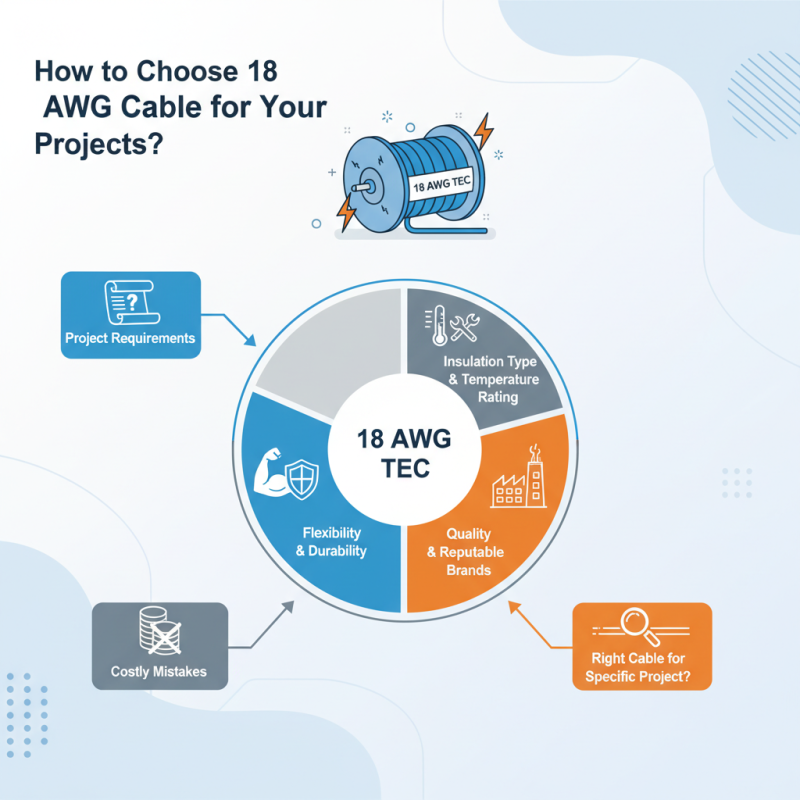
Choosing the right cable for your project is crucial. One popular choice is the 18 AWG TEC Cable. This cable offers a balance of flexibility and durability. Many projects depend on reliable connections, and this gauge meets that need.
When selecting 18 AWG TEC Cable, consider its specifications. Look at factors like insulation type and temperature rating. These details impact performance. Every project has unique requirements. Therefore, understanding your needs is key. Mistakes made here can be costly.
It's important to remember that quality matters. Opt for reputable brands to ensure reliability. Reliable suppliers can make a big difference in performance. While 18 AWG TEC Cable suits many applications, it might not be the best fit for every situation. Reflect on whether you're truly using the right cable for your specific project.
Understanding AWG Standards and Their Importance in Cable Selection
When it comes to selecting 18 AWG TEC cables for your projects, understanding AWG standards is crucial. The American Wire Gauge (AWG) system helps determine a wire's diameter and current-carrying capacity. Each gauge has a specific resistance, which impacts performance. For instance, an 18 AWG wire can typically handle up to 10 amps, making it suitable for various applications.
In the data from the National Electrical Code (NEC), it is noted that incorrect wire gauge can lead to overheating and potential failure. This emphasizes the importance of choosing the right gauge for your needs. The relationship between wire thickness and resistance is significant; a thicker wire reduces resistance, enhancing efficiency. It's worth noting that many users overlook the ambient temperature effects, which can alter wire performance.
Tips: Always check your project's power requirements. Undersized wires can lead to safety hazards. Consider the distance your cable runs; longer distances may require a larger gauge to counteract voltage drop. Also, remember that while 18 AWG is versatile, its applications are limited. For high-power devices, exploring heavier gauges could be wise.
Keeping these factors in mind can improve the safety and efficiency of your electrical setups. Take the time to evaluate your cable needs carefully. It's essential to focus on reliable data, especially when investing in cables for critical projects.
Identifying the Performance Requirements for Your TEC Applications
When selecting an 18 AWG TEC cable for your projects, understanding performance requirements is crucial. Consider the application's voltage and current requirements. Different TEC projects generate varied thermal loads and power needs. For instance, cooling modules may operate at higher currents compared to heating applications. Make sure to check the specifications of your TEC device in detail.
Environmental factors also play a significant role. Will your cable be exposed to moisture or high temperatures? If so, protective insulation becomes vital. Neglecting this can lead to poor performance over time. Additionally, consider the cable's length. Longer cables can introduce resistance that affects efficiency and heat transfer. This is often overlooked but essential for optimal function in your system.
Assess the thermal performance as well. The material and construction directly impact heat dissipation. Ensuring your cable can withstand the thermal environment is key. You may find that a seemingly perfect choice isn’t ideal after reviewing these factors. Always be prepared to adapt your selection as new information arises. Ultimately, making an informed choice requires careful consideration and flexibility.
Evaluating the Material and Insulation Types for 18 AWG TEC Cables
When selecting 18 AWG TEC cables for your projects, evaluating the material and insulation types is crucial. Copper is common for conductive cores due to its excellent conductivity. According to industry reports, copper's conductivity can reach up to 97% IACS, making it a reliable choice. However, using aluminum as an alternative can reduce costs. It’s about weighing performance against budget constraints.
Insulation materials vary significantly, each with specific advantages. PVC offers flexibility and decent resistance to light chemicals. On the other hand, Teflon is preferable for high-temperature environments. Research indicates that Teflon can withstand temperatures up to 200°C. This is essential for projects requiring durability, yet over-specifying insulation can lead to unnecessary costs and weight.
Tip: Always consider the environment where the cable will be used. Factors like temperature and exposure to chemicals matter. Also, think about the length needed. More length may lead to higher resistance and lower efficiency. Pay attention to minor details that can impact performance. Balancing these elements helps ensure your project’s success.
Considering Temperature Ratings and Environmental Factors in Cable Choice
Choosing the right cable for your project requires careful consideration of temperature ratings and environmental factors. An 18 AWG TEC cable is popular in various applications, but its performance can vary significantly based on environmental conditions. High temperatures can compromise the insulation, leading to failures. Always check the temperature rating of the cable before making a decision. This rating indicates how much heat the cable can withstand without degrading.
Moreover, environmental factors such as moisture, chemicals, and UV exposure play a crucial role in the longevity of your cables. For instance, if your project is outdoors, consider cables that offer better resistance to UV rays. Cables exposed to liquids can benefit from waterproof insulation. Imagine using a cable in a damp basement; it needs to resist mildew and corrosion. Reflecting on the installation site will help ensure that the cable selected is suitable for its environment and usage.
Sometimes, we may overlook the importance of these specifications. Choosing a cable solely based on thickness or current capacity can lead to issues down the line. Understanding the interplay of temperature ratings and environmental factors can ultimately make or break the success of your project. Balancing these elements requires a deeper understanding of the conditions your cable will face. Deep consideration and informed choices are essential for optimal performance.
Comparing Cost and Availability of Different 18 AWG TEC Cable Options
When selecting 18 AWG TEC cables, it's crucial to evaluate their cost and availability carefully. The price can vary significantly based on material, insulation type, and supplier. According to industry reports, the average cost of 18 AWG copper wire ranges from $0.10 to $0.30 per foot, while higher-grade options can exceed $0.40 per foot. Understanding your project's budget and requirements is vital. Bulk purchasing can reduce costs but may lead to excess inventory.
Availability is another key factor. Common options are usually readily available from multiple suppliers. In contrast, specialized cables might have limited stock. One report indicated that 35% of professionals faced delays due to supply chain issues with specialty TEC cables. Thus, researching and diversifying suppliers is essential for timely project execution.
In addition, it's worth noting that while cheaper options are appealing, they may compromise performance. The insulation quality, for instance, affects heat resistance and overall efficiency. Many users have found that spending slightly more ensures better results. However, evaluating the long-term impact versus initial costs often requires careful thought.
How to Choose 18 AWG TEC Cable for Your Projects? - Comparing Cost and Availability of Different 18 AWG TEC Cable Options
| Cable Type | Price per Foot | Max Current Rating (Amps) | Availability | Insulation Type |
| PVC Insulated | $0.15 | 10 | High | PVC |
| Silicone Insulated | $0.25 | 13 | Medium | Silicone |
| Teflon Insulated | $0.35 | 15 | Low | Teflon |
| XLPE Insulated | $0.20 | 12 | High | XLPE |