


Choosing a Milk Cup for your business is a practical decision, not just a branding exercise. The right cup should suit the drinks you serve, the way customers use them, and the pace of your operation. A takeaway counter may need secure lids and easy stacking, while a dine-in café may care more about how a cup feels in the hand. Small details matter. A lid that leaks during a short walk can undo the care put into a carefully prepared drink.
Start by checking capacity, material, insulation, rim comfort, and compatibility with your lids and dispensers. Then compare unit price with storage needs, product consistency, and the amount of waste or inconvenience a poor fit could create. Do not rely on a product photo alone. Request samples and test them with actual hot and cold drinks, using the serving process your team follows. Notice whether the cup softens, becomes uncomfortable to hold, or fits neatly in your storage area. These checks cannot predict every customer preference, but they can reveal avoidable problems.
It is tempting to choose the lowest quote or the most attractive design. That is not always the best answer. A lower-cost option may work well for one menu and poorly for another, so judge it against your own service needs. Ask suppliers clear questions about specifications and ordering consistency, and verify claims against product information. The choice may still involve trade-offs. A thoughtful comparison helps you select a Milk Cup that supports presentation, handling, and day-to-day reliability without paying for features your business will not use.
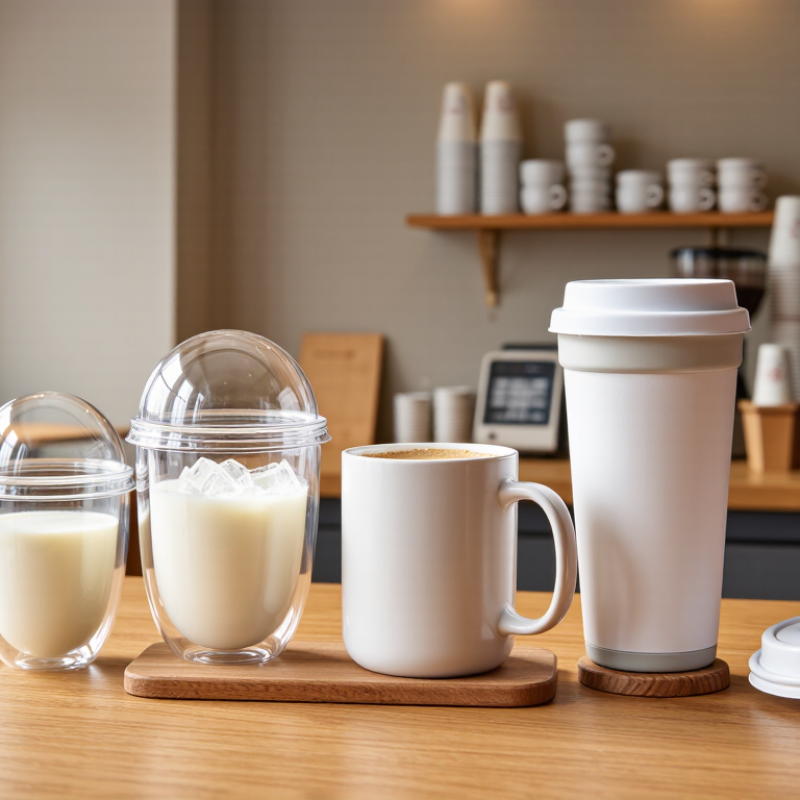
Before comparing Milk Cups, map how customers will use them. A café serving steamed milk needs a cup that feels comfortable in hand and tolerates heat. A hotel breakfast station may need stackable cups for quick self-service. For takeaway orders, check lid fit, spill resistance, and whether staff can fill cups quickly during a rush. The National Coffee Association’s Spring 2024 National Coffee Data Trends report found that 67% of U.S. adults had coffee the previous day. That figure does not predict your sales, but it shows why coffee-service needs deserve close attention. Small details matter.
Match cup capacity to the actual serving, not just the menu label. Test samples with cold milk, warm milk, and any toppings or add-ins you serve. Note condensation, rim comfort, and how easily cups separate from a stack. Ask staff to use them during a busy shift; customers may hold a cup longer than expected. It is easy to overrate a polished-looking sample. Weigh that against storage space, unit cost, and waste handling at your location. Keep it simple. Record feedback from both employees and customers, then compare options against your real use cases before ordering in bulk.
| Business Use Case | Typical Serving Size | Suitable Cup Type | Lid or Service Format | Customer and Operational Priorities | What to Check Before Ordering |
|---|---|---|---|---|---|
| Dine-in café or restaurant | About 180–300 ml (6–10 fl oz), depending on the menu | Reusable glass or food-contact-grade ceramic; reusable plastic may suit some settings | Usually served without a lid | Comfortable handling, presentation, durability, and compatibility with the dishwasher and storage space | Check dimensions, stackability, breakage risk, and care instructions |
| Takeaway coffee, tea, or hot chocolate | About 240–480 ml (8–16 fl oz) | Insulated paper cup or another cup specifically designed for hot drinks | Compatible sip-through lid; sleeve may improve handling comfort | Heat handling, leak resistance, secure lid fit, and fast service | Match cup and lid dimensions; test with the actual drink temperature and filling process |
| Cold milk, smoothies, or iced drinks | About 300–700 ml (10–24 fl oz) | Clear food-contact-grade plastic or a cold-drink paper cup with an appropriate lining | Flat or dome lid; straw opening if required for the menu | Cold-liquid leak resistance, enough room for ice, visibility of the drink, and easy carrying | Confirm cold-use suitability, lid fit, condensation handling, and local rules for disposable items |
| School, childcare, or staff cafeteria | About 150–250 ml (5–8 fl oz), adjusted for age group and serving policy | Reusable, durable cups for wash-and-return service, or single-use cups where operations require them | Open cup for supervised service; lid when needed for transport | Easy-to-hold shape, manageable portion size, safe cleaning, and efficient distribution | Review age suitability, washing procedures, food-contact requirements, and applicable local regulations |
| Delivery and catering | About 240–500 ml (8–17 fl oz) | Rigid cup or suitably constructed paper cup selected for the drink and delivery duration | Close-fitting lid; tamper-evident packaging where required by the operation | Resistance to spills, secure packing, cup stability, and fit inside delivery bags | Run a packed-order test for leakage, movement, stacking, and temperature changes |
| Vending or self-service station | About 180–300 ml (6–10 fl oz) | Cup sized and shaped for the machine, dispensing mechanism, and beverage temperature | Usually open for immediate consumption; optional lid if the setup supports it | Reliable dispensing, consistent fill level, storage efficiency, and low jam risk | Verify rim diameter, height, taper, cup-stack fit, and machine specifications |
Note: Serving sizes are practical planning ranges, not fixed standards. Confirm food-contact suitability, temperature limits, cup-and-lid compatibility, and local requirements before purchasing.

When choosing a milk cup, compare how each material performs during your actual service. Paper cups feel familiar and are easy to handle, but thin walls may soften when filled with hot drinks. A compatible inner lining can improve leak resistance; check that the cup and lid are designed to work together. Plastic cups show cold drinks clearly and resist splashes, though they may feel less suitable for a premium hot-drink presentation. Reusable cups can support repeat use, but washing, storage, and return routines take space. Small details matter.
Capacity should match the drink, not just the menu label. A 4-ounce cup may suit espresso-based samples, while 8- or 12-ounce sizes often allow room for milk and foam. Larger cups can reduce spills from generous pours, but they may also encourage oversized servings. Measure a real recipe in the cup before ordering. Foam takes up room.
Shape affects both comfort and workflow. A tapered cup stacks neatly, while a wider opening makes latte art easier to see and sip. A rolled rim can feel smoother against the mouth; test it with a hot drink, since comfort varies. Clear walls help display iced milk drinks, whereas opaque cups hide condensation and keep branding or labels readable. Test filled cups at the counter, in a carrier, and after several minutes. One detail is easy to miss: a lid that fits perfectly on a sample may feel loose after repeated handling.
When choosing a milk cup, check its food-contact surface, rim, and lid—not just its appearance. The 2022 FDA Food Code calls for food-contact surfaces to be smooth, durable, nonabsorbent, and easily cleanable. Treat that as a useful screening standard, not proof that every cup suits your washing equipment. Milk residue can collect under lid seals and around narrow spouts. Small details matter.
Cleaning affects safety. The World Health Organization estimates that unsafe food causes about 600 million illnesses worldwide each year; this figure covers all foods, not milk cups specifically. For daily service, look for clear cleaning instructions and inspect seams where residue may remain. NSF/ANSI 51 provides criteria for food-equipment materials, so ask suppliers for relevant compliance documentation. Then run a practical wash test: use the cup, leave it to dry, and check the rim, handle joint, and lid channel for residue or odor. It can be easy to overlook a stubborn corner.
Durability matters too. Repeated washing, hot water, and drops can wear surfaces or loosen seals. Test a sample through your actual cleaning routine before ordering in volume. Check for cracks, rough edges, fading, and trapped moisture. A cup that cleans quickly but degrades early may cost more in replacement time and stock. I would not choose by finish alone; it can look sturdy and still be awkward to clean.
Check that cups can withstand the hot-water sanitizing method used by your operation.
The FDA Food Code specifies minimum hot-water sanitizing temperatures for these methods: 77°C (171°F) for manual warewashing, 74°C (165°F) for single-temperature stationary-rack machines, and 82°C (180°F) for other machine types. Choose cups rated for your actual washing process, and check applicable local requirements and the cup manufacturer’s care instructions. Reference: FDA Food Code §4-703.11.
Start with landed cost per usable cup, not the quoted unit price. Add lids, freight, storage, breakage, minimum orders, and disposal fees. Compare the cost per 1,000 drinks under both normal and peak demand. Small differences matter. Ask suppliers for material specifications, food-contact documentation, and current price validity. A low quote loses value when cartons arrive late or cup sizes vary.
The OECD’s Global Plastics Outlook (2022) estimated that just 9% of plastic waste was recycled worldwide in 2019. This is a system-wide figure, not a cup-specific rate. A recyclable label does not prove local recovery. Check whether nearby facilities accept the cup’s actual lining, and request evidence for recycled or responsibly sourced content. Compare lighter and compostable options only where suitable collection exists. Paper is not automatically the better choice.
Reliability needs numbers too. Request the supplier’s on-time, in-full performance, backup capacity, and lead-time range. Run a small trial. Inspect rim seams, hot-drink leakage, sleeve fit, and pallet damage; record defects per 1,000 cups. One awkward truth: forecasts are often wrong, including ours. Keep a second qualified supplier, even if its unit price is slightly higher.
Choosing a milk cup starts with the way your business serves drinks. Note your usual sizes, service speed, and whether customers drink in or take away. A cup that looks right on a shelf may feel awkward during a busy morning rush. Small details matter. Check the rim, grip, and how easily the cup fits your storage space.
Test candidate cups with the drinks you actually sell. Pour in a hot latte and a chilled milk drink, then check comfort, leaks, and temperature changes. Add your usual lid if you use one. Look for drips around the rim and condensation that makes the cup slippery. Ask staff to carry a full cup across the counter. Their feedback can reveal problems a quick desk test misses.
Record the cup size, drink temperature, handling notes, and any customer comments. Compare the results with your target cost per serving, but do not let price decide alone. A cheaper cup can create extra spills or slow service. One test is rarely enough; I have found that busy shifts expose flaws a quiet trial does not. Revise your shortlist and repeat the test before placing a larger order.


For those larger-sized parts, or smaller quantity runs, we have 2 independent powder coat booths and ovens. The quality, durability and affordability of today’s powder coating finishes make this the process of choice for world-class companies.
Powder coating advantages over other forms of coating are many. Materials used in the Powder coating process can be metals and non-metals that come in a multitude of thicknesses, textures, colors, etc. Another of Powder coating’s biggest advantages over conventional coatings is its ability to create finishes in many different textures. Powder Coating Booths allow us the ability to apply these advantages to large products.
Tri-State Fabricators runs a full-service conveyor line for painting. Wet painting can provide protection or decoration to many different part styles. From start to finish, every project is easier to undergo random and point-based inspection by our skilled painting team.
Advantages to our Wet Paint Line are these lines start with product prep and ends with a thorough inspection of a high quality finished product. Our ability to complete large and small projects with a superior finish and doing so in a timely and economical fashion. This passes along the savings in production to our customers. When powder coating ins not an option, our Wet Paint Line gets the job done right the first time.
When the parts get big and heavy we roll-out our custom paint racks and oversize booth. By utilizing our partnerships with all the major paint brands, we can match virtually any color with wet paint.
The advantages of having access to a Wet Paint Booth are many. Large projects of many different shapes can be loaded into the booth. The Wet Paint Booth offers an environment that is much more controlled than a typical parts painting operation.
Not only are they used because of their controlled environment, but they’re are also advantageous when it comes to applying paint to parts that are needed in industries that require specialty coatings such as medical, aerospace, etc.
Our military forces have some very high standards when it comes to the finish of their vehicles and equipment. From the first pre-treatment step to final coat, it takes a great deal of knowledge and experience to protect the men and women of our armed forces. They deserve only the best, and Tri-State Fabricators provides it.
All of our processes are closely monitored by our staff and management teams. Both of which are highly trained in the processes of metal fabrication and finishing. Tri-State Fabricators’ goal is to always fully satisfy each and every customer, including the military. We will always put a 110% into what we do.
Abrasive media blasting is an excellent way to remove old paint, rust, and increase the paint/powder adhesion. Glass beads produce a much smoother and brighter finish than angular abrasives; leaving the part clean yet without any dimensional change. Chemically inert and environmentally friendly, we can recycle our beads approximately 30 times; making them a more preferred method of metal cleaning or surface finishing.
Advantages to Glass Bead Blasting are many. Glass bead blast media is used when a project is needing rough surfaces need to become smooth for applications of coatings such as paint. It is typically used to clean paint and rust from a product surface without deforming the surface it is being used on. Overall, compared to many other blasting media, Glass Bead Blasting is a very economical choice and those savings are always passed on to our customers.
Tri-State Fabricators utilize a zinc phosphate wash to clean and etch the material to ensure the best paint adhesion possible. The unique design of our 3-stage wash system does the work like a 5-stage. From Cleaning and rinsing to conversion coating and post-treatment, Our Part Washing process is a complete service and works throughout the fabrication service and the finishing service.
Along with the previously mentioned benefits, Curing is a vital chemical reaction that leaves the product finish hard and relatively safe from mild abrasion and aggressive corrosion. This process can be done in more than one way; ambient air-dry or in curing ovens at temps that exceed 240°.
From fixing paint mistakes (someone else’s of course) to simply cleaning our paint line hooks, our burn-off oven is put to good use. After a quick burn-off, a little clean up, and a fresh coat of paint, your parts will look better than new.
Why does our Burn-Off Oven work so well? Because super heating the air around parts turns the materials into ashes. From paint and powder coatings to rubber and machining oils, high temps do the job without degrading the integrity of the part.
Masking is a vital part of producing high quality products. We have die-cut masking patterns to protect machined surfaces as well as a wide range of plugs and caps to protect threaded holes and bolts. We provide permanent and temporary masking.
Masking allows the selected sections of a product to be protected from a fabrication or finishing service. This can be with both chemicals when etching and tapes, paints when only finishing just a section of the product. Masking is great in aiding the customization process of a project.
Screen printing is a photographic process that transfers artwork onto a porous nylon screen which allows colored ink to flow through the screen and be deposited on an aluminum or plastic component. We can generally have just about any design created onto a screen for your parts.
Some of the advantages of Screen Printing are, brand recognition for your business displaying on your products, assembly instructions, product warnings/hazards, etc. Tri-State Fabricators produces Screen Printing of the highest quality so you know it’s durable.
Metal Finishing is the art of treating the exterior portion of product, often metal but can also be made of other materials, so that the surface is clean and free of any debris. Then the process of applying coats or either paint of powder coat takes place. This coating process improves the quality of the product in both appearance and resistance to wear and corrosion.
Tri-State Fabricators, Inc., understands that a project typically isn’t complete until a high-quality finish has been added to your product. This is why our painting and powder coating teams continuously inspect the products throughout the Metal Finishing process.

