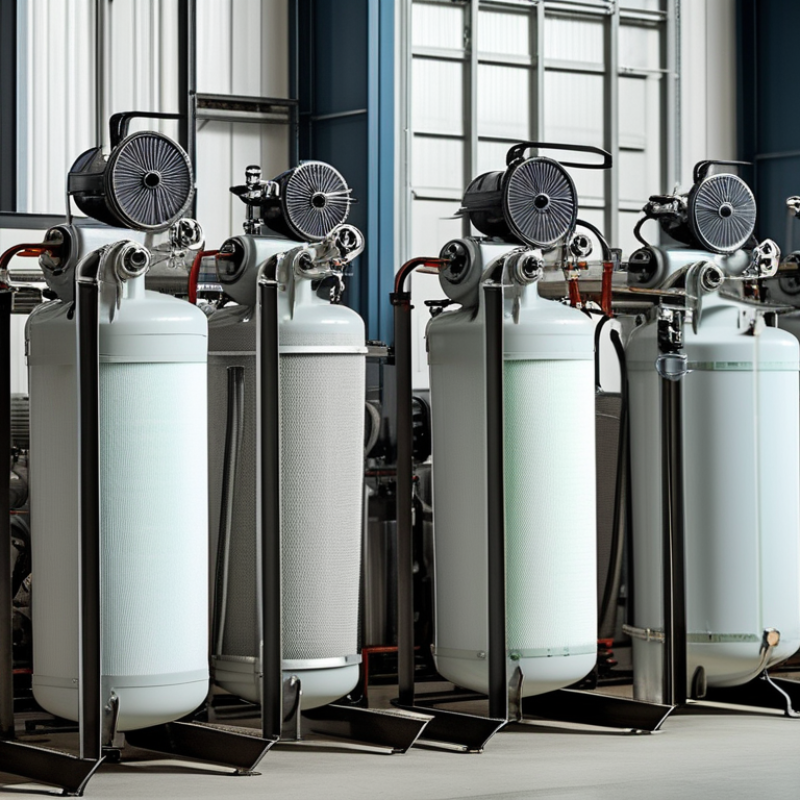
Choisir le meilleur filtre industriel pour vos besoins ?

Choisir un Filtre industriel adapté à ses besoins peut sembler complexe. Cependant, il est essentiel de comprendre les différentes options qui s'offrent à vous. Un bon filtre industriel permettra d'optimiser la qualité de l'air ou le processus de fabrication. Chaque secteur a ses propres exigences.

L'efficacité d'un filtre dépend de plusieurs critères. Par exemple, la taille des particules à éliminer ou le débit d'air sont cruciaux. Ignorer ces détails pourrait entraîner des erreurs coûteuses. D'un autre côté, certains pourraient opter pour un filtre standardisé sans réfléchir à leurs besoins spécifiques. Cela peut sembler pratique, mais cela n'est pas toujours la meilleure solution.

En résumé, reconnaître ses besoins est primordial. Une réflexion approfondie et une connaissance des différents types de filtres industriels sont nécessaires. Se fier à un expert peut souvent éviter des choix regrettables.

Choisir le meilleur filtre industriel pour vos besoins ?

Choisir un filtre industriel : critères à prendre en compte

Choisir un filtre industriel adapté à vos besoins peut sembler complexe. Plusieurs critères doivent être pris en compte. Parmi eux, la taille des particules à filtrer est essentielle. Un filtre mal adapté ne retient pas les impuretés souhaitées. Vérifiez donc les spécifications techniques de chaque modèle.

Un autre facteur important est le débit. Un filtre doit supporter le volume de gaz ou de liquide passant à travers lui. Un faible débit peut entraîner un dysfonctionnement du système. Pensez également à la fréquence de maintenance. Un filtre nécessitant peu d'entretien peut réduire les coûts à long terme.

Conseils : Évaluez toujours vos besoins en amont. Testez plusieurs types de filtres avant de faire un choix définitif. N'oubliez pas de prévoir un échantillon pour une analyse de performance. Une évaluation correcte peut éviter des erreurs coûteuses.

Choisir le meilleur filtre industriel pour vos besoins

Les différents types de filtres industriels et leurs applications

Choisir un filtre industriel adapté à vos besoins est essentiel. Plusieurs types de filtres existants, chacun ayant des applications spécifiques. Les filtres à air , par exemple, sont utilisés pour éliminer les particules de poussière. Dans les environnements de travail, la qualité de l'air est cruciale pour la santé des employés .

Les filtres à eau , quant à eux, jouent un rôle vital dans le traitement des liquides. Ils sont employés dans l'industrie alimentaire et chimique. Souvent, ces filtres doivent être remplacés régulièrement. Une négligence dans leur entretien peut entraîner des problèmes de qualité. Chaque type de filtre a ses exigences en matière d'entretien et d'installation.

À première vue, le choix du bon filtre peut sembler simple. Cependant, il nécessite une compréhension approfondie des besoins spécifiques de l'entreprise. Les filtres à particules coûtent souvent moins cher, mais leur efficacité peut varier. Une réflexion presque constante est nécessaire pour s'assurer que le système de filtration répond bien aux exigences légales et de sécurité.

Évaluer la capacité et l'efficacité du filtre industriel choisi

Lors de l'évaluation de la capacité d'un filtre industriel, plusieurs critères sont à considérer. La capacité de filtration doit répondre aux spécificités de votre environnement. Chaque industrie a ses propres exigences. Par exemple, un filtre utilisé dans l'agroalimentaire ne remplit pas les mêmes conditions qu'un filtre pour l'industrie chimique.


L' Efficacité est également cruciale. Cela se mesure par la réduction des particules dans l'air ou dans les fluides. Un bon filtre doit maintenir une performance stable sur le long terme. Cependant, il est essentiel de ne pas se fier uniquement aux spécifications du fabricant. Des tests internes peuvent révéler des performances différentes.


L'entretien du filtre joue un rôle clé dans sa longévité. Un filtre négligé perd rapidement son efficacité. Ainsi, il est impératif d'établir un calendrier d'entretien régulier. Cela permettra non seulement de maximiser l'efficacité, mais aussi de réduire les coûts à long terme. Évaluer ces facteurs nécessite une réflexion approfondie et un ajustement continu de vos choix.

Les coûts et la maintenance des filtres industriels

Le choix des filtres industriels ne se limite pas aux performances, mais aussi aux coûts et à la maintenance. Selon une étude de Market Research Future, le marché des filtres industriels devrait atteindre 36 milliards d'euros d'ici 2028. Cette croissance est liée à la montée des normes environnementales , mais elle implique également des investissements significatifs dans l'entretien.

Un filtre de haute qualité peut coûter jusqu'à 30 % de plus que ses concurrents, mais il offre souvent des économies sur le long terme. Les coûts d'entretien régulier, tels que le remplacement des éléments filtrants, sont également cruciaux.
En effet, un entretien négligé peut entraîner des pannes coûteuses. Selon une enquête de l'Association des industries de filtration, 40 % des entreprises signalent des temps d'arrêt dus à un entretien inadéquat.

Il est essentiel d'évaluer le coût total de possession (CTP) des filtres. Ce concept inclut l'achat, l'entretien, ainsi que les économies d'énergie réalisées grâce à un système efficace. Environ 20 % des coûts peuvent être liés à une inefficacité de filtration. Prendre le temps d'identifier les besoins spécifiques peut donc faire la différence. Une analyse approfondie permet de faire des choix éclairés pour optimiser la rentabilité des investissements.

Normes et réglementations pour les filtres industriels à considérer

Lors de la sélection des filtres industriels , il est crucial de prendre en compte les normes et réglementations . Ces règles garantissent la sécurité et la conformité des dispositifs. Par exemple, les filtres doivent répondre aux normes ISO spécifiques selon le type d'industrie. Négliger ces aspects peut entraîner des conséquences sur la santé des employés et l'environnement.

Les réglementations varient d'un pays à l'autre. Parfois, des certifications supplémentaires peuvent être nécessaires. Il est indispensable de se renseigner sur les exigences locales avant d'acheter un filtre. Assurez-vous que vos filtres répondent aux normes environnementales . Cela témoigne de votre engagement envers une responsable de production.

Conseils : Évaluez régulièrement vos systèmes de filtration. Cela permet d'identifier les ressources à améliorer. Pensez à l'ancien votre équipe sur les pratiques de maintenance des filtres. Une bonne connaissance des réglementations en matière de filtration peut également prévenir les erreurs coûteuses.


Powder Coat Booths

For those larger-sized parts, or smaller quantity runs, we have 2 independent powder coat booths and ovens. The quality, durability and affordability of today’s powder coating finishes make this the process of choice for world-class companies.

Powder coating advantages over other forms of coating are many. Materials used in the Powder coating process can be metals and non-metals that come in a multitude of thicknesses, textures, colors, etc. Another of Powder coating’s biggest advantages over conventional coatings is its ability to create finishes in many different textures. Powder Coating Booths allow us the ability to apply these advantages to large products.

Wet Paint Line

Tri-State Fabricators runs a full-service conveyor line for painting. Wet painting can provide protection or decoration to many different part styles. From start to finish, every project is easier to undergo random and point-based inspection by our skilled painting team.

Advantages to our Wet Paint Line are these lines start with product prep and ends with a thorough inspection of a high quality finished product. Our ability to complete large and small projects with a superior finish and doing so in a timely and economical fashion. This passes along the savings in production to our customers. When powder coating ins not an option, our Wet Paint Line gets the job done right the first time.

Wet Paint Booths

When the parts get big and heavy we roll-out our custom paint racks and oversize booth. By utilizing our partnerships with all the major paint brands, we can match virtually any color with wet paint.

The advantages of having access to a Wet Paint Booth are many. Large projects of many different shapes can be loaded into the booth. The Wet Paint Booth offers an environment that is much more controlled than a typical parts painting operation.

Not only are they used because of their controlled environment, but they’re are also advantageous when it comes to applying paint to parts that are needed in industries that require specialty coatings such as medical, aerospace, etc.

Military CARC

Our military forces have some very high standards when it comes to the finish of their vehicles and equipment. From the first pre-treatment step to final coat, it takes a great deal of knowledge and experience to protect the men and women of our armed forces. They deserve only the best, and Tri-State Fabricators provides it.

All of our processes are closely monitored by our staff and management teams. Both of which are highly trained in the processes of metal fabrication and finishing. Tri-State Fabricators’ goal is to always fully satisfy each and every customer, including the military. We will always put a 110% into what we do.

Glass-Bead Blasting

Abrasive media blasting is an excellent way to remove old paint, rust, and increase the paint/powder adhesion. Glass beads produce a much smoother and brighter finish than angular abrasives; leaving the part clean yet without any dimensional change. Chemically inert and environmentally friendly, we can recycle our beads approximately 30 times; making them a more preferred method of metal cleaning or surface finishing.

Advantages to Glass Bead Blasting are many. Glass bead blast media is used when a project is needing rough surfaces need to become smooth for applications of coatings such as paint. It is typically used to clean paint and rust from a product surface without deforming the surface it is being used on. Overall, compared to many other blasting media, Glass Bead Blasting is a very economical choice and those savings are always passed on to our customers.

Part Washing

Tri-State Fabricators utilize a zinc phosphate wash to clean and etch the material to ensure the best paint adhesion possible. The unique design of our 3-stage wash system does the work like a 5-stage. From Cleaning and rinsing to conversion coating and post-treatment, Our Part Washing process is a complete service and works throughout the fabrication service and the finishing service.

Along with the previously mentioned benefits, Curing is a vital chemical reaction that leaves the product finish hard and relatively safe from mild abrasion and aggressive corrosion. This process can be done in more than one way; ambient air-dry or in curing ovens at temps that exceed 240°.

Burn-Off Oven

From fixing paint mistakes (someone else’s of course) to simply cleaning our paint line hooks, our burn-off oven is put to good use. After a quick burn-off, a little clean up, and a fresh coat of paint, your parts will look better than new.

Why does our Burn-Off Oven work so well? Because super heating the air around parts turns the materials into ashes. From paint and powder coatings to rubber and machining oils, high temps do the job without degrading the integrity of the part.

Masking

Masking is a vital part of producing high quality products. We have die-cut masking patterns to protect machined surfaces as well as a wide range of plugs and caps to protect threaded holes and bolts. We provide permanent and temporary masking.

Masking allows the selected sections of a product to be protected from a fabrication or finishing service. This can be with both chemicals when etching and tapes, paints when only finishing just a section of the product. Masking is great in aiding the customization process of a project.

Screen Printing

Screen printing is a photographic process that transfers artwork onto a porous nylon screen which allows colored ink to flow through the screen and be deposited on an aluminum or plastic component. We can generally have just about any design created onto a screen for your parts.

Some of the advantages of Screen Printing are, brand recognition for your business displaying on your products, assembly instructions, product warnings/hazards, etc. Tri-State Fabricators produces Screen Printing of the highest quality so you know it’s durable.

Metal Finishing

Metal Finishing is the art of treating the exterior portion of product, often metal but can also be made of other materials, so that the surface is clean and free of any debris. Then the process of applying coats or either paint of powder coat takes place. This coating process improves the quality of the product in both appearance and resistance to wear and corrosion.

Tri-State Fabricators, Inc., understands that a project typically isn’t complete until a high-quality finish has been added to your product. This is why our painting and powder coating teams continuously inspect the products throughout the Metal Finishing process.