


How to Choose the Best Core Drill Rig in 2026?

Choosing the best Core Drill Rig in 2026 starts with the material, hole size, and conditions on site. A rig for a small indoor concrete opening may be poorly suited to repeated, large-diameter coring. Match the motor’s power and speed range to the bit manufacturer’s specifications. Check the rig’s drilling capacity, mounting method, and compatibility with wet or dry operation. Small details matter. A loose anchor, awkward feed handle, or short cable can slow a job and affect control.

Consider the work area, too. Measure access points and overhead clearance before choosing a rig. For vertical or angled drilling, confirm that the stand can be secured correctly and that the operator can maintain a stable working position. Compare service access, replacement-part availability, warranty terms, and the support offered by the supplier. A low purchase price is not the whole cost. Downtime has a price as well.

Experienced operators often stress the value of matching the rig to the task, but I cannot verify a named expert’s quotation from the information supplied. I will not invent one. This guide instead explains the selection criteria and trade-offs readers can check against equipment manuals, bit specifications, and supplier documentation. Some jobs still require an imperfect compromise between portability and capacity. Be honest about that. The right choice is the rig that meets the job’s technical demands without adding unnecessary weight, complexity, or cost.
How to Choose the Best Core Drill Rig in 2026?

Understanding Core Drill Rigs and Their Main Types

How to Choose the Best Core Drill Rig in 2026?

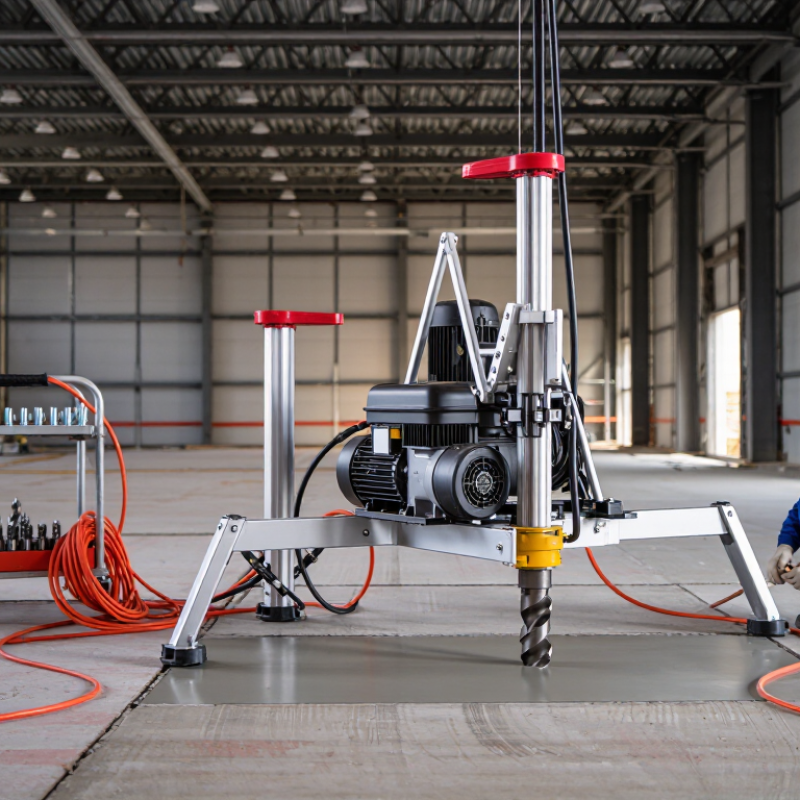
A core drill rig rotates a hollow, diamond-tipped bit to cut a clean circular opening through concrete, masonry, or stone. The main types are handheld, stand-mounted, and track-mounted rigs. Handheld models suit small holes and tight spaces, but the operator must control more vibration and drift. Stand-mounted rigs anchor to the surface, helping keep larger holes straight. Track-mounted systems can handle demanding work on walls or floors, though they take longer to position. Choose by hole diameter, material, access, and required accuracy—not motor power alone.

Dust control matters as much as drilling capacity. OSHA’s construction silica standard, 29 CFR 1926.1153, sets an eight-hour permissible exposure limit of 50 µg/m³ and an action level of 25 µg/m³ for respirable crystalline silica. Water-fed drilling or suitable dust collection helps control exposure. For wet work, check water flow and drainage; a slick floor can create its own hazard. A rig may look powerful on paper, yet prove awkward when its base cannot sit flat.

Tips: Match the rig to the largest hole you actually need. Check anchor stability, bit compatibility, and clearance before setup. For repeated holes, a stand-mounted rig usually improves consistency. Still, the best choice is not always obvious—test the setup on similar material when possible.

How to Choose the Best Core Drill Rig in 2026? — Understanding Core Drill Rigs and Their Main Types
Rig Type Typical Application Power and Setup Main Advantages Key Limitations Best Choice When...
Handheld Concrete Core Drill Small-diameter holes in concrete, masonry, and similar construction materials. Usually electric; operated by hand with a compatible diamond core bit. Wet or dry drilling depends on the tool and bit. Portable, quick to position, and useful where installing a drill stand is impractical. Operator control and fatigue become important as hole diameter, drilling time, or material hardness increases. It is not suitable for every large or deep hole. You need mobility and are making relatively small holes in accessible locations.
Stand-Mounted Concrete Core Drill Accurate holes for plumbing, electrical, HVAC, anchors, and other building services. An electric or hydraulic motor travels along a drill stand. The stand is commonly secured with an anchor; some compatible setups use a vacuum base on suitable surfaces. Provides stable, controlled drilling and is well suited to repeatable holes, larger diameters, and angled drilling when the equipment allows. Requires space and time to position and secure the stand. Water management and safe handling of the core are also needed for many jobs. Accuracy, repeatability, or a larger hole matters more than the fastest setup.
Heavy-Duty Hydraulic Concrete Core Drill Large-diameter or demanding concrete drilling on construction, infrastructure, and demolition projects. Hydraulic power is supplied by a separate power pack. The motor is generally mounted on a secured stand or other engineered support. Suitable for demanding applications and can be configured for jobs where electric equipment is not the preferred option. Requires a hydraulic power source, hose management, and trained setup. The complete system is less portable than a small electric drill. The job calls for sustained heavy-duty work and the site can support the power pack and rig setup.
Surface Mineral Exploration Core Drill Rig Recovering cylindrical rock samples for geological exploration and mineral assessment. Typically mounted on a truck, trailer, or tracked carrier. A drill string and core barrel advance into rock; wireline systems can retrieve the inner tube without removing the entire drill string. Designed for exploration drilling and recovery of continuous rock core. Wireline retrieval can reduce the time needed for repeated core recovery at depth. Requires specialized crews, drilling fluids or other ground-control measures as conditions require, and substantial site access and logistics. You need geological core samples from a surface exploration program, not holes in building concrete.
Underground Mineral Exploration Core Drill Rig Core drilling from underground mine workings or confined underground locations. Compact layouts are designed to fit underground access constraints. Rigs may be mounted on skids or carriers and use drilling systems suited to the planned hole direction and site conditions. Can operate in restricted underground spaces and support exploration from existing workings. Access dimensions, ventilation, water management, ground conditions, and underground safety requirements constrain selection and setup. The drilling location is underground and the rig must fit the available headings and access route.
Selection note: First identify whether the job is concrete coring or geological exploration—these are different equipment categories. Then compare required hole diameter and depth, material or rock conditions, drilling direction, available power, access and mounting options, water management, and operator requirements. Confirm final capacity and setup limits in the equipment and bit specifications.

Matching Rig Design to Your Drilling Tasks and Site Conditions

Choosing a core drill rig in 2026 starts with the hole, not the brochure. For small-diameter concrete sampling inside a basement, a compact, securely anchored rig may matter more than high output. On remote rock sites, a tracked carrier, longer feed travel, and reliable core retrieval can save repeated repositioning. Check the planned core diameter, depth, material hardness, overhead clearance, access width, and water supply together. A powerful rig is not automatically the right rig.

Ground conditions change the decision. The Federal Highway Administration’s 2018 Drilled Shafts manual highlights groundwater, casing, and drilling-fluid choices as important construction variables; these deserve attention when planning site access and bore stability. For concrete work, dust control belongs in the rig comparison too. OSHA’s respirable crystalline silica standard sets an action level of 25 micrograms per cubic meter and a permissible exposure limit of 50, averaged over eight hours. Ask whether the setup supports effective water delivery and safe slurry collection. Small details matter. A specification sheet rarely captures muddy access, awkward hose routing, or a tight turning area. Recheck the layout with operators before ordering; a technically suitable rig can still be cumbersome on the actual site.

Comparing Power Sources, Capacity, and Key Performance Specifications

Choosing a core drill rig starts with the work, not the motor label. Electric rigs suit sites with steady power and indoor drilling; hydraulic or engine-driven units offer more mobility but add fuel, heat, and maintenance needs. The U.S. Energy Information Administration reported an average U.S. industrial electricity price of 8.14 cents per kilowatt-hour in 2023. Treat that as a comparison point, not a site estimate: tariffs, generator efficiency, and duty cycles change the real cost. Torque matters. For remote work, calculate runtime between refueling or charging, then check whether the rig can hold speed under load.

Capacity means more than maximum hole diameter. Match the rig’s rated diameter and drilling depth to the planned core size, barrel length, and material; a large headline capacity is less useful if the frame flexes or feed travel is short. Compare continuous power, spindle speed range, feed force, and cooling-water flow. The International Energy Agency’s Global Critical Minerals Outlook 2024 found announced projects could supply only about 70% of projected copper demand by 2035, underscoring the need for dependable exploration equipment. Still, that industry outlook cannot tell you which rig fits a particular formation. Check the maker’s published test conditions, and verify performance with a representative core size. I would not over-trust a single maximum-depth figure. A wet, fractured rock face can change the job quickly.

Assessing Safety Features, Compatibility, and Ease of Operation

A core drill rig should make control predictable, not merely promise high power. Check for a secure stand, a functioning emergency stop, and guards that stay clear of the bit. For wet drilling, inspect water connections and cable protection before setup. Keep hoses away from the operator’s feet. Small details matter. Follow the rig’s manual for electrical protection and anchoring; a loose base can shift when the bit binds. A checklist helps, though it will not catch every site hazard.

Compatibility starts with the drilling task. Match the rig’s motor mount, bit range, drilling angle, and stroke to the work. Confirm the surface can support the chosen anchor, and check whether the setup allows wet or dry operation. Measure overhead clearance and nearby obstructions before carrying equipment into place. A bit that fits the motor may still exceed the stand’s rated capacity. Never guess from appearance; verify the specifications.

Ease of operation shows up during setup. Controls should be reachable while wearing gloves, and the feed handle should move smoothly without forcing your wrist. Check the rig’s weight, leveling method, and transport handles, especially when access is narrow. Run a brief, controlled check before drilling. Listen for unusual vibration. One awkward latch can slow a whole job, and I would not ignore it just because the rig feels sturdy.

Estimating Total Ownership Costs and Verifying Supplier Support

How to Choose the Best Core Drill Rig in 2026?

Choosing a core drill rig in 2026 means pricing the work it must do, not just the machine. A low quote can hide freight, installation, bits, water-handling equipment, operator training, and downtime. List each item. Estimate energy use, routine service, consumables, and likely repairs across expected annual hours. Use local labor and delivery costs; generic online estimates can miss the mark. Keep assumptions visible.

Compare rigs against the same drilling depth, material, and shift pattern. Ask for service intervals, replacement-part prices, warranty exclusions, and expected delivery times in writing. A sample cost sheet is useful, but it is not a forecast. Add a contingency for wear, especially if the ground is abrasive or access is difficult. That estimate may still be wrong. Review it after the first few jobs.

Supplier support deserves the same scrutiny as the rig. Ask who handles troubleshooting, where common parts are stocked, and whether technicians can guide setup remotely or on site. Verify claims with references from customers drilling similar diameters and materials. Check response commitments against your schedule, not a vague promise of quick help. Good support is measurable. Record contacts, training scope, and escalation steps before ordering.

Article Source:

Powder Coat Booths

For those larger-sized parts, or smaller quantity runs, we have 2 independent powder coat booths and ovens. The quality, durability and affordability of today’s powder coating finishes make this the process of choice for world-class companies.

Powder coating advantages over other forms of coating are many. Materials used in the Powder coating process can be metals and non-metals that come in a multitude of thicknesses, textures, colors, etc. Another of Powder coating’s biggest advantages over conventional coatings is its ability to create finishes in many different textures. Powder Coating Booths allow us the ability to apply these advantages to large products.

Wet Paint Line

Tri-State Fabricators runs a full-service conveyor line for painting. Wet painting can provide protection or decoration to many different part styles. From start to finish, every project is easier to undergo random and point-based inspection by our skilled painting team.

Advantages to our Wet Paint Line are these lines start with product prep and ends with a thorough inspection of a high quality finished product. Our ability to complete large and small projects with a superior finish and doing so in a timely and economical fashion. This passes along the savings in production to our customers. When powder coating ins not an option, our Wet Paint Line gets the job done right the first time.

Wet Paint Booths

When the parts get big and heavy we roll-out our custom paint racks and oversize booth. By utilizing our partnerships with all the major paint brands, we can match virtually any color with wet paint.

The advantages of having access to a Wet Paint Booth are many. Large projects of many different shapes can be loaded into the booth. The Wet Paint Booth offers an environment that is much more controlled than a typical parts painting operation.

Not only are they used because of their controlled environment, but they’re are also advantageous when it comes to applying paint to parts that are needed in industries that require specialty coatings such as medical, aerospace, etc.

Military CARC

Our military forces have some very high standards when it comes to the finish of their vehicles and equipment. From the first pre-treatment step to final coat, it takes a great deal of knowledge and experience to protect the men and women of our armed forces. They deserve only the best, and Tri-State Fabricators provides it.

All of our processes are closely monitored by our staff and management teams. Both of which are highly trained in the processes of metal fabrication and finishing. Tri-State Fabricators’ goal is to always fully satisfy each and every customer, including the military. We will always put a 110% into what we do.

Glass-Bead Blasting

Abrasive media blasting is an excellent way to remove old paint, rust, and increase the paint/powder adhesion. Glass beads produce a much smoother and brighter finish than angular abrasives; leaving the part clean yet without any dimensional change. Chemically inert and environmentally friendly, we can recycle our beads approximately 30 times; making them a more preferred method of metal cleaning or surface finishing.

Advantages to Glass Bead Blasting are many. Glass bead blast media is used when a project is needing rough surfaces need to become smooth for applications of coatings such as paint. It is typically used to clean paint and rust from a product surface without deforming the surface it is being used on. Overall, compared to many other blasting media, Glass Bead Blasting is a very economical choice and those savings are always passed on to our customers.

Part Washing

Tri-State Fabricators utilize a zinc phosphate wash to clean and etch the material to ensure the best paint adhesion possible. The unique design of our 3-stage wash system does the work like a 5-stage. From Cleaning and rinsing to conversion coating and post-treatment, Our Part Washing process is a complete service and works throughout the fabrication service and the finishing service.

Along with the previously mentioned benefits, Curing is a vital chemical reaction that leaves the product finish hard and relatively safe from mild abrasion and aggressive corrosion. This process can be done in more than one way; ambient air-dry or in curing ovens at temps that exceed 240°.

Burn-Off Oven

From fixing paint mistakes (someone else’s of course) to simply cleaning our paint line hooks, our burn-off oven is put to good use. After a quick burn-off, a little clean up, and a fresh coat of paint, your parts will look better than new.

Why does our Burn-Off Oven work so well? Because super heating the air around parts turns the materials into ashes. From paint and powder coatings to rubber and machining oils, high temps do the job without degrading the integrity of the part.

Masking

Masking is a vital part of producing high quality products. We have die-cut masking patterns to protect machined surfaces as well as a wide range of plugs and caps to protect threaded holes and bolts. We provide permanent and temporary masking.

Masking allows the selected sections of a product to be protected from a fabrication or finishing service. This can be with both chemicals when etching and tapes, paints when only finishing just a section of the product. Masking is great in aiding the customization process of a project.

Screen Printing

Screen printing is a photographic process that transfers artwork onto a porous nylon screen which allows colored ink to flow through the screen and be deposited on an aluminum or plastic component. We can generally have just about any design created onto a screen for your parts.

Some of the advantages of Screen Printing are, brand recognition for your business displaying on your products, assembly instructions, product warnings/hazards, etc. Tri-State Fabricators produces Screen Printing of the highest quality so you know it’s durable.

Metal Finishing

Metal Finishing is the art of treating the exterior portion of product, often metal but can also be made of other materials, so that the surface is clean and free of any debris. Then the process of applying coats or either paint of powder coat takes place. This coating process improves the quality of the product in both appearance and resistance to wear and corrosion.

Tri-State Fabricators, Inc., understands that a project typically isn’t complete until a high-quality finish has been added to your product. This is why our painting and powder coating teams continuously inspect the products throughout the Metal Finishing process.


