


Choosing the right Cnc Cutting Machine can shape your workshop’s accuracy, speed, and long-term costs. The best choice depends on your materials, production volume, workspace, and operators’ skills. A compact machine may suit a sign maker, while a heavy-duty model may serve a metal fabrication shop better. Similar-looking machines can perform very differently.
Real workshop decisions require more than reading impressive specifications. Examine cutting thickness, spindle power, working area, positioning accuracy, and control compatibility. Ask how the machine performs after eight hours of continuous work. Check sample cuts on your actual materials, including plywood, acrylic, aluminum, or composite panels. Small details matter. A rough edge can create hours of extra finishing work.
Reliable manufacturers provide clear technical data, safety guidance, training, and accessible replacement parts. Independent reviews and verified customer feedback can reveal service delays that brochures rarely mention. Industry experience also shows that the cheapest machine is not always economical. However, premium pricing does not guarantee perfect results. No machine is perfect. Operators still need maintenance routines, correct tooling, and realistic production settings. Even experienced buyers can overlook noise, dust collection, software learning curves, or limited after-sales support. This guide compares these practical factors, helping you evaluate each Cnc Cutting Machine with greater confidence and fewer costly surprises. The final decision should balance measurable performance with dependable support, workplace safety, and your actual business goals.
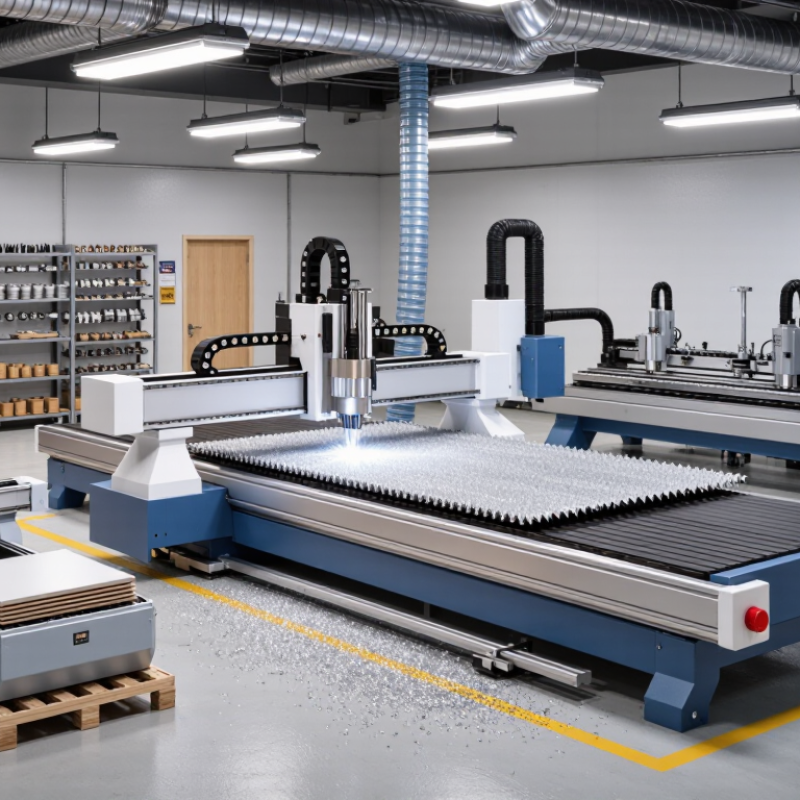
Choosing the best CNC cutting machine starts with the material, not the machine name. A CNC router suits wood, plastics, foam, and some soft composites. It uses rotating bits to create signs, panels, grooves, and three-dimensional surfaces. A laser cutter produces narrow, precise cuts in sheet materials. It works well for acrylic, plywood, fabric, and thin metals, depending on power and ventilation. Plasma machines cut conductive metal quickly, especially steel and aluminum. Waterjet systems handle thick metal, stone, glass, and heat-sensitive materials without a heat-affected edge. Each type solves a different production problem.
Tips: Test a sample before ordering. Check thickness limits, kerf width, bed size, extraction, software compatibility, and operator training. Ask for measured tolerances, not vague promises. Review maintenance access and consumable costs. A fast machine can become expensive when downtime is frequent. Keep safety guards, ventilation, and emergency controls central to the decision. They are not optional features.
Application changes the answer. A furniture workshop may value a large router bed and dust collection. A metal fabricator may need plasma speed or waterjet accuracy. A prototype shop might prefer laser detail and quick setup. In real workshops, the “best” choice is rarely perfect. Teams sometimes choose excessive power, then struggle with heat, waste, and complicated settings. Sometimes a smaller machine delivers better control. Compare actual jobs, expected volume, tolerances, and available floor space. Leave room for mistakes. Your workflow should guide the specification, not advertising language.
| CNC Machine Type | Primary Cutting Method | Suitable Materials | Typical Material Thickness | Typical Accuracy | Best Applications | Main Advantages and Limitations |
|---|---|---|---|---|---|---|
| CNC Router | Rotating cutting tool removes material mechanically. | Wood, MDF, plywood, plastics, acrylic, foam, composites, and some soft non-ferrous metals. | Usually up to 50 mm for sheet materials; heavier machines can process thicker stock. | Approximately ±0.05 to ±0.20 mm, depending on machine construction, tooling, and workpiece. | Furniture components, signs, cabinet panels, prototypes, decorative panels, and 3D carving. | Versatile and relatively economical. It produces chips and tool wear, and it is generally unsuitable for hardened steel or highly reflective metals. |
| CNC Fiber Laser | Focused laser beam melts or vaporizes material with assist gas. | Carbon steel, stainless steel, aluminum, brass, copper, and other conductive metals. | Commonly used from thin sheet to about 25 mm in carbon steel; practical capacity varies with laser power and material. | Approximately ±0.03 to ±0.10 mm under suitable operating conditions. | Sheet-metal fabrication, electrical enclosures, automotive parts, brackets, precision blanks, and intricate profiles. | Fast, narrow kerf, low mechanical force, and excellent detail on sheet metal. Initial cost can be high, and reflective materials require suitable machine configuration and process control. |
| CNC CO2 Laser | Infrared laser beam cuts or engraves non-metallic materials. | Acrylic, wood, paper, cardboard, textiles, leather, rubber, and selected plastics. | Often up to 20–30 mm for wood or acrylic, depending on power, material, and cutting speed. | Approximately ±0.05 to ±0.20 mm for many sheet and engraving applications. | Sign making, packaging prototypes, engraving, crafts, architectural models, and interior decoration. | Provides clean edges and fine engraving on many non-metals. It is not normally suitable for bare metal cutting, and some plastics can release hazardous fumes when heated. |
| CNC Plasma Cutter | High-temperature ionized gas melts conductive metal, while a gas jet removes molten material. | Carbon steel, stainless steel, aluminum, and other electrically conductive metals. | Commonly 1–40 mm; industrial systems can cut substantially thicker plate. | Approximately ±0.15 to ±0.50 mm, depending on plate thickness, torch height, consumables, and process settings. | Structural steel parts, machinery frames, agricultural equipment, repair work, and medium-to-thick plate fabrication. | Fast and cost-effective for conductive metal plate. It creates a heat-affected zone and generally has a wider kerf and lower fine-detail capability than laser cutting. |
| CNC Waterjet | High-pressure water, often mixed with abrasive garnet, erodes the material. | Steel, stainless steel, aluminum, stone, glass, ceramics, rubber, composites, and layered materials. | Commonly 1–150 mm; specialized equipment can process thicker materials. | Approximately ±0.05 to ±0.15 mm for many precision systems. | Heat-sensitive materials, thick metal, stone countertops, aerospace components, glass, and mixed-material assemblies. | No heat-affected zone and broad material compatibility. It has higher operating costs, uses water and abrasive, and is usually slower than laser for thin sheet metal. |
| CNC Oxy-Fuel Cutter | Fuel gas preheats steel, and a high-purity oxygen jet oxidizes and removes the material. | Primarily carbon steel and low-alloy steel; not suitable for aluminum or stainless steel in normal operation. | Typically about на? 6–300 mm; heavy-duty systems can process thicker plate. | Approximately ±0.50 to ±1.50 mm, depending on equipment, plate thickness, and setup. | Heavy steel plate, structural components, shipbuilding, bridges, large machinery, and demolition or repair work. | Low equipment and operating cost for very thick carbon steel. It is relatively slow, produces a large heat-affected zone, and requires careful gas handling and ventilation. |
| CNC Knife Cutter | Oscillating, tangential, or rotary knife mechanically cuts flexible or semi-rigid sheet materials. | Foam, cardboard, corrugated board, textiles, leather, vinyl, rubber, gaskets, and composite fabrics. | Commonly up to 50 mm, depending on material density and knife configuration. | Approximately ±0.10 to ±0.50 mm for many sheet-cutting applications. | Packaging, upholstery, apparel patterns, insulation, gaskets, signage, and soft-material prototyping. | Produces no thermal discoloration or melted edges and is well suited to flexible materials. It cannot cut most metals and may require specialized blades for dense materials. |

Choosing a CNC cutting machine starts with the material, not the machine’s appearance. Steel, aluminum, wood, plastic, and stone require different cutting methods, tools, and power levels. A machine that cuts thin plywood well may struggle with dense steel. It can also produce rough edges or excessive heat.
Measure the material’s usual thickness and maximum sheet size. Include occasional larger pieces if your work may expand. The cutting bed should support the full panel without awkward repositioning. Check the working height too. Thick materials need enough clearance for fixtures, tools, and safe movement. Dust, chips, and metal swarf also demand suitable extraction or collection equipment.
Define the cutting result you actually need. Tight tolerances require stable motion, accurate calibration, and suitable software settings. For decorative work, edge appearance may matter more than speed. For production, repeatability and cycle time become critical. Consider holes, curves, pockets, bevels, and frequent tool changes. I once selected a machine mainly by its advertised cutting speed. That assumption was wrong. The finished edges needed extra sanding, which erased the time saved. Test samples are valuable. Ask for cuts using your real material, thickness, and design files. Inspect the edge, dimensions, noise, dust, and cleanup requirements. A careful comparison reveals practical limits that specifications often overlook. Testing prevents expensive surprises.
Accuracy, speed, power, and automation determine how well a CNC cutting machine performs in daily production. Accuracy matters when parts must fit tightly. Check the machine’s repeatability, cutting tolerance, and calibration process. A small error can become costly across hundreds of parts.
Speed is useful, but faster cutting is not always better. Materials may burn, warp, or develop rough edges when settings are pushed too far. Power should match your regular workload, not your most ambitious project. Thin sheets need less energy, while dense materials require stable output and stronger motion control. Test cuts reveal more than impressive specifications.
Automation can reduce setup time and operator fatigue. Features such as automatic tool adjustment, material detection, and programmable nesting improve consistency. However, complex automation may increase maintenance demands. I once underestimated that trade-off. The machine saved preparation time but required better staff training. Operators still need to inspect edges, clean sensors, and verify dimensions. Reliable results come from equipment, documented procedures, and regular checks. Ask for sample cuts using your actual material and thickness. Record the cycle time, noise, edge quality, and waste. A practical trial often exposes weaknesses that a sales sheet does not.
Choosing a CNC cutting machine requires more than comparing spindle power and table size. Software often determines daily productivity. Test the complete workflow: drawing import, nesting, toolpath simulation, post-processing, and machine feedback. NIST research on smart manufacturing emphasizes interoperable data and better production visibility. Ask whether the controller exports useful logs, supports user permissions, and receives updates without disrupting work. A polished interface helps. A reliable workflow matters more.
Maintenance should be judged on access, not promises. Inspect lubrication points, filters, cable routes, and service clearances before buying. The U.S. Department of Energy’s Operations & Maintenance Best Practices Guide estimates predictive maintenance can reduce costs by 8–12% compared with preventive maintenance, and 30–40% compared with reactive maintenance. Safety deserves equal attention. Check guarding, emergency stops, interlocks, dust extraction, and operator training. The U.S. Bureau of Labor Statistics recorded 5,283 fatal occupational injuries in 2023 across all industries. This is not a CNC-specific rate, but it shows why safety shortcuts are expensive.
Operating cost calculations should include tooling, electricity, compressed air, scrap, software subscriptions, and training hours. The U.S. Department of Energy reports that compressed-air systems can represent 10–30% of industrial electricity use. Measure actual consumption where possible. My own cost models are never perfect; scrap rates change with material and operator experience. Leave room for that uncertainty. A cheaper machine can become costly when downtime, rework, or unsupported software enters the calculation.
This benchmark compares common CNC cutting technologies on a normalized 1–10 scale, where 10 represents the most favorable result. The scores reflect typical mid-range equipment characteristics: software usability, maintenance simplicity, safety provisions, and operating-cost efficiency. Actual performance varies with material, workload, automation level, and local energy and labor costs.
How to Choose the Best CNC Cutting Machine?
Selecting the Best Machine for Your Budget and Production Goals
Choosing the best CNC cutting machine starts with production economics, not the brochure. Define material, thickness, part size, tolerance, daily hours, and target output. A high-speed spindle is wasted if loading delays dominate. Grand View Research estimates the global CNC machine market reached about $83.8 billion in 2023, with a projected 9.5% CAGR through 2030. That growth signals investment, not automatic profitability. Forecasts describe markets, not your floor, operators, or maintenance budget.
For a limited budget, calculate total ownership costs over five years. Include tooling, software, dust extraction, power, training, service, scrap, and downtime. Compare hourly costs with the value of sellable parts. Test normal demand, peak demand, and a slow month. The International Federation of Robotics reported 541,302 industrial robot installations worldwide in 2023. Automation is expanding, but a simpler machine may suit irregular volumes better. I would rather increase capacity gradually than finance equipment that stands idle.
Tips: Request sample cuts using your actual material. Measure edge quality, cycle time, noise, and cleanup. Ask for service response times in writing. Keep 15–20% of the project budget for installation and surprises. That margin may feel excessive. It is often missing from early calculations. Choose upgrades only when they support a documented production goal.


For those larger-sized parts, or smaller quantity runs, we have 2 independent powder coat booths and ovens. The quality, durability and affordability of today’s powder coating finishes make this the process of choice for world-class companies.
Powder coating advantages over other forms of coating are many. Materials used in the Powder coating process can be metals and non-metals that come in a multitude of thicknesses, textures, colors, etc. Another of Powder coating’s biggest advantages over conventional coatings is its ability to create finishes in many different textures. Powder Coating Booths allow us the ability to apply these advantages to large products.
Tri-State Fabricators runs a full-service conveyor line for painting. Wet painting can provide protection or decoration to many different part styles. From start to finish, every project is easier to undergo random and point-based inspection by our skilled painting team.
Advantages to our Wet Paint Line are these lines start with product prep and ends with a thorough inspection of a high quality finished product. Our ability to complete large and small projects with a superior finish and doing so in a timely and economical fashion. This passes along the savings in production to our customers. When powder coating ins not an option, our Wet Paint Line gets the job done right the first time.
When the parts get big and heavy we roll-out our custom paint racks and oversize booth. By utilizing our partnerships with all the major paint brands, we can match virtually any color with wet paint.
The advantages of having access to a Wet Paint Booth are many. Large projects of many different shapes can be loaded into the booth. The Wet Paint Booth offers an environment that is much more controlled than a typical parts painting operation.
Not only are they used because of their controlled environment, but they’re are also advantageous when it comes to applying paint to parts that are needed in industries that require specialty coatings such as medical, aerospace, etc.
Our military forces have some very high standards when it comes to the finish of their vehicles and equipment. From the first pre-treatment step to final coat, it takes a great deal of knowledge and experience to protect the men and women of our armed forces. They deserve only the best, and Tri-State Fabricators provides it.
All of our processes are closely monitored by our staff and management teams. Both of which are highly trained in the processes of metal fabrication and finishing. Tri-State Fabricators’ goal is to always fully satisfy each and every customer, including the military. We will always put a 110% into what we do.
Abrasive media blasting is an excellent way to remove old paint, rust, and increase the paint/powder adhesion. Glass beads produce a much smoother and brighter finish than angular abrasives; leaving the part clean yet without any dimensional change. Chemically inert and environmentally friendly, we can recycle our beads approximately 30 times; making them a more preferred method of metal cleaning or surface finishing.
Advantages to Glass Bead Blasting are many. Glass bead blast media is used when a project is needing rough surfaces need to become smooth for applications of coatings such as paint. It is typically used to clean paint and rust from a product surface without deforming the surface it is being used on. Overall, compared to many other blasting media, Glass Bead Blasting is a very economical choice and those savings are always passed on to our customers.
Tri-State Fabricators utilize a zinc phosphate wash to clean and etch the material to ensure the best paint adhesion possible. The unique design of our 3-stage wash system does the work like a 5-stage. From Cleaning and rinsing to conversion coating and post-treatment, Our Part Washing process is a complete service and works throughout the fabrication service and the finishing service.
Along with the previously mentioned benefits, Curing is a vital chemical reaction that leaves the product finish hard and relatively safe from mild abrasion and aggressive corrosion. This process can be done in more than one way; ambient air-dry or in curing ovens at temps that exceed 240°.
From fixing paint mistakes (someone else’s of course) to simply cleaning our paint line hooks, our burn-off oven is put to good use. After a quick burn-off, a little clean up, and a fresh coat of paint, your parts will look better than new.
Why does our Burn-Off Oven work so well? Because super heating the air around parts turns the materials into ashes. From paint and powder coatings to rubber and machining oils, high temps do the job without degrading the integrity of the part.
Masking is a vital part of producing high quality products. We have die-cut masking patterns to protect machined surfaces as well as a wide range of plugs and caps to protect threaded holes and bolts. We provide permanent and temporary masking.
Masking allows the selected sections of a product to be protected from a fabrication or finishing service. This can be with both chemicals when etching and tapes, paints when only finishing just a section of the product. Masking is great in aiding the customization process of a project.
Screen printing is a photographic process that transfers artwork onto a porous nylon screen which allows colored ink to flow through the screen and be deposited on an aluminum or plastic component. We can generally have just about any design created onto a screen for your parts.
Some of the advantages of Screen Printing are, brand recognition for your business displaying on your products, assembly instructions, product warnings/hazards, etc. Tri-State Fabricators produces Screen Printing of the highest quality so you know it’s durable.
Metal Finishing is the art of treating the exterior portion of product, often metal but can also be made of other materials, so that the surface is clean and free of any debris. Then the process of applying coats or either paint of powder coat takes place. This coating process improves the quality of the product in both appearance and resistance to wear and corrosion.
Tri-State Fabricators, Inc., understands that a project typically isn’t complete until a high-quality finish has been added to your product. This is why our painting and powder coating teams continuously inspect the products throughout the Metal Finishing process.

