Why Choose Step Feeders for Efficient Material Handling?
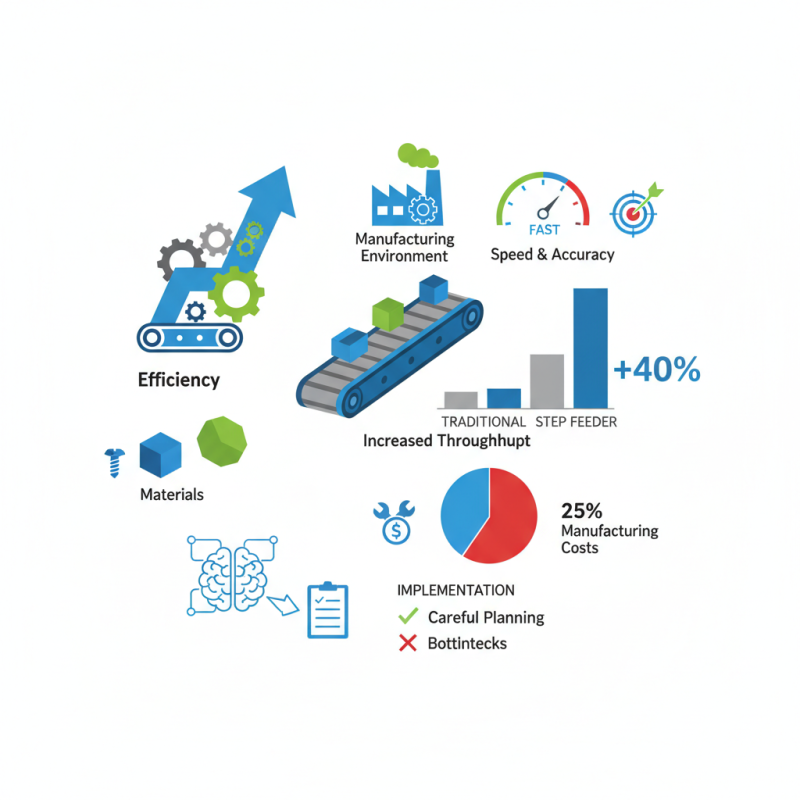
In today's fast-paced manufacturing environment, efficiency in material handling is crucial. Step Feeders have emerged as a key solution. According to a report by the Institute of Industrial Engineers, material handling accounts for over 25% of manufacturing costs. This highlights the need for effective systems. Step feeders provide a reliable method to streamline the delivery of components to production lines. They improve both speed and accuracy.
The versatility of step feeders is notable. They can handle various materials, from small parts to bulk items. Their design minimizes handling time and reduces waste. A study published in the Journal of Manufacturing Science and Engineering indicated that step feeders can increase throughput by as much as 40%. This makes them essential for high-demand production environments.
However, the implementation of step feeders is not without challenges. Companies must assess their specific needs to avoid pitfalls. For example, poorly integrated systems can lead to bottlenecks. Thus, careful planning and evaluation of supplier options remain key. Embracing step feeders might be the solution to enhance efficiency in material handling.
Advantages of Step Feeders in Material Handling Systems
Step feeders are versatile tools widely used in material handling systems. They effectively move various materials, whether granules, powders, or small parts. The design of step feeders allows for a consistent flow of materials, enhancing productivity. Unlike traditional systems, step feeders can handle varying feed rates, adapting seamlessly to operational needs.
One major advantage of step feeders is their efficiency. They minimize waste by ensuring precise control over material flow. This feature is particularly helpful in industries where accurate measurements are crucial. Additionally, the compact design saves floor space while maintaining high throughput. Operators appreciate the ease of maintenance, which reduces downtime.
However, it's important to recognize potential limitations. For instance, step feeders might struggle with certain larger or irregularly shaped materials. Additionally, the initial setup requires careful calibration. Over time, the effectiveness of a step feeder can diminish if not properly managed. This ongoing requirement for oversight reflects the need for continuous evaluation and adjustment in the handling process.
Why Choose Step Feeders for Efficient Material Handling? - Advantages of Step Feeders in Material Handling Systems
| Feature | Description | Benefits |
| Space Efficiency | Compact design allows for installation in tight spaces. | Maximizes floor space and reduces overall facility footprint. |
| Versatility | Can handle a variety of materials including bulk and packaged goods. | Flexible solution for different material handling needs. |
| Energy Efficiency | Designed for low power consumption during operation. | Reduces operational costs and environmental impact. |
| Reduced Material Damage | Gentle handling mechanism minimizes wear and tear. | Preserves the integrity of sensitive materials. |
| Automation Compatible | Easily integrates with automated systems for increased efficiency. | Enhances workflow and reduces labor costs. |
Key Features of Step Feeders for Improved Efficiency
Step feeders play a vital role in enhancing material handling processes. They are designed with specific features that improve overall efficiency. One key attribute is their ability to handle various materials with precision. This adaptability reduces downtime during production changes. The feeding mechanism ensures a consistent flow, minimizing jams and optimizing cycle times.
Incorporating step feeders can lead to significant productivity gains. Their gentle handling of delicate components prevents damage. This is crucial in industries where product integrity matters. Additionally, step feeders often operate quietly, reducing noise pollution in the workplace. Operators appreciate a quieter environment, as it promotes focus and safety.
Tips:
- Regular maintenance is essential for peak performance.
- Check for wear and tear on feeder components.
- A small issue can escalate, leading to costly repairs.
- Consider training staff on proper operation techniques.
- Well-trained operators can spot potential problems before they arise.
This proactive approach enhances the longevity of your equipment and boosts overall efficiency.
Comparative Analysis: Step Feeders vs. Traditional Feeders
In material handling, choosing the right feeder can significantly impact efficiency. Step feeders stand out against traditional feeders for several reasons. They utilize a unique design that allows materials to flow smoothly. This reduces the chances of clogs and jams. The design also promotes consistent material delivery, which is crucial for maintaining production speed.
Unlike traditional feeders, step feeders often feature a more compact layout. This can save valuable floor space in a facility. Many operators find this advantageous, especially in environments with limited room. Traditional feeders may require more extensive systems and maintenance. The potential for wear and tear is higher in complex setups. Regular upkeep can be a headache for maintenance teams.
However, there are some challenges with step feeders. Their initial cost can be higher compared to traditional options. Not every application may benefit from this technology. In some cases, traditional feeders might still perform adequately. Choosing the right solution involves careful analysis and consideration of specific operational needs. Balancing cost and efficiency is key.
Applications of Step Feeders in Various Industries
Step feeders play a vital role in various industries, enhancing material handling efficiency. In manufacturing, these feeders regulate the flow of parts, ensuring a steady supply to automated systems. For example, automotive plants rely on step feeders to transport components like screws and bolts, minimizing downtime and maximizing productivity. The careful design of step feeders allows them to handle materials with precision, reducing waste and ensuring consistent output.
In the food processing sector, step feeders are crucial for handling bulk ingredients. They manage the distribution of grains, powders, and other substances with accuracy. The design allows for gentle movement, preventing damage to delicate materials. Step feeders can adapt to various shapes and sizes, accommodating different food products. However, some challenges remain, such as maintaining hygiene and cleanliness in food applications, which requires regular evaluation.
Pharmaceutical industries also benefit significantly from step feeders. These devices manage the accurate dosing of ingredients, a critical aspect of drug manufacturing. Consistency in dosage is imperative to meet regulatory standards. Nonetheless, integrating step feeders into existing systems can be complex and requires thoughtful planning. This process often reveals inefficiencies in the current setup, prompting companies to rethink their material handling strategies.
Best Practices for Integrating Step Feeders into Workflows
Integrating step feeders into your workflow can dramatically improve material handling efficiency. These systems help to automate the process of transferring materials from one stage to another, reducing manual labor. However, getting it right requires careful planning. Analyze your current systems and identify where bottlenecks occur. Step feeders can solve specific challenges, but they need to be properly positioned and calibrated.
When implementing step feeders, consider their compatibility with existing equipment. Evaluate the size, weight, and flow rate of materials. These factors can impact how effective the feeders will be. It's also wise to involve your operators in the process. Their insights can reveal practical issues that might not be immediately apparent. Addressing these concerns early can prevent costly missteps later.
Testing and monitoring the system after installation are crucial. Regular checks can help identify any deviations from expected performance. Gather feedback continuously to improve the workflow further. While step feeders promise efficiency, their success hinges on ongoing adjustments and learning from past experiences. Reflect on what works and what doesn’t to create a more effective material handling process overall.





