How to Choose the Right Piston Filler for Your Business?
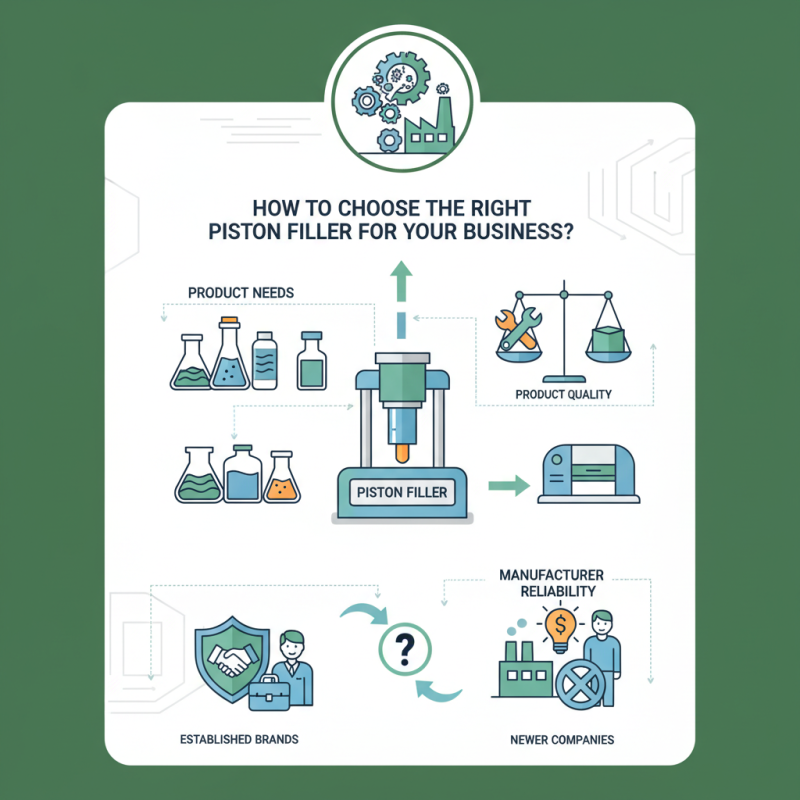
In the world of packaging and manufacturing, choosing the right Piston Filler can significantly impact efficiency and product quality. Industry expert Jane Smith, who has over 15 years of experience in filling technology, emphasizes, “Selecting the right Piston Filler can streamline production and enhance product consistency.” This highlights how crucial it is to make an informed decision when investing in this equipment.
Consider the specific needs of your product line. Different fillers cater to various viscosities and container sizes. Taking the time to assess your unique requirements can prevent costly mistakes later. An ill-suited Piston Filler may lead to increased downtime or quality control issues. Understanding these factors will guide you in making a more strategic choice.
Additionally, evaluating the reliability of manufacturers is vital. Established brands often provide better service and support. However, newer companies may offer innovative solutions at competitive prices. Weighing these aspects requires careful consideration. The right Piston Filler can be a game-changer, but a poor choice can lead to regrets. Be thorough and reflective in your selection process.
Understanding Different Types of Piston Fillers and Their Applications
When selecting a piston filler for your business, it’s crucial to understand the different types available. There are several categories of piston fillers, including gravity, vacuum, and pressure fillers. Each type has unique applications, accommodating various viscosities and products. For instance, pressure fillers are ideal for thick substances like sauces, while vacuum fillers work well for thin, liquid products.
A recent industry report highlights that over 45% of manufacturers prefer volumetric fillers for their precision. This reliability ensures consistent product delivery, which is essential for maintaining brand quality. If your product requires specific fill weights, considering a filler with adjustable calibration can enhance accuracy.
Tips: Assess your production volume and product type. Different fillers cater to varying speeds and output requirements. Don’t overlook the importance of ease of cleaning. Many facilities struggle with maintenance, which can lead to downtime. The right filler should not only meet your needs but also simplify operations. Remember, investing in the right equipment can significantly reduce waste and increase efficiency.
Evaluating Key Features: Speed, Accuracy, and Volume of Piston Fillers
When selecting a piston filler for your business, speed, accuracy, and volume are crucial factors. Speed is essential for maintaining production efficiency. A filler that operates quickly can keep up with high-demand environments. However, rushing can compromise quality. Balancing speed with precision is vital for consistent results.
Accuracy is another significant feature to consider. The right piston filler should deliver precise volumes consistently. This ensures that each product meets quality standards. Inaccurate filling can lead to waste or customer dissatisfaction. Regular calibration and maintenance can enhance accuracy, but it's essential to evaluate these aspects before making a purchase.
Volume specifications play a significant role in the choice of a piston filler. Businesses must assess their production needs. Will they require smaller batches or larger outputs? Understanding these needs can lead to more informed decisions. However, some fillers might claim to handle larger volumes but fall short in real-world applications. Testing and feedback mechanisms can help identify these discrepancies.
Comparison of Key Features in Piston Fillers
Assessing Industry Standards: Choosing Equipment for Specific Liquids
When selecting a piston filler for your specific liquids, several industry standards need consideration. Various liquids exhibit different viscosities, which directly influence the type of piston filler you should choose. For instance, a recent report from the Food and Beverage Equipment Council indicates that 70% of manufacturers face challenges when filling viscous liquids. Utilizing the right filler type can be critical to maintaining quality and efficiency.
Furthermore, the material of the filler plays a crucial role. Corrosive liquids require specific materials to avoid contamination. The Machinery and Equipment Manufacturers Association highlights that using inadequate materials can increase maintenance costs by 25%. Proper material selection ensures longevity and reliability in operations. It's essential to assess liquid characteristics like temperature and pressure as well.
In addition, the application method matters too. A report by the Packaging Machinery Manufacturers Institute reveals that 40% of process inefficiencies stem from incorrect application techniques. Decision-makers must analyze the production environment. Regular evaluations can help identify what adjustments or upgrades are necessary. Addressing these factors can lead to improved production outcomes and customer satisfaction.
Comparing Cost Factors: Initial Investment vs. Long-Term ROI in Production
When selecting a piston filler, understanding the cost dynamics is crucial. Many businesses overlook the relationship between initial investment and long-term return on investment (ROI). According to industry reports, the average initial cost for a high-quality piston filler can range from $10,000 to $100,000. However, the long-term savings can be significant. Fully automated systems may reduce labor costs by up to 50%, freeing staff for other critical tasks.
The longevity of the equipment is another element to consider. Piston fillers generally have a lifespan of 10 to 15 years. This durability can justify higher upfront costs. Regular maintenance and spare parts should also factor into your budget. A study by Packaging World highlights that a well-maintained filler can yield a 30% increase in production efficiency over time.
However, it’s essential to recognize that not every expensive filler guarantees success. Some units might face challenges, such as frequent adjustments or malfunctions. Understanding your production needs and conducting a comprehensive ROI analysis can help avoid costly mistakes. Investing time in segmenting your market and defining your product line can lead to better filler choices, ensuring a balance between initial spending and future gains.
How to Choose the Right Piston Filler for Your Business? - Comparing Cost Factors: Initial Investment vs. Long-Term ROI in Production
| Piston Filler Type | Initial Investment ($) | Operating Costs per Year ($) | Maintenance Costs per Year ($) | Estimated Lifespan (Years) | Projected ROI (%) |
| Semi-Automatic Piston Filler | 5,000 | 2,000 | 500 | 10 | 150% |
| Fully Automatic Piston Filler | 15,000 | 3,500 | 1,200 | 15 | 200% |
| Bench Top Piston Filler | 2,500 | 1,000 | 300 | 8 | 120% |
| Industrial Piston Filler | 30,000 | 5,000 | 2,000 | 20 | 250% |
Identifying Supplier Credentials: Importance of Maintenance and Support Services
When selecting a piston filler for your business, it’s crucial to consider the supplier's credentials. Often overlooked, maintenance and support services play a pivotal role in the long-term success of your operations. A reliable supplier should provide a detailed maintenance schedule. This ensures your machine runs smoothly, minimizing downtime.
Support is equally important. A knowledgeable support team can resolve issues quickly. This is vital in reducing disruptions. Ask about the training provided for your staff. Easy-to-understand training resources can make a huge difference. A poorly trained team may lead to mistakes.
Reflection on past experiences with equipment suppliers can be beneficial. Think about any challenges you faced. Did the supplier provide effective support? Were they easy to reach? Evaluating these aspects can illuminate potential gaps in service. Your choice should not only be about machinery design but also about ongoing support. A solid partnership with a reliable supplier can enhance productivity and maintain quality standards.





